Your hospital's data center is the operational core of every clinical system — EHR, PACS, laboratory information, pharmacy dispensing, and real-time patient monitoring. When cooling fails at 2 a.m., when a UPS module degrades silently for six weeks, or when a fire suppression system is found out-of-spec during a Joint Commission survey, the consequence is not an inconvenience — it is system downtime measured in patient risk, regulatory exposure, and seven-figure recovery costs. A 2024 Ponemon Institute study found that healthcare data center downtime costs an average of $9,900 per minute — the highest of any industry sector. Yet 68 percent of hospital IT infrastructure teams still manage server room maintenance on paper logs and spreadsheets. That documentation gap is exactly what Oxmaint closes. Book a Strategic Infrastructure Session to see how Oxmaint digitizes hospital data center maintenance, UPS lifecycle tracking, and environmental compliance across your full healthcare IT estate.
Hospital data center maintenance requires structured, documented management of five critical infrastructure categories: precision cooling (CRAC/CRAH units), uninterruptible power supply systems and generator transfer testing, fire suppression and environmental monitoring, physical security and access logging, and network infrastructure inspection. Oxmaint digitizes every maintenance task, inspection record, environmental alert response, and corrective action — meeting Joint Commission EC standards and HIPAA infrastructure safeguard requirements without paper-based workarounds.
The Five Infrastructure Systems Carrying the Highest Operational Risk
Each system has its own regulatory obligation and its own failure signature. Book a Strategic Infrastructure Session to see how Oxmaint structures all five into a single auditable maintenance program.
CRAC and CRAH units require documented filter replacement, refrigerant verification, coil cleaning, and airflow balance records. Thermal runaway caused by a single blocked cold aisle or degraded compressor can take down EHR access, PACS imaging, and real-time patient monitoring simultaneously. Oxmaint schedules all cooling PM tasks, captures readings at the unit level, and triggers escalation when discharge temperature deviates from setpoint.
Battery health degradation is silent — a UPS that tests green may fail within 90 seconds of a utility outage if impedance has not been measured against manufacturer thresholds. NFPA 99 requires documented monthly generator exercise tests, annual full-load transfer tests, and battery replacement cycle tracking. Oxmaint generates NFPA 99-aligned PM schedules, captures impedance readings per string, and prevents work orders from closing without discharge test documentation.
Clean agent suppression systems require annual agent weight verification, nozzle obstruction inspection, manual release testing, and cylinder pressure records. Environmental monitoring covering temperature, humidity, water ingress, and smoke detection requires documented alarm response records and sensor calibration logs. Oxmaint schedules all fire suppression inspections, captures alarm response records with timestamp, and archives calibration certificates against each monitored zone.
HIPAA Physical Safeguards require documented facility access controls for all areas housing ePHI systems including server rooms. Access control hardware — badge readers, biometric panels, electronic locks — requires documented inspection and testing records. Oxmaint tracks access control hardware inspection schedules, logs every maintenance entry with technician identity and timestamp, and produces HIPAA-aligned access log exports for OCR audits and SOC 2 reviews.
Every Cooling Check. Every Battery Test. Every Access Log. Captured and Auditable — Automatically.
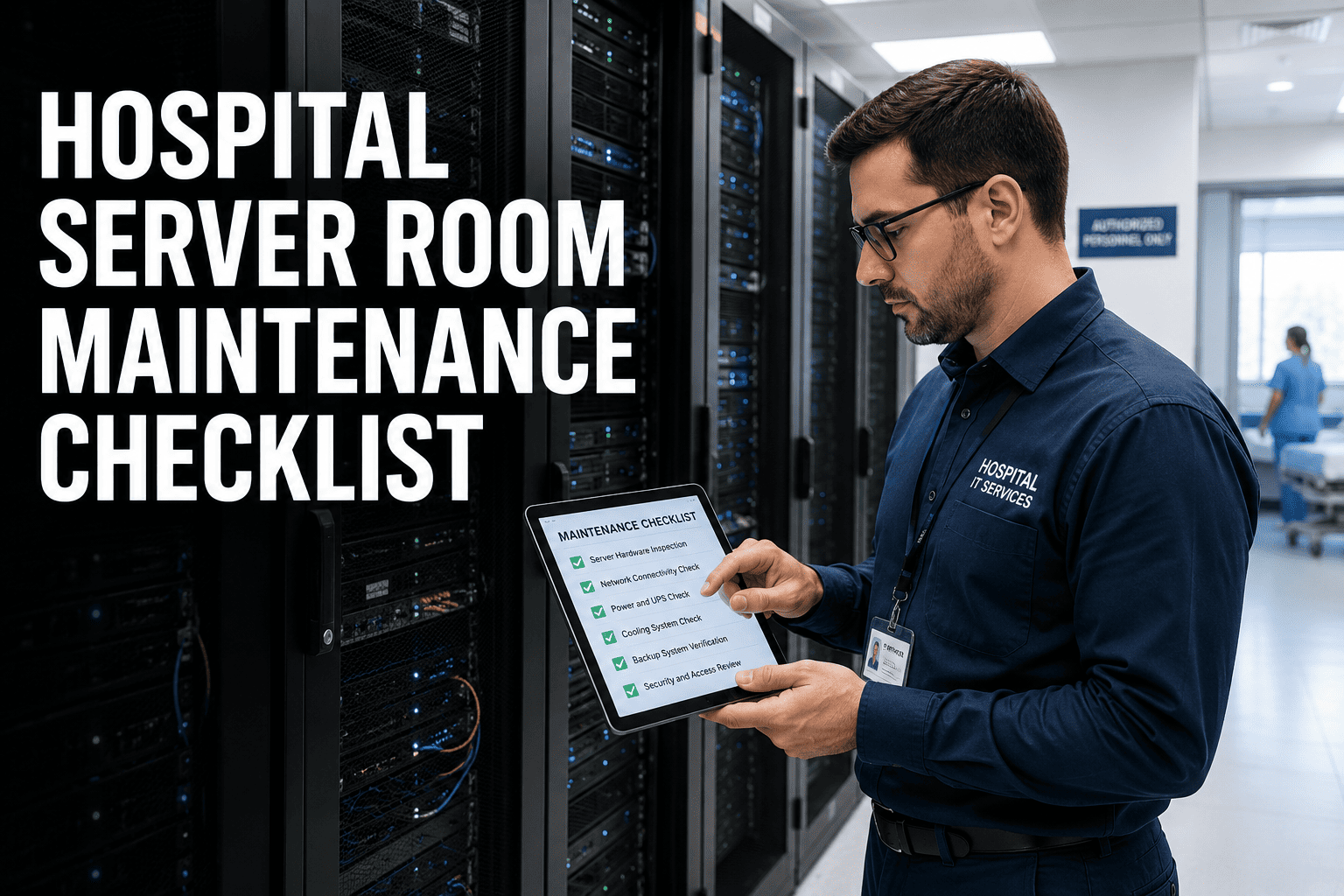
Oxmaint generates NFPA 99, Joint Commission, and HIPAA-aligned maintenance records on mobile — completing documentation at the equipment, not reconstructed from memory before the next audit. Book a Strategic Infrastructure Session to see the full data center maintenance workflow for your hospital.
Current State vs. Future State — Hospital Data Center Maintenance
The gap between how most hospital IT teams manage maintenance today and what Joint Commission, HIPAA, and NFPA auditors require is documented in every finding report from every survey cycle.
| Infrastructure Area | Current State — Paper-Based | Future State — Oxmaint Digital |
|---|---|---|
| CRAC/CRAH PM scheduling | Spreadsheet reminders — missed when staff turn over, no escalation when overdue | Automated PM schedule with 14-day and 3-day alerts, technician mobile dispatch, auto-archive on completion |
| UPS battery test records | Paper logbooks per cabinet — no centralized view of battery age or impedance trend across the fleet | Per-string impedance readings in Oxmaint, battery age tracked against manufacturer replacement threshold, fleet-wide dashboard visibility |
| Generator transfer test documentation | PDF scan in shared drive — not retrievable by equipment ID during Joint Commission survey | NFPA 99-aligned test record linked to generator asset ID, exportable in under 5 minutes for any survey request |
| Environmental alarm response | Email thread from on-call technician — no formal closure record, no root cause documentation | Alarm event logged with response timestamp, technician identity, corrective action taken, and root cause classification |
| Fire suppression inspection currency | Contractor certificate at facilities office — expiry date not tracked in any live system | Certificate uploaded to Oxmaint, auto-alert 60 days before expiry, Joint Commission-ready export on demand |
| Joint Commission EC survey preparation | 3 to 6 weeks of manual record assembly across IT, facilities, and biomedical departments | Complete EC.02.05 evidence package exported from Oxmaint in under 3 hours for any survey cycle |
Clinical and Operational Impact — What Infrastructure Uptime Means for Patient Care
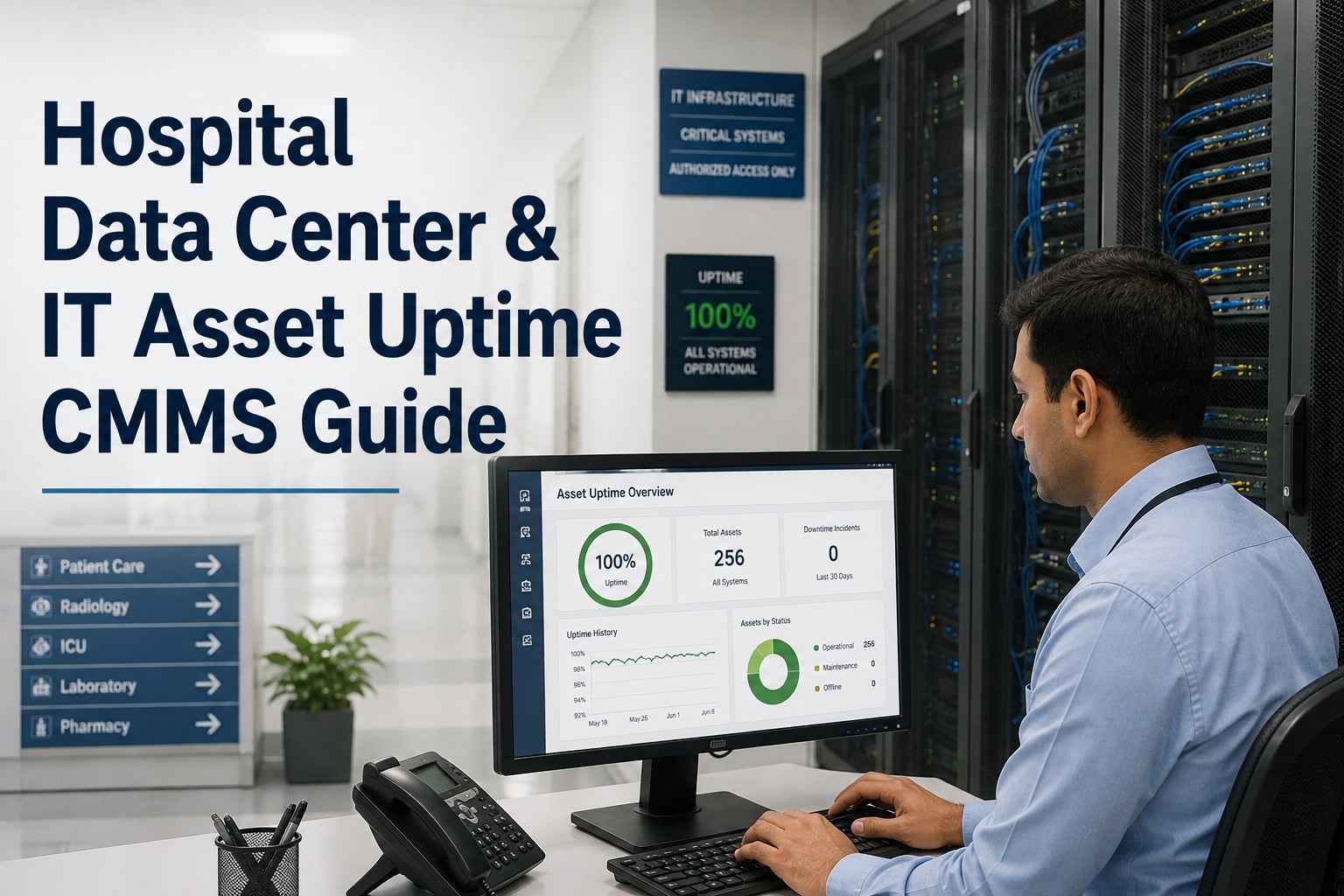
Target uptime for EHR platforms supporting active patient care — achievable only when cooling, power, and network infrastructure are on documented preventive schedules, not reacted to after failure.
Oxmaint produces the EC.02.05 evidence package surveyors require — without manual assembly across IT, facilities, and biomedical departments before each survey cycle.
Oxmaint produces access-correlated maintenance logs satisfying OCR audit requirements — eliminating the manual correlation task between badge system exports and maintenance records.
Hospitals using structured PM programs for cooling and power report up to 74 percent reduction in unplanned infrastructure-related outages versus reactive-only maintenance approaches.
When maintenance history and asset records are available in Oxmaint at the moment of failure, MTTR for data center incidents drops by 58 percent versus teams relying on paper records and institutional memory.
Cyber liability insurers increasingly require evidence of physical infrastructure maintenance programs for healthcare clients — Oxmaint produces the maintenance evidence packages carriers require at renewal.
Infrastructure KPI Benchmarks — Hospital Data Centers
Client Results — Hospitals Using Oxmaint for Data Center Maintenance
From 61% to 96% PM Compliance — Without Adding Headcount
Hospital IT teams that move to Oxmaint close the documentation gap before the next Joint Commission survey — not during the corrective action window after it. Book a Strategic Infrastructure Session to identify your current compliance gap in the first deployment session.
Frequently Asked Questions
Close the Infrastructure Documentation Gap Before the Next Survey Cycle
Digital NFPA 99 generator records, UPS battery lifecycle tracking, Joint Commission EC evidence packages, and HIPAA Physical Safeguards access logs — all live in Oxmaint within 6 weeks, no IT project required. Book a Strategic Infrastructure Session with your IT Director and Facilities Manager to see the full maintenance program configured for your data center and critical power infrastructure.