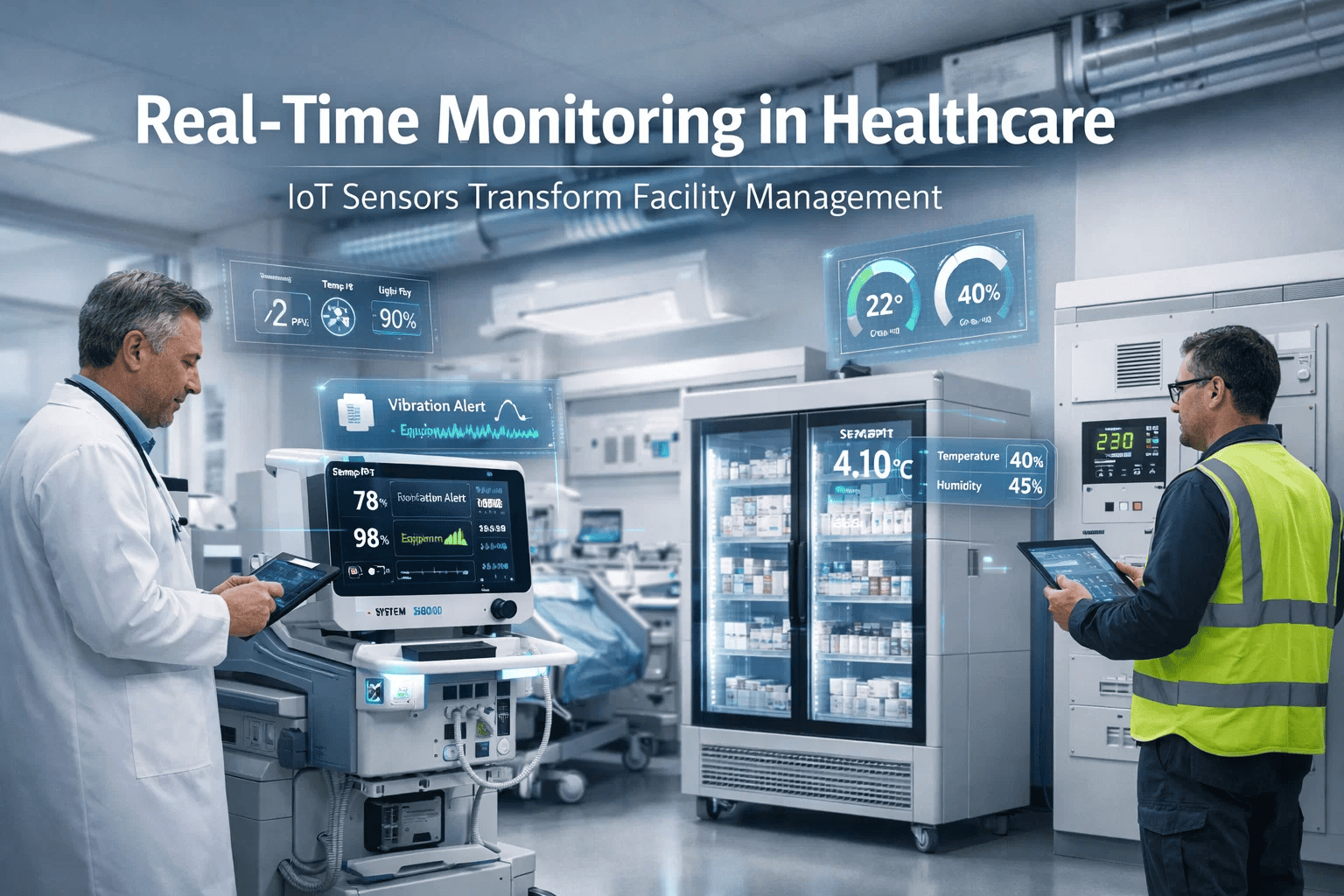
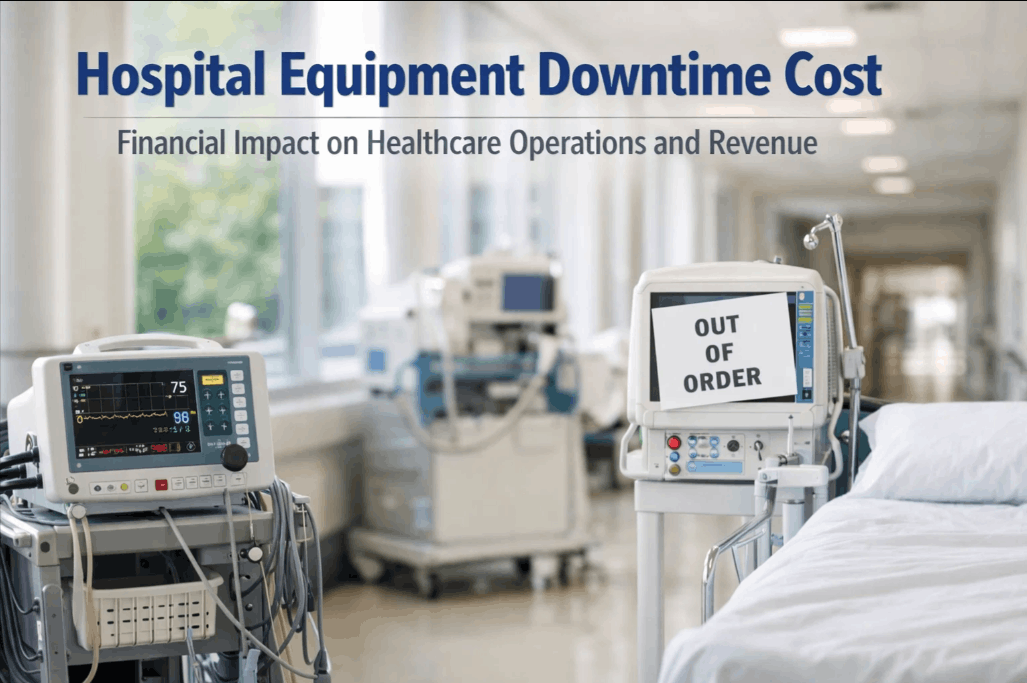
Unplanned downtime in a hospital HVAC system is not a maintenance inconvenience — it is a patient safety event. Negative pressure isolation rooms losing differential pressure, surgical suites failing temperature thresholds, and emergency generator transfer switches missing annual certification all carry Joint Commission citation risk, CMS Condition of Participation findings, and — in the worst case — direct patient harm. The gap between what a facility management team executes in the field and what is documented in an auditable, retrievable record is where regulatory exposure lives. That gap is exactly what Oxmaint closes. Book a demo to see how Oxmaint digitizes hospital facility maintenance, compliance records, and work order management across your full operation.
Hospital facility maintenance encompasses five regulated infrastructure domains: HVAC and ventilation for infection control, electrical systems and emergency power, plumbing and water management for Legionella prevention, fire and life safety systems, and vertical transportation. Each domain carries independent Joint Commission, CMS, and NFPA compliance obligations with mandatory documentation. Oxmaint delivers a single digital platform connecting field execution to auditable records — eliminating the documentation gap that drives citation risk.
Five Infrastructure Domains Where Documentation Failures Drive Citation Risk
Joint Commission surveys and CMS inspections consistently cite documentation failures across the same five domains. Each carries its own regulatory framework, PM frequency obligation, and audit evidence requirement. Book a demo to see how Oxmaint structures all five into a unified digital maintenance program.
Surgical suite air changes, negative pressure isolation room differential pressure verification, and HEPA filter integrity testing require documented PM records at defined intervals. A single missed negative pressure verification in an airborne infection isolation room constitutes a TJC Environment of Care finding. Oxmaint schedules, assigns, and captures every ventilation verification record against the room asset — automatically.
Monthly generator load tests, annual full-load transfer switch certifications, and Type 1 Essential Electrical System branch circuit documentation are mandatory under NFPA 99 and TJC EC standards. Missing a single monthly generator test record is a citable finding. Oxmaint generates the test work order, captures pass/fail readings at the equipment, and archives the record against the generator asset for instant retrieval at survey.
CMS requires every hospital to maintain a documented Water Management Program addressing Legionella risk across cooling towers, domestic hot water systems, and decorative water features. Water temperature logs, disinfection records, and corrective action documentation must be retrievable on demand. Oxmaint manages the full WMP schedule, captures field readings, and flags exceedances for immediate escalation to infection prevention.
Sprinkler system quarterly inspections, fire door annual testing, smoke compartment integrity surveys, and exit lighting monthly checks all require documented records under NFPA 101 and TJC Life Safety chapter requirements. Oxmaint generates inspection work orders on schedule, captures deficiency findings with photo evidence, and routes corrective actions through closure — producing the Statement of Conditions documentation surveyors require.
Every PM. Every Inspection. Every Certification. Captured at the Point of Work.
Oxmaint generates maintenance work orders, inspection records, and compliance documentation on mobile — completed in the field, not reconstructed from memory before the surveyor arrives. Book a demo to see the maintenance workflow for your hospital infrastructure.
Operational KPI Benchmarks — Hospital Facility Maintenance
Deployment Roadmap — Hospital Facility CMMS Implementation
A structured deployment moves your hospital from paper-based maintenance records to a fully operational digital facility management system — without disrupting ongoing clinical operations or existing PM schedules.
Every critical infrastructure asset — HVAC units, generators, fire suppression zones, elevators, water system components — registered in Oxmaint with regulatory category, PM frequency, and inspection standard. Existing PM schedules migrated from paper or legacy CMMS. Joint Commission environment of care categories assigned per asset class.
PM checklists, inspection forms, and corrective work orders configured as mobile-first digital workflows. Technicians access assignments via QR-tagged equipment — no paper forms, no manual transcription, no missing signatures. Readings and findings entered at the asset. Book a demo to see mobile PM completion for hospital HVAC and life safety equipment.
Oxmaint compliance dashboard activated showing PM completion rates by regulatory category, overdue inspections, open corrective actions by priority, and certificate currency status. Director of Facilities and VP Operations views configured with role-appropriate scope. Automated escalation when critical system PMs are overdue beyond defined thresholds.
All maintenance records, inspection logs, corrective action closures, and certificate documentation exportable in formats required for TJC surveys, CMS inspections, and state AHJ reviews. Statement of Conditions evidence assembled from Oxmaint in under 2 hours — versus weeks of manual record gathering.
Oxmaint vs Competing CMMS Platforms — Hospital Facility Management
Most general-purpose CMMS platforms manage work orders. They do not manage TJC Environment of Care documentation, CMS Water Management Program records, or NFPA life safety inspection evidence configured for hospital operations.
| Capability | Oxmaint | MaintainX | UpKeep | Fiix | Limble | IBM Maximo | Hippo | Infor EAM |
|---|---|---|---|---|---|---|---|---|
| TJC Environment of Care PM templates | Yes | Generic | No | No | No | Custom | No | Custom |
| CMS Water Management Program records | Yes | No | No | No | No | Custom | No | Custom |
| NFPA 99/101 life safety inspection scheduling | Yes | Generic | Generic | Partial | Generic | Yes | Generic | Yes |
| Certificate currency tracking and alerts | Yes | Partial | No | Partial | No | Yes | No | Yes |
| Survey-ready export in under 2 hours | Yes | Partial | Partial | Partial | Partial | Yes | Partial | Yes |
| Deployment in weeks without IT project | Yes | Yes | Yes | Varies | Yes | No | Yes | No |
TJC, CMS, and NFPA Compliance — One Digital System
Whether your hospital operates under TJC accreditation, CMS Conditions of Participation, or DNV GL Healthcare standards — Oxmaint pre-configures the correct PM templates, inspection schedules, and audit exports for your compliance framework. Book a demo to see multi-standard compliance configuration for your health system.
Demonstrated Results — Hospitals Using Oxmaint
These outcomes reflect hospital facility deployments where Oxmaint replaced paper-based or legacy CMMS maintenance programs within the first year of operation.
Frequently Asked Questions
Close the Documentation Gap Before the Next Survey
Digital PM records, life safety inspection tracking, water management documentation, and TJC survey-ready exports — all live in Oxmaint within 4 to 6 weeks, no IT project required. Book a demo with your Director of Facilities and see the full compliance workflow configured for your hospital infrastructure.