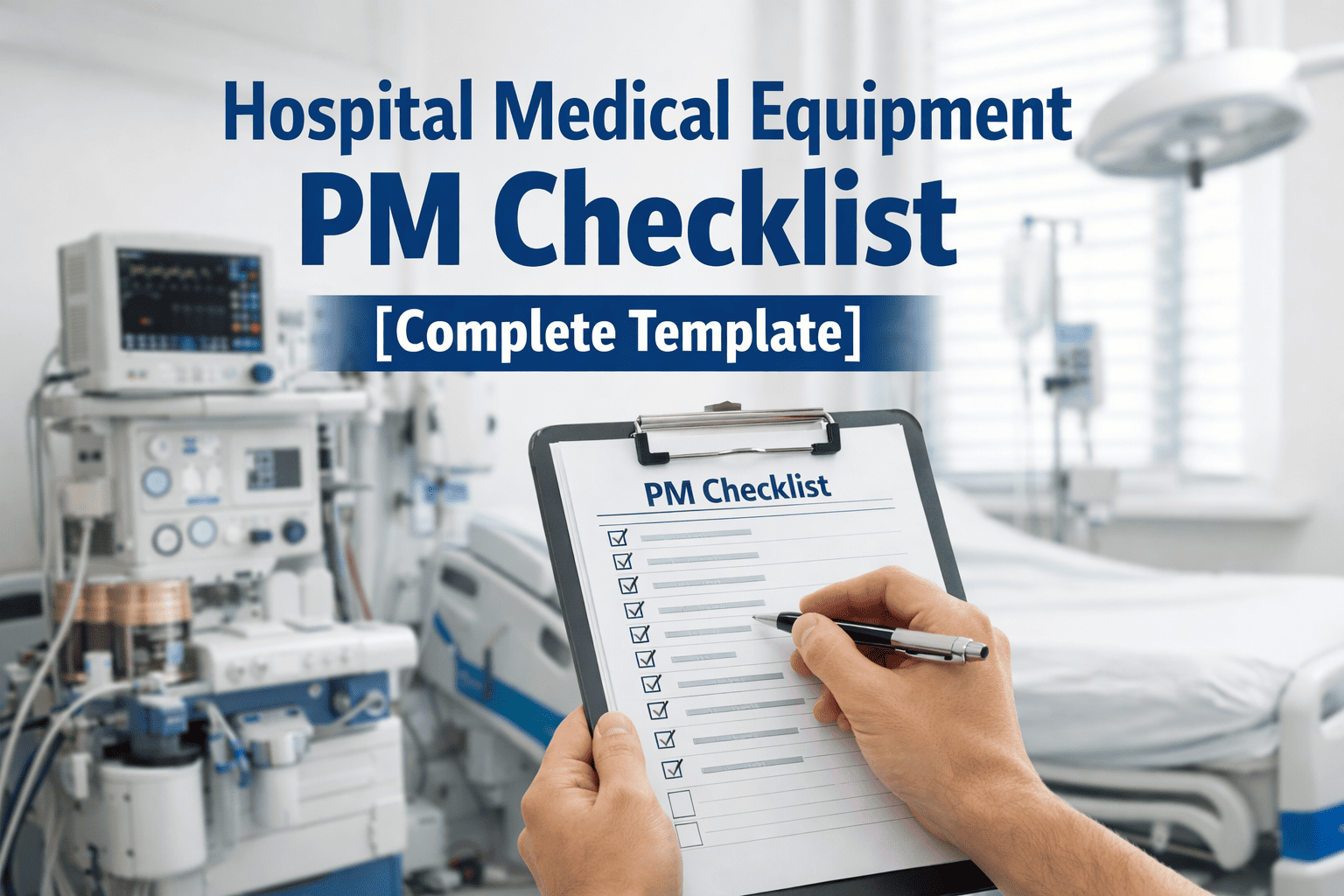
A hospital biomedical engineering team that cannot produce a signed PM checklist, calibration record, or corrective maintenance log within minutes of an accreditation surveyor's request is already in a compliance exposure position — before a single device failure is discussed. The Joint Commission and DNV GL cite equipment management documentation gaps as the most common reason facilities enter Immediate Threat to Life review during survey. Oxmaint eliminates that exposure by digitizing every PM checklist, inspection record, and corrective work order against the asset — retrievable in under two minutes, not two days. Book a demo to see how Oxmaint structures medical equipment PM documentation for your biomedical engineering program.
A complete hospital medical equipment PM program requires device-specific checklists for four primary equipment categories: diagnostic imaging (CT, MRI, X-ray, ultrasound), critical care and respiratory (ventilators, infusion pumps, patient monitors), surgical and electrosurgical equipment, and biomedical support systems (sterilizers, defibrillators, patient lifts). Oxmaint digitizes every checklist, routes PM work orders by equipment class and risk tier, and archives completed records against the device serial number — producing accreditation-ready documentation automatically at every inspection cycle.
The Four Medical Equipment Categories Driving the Highest PM Documentation Risk
Each category carries a distinct regulatory obligation, failure consequence, and documentation standard. Book a demo to see Oxmaint's PM checklist library configured for your device inventory.
CT scanners, MRI systems, digital X-ray, fluoroscopy, and ultrasound units require documented PM at intervals defined by manufacturer specification and ACR technical standards. Missed PM cycles create both accreditation exposure and radiation safety liability. Oxmaint schedules PM work orders by device, routes to the credentialed biomed technician, and captures every inspection point — output parameters, safety interlocks, and image quality verification — against the equipment serial record.
Ventilators, infusion pumps, patient monitors, pulse oximeters, and defibrillators are life-safety devices under CMS Conditions of Participation. PM documentation must demonstrate that calibration, alarm verification, and battery performance were tested at required intervals per the facility's Medical Equipment Management Plan. Oxmaint generates device-specific PM work orders with checklist fields mapped to manufacturer service requirements — preventing generic checklists from being applied to life-critical equipment.
Electrosurgical units, surgical lasers, powered surgical instruments, and OR-grade patient monitoring systems carry NFPA 99 Chapter 10 documentation requirements for each PM cycle. Leakage current testing, ground continuity verification, and output power calibration must be documented per device, per inspection date. Oxmaint's surgical equipment PM module includes AAMI TIR12-aligned electrical safety test fields and routes completed records to the biomedical equipment manager for supervisor sign-off before the device returns to service.
Steam sterilizers, washer-disinfectors, patient lifts, and powered stretchers each carry distinct PM documentation obligations — sterilization equipment under AAMI ST79 biological indicator and cycle log requirements, patient handling equipment under ANSI/AAMI ES60601-1 electrical safety standards. Oxmaint maintains separate PM checklist templates per equipment class, schedules biological indicator tests within the sterilizer PM workflow, and flags failed test results for immediate corrective action routing.
200+ PM Checklists. Every Device Category. Accreditation-Ready at Every Survey.
Oxmaint's biomedical PM library covers imaging, critical care, surgical, and sterilization equipment — with device-specific checklist fields, calibration records, and corrective action routing built in. Book a demo to see the full checklist library for your device inventory.
Oxmaint Biomedical PM Implementation — Deployment Roadmap
A structured deployment transitions your biomed team from paper-based PM records to a fully auditable digital equipment management program without disrupting active clinical operations.
Complete medical equipment inventory imported into Oxmaint's asset registry — device type, manufacturer, model, serial number, location, and risk tier (life-critical, non-life-critical, general). PM interval and checklist type assigned per device class. Joint Commission and CMS equipment management plan categories mapped to Oxmaint asset classifications for accreditation alignment.
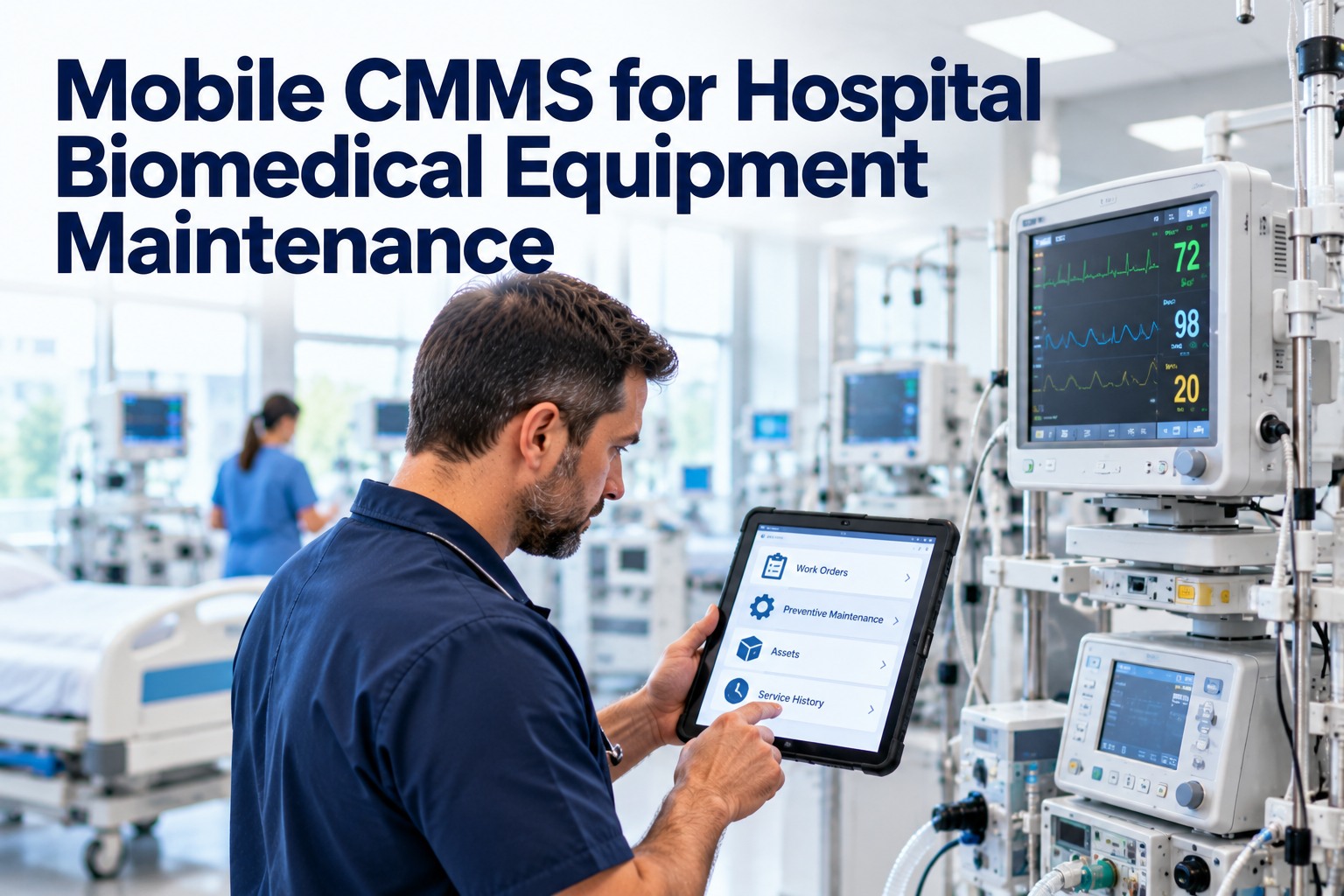
Device-specific PM checklists configured in Oxmaint from manufacturer service manuals and existing biomed procedures. Electrical safety test fields, calibration verification steps, and functional performance checkpoints mapped per equipment class. Biomed technicians access PM work orders on mobile — completing inspections at the device, not transcribed afterward. Book a demo to see PM checklist configuration for your top-priority device categories.
Oxmaint equipment compliance dashboard activated — PM completion rates by device category, overdue inspection alerts, corrective work order status, and equipment out-of-service tracking. Biomedical director and VP of Facilities views configured with role-appropriate scope. Automated alerts for devices approaching PM due date at 14-day and 7-day intervals. Joint Commission EC.02.04.01 evidence package exportable in under 90 minutes before any survey.
PM Compliance Benchmarks — Hospital Biomedical Programs
Operational Results — Hospitals Using Oxmaint Biomedical PM
Outcomes from hospital biomedical programs where Oxmaint replaced paper-based PM systems within the first year of deployment.
From 68% to 97% PM Completion — in 90 Days
Hospitals that move from paper PM logs to Oxmaint's digital biomedical program close the accreditation documentation gap before the next TJC survey — not during it. Book a demo to see the PM compliance gap identified across your device inventory in the first session.
Oxmaint Biomedical Platform Features
200+ equipment-specific PM templates — imaging, critical care, surgical, sterilization — each with manufacturer-aligned inspection fields, calibration verification steps, and electrical safety test records built in.
Life-critical devices scheduled at tighter intervals with mandatory supervisor sign-off gates. Non-life-critical and general equipment managed at facility-defined intervals — all tracked against the same compliance dashboard.
Failed PM inspection items trigger automatic corrective work orders — routed to the responsible biomed technician, tracked to closure, with parts request integration and escalation alerts at configurable deadlines.
Complete EC.02.04.01 evidence packages — PM records, corrective histories, out-of-service logs, and equipment management plan compliance data — exportable in under 90 minutes for any survey or CMS inspection.
FDA MAUDE and manufacturer safety alert tracking integrated with device serial records — open recalls flagged on the equipment asset, corrective actions routed automatically, and recall closure documented for regulatory evidence.
Single Oxmaint instance managing equipment across multiple hospital buildings, off-campus clinics, and ambulatory care sites — with campus-level PM compliance dashboards and centralized biomed director oversight.
Oxmaint vs Competing CMMS — Biomedical Equipment Management
| Capability | Oxmaint | MaintainX | UpKeep | Fiix | Limble | IBM Maximo | Hippo | Infor EAM |
|---|---|---|---|---|---|---|---|---|
| Device-specific biomed PM checklists | Yes | Generic | No | No | No | Custom | No | Custom |
| TJC EC.02.04.01 audit export | Yes | Partial | Partial | Partial | Partial | Yes | Partial | Yes |
| Life-critical device PM gating | Yes | No | No | No | No | Custom | No | Custom |
| FDA recall and safety alert tracking | Yes | No | No | No | No | Custom | No | Partial |
| Multi-campus device dashboard | Yes | Yes | Partial | Partial | Partial | Yes | Partial | Yes |
| Deployment in weeks without IT project | Yes | Yes | Yes | Varies | Yes | No | Yes | No |
Frequently Asked Questions
Close the Accreditation Documentation Gap Before the Next TJC Survey
Device-specific PM checklists, life-critical service gating, corrective work order routing, and TJC audit export — all live in Oxmaint within 4 to 6 weeks, no IT project required. Book a demo with your biomedical director and see the full PM checklist library configured for your device inventory.


.jpg)

