In a hospital, a failed air handler can pause surgeries, a tripped chiller can threaten sterile storage, and a dead generator test can put patients at risk. Yet many facility teams still learn about equipment trouble the hard way: when it stops. Predictive maintenance flips that. By watching the signals equipment gives off before it fails, AI helps hospital teams fix problems on their own schedule, not during a code or a procedure. This guide explains how it works, where it pays off first, and how OXMAINT AI, the AI-powered CMMS, turns early warnings into scheduled work orders and a clear asset record.
Healthcare Maintenance · Predictive Maintenance · AI Insights · Equipment Uptime · Asset Reliability
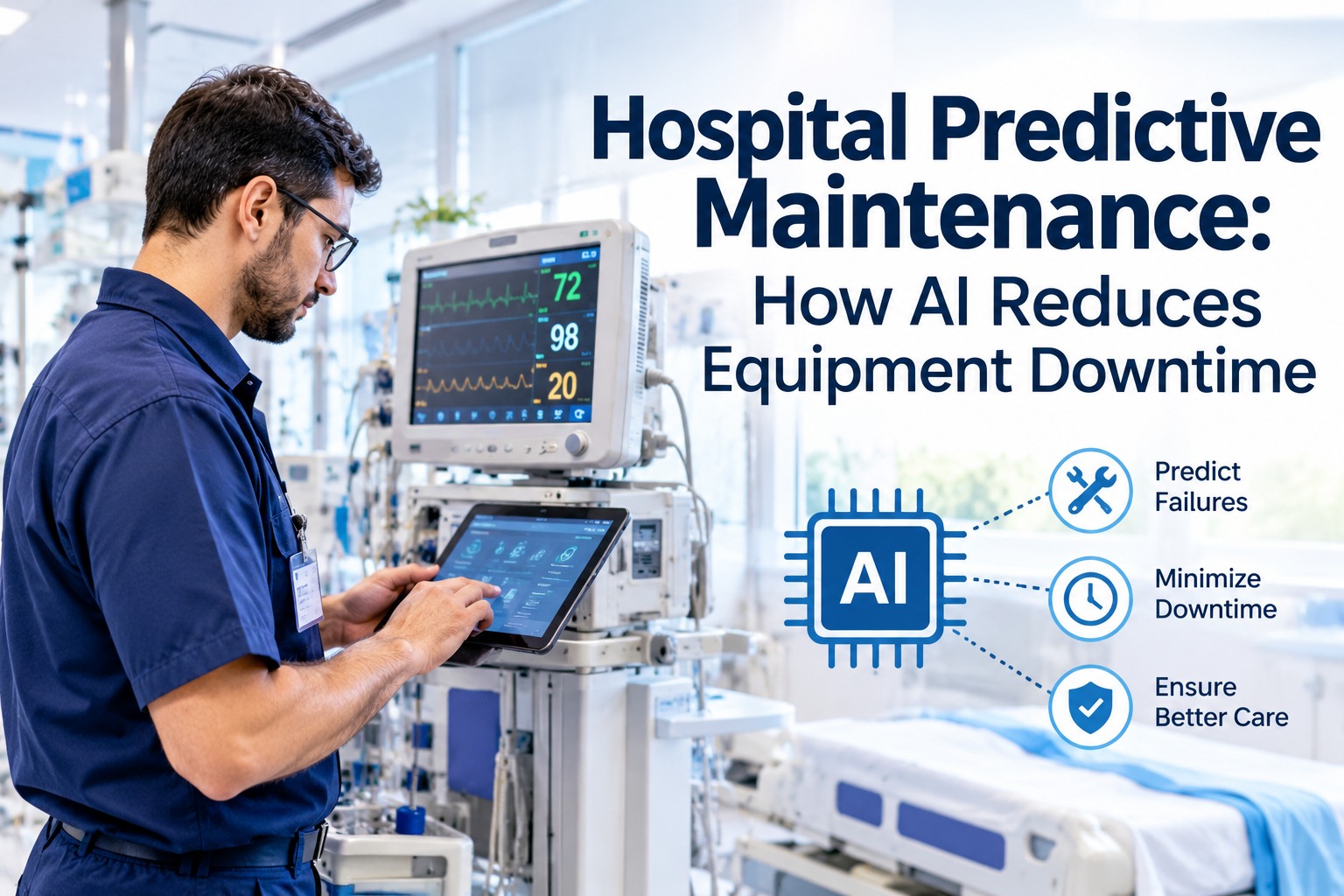
Hospital Predictive Maintenance: How AI Reduces Equipment Downtime
Hospitals cannot afford surprise failures. OXMAINT AI, the AI-powered CMMS and maintenance management software, helps teams spot warning signs early, schedule the fix before equipment fails, and keep a complete service record for every asset.
From signal to fix
1
Sensevibration, heat, current, pressure
↓
2
PredictAI flags unusual patterns
↓
3
Actwork order created and assigned
Fewer Surprises
catch faults while there is still time to plan the repair
Smarter Schedules
service based on condition, not just the calendar
Patient-Ready
protect ORs, ICUs, labs and sterile areas from outages
Audit-Ready
a timestamped history for every asset and task
The Maintenance Maturity Staircase
Most hospitals sit somewhere between reactive and preventive. Predictive maintenance is the next step up, and you do not need to leave the lower steps behind to reach it. It builds on them. Book a demo to see where your team stands.
REACTIVE
Fix it when it breaks
Highest disruption. Emergency repairs and rush parts.
PREVENTIVE
Service on a schedule
Fewer failures, but some tasks are done too early or too late.
PREDICTIVE
Act on real condition
AI spots the trend, so you fix the right asset at the right time.
Where Hospitals Feel Downtime Most
Not every asset needs predictive monitoring. Start with equipment where failure disrupts care, safety or compliance, and where early warning signs actually exist. Start free and flag your critical hospital assets.
AIR & PRESSURE
AHUs, chillers & exhaust
Keep ORs, isolation rooms and pharmacies at the right temperature and pressure.
Watch: vibration, motor amps, delta-T
POWER
Generators & UPS
Backup power has to start the moment it is needed.
Watch: battery health, run tests, temperatures
STERILE & LAB
Autoclaves, pumps & cold storage
Downtime delays procedures and puts supplies and samples at risk.
Watch: cycle data, pressures, temperature drift
BUILDING
Elevators, boilers & water systems
Patient flow and basic services depend on them every hour.
Watch: fault logs, runtime, water temperature
What AI Actually Watches
Equipment rarely fails without warning. It gets hotter, louder, draws more current or runs longer than before. AI looks for those small changes across many assets at once, far faster than a technician with a clipboard can. Book a demo to see how readings become alerts.
≈
Vibration
Bearing wear and misalignment
▲
Temperature
Overheating motors and fouled coils
⚡
Current draw
Motors working harder than normal
◉
Pressure
Leaks, blockages and filter loading
◷
Runtime & cycles
Wear that builds with use
✎
Work history
Repeat faults on the same asset
An Alert Nobody Acts On Is Just Noise.
Prediction only reduces downtime when the warning becomes a task, with an owner, a due date and parts on the shelf. OXMAINT AI connects insight to the work order, so early signs lead to real repairs.
A Failure Prevented: The 14-Day Story
Here is what predictive maintenance can look like on an air handler serving an operating room. This is an illustrative scenario, not a customer result. Start free and build your first alert workflow.
DAY 1
Motor current creeps up
Readings stay within limits but trend upward compared with the unit's own baseline.
DAY 4
AI flags the pattern
Vibration and current together point to likely bearing wear. A work order is raised.
DAY 8
Parts and window planned
The technician confirms the issue, orders the bearing and schedules a low-impact slot.
DAY 14
Fixed before it failed
Repair is done off-peak, the OR never loses airflow and the history is logged on the asset.
Your Path to Predictive: 4 Practical Steps
You do not need to monitor everything on day one. Start small, prove it works, then expand. Book a demo for a starter roadmap.
1
Build the asset register
Capture every critical unit with location, specs and service history.
2
Lock in solid PMs
Clean preventive data is the foundation predictions depend on.
3
Add condition readings
Start with inspection readings or sensors on a few critical assets.
4
Act on insights, then scale
Turn alerts into work orders, review results, expand to more assets.
How OXMAINT AI Supports Hospital Teams
One platform covers the full chain: know the asset, watch its condition, act on the warning, and prove the work. Start free and load your hospital equipment list.
◉
Asset Management
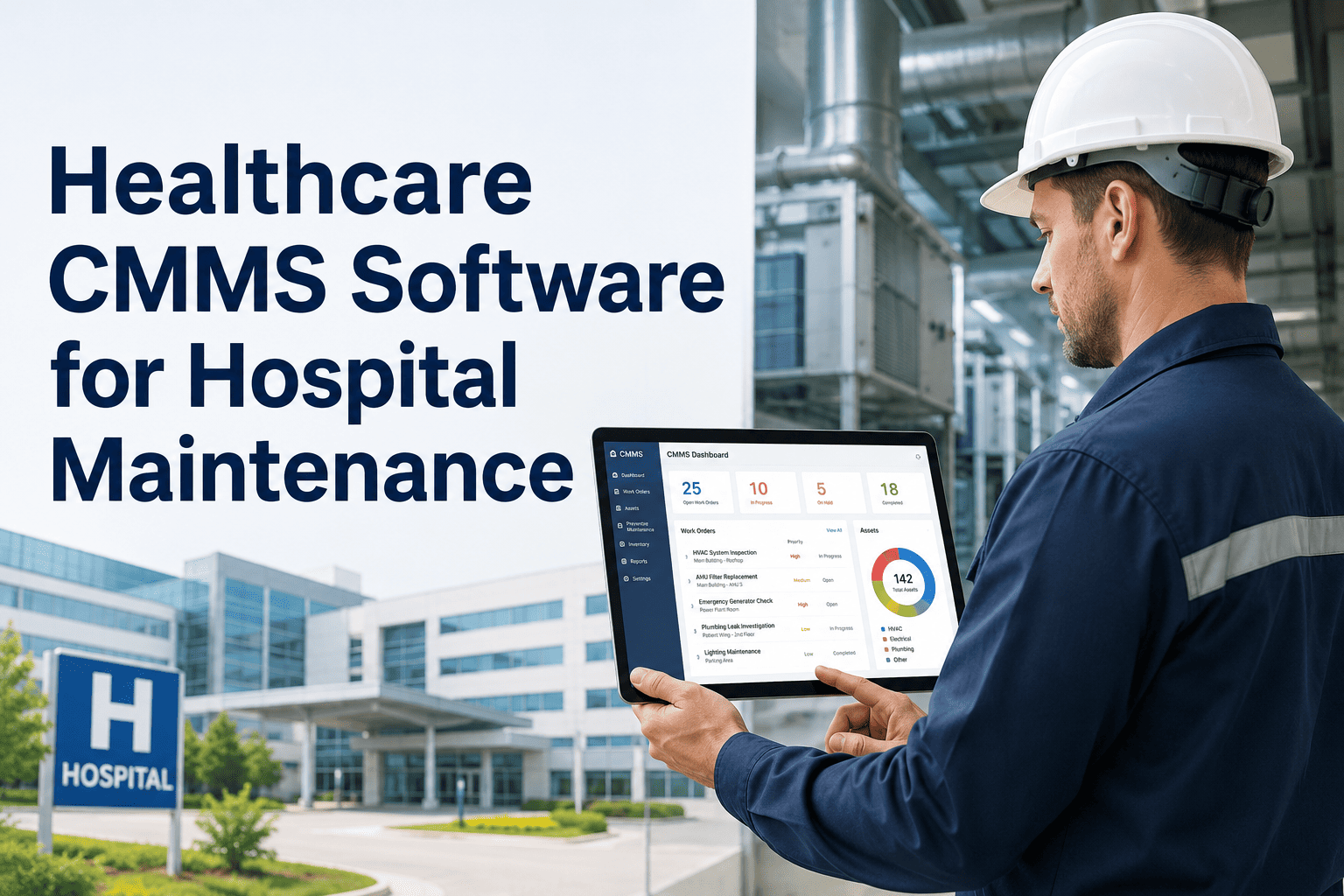
A single register for HVAC, power, plumbing and building equipment, with warranty tracking.
◉
AI Insights
Surface repeat failures, overdue critical tasks and unusual trends early.
◉
Preventive Scheduling
Automated PMs with reminders keep the baseline strong.
◉
Mobile Work Orders
Technicians log readings, photos and notes from the floor.
◉
Parts & Inventory
Know what is on the shelf before a repair is scheduled.
◉
Records & Reports
Timestamped history supports inspections, audits and survey readiness.
“
We used to find out about equipment problems when a department called us. Now we see the pattern first, the work order is already waiting, and repairs happen in a planned window. Our team spends less time firefighting and more time preventing.
Director of Facilities · Regional Hospital
Frequently Asked Questions
What is predictive maintenance in a hospital?
It is a maintenance approach that uses condition data, such as vibration, temperature and current, to forecast when equipment is likely to fail, so repairs happen before a breakdown.
Do we need sensors on every asset?
No. Start with the most critical equipment. Even regular inspection readings logged in a CMMS give you trend data to work with.
Start free in OXMAINT AI.
Is predictive better than preventive maintenance?
They work together. Preventive maintenance covers predictable wear, while predictive maintenance targets failures that show warning signs. Most hospitals use both.
Does this cover clinical equipment or facility equipment?
The principles apply to both, but this guide focuses on facility and building systems. Clinical and biomedical devices often have specific manufacturer and regulatory requirements, so confirm those separately.
How does healthcare CMMS software reduce downtime?
It schedules preventive tasks, tracks work orders and parts, records asset history and turns early warnings into planned repairs.
Book a demo to see it live.
Fix It Before the Department Calls You.
Know your critical assets, watch their condition, act on early warnings and keep a record that stands up to any audit. Start predictive maintenance with OXMAINT AI and give your hospital the uptime patients depend on.