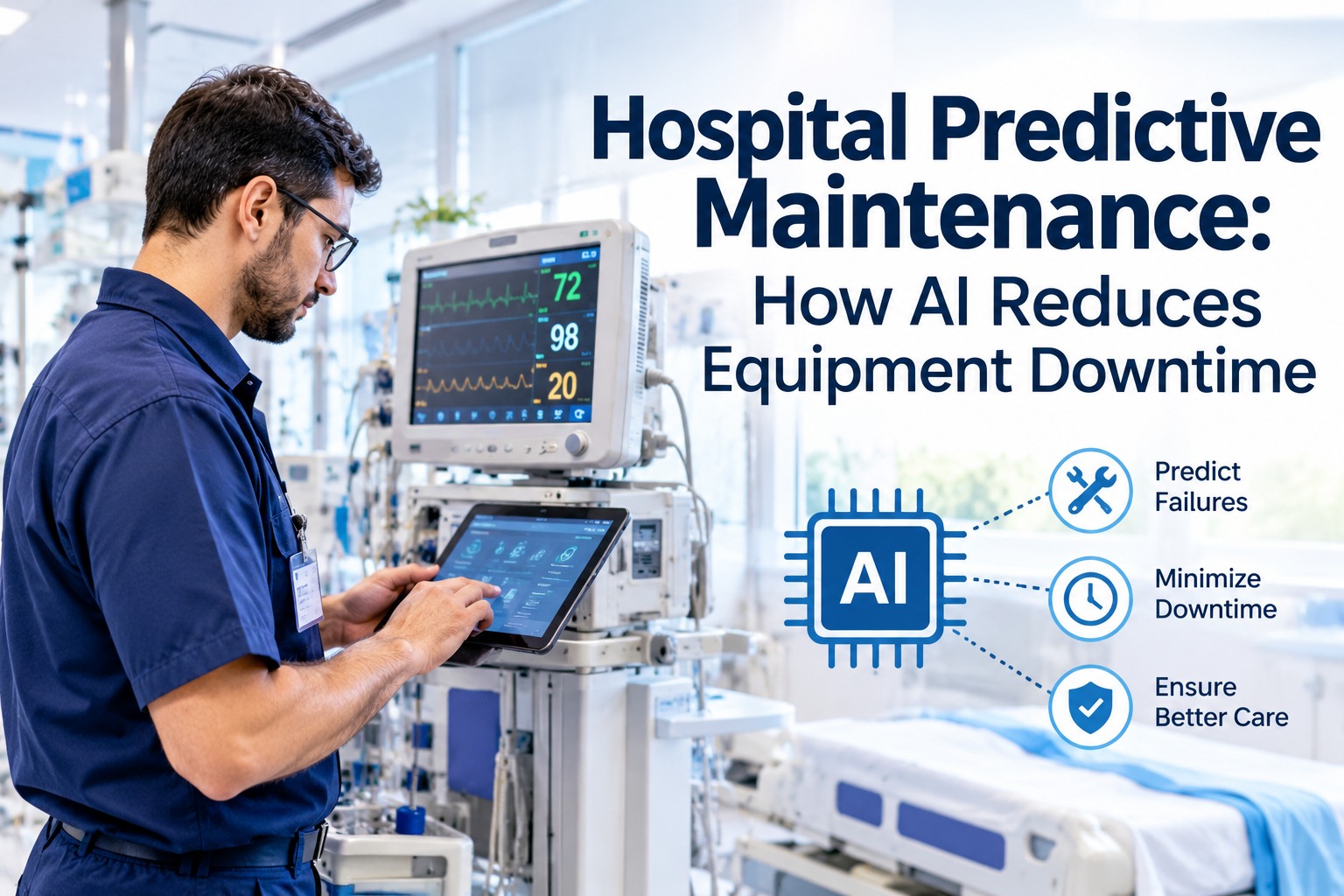
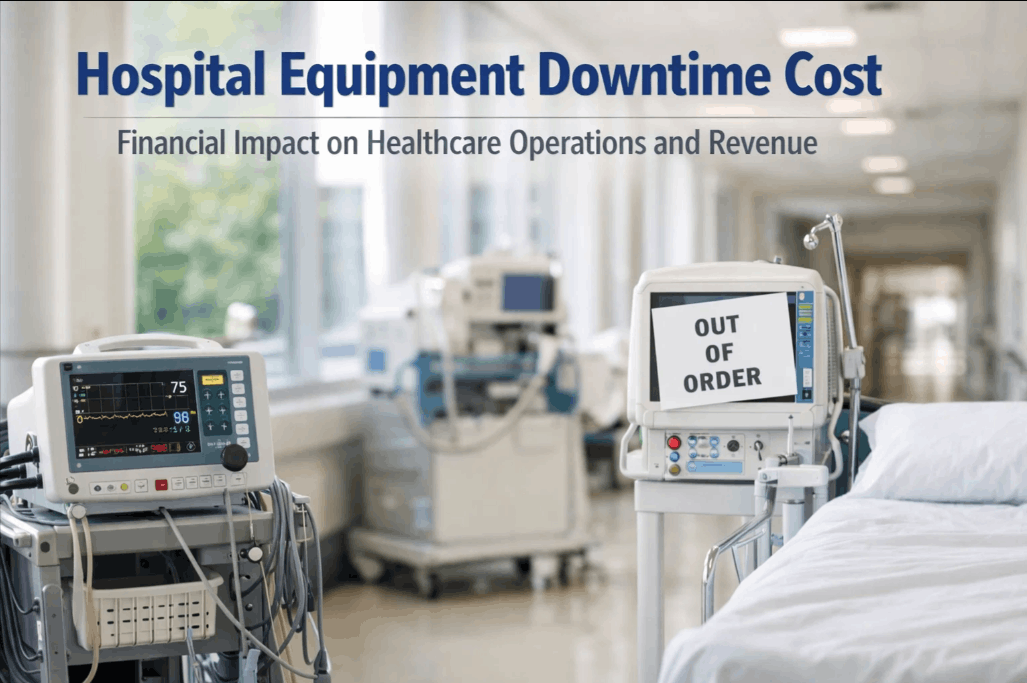
A hospital that loses an MRI scanner for 48 unplanned hours loses approximately $180,000 in revenue — before factoring in rescheduled procedures, diverted patients, and the clinical consequences of delayed diagnoses. Predictive maintenance closes that gap by shifting from reactive repair to sensor-driven intervention, typically reducing critical medical equipment downtime by 50 to 60 percent within the first year. The gap between that outcome and what most hospitals achieve today is not technology — it is documentation, scheduling discipline, and connected field execution. That is exactly what Oxmaint delivers. Book a demo to see how Oxmaint deploys predictive maintenance across your hospital's MRI, CT, HVAC, and ventilator assets.
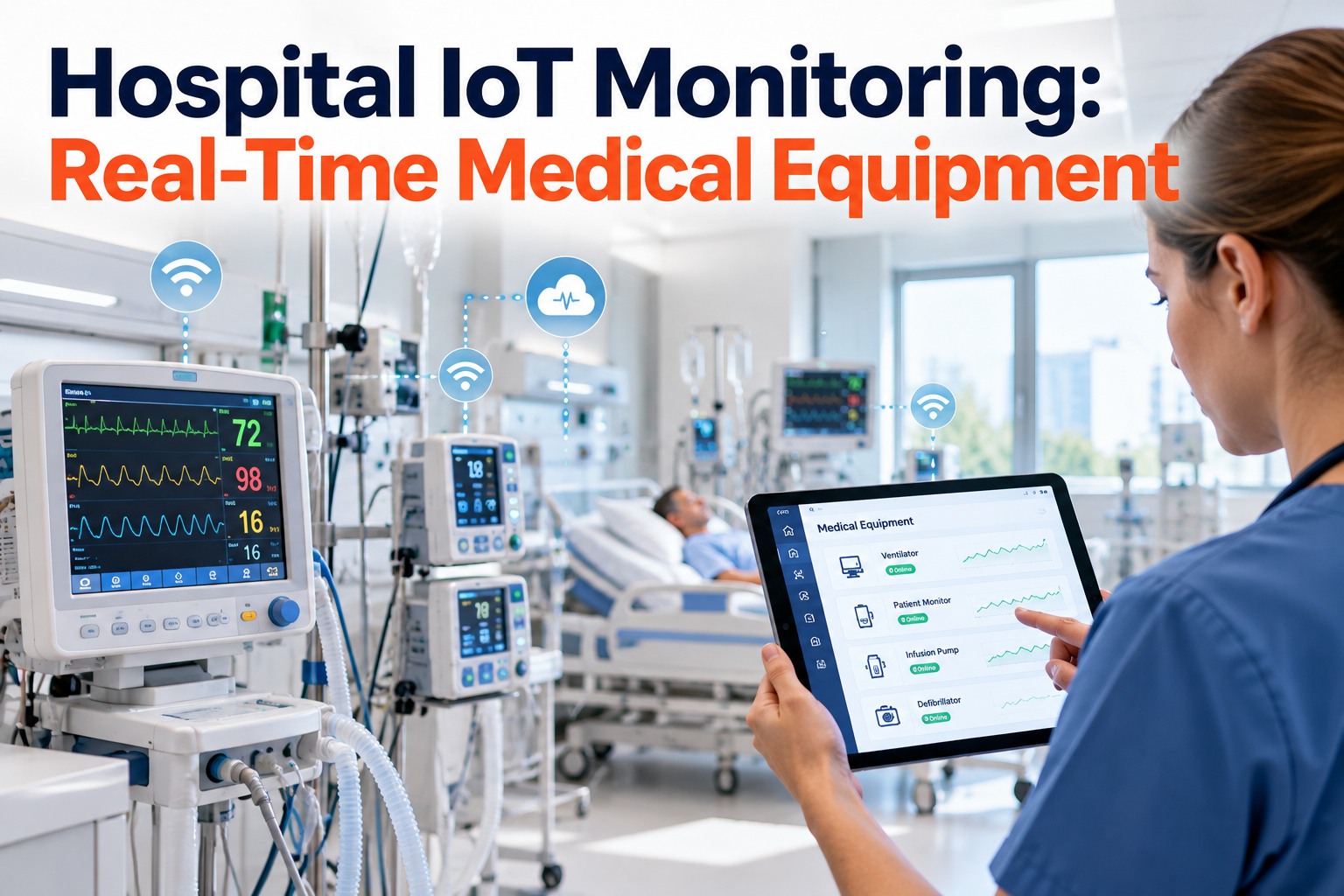
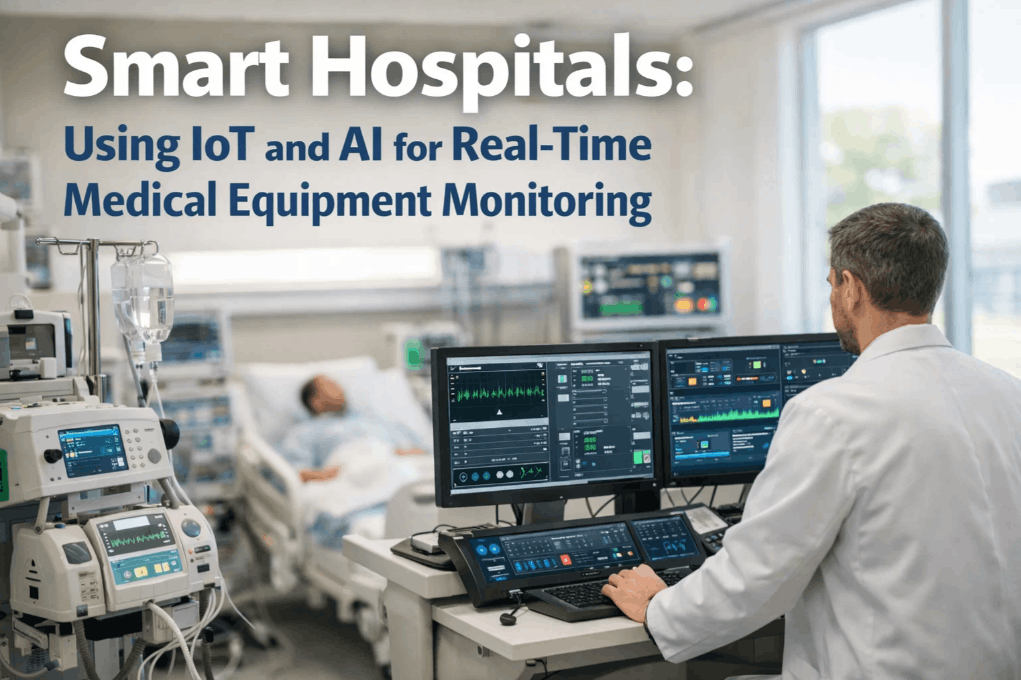
Hospital predictive maintenance combines IoT sensor data, AI-driven failure prediction, and mobile-first work order execution to monitor MRI, CT, ventilators, chillers, and HVAC systems continuously — intervening before failure rather than after. Oxmaint connects sensor alerts to technician dispatch, captures every maintenance action in an auditable record, and produces TJC/DNV-ready documentation automatically. No IT project. Operational in 4 to 6 weeks.
High-Consequence Equipment Categories for Hospital PdM
Four asset categories account for over 80 percent of unplanned downtime financial exposure in acute care hospitals. Each carries distinct failure modes, monitoring parameters, and regulatory documentation requirements. Book a demo to see how Oxmaint structures PdM programs for each.
MRI helium boil-off rates, cryostat pressure, gradient coil temperatures, and RF shielding integrity are all predictive indicators that precede costly magnet quench events. CT tube utilization tracking and detector calibration drift signal tube end-of-life weeks before failure. Oxmaint ingests sensor streams from both modalities, flags anomalies against baseline thresholds, and dispatches clinical engineering work orders before imaging throughput is affected.
Ventilator compressor pressure decay, valve cycle counts, and flow sensor calibration drift are measurable precursors to ICU equipment failure. Infusion pump alarm history and motor current draw patterns predict actuator degradation. Oxmaint tracks device-level utilization hours, triggers PM work orders at manufacturer-specified intervals, and logs every inspection with technician identity — producing the biomedical equipment maintenance records required by CMS Conditions of Participation.
Operating room positive-pressure differentials, isolation room negative-pressure integrity, and sterile processing area humidity are life-safety parameters tied directly to HVAC performance. Chiller COP trending, compressor vibration signatures, and cooling tower biological monitoring are all PdM indicators that prevent both clinical risk events and unplanned capital replacement. Oxmaint manages the full sensor-to-work-order workflow, including ASHRAE 170 ventilation verification records.
Emergency generator load bank test results, automatic transfer switch contact wear, and UPS battery state-of-health are NFPA 110 documentation requirements — and leading indicators of life-safety system failures. Oxmaint schedules monthly and annual generator tests per NFPA 110 Chapter 8, captures test results with timestamp and technician sign-off, and flags trending battery voltage degradation before UPS runtime falls below design minimums.
Sensor Data to Work Order to Audit Record — Without Manual Intervention
Oxmaint connects IoT sensor alerts directly to clinical engineering dispatch — with every maintenance action captured in TJC and CMS-ready documentation automatically. Book a demo to see the sensor-to-work-order workflow for your imaging and critical care equipment.
Deployment Roadmap — Hospital PdM Implementation
Oxmaint deploys hospital predictive maintenance in a structured four-phase program that delivers measurable downtime reduction without disrupting active clinical operations or requiring dedicated IT resources.
Every clinical and facility asset registered in Oxmaint with criticality tier (life-safety, revenue-generating, operational support), regulatory code reference, and IoT sensor assignment. Existing equipment inventories from HTM and facilities management imported directly. Failure mode library configured per asset class using manufacturer service data.
IoT sensors connected to Oxmaint API — vibration, temperature, pressure, current draw, and runtime counters feeding real-time condition dashboards. Alert thresholds configured against manufacturer specifications and ASHRAE/NFPA baselines. Mobile work order dispatch activated for clinical engineering technicians. Book a demo to see the sensor integration workflow for MRI and chiller monitoring.
TJC EC chapter maintenance records, CMS CoP biomedical equipment documentation, and NFPA 110 generator test logs all configured as automated exports from Oxmaint maintenance records. Facilities manager and VP Engineering dashboards activated showing equipment uptime, PM compliance rates, and overdue inspection alerts by department.
Oxmaint AI analyzes 90-day sensor baselines to refine failure prediction models per asset — reducing false-positive dispatches while extending early-warning lead time before actual failure events. Monthly reporting to VP Engineering and CFO on downtime reduction, avoided emergency repair costs, and PM compliance rates against accreditation benchmarks.
Hospital PdM Performance Benchmarks
Client Outcomes — Hospitals Using Oxmaint PdM
Outcomes from acute care hospital deployments where Oxmaint replaced calendar-based PM programs with sensor-driven predictive maintenance in the first operational year.
From 61% to 97% PM Compliance — in 90 Days
Hospitals that replace calendar-based PM with Oxmaint's sensor-driven predictive maintenance close TJC documentation gaps and eliminate the reactive repair cycle that consumes 30 to 40 percent of clinical engineering budgets. Book a demo to see your current PM compliance gap quantified in the first deployment session.
Oxmaint vs Competing CMMS — Hospital PdM Capabilities
| Capability | Oxmaint | MaintainX | UpKeep | Fiix | Limble | IBM Maximo | Infor EAM |
|---|---|---|---|---|---|---|---|
| IoT sensor-to-work-order automation | Yes | Partial | Partial | Partial | Partial | Yes | Yes |
| TJC EC chapter documentation export | Yes | No | No | Partial | No | Custom | Custom |
| Biomedical equipment PM scheduling | Yes | Generic | Generic | Generic | Generic | Yes | Yes |
| NFPA 110 generator test log management | Yes | No | No | No | No | Custom | Custom |
| ASHRAE 170 HVAC verification records | Yes | No | No | No | No | Custom | Custom |
| Deployment in weeks without IT project | Yes | Yes | Yes | Varies | Yes | No | No |
| AI failure prediction with sensor baseline | Yes | No | No | Partial | No | Yes | Yes |
Frequently Asked Questions
Reduce Hospital Equipment Downtime by 50–60% — Without an IT Project
IoT sensor monitoring, AI failure prediction, and TJC-ready documentation — all operational within 4 to 6 weeks across your MRI, CT, ventilator, HVAC, and power infrastructure assets. Book a demo with your VP of Engineering and see the full PdM workflow configured for your hospital's asset portfolio.