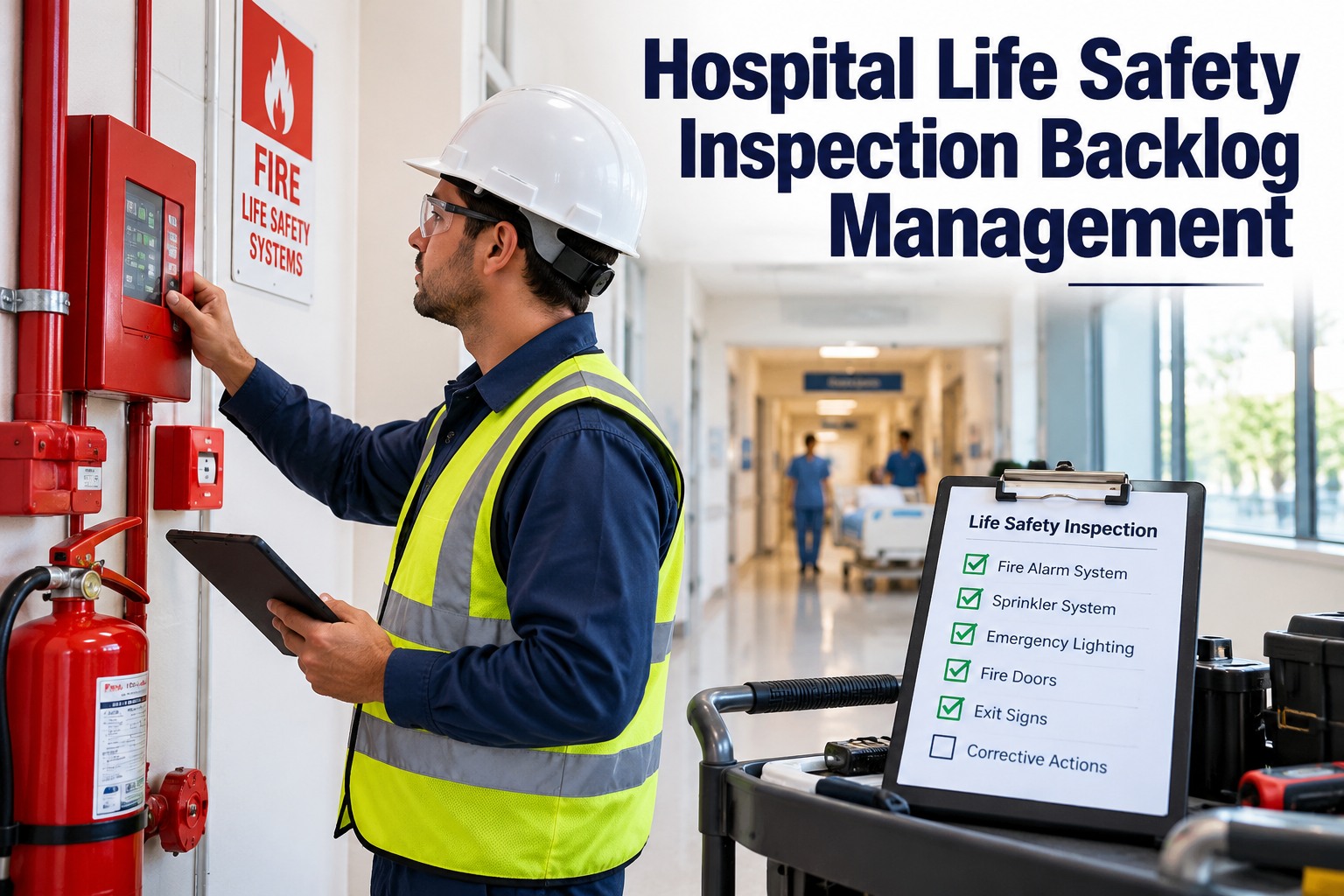
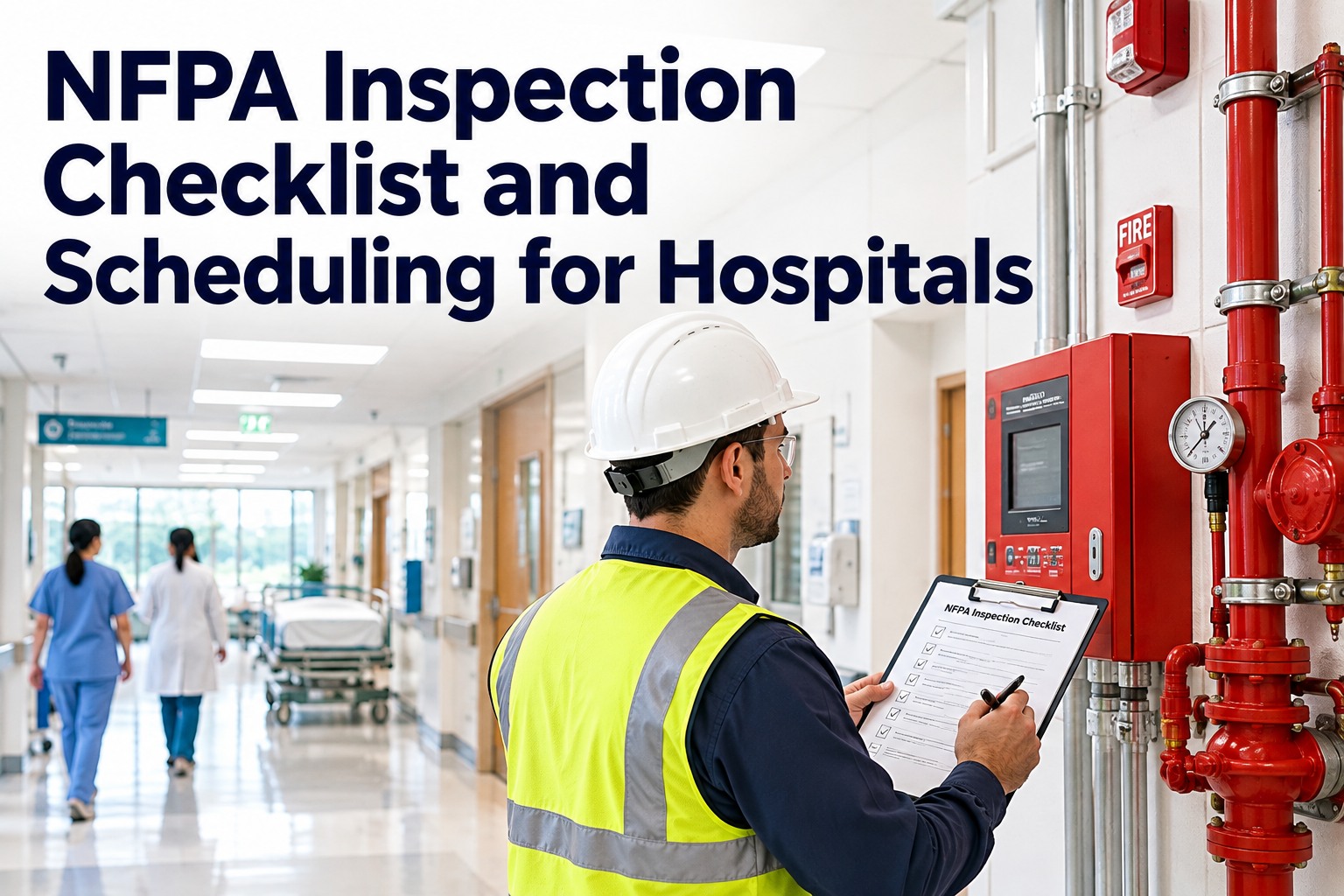
A roof membrane failure above an operating room costs more than the repair. It costs OR downtime at $30,000 to $80,000 per day, remediation at $200,000 to $500,000, and a Joint Commission Environment of Care citation that follows your facility through the next survey cycle. The root cause is rarely the roof itself — it is the absence of a documented inspection program that could have caught the failure six months earlier. That is the gap Oxmaint closes. Book a 30-minute demo to see how hospital systems use Oxmaint to protect critical care infrastructure and pass Joint Commission surveys without manual record assembly.
Hospital building envelope failures — roof membrane breaches, facade water infiltration, drainage failures, and flashing failures at roof penetrations — are predictable and preventable with a documented inspection program. The regulatory and financial risk falls on facility leadership when that program exists on paper but not in an auditable record. Oxmaint digitizes roof inspection schedules, waterproofing PM records, leak response corrective actions, and Joint Commission EC documentation — connecting field execution to auditable evidence automatically.
Where Hospital Building Envelope Risk Concentrates
Four infrastructure categories carry disproportionate regulatory and financial exposure for hospital facility leadership. Each has a documented inspection obligation. Each fails in the same way — execution without a retrievable record.
Operating suites, ICUs, sterile processing, and pharmacy clean rooms sit beneath roof sections where a membrane failure triggers immediate sterility compromise. Annual documented inspections per zone are a Joint Commission expectation. Without a retrievable record, the inspection did not happen in the eyes of a surveyor.
Sealant failure, panel displacement, and cladding cracks create water infiltration pathways directly into patient care areas. AAMA 501 recommends full facade inspection every five years for occupied healthcare buildings. Most hospital systems cannot produce these records on demand when a surveyor asks.
HVAC units, cooling towers, generator exhaust stacks, and medical gas vent terminations each create a penetration point requiring documented flashing condition records. Every equipment PM visit on a rooftop asset is a documentation opportunity — and a citation risk when it is missed. Flashing failures are the most common source of hospital water infiltration.
Blocked drains impose structural load beyond design capacity and accelerate membrane degradation. Interior leak response — from initial report through root cause identification and permanent repair — must be a documented corrective action chain. A disconnected work order with no root cause linkage is a Joint Commission finding waiting to happen.
The Documentation Gap Is the Risk. Oxmaint Closes It.
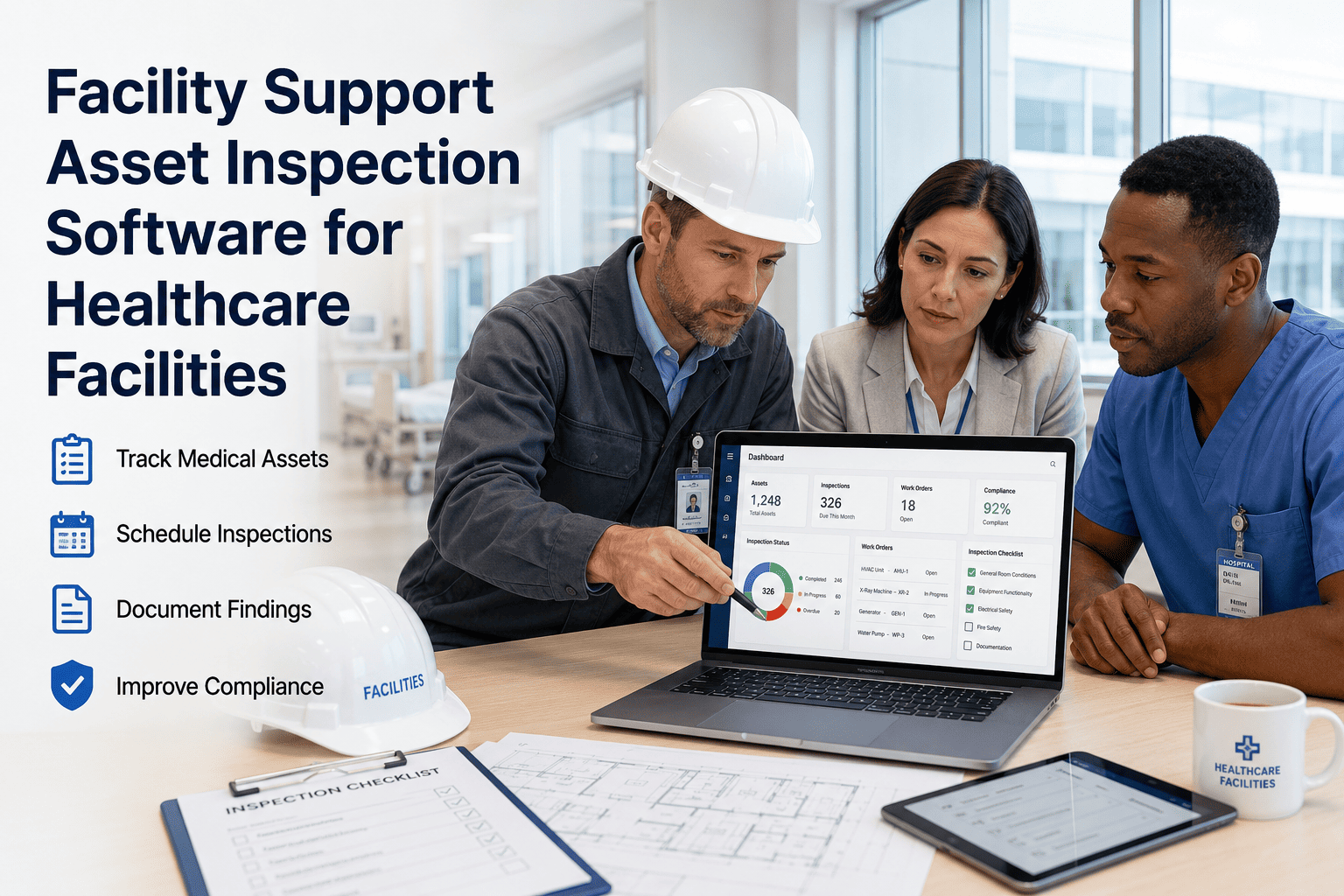
Roof inspections completed in the field on mobile. Deficiency records with photo evidence archived automatically. Corrective actions tracked to closure with escalation alerts. Joint Commission EC package assembled in 2 hours. Book a demo to see the building envelope inspection workflow for your hospital campus.
What Oxmaint Delivers for Hospital Facility Leadership
Inspection work orders assigned per roof zone, completed on mobile with photo capture. Records auto-archived against the building asset — retrievable in under 10 minutes for any surveyor or audit request.
Every interior leak linked from notification through root cause to permanent repair closure — the complete documented chain Joint Commission surveyors require, produced automatically without manual assembly.
Automated escalation at 14-day and 3-day intervals before inspection due dates — facility leadership sees compliance gaps before the Joint Commission surveyor does, not after.
Complete EC.02.06.01 building envelope documentation package in under 2 hours — versus 4 weeks of manual record gathering across departments before each survey.
Contractor induction status, height work certifications, and ICRA acknowledgments verified in real time before hospital site access is granted — critical during roof replacement and facade projects.
System-level dashboard showing inspection currency, outstanding corrective actions, and deficiency status across every campus — a single view of portfolio risk for VP Facilities and COO without chasing site-level reports.
Documented Outcomes at Hospitals Using Oxmaint
The Business Case for Facility Leadership
| Cost Category | Without Oxmaint | With Oxmaint |
|---|---|---|
| Joint Commission survey preparation | 4 weeks of internal labor — $50K–$90K per survey cycle | 2-hour automated export — labor cost near zero |
| Undetected membrane failure above OR suite | $200K–$500K remediation + OR shutdown + citation exposure | Identified at inspection — corrective work at $5K–$20K |
| Inspection record retrieval for surveyor | 3–5 days searching physical files — citation risk if not found | Under 10 minutes from Oxmaint search by zone or date |
| Corrective action closure tracking | Average 52 days — manual follow-up across departments | Average 15 days — automated escalation at day 20 |
| Annual Oxmaint program cost | — | $28K–$48K per year — recovered on the first incident prevented |
Frequently Asked Questions
Close the Inspection Gap Before the Next Survey
Hospital systems that move from paper logs to Oxmaint produce Joint Commission documentation in 2 hours, achieve 97% inspection compliance within 90 days, and eliminate the remediation costs that follow undetected roof failures. Deployment takes 4 to 6 weeks. No IT project required. Book a 30-minute demo with your facilities director and see the complete workflow configured for your hospital campus.