In healthcare facilities, HVAC systems are far more than comfort machines. They are critical life-support infrastructure. Operating rooms demand precise temperature and humidity control. Isolation wards rely on negative pressure differentials to prevent airborne pathogen transmission. Pharmaceutical storage areas require unwavering climate stability. When an HVAC system fails in a hospital, it does not simply cause discomfort — it puts patients at direct risk. Yet, despite this critical importance, the majority of healthcare facilities in the United States still depend on reactive or calendar-based maintenance strategies that leave them vulnerable to unexpected failures and costly emergency repairs.
The emergence of AI-powered predictive maintenance is fundamentally changing this equation. By combining IoT sensor networks with machine learning algorithms, healthcare facility managers can now detect subtle HVAC anomalies weeks before they escalate into dangerous failures. This is not futuristic speculation — it is happening right now in hospitals across America, and the results are remarkable. Facilities implementing AI-driven HVAC inspection have documented up to 40% reduction in system failures and 15% reduction in HVAC-related operational costs. If your healthcare facility is still relying on outdated maintenance approaches, the time to modernize is now. Sign up for OxMaint and bring intelligent HVAC monitoring to your facility today.
Why Healthcare HVAC Demands a Smarter Approach
Healthcare facilities operate HVAC systems under conditions that are dramatically different from commercial buildings. Hospital HVAC systems run 24 hours a day, 365 days a year, supporting environments where even minor fluctuations can have serious consequences. An operating room that drifts two degrees outside its specified range during surgery creates genuine patient risk. A pharmacy storage unit that loses temperature control overnight can destroy thousands of dollars in medication. The stakes are simply too high for guesswork-based maintenance.
Traditional preventive maintenance follows rigid schedules — quarterly filter changes, biannual coil cleaning, annual compressor inspections — regardless of actual equipment condition. This means technicians sometimes service components that are functioning perfectly while missing degradation in components that were not scheduled for inspection. The U.S. Department of Energy has documented that targeted predictive programs save 8 to 12 percent over purely preventive schedules and up to 40 percent compared to reactive, run-to-failure approaches. For a large hospital campus spending millions annually on HVAC operations, these percentages translate into enormous savings.
The Maintenance Evolution in Healthcare HVAC
Fix it when it breaks
- Unpredictable emergency costs
- Patient safety risks during failures
- Highest long-term expense
- Shortened equipment lifespan
Service on a fixed schedule
- Reduces some breakdowns
- Often services healthy components
- Misses developing faults
- Moderate cost savings
Service exactly when needed
- Detects faults weeks in advance
- Maximizes equipment lifespan
- Ensures continuous patient safety
- Lowest total cost of ownership
How AI Detection Actually Works for HVAC Inspection
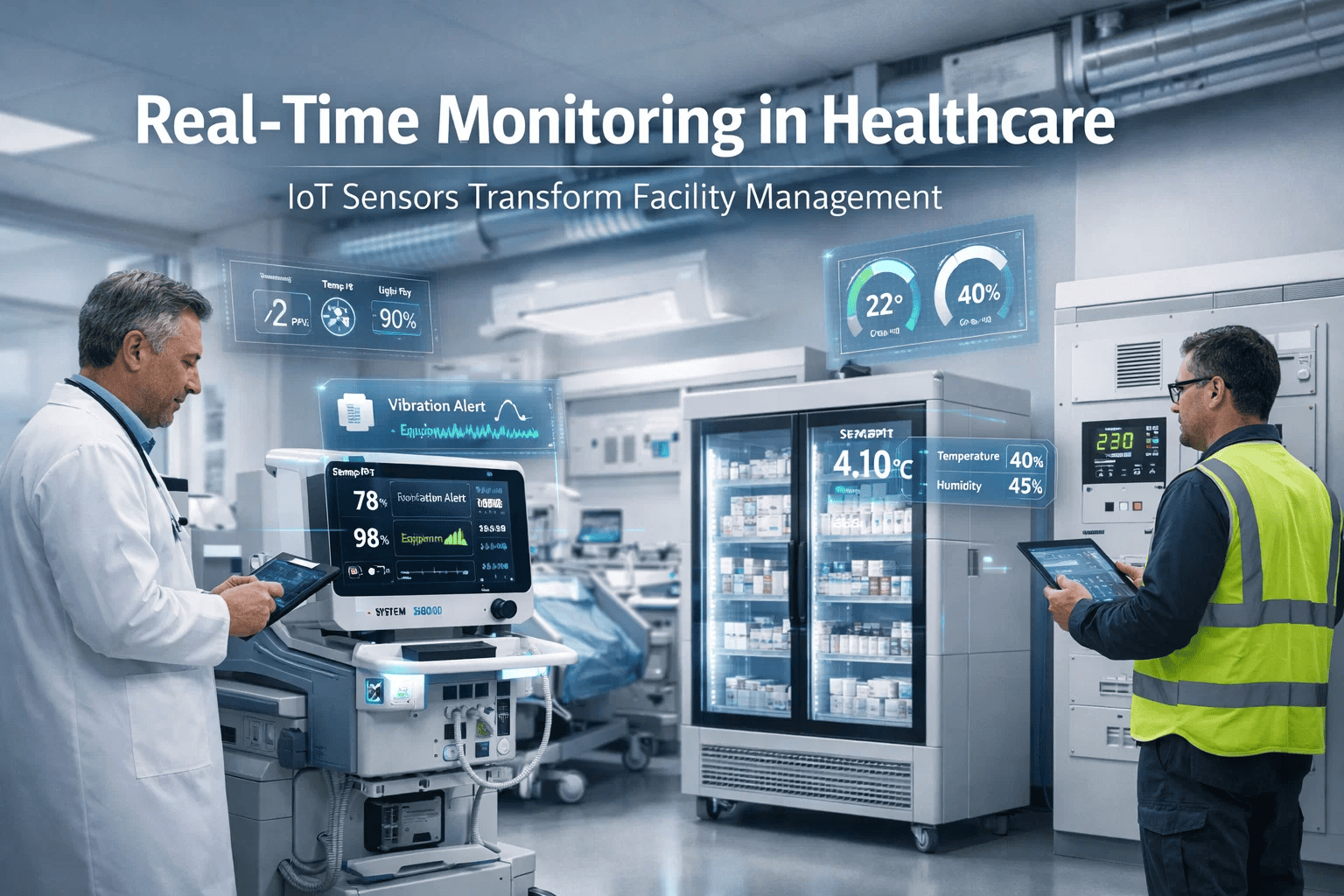
The technology behind AI-powered HVAC inspection is sophisticated but the concept is straightforward. IoT sensors installed across your HVAC infrastructure continuously monitor critical parameters — temperature, pressure, airflow velocity, vibration signatures, humidity levels, energy consumption, and refrigerant pressures. This data streams in real-time to cloud-based analytics platforms where machine learning algorithms analyze every reading against established baselines.
What makes AI detection genuinely powerful is its ability to identify patterns invisible to human observation. A compressor drawing marginally more amperage each week. A fan bearing producing a subtle vibration frequency shift. A damper actuator responding milliseconds slower than normal. Individually, these micro-changes are undetectable during routine inspections. But AI algorithms trained on thousands of equipment profiles recognize them as early indicators of impending failure — often identifying problems 4 to 6 weeks before a breakdown would occur.
The AI Detection Pipeline
Continuous Data Collection
IoT sensors capture temperature, vibration, pressure, airflow, and energy data around the clock from every HVAC component.
Baseline Learning
Machine learning algorithms establish normal operating profiles for each unit, adapting to seasonal patterns and usage cycles.
Anomaly Detection
AI identifies subtle deviations from baseline behavior — changes too small for human detection but significant for predicting failure.
Predictive Alerts & Work Orders
The system generates prioritized alerts with specific diagnostic information and automatically creates maintenance work orders in OxMaint.
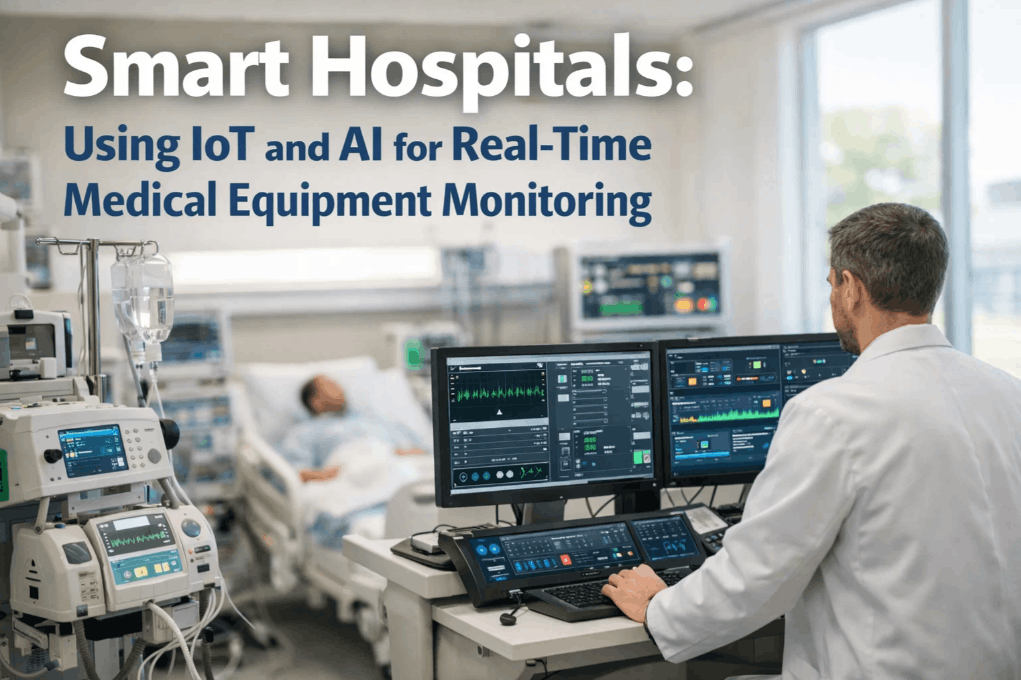
In healthcare settings, this capability is particularly transformative. Hospitals employ AI-powered monitoring specifically to ensure HVAC reliability in operating theaters, ICUs, and other critical care environments where climate control directly impacts clinical outcomes. A single AI-detected anomaly in a hospital chilled water system or air handling unit can prevent a cascade of failures that would otherwise compromise sterile environments and endanger patients. Want to see how this works for your facility? Book a demo and explore how OxMaint integrates AI detection into your existing HVAC maintenance workflow.
Ready to Protect Your Healthcare HVAC with AI?
Join hundreds of healthcare facilities using OxMaint to shift from reactive repairs to intelligent, predictive HVAC maintenance.
Critical HVAC Components AI Monitors in Hospitals
Not all HVAC components carry equal risk in healthcare environments. AI-powered inspection platforms prioritize monitoring based on clinical impact and failure probability. Understanding which components receive the most attention helps facility managers appreciate the depth of protection AI monitoring provides.
The workhorses of hospital ventilation. AI monitors fan motor current draw, bearing vibration frequencies, belt tension indicators, and coil differential pressures. In healthcare, AHU failure directly impacts air changes per hour in critical spaces — a Joint Commission compliance requirement.
AI tracks refrigerant superheat and subcooling values, oil analysis parameters, motor winding temperatures, and condenser approach temperatures. A subtle refrigerant leak detected by AI pattern analysis prevents both system failure and potential environmental compliance violations.
Hospital isolation rooms and operating suites depend on precise airflow control through VAV systems. AI detects actuator degradation, damper positioning errors, and pressure-independent control valve drift that could compromise room pressurization requirements.
Sensor drift is a silent efficiency killer. AI cross-references BAS sensor readings against independent IoT measurements to identify calibration drift in temperature, humidity, and CO2 sensors — ensuring your control system responds to accurate data.
Real-World Impact: Numbers That Matter
The case for AI-driven HVAC predictive maintenance in healthcare is not theoretical. Documented implementations across the United States paint a compelling picture of tangible benefits. Healthcare facilities transitioning from reactive to predictive HVAC maintenance have reported dramatic improvements across every measurable metric. HVAC accounts for 35 to 50 percent of total energy consumption in commercial buildings — and hospitals, with their 24/7 operations and stringent climate requirements, sit at the high end of that range. Even modest efficiency improvements through predictive maintenance translate into substantial financial impact.
One medical research facility documented a 40% reduction in HVAC system failures after implementing predictive AI maintenance algorithms, resulting in fewer emergency interventions and greater stability for temperature-sensitive protocols. A 40-story commercial building in Tokyo avoided over $40,000 in emergency repair costs when its AI system detected unusual fan vibration and compressor load increases weeks before potential failure. These are not isolated success stories — they represent the consistent, measurable outcomes of AI-powered HVAC monitoring.
Healthcare facility managers who are still relying on spreadsheets, quarterly inspections, and reactive service calls are leaving significant money on the table while exposing their facilities to preventable risks. The technology is proven, the ROI typically materializes within 1 to 2 years, and the patient safety benefits are immediate. Sign up for OxMaint to start building your predictive maintenance foundation today.
How OxMaint Powers Healthcare HVAC Predictive Maintenance
OxMaint provides the CMMS backbone that transforms raw AI detection data into actionable maintenance workflows. When an AI algorithm identifies an anomaly in your hospital HVAC system — whether it is a compressor showing early signs of bearing wear or an AHU filter approaching critical differential pressure — OxMaint automatically generates a prioritized work order with all relevant diagnostic context. Your maintenance team receives specific, data-driven instructions rather than vague alerts, dramatically reducing troubleshooting time and ensuring the right technician arrives with the right parts.
The platform integrates seamlessly with building automation systems and IoT sensor networks, creating a single source of truth for all HVAC asset data. Historical performance trends, maintenance records, component lifecycle tracking, and regulatory compliance documentation all live within OxMaint — giving healthcare facility managers complete visibility into their HVAC infrastructure health. Remote monitoring capabilities mean you can track system performance across multiple buildings from a single dashboard, which is invaluable for large hospital campuses and multi-facility health networks. Ready to see it in action? Book a demo and let us show you exactly how OxMaint integrates with your existing systems.
Transform Your Hospital HVAC Maintenance Today
Stop reacting to failures. Start predicting and preventing them. OxMaint gives you the tools to protect patients, extend equipment life, and reduce costs simultaneously.
Frequently Asked Questions
What is AI-powered predictive maintenance for HVAC systems in healthcare?
AI-powered predictive maintenance uses IoT sensors and machine learning algorithms to continuously monitor HVAC components in healthcare facilities. Instead of following fixed maintenance schedules or waiting for equipment to fail, AI analyzes real-time operational data — including temperature, pressure, vibration, and energy consumption — to detect subtle anomalies that indicate developing faults. This allows maintenance teams to address issues weeks before they escalate into failures, ensuring uninterrupted climate control in critical areas like operating rooms, ICUs, and pharmaceutical storage.
How much can hospitals save with predictive HVAC maintenance?
Healthcare facilities typically see 25 to 40 percent reduction in overall maintenance costs through predictive strategies. The U.S. Department of Energy documents that predictive programs save 8 to 12 percent over preventive maintenance schedules and up to 40 percent compared to reactive approaches. Additionally, ASHRAE data shows predictive maintenance can extend HVAC equipment lifespan by 5 to 10 years, and facilities report 10 to 20 percent energy cost savings through optimized system performance. For large hospital campuses, these savings can amount to hundreds of thousands of dollars annually.
Can AI predictive maintenance work with our existing HVAC equipment?
Yes. AI predictive maintenance systems are designed to work with both modern and legacy HVAC equipment. IoT sensors can be retrofitted onto existing compressors, air handling units, chillers, and VAV systems without requiring equipment replacement. Platforms like OxMaint integrate with existing Building Automation Systems (BAS) and can work alongside current Building Management Systems, creating a layered monitoring approach that enhances your existing infrastructure rather than replacing it.
How does AI detection differ from traditional HVAC inspections?
Traditional HVAC inspections are periodic, manual, and limited to what a technician can observe during a scheduled visit. AI detection operates continuously, analyzing thousands of data points per minute across all monitored components simultaneously. It identifies patterns and micro-changes that are invisible to human observation — such as gradual bearing degradation, slow refrigerant leaks, or sensor calibration drift. This continuous monitoring closes the gap between scheduled inspections where developing faults would otherwise go undetected.
How quickly does AI predictive maintenance show ROI for healthcare facilities?
Most healthcare facilities implementing AI-powered HVAC predictive maintenance see return on investment within 12 to 24 months. Initial costs include IoT sensor installation and platform deployment, but these are typically offset quickly through reduced emergency repair costs, lower energy consumption, extended equipment lifespan, and decreased maintenance labor hours. Some facilities report recouping their investment within the first year due to avoided catastrophic equipment failures alone.
Is patient data security maintained with IoT-connected HVAC monitoring?
AI-powered HVAC monitoring systems operate on separate network infrastructure from clinical systems and patient health records. The IoT sensors collect only mechanical and environmental performance data — temperatures, pressures, vibration frequencies, and energy metrics — with no connection to patient information systems. OxMaint employs enterprise-grade encryption and follows healthcare industry cybersecurity best practices to ensure all facility data remains secure and compliant with institutional security policies.
How does OxMaint integrate AI HVAC detection into maintenance workflows?
OxMaint serves as the CMMS platform that converts AI detection alerts into actionable maintenance tasks. When an anomaly is detected, OxMaint automatically generates a prioritized work order with specific diagnostic information, assigns it to the appropriate technician based on skill set and availability, and includes all relevant historical data for that asset. This eliminates manual alert triage, reduces troubleshooting time, and ensures consistent, documented response to every predicted issue — supporting both operational efficiency and regulatory compliance documentation.