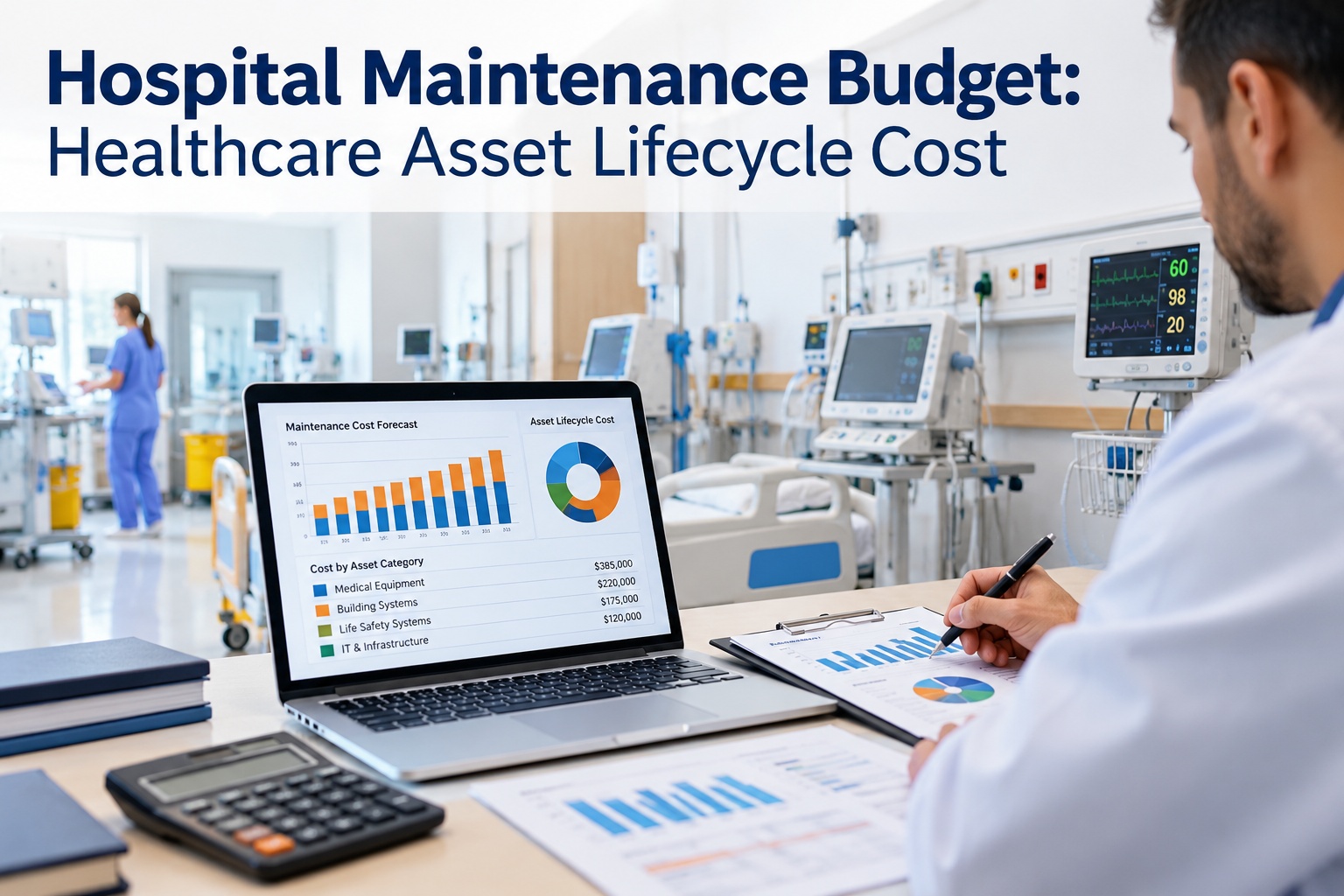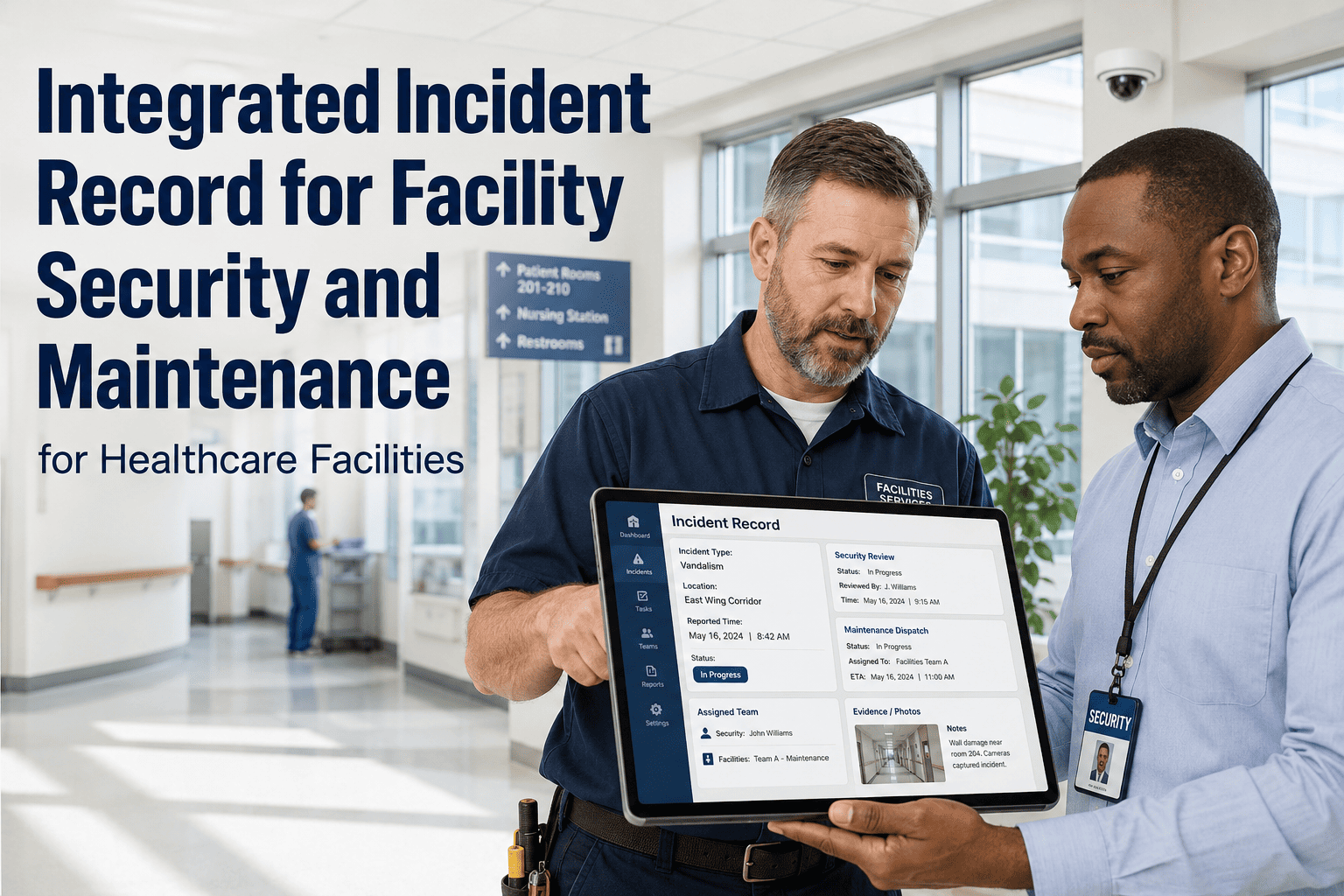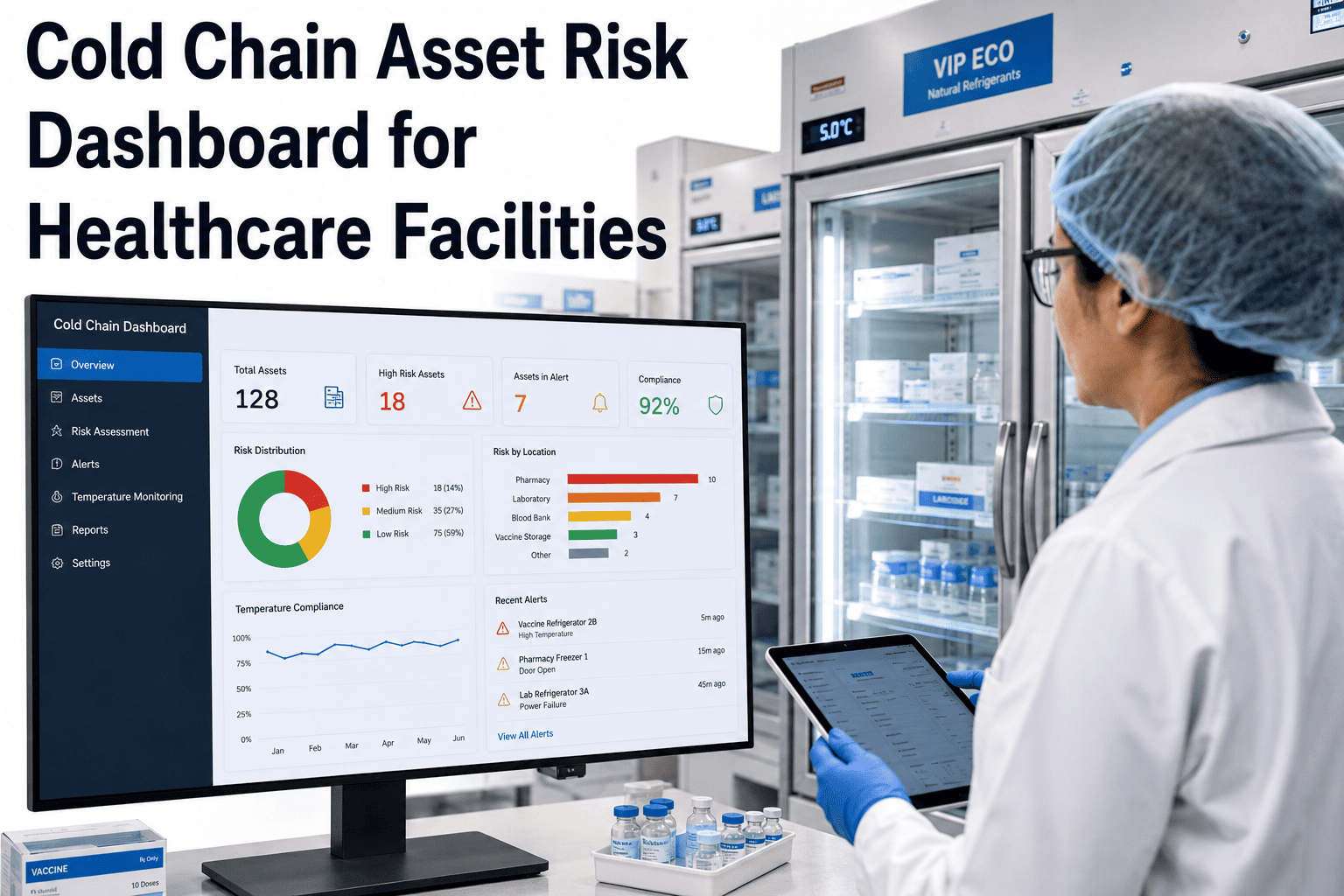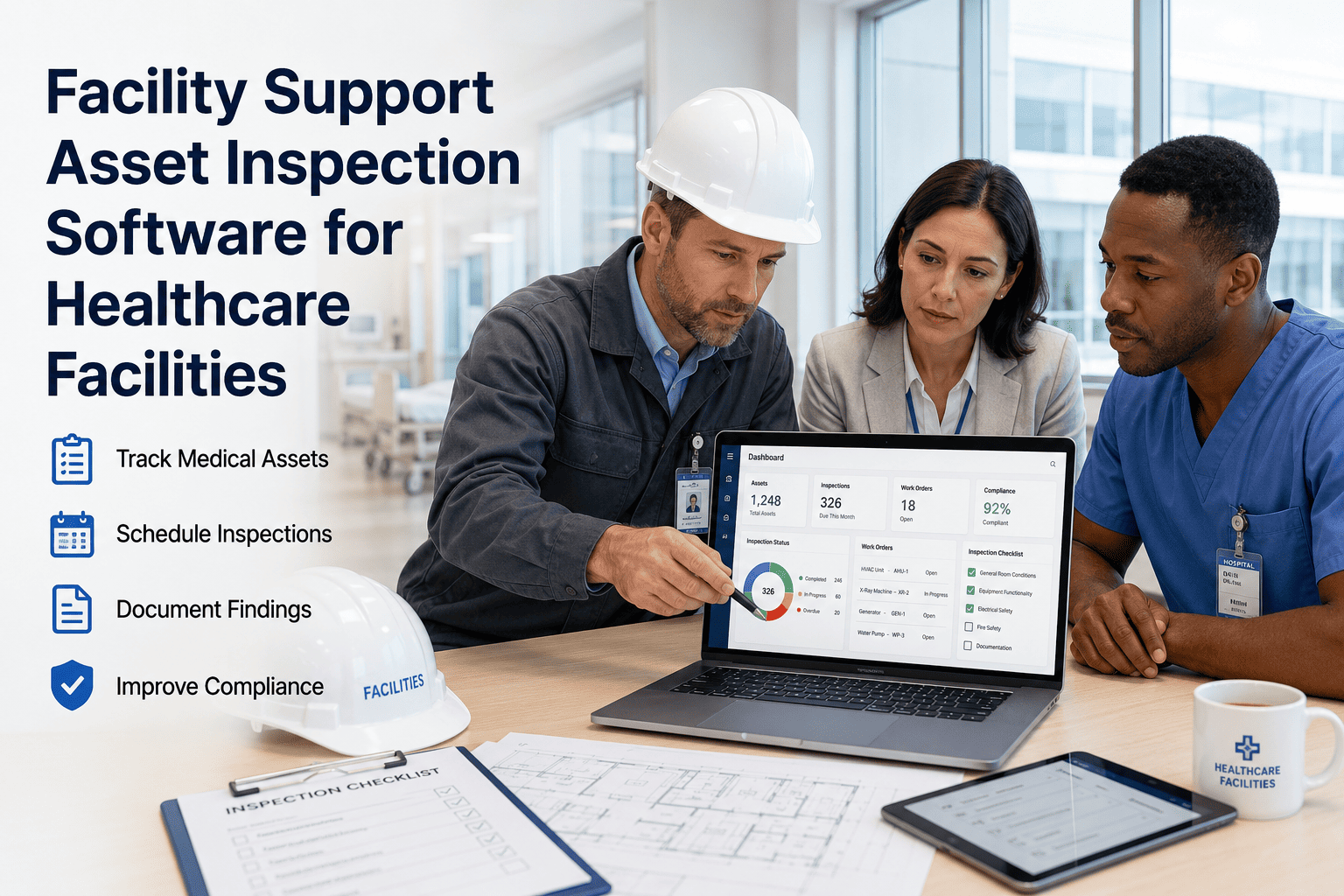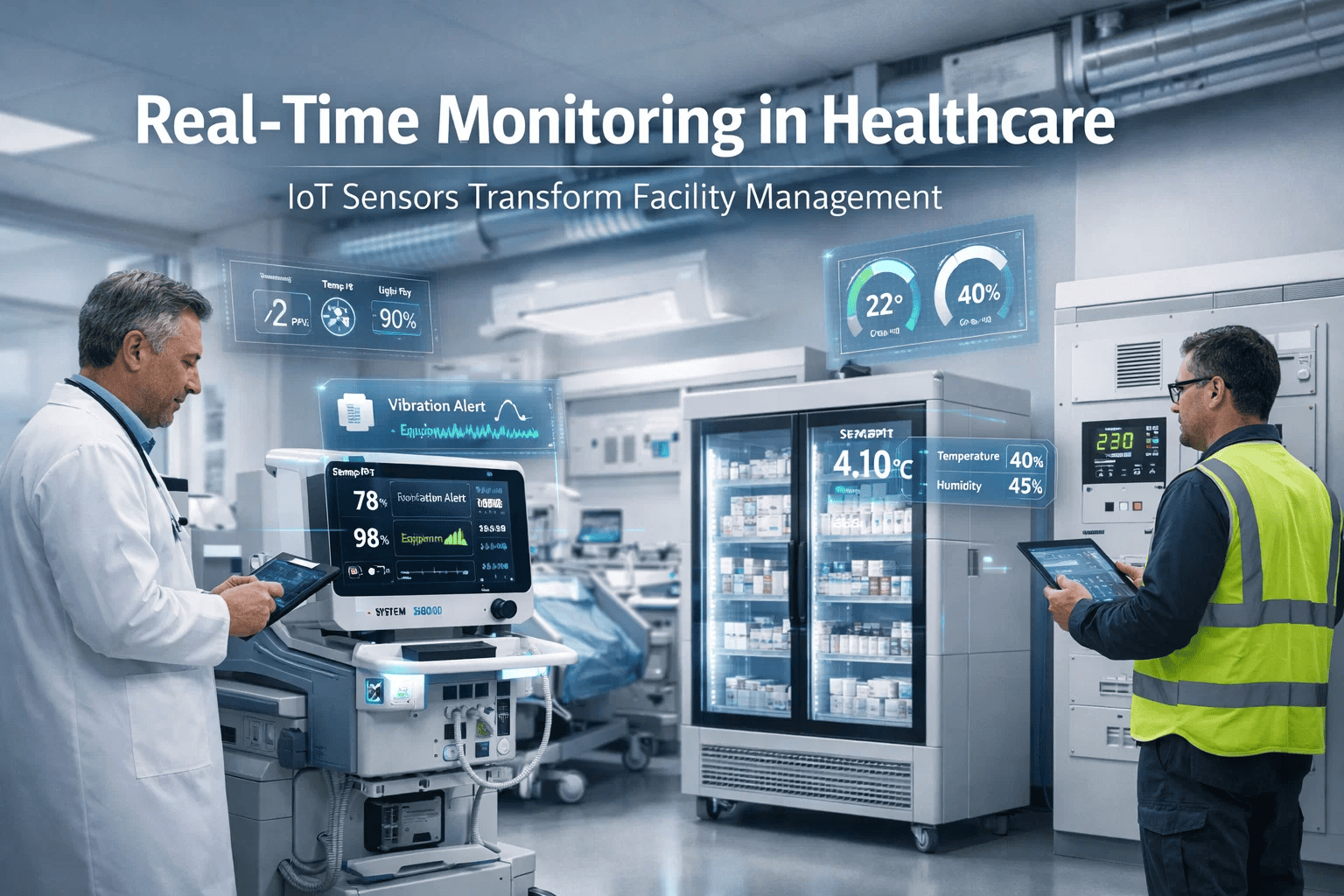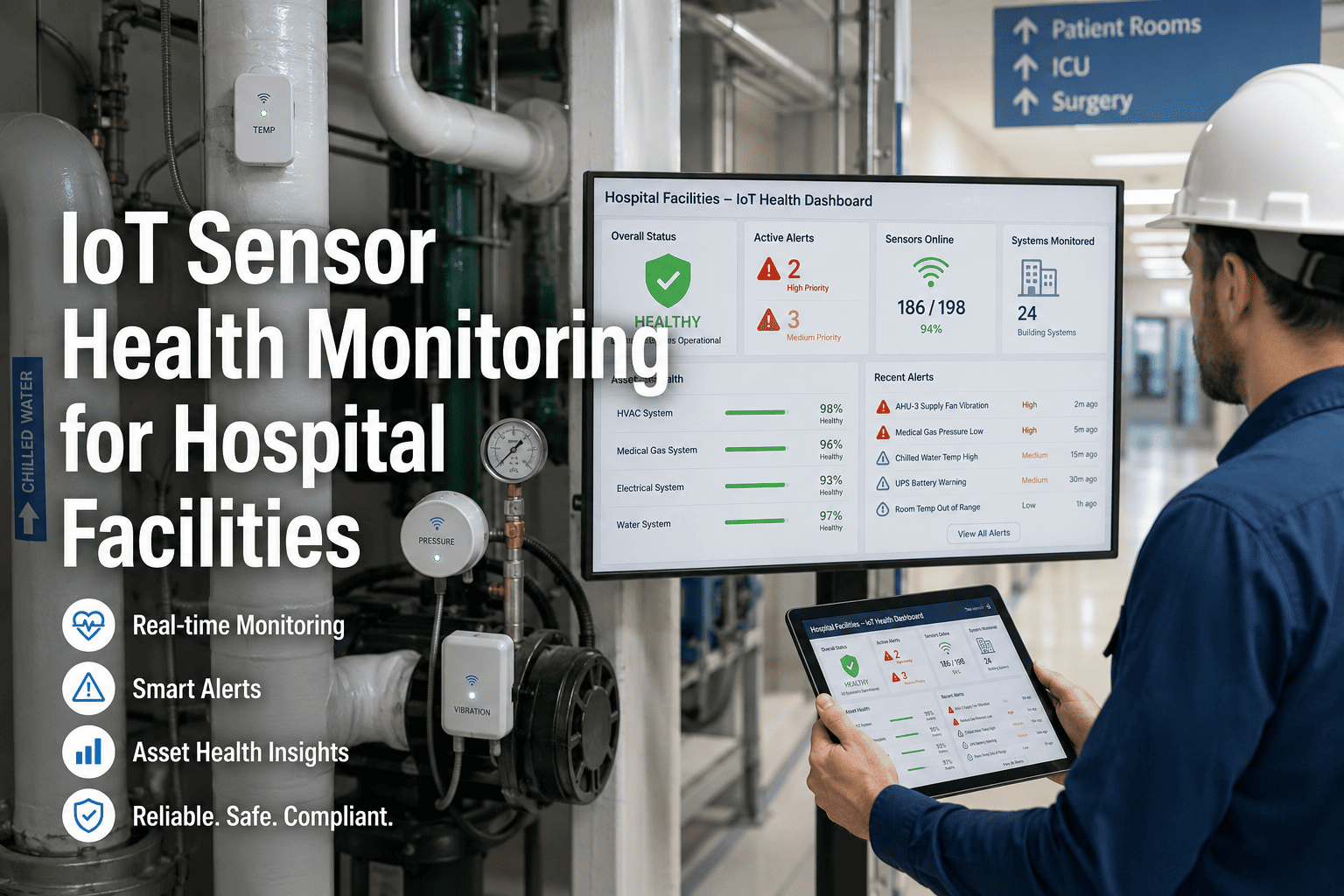
Hospital facilities teams are under constant pressure to keep hundreds of connected assets running — from HVAC and medical gas systems to refrigeration units and critical power infrastructure. IoT sensor health monitoring gives facility engineers a live, continuous feed from every asset, turning silent equipment failures into actionable maintenance tasks before they disrupt patient care. With the global IoT healthcare market projected to reach $556 billion by 2032, leading hospitals are already moving from calendar-based inspections to condition-based workflows driven by real sensor data. OxMaint connects your IoT sensor layer directly to work orders, inspection proof, and leadership dashboards — so your team acts on data, not guesswork. Book a demo to see how sensor alerts become closed maintenance tasks with full audit trails.
IoT Sensor Health Monitoring for Hospital Facilities
Turn live sensor data into assigned work orders, inspection evidence, repair history, and real-time leadership visibility — all inside one platform built for healthcare teams.
What Breaks Without IoT Sensor Visibility
Most hospital maintenance teams still rely on scheduled rounds and manual checks. By the time a technician finds a fault, the window for a low-cost fix is already closed. These are the three failure modes that cost facilities the most.
Six IoT Monitoring Use Cases with the Highest ROI in Hospitals
Sensors stream readings every 30 seconds across blood banks, surgical suites, and sterile stores. Deviations trigger an immediate OxMaint work order — not a discovery during a manual round.
94% reduction in spoilage-related lossesVibration, electrical load, and cycle counts feed directly into asset records. MRI and CT equipment monitored via IoT shows 38% longer intervals between unplanned breakdowns.
38% longer service intervalsInfection control depends on precise pressure differentials, HEPA status, and air change rates. Real-time HVAC monitoring detects filter degradation instantly — maintaining Joint Commission compliance continuously.
Continuous TJC compliance evidenceSensors monitor every riser, outlet, and tank — auto-flagging readings in the 20–45°C Legionella danger zone. Compliance documentation is generated automatically, replacing labor-intensive testing rounds.
Automated compliance documentationGenerator readiness, UPS battery health, and critical power assets are monitored continuously. Alerts reach the right technician before a power event becomes a patient safety incident.
Zero-downtime power transition readinessBluetooth beacons and RFID tags track high-value equipment across wards in real time. Maintenance teams know what is due for service, where it is, and whether it is in use — without a manual search.
Real-time asset location across all wardsFrom Sensor Alert to Closed Work Order in OxMaint
IoT Maintenance Impact: Reactive vs. Monitored
| Metric | Reactive Only | With IoT + OxMaint |
|---|---|---|
| Cold chain breach discovery time | 2–6 hours (manual round) | Under 2 minutes (automated alert) |
| Drug spoilage cost per incident | ~$14,000 | Near zero with early alert |
| Imaging equipment downtime cost | $22,000/hour | Avoided with predictive scheduling |
| MRI service interval | Calendar-based (fixed) | 38% longer (condition-based) |
| Compliance documentation | Manual, inconsistent | Automated, timestamped, audit-ready |
| Technician response time | Next available / delayed | Assigned automatically on alert |
What Healthcare Facility Leaders Say
Before continuous monitoring, our cold chain audits were a retrospective exercise — we found out about problems after the loss had already occurred. Moving to real-time sensor alerts tied directly to work orders changed the response entirely. A breach at 2 AM gets a tech dispatched and evidence logged before the next shift arrives.
Joint Commission surveys used to mean weeks of scrambling to reconstruct paper records. With sensor-generated, timestamped maintenance history auto-populated in the CMMS, our last survey was the shortest and cleanest we have ever had. The auditors found what they expected to find, because the data was already there.
Frequently Asked Questions
How does OxMaint connect to existing IoT sensors in our hospital?
OxMaint integrates with your existing sensor infrastructure through standard API and BMS connectors — no rip-and-replace required. Sensor readings map to asset records already in the system, so alerts create work orders against the correct equipment automatically. Book a demo to review your specific sensor setup with our integration team.
What types of hospital assets benefit most from IoT sensor monitoring?
The highest ROI typically comes from medical refrigeration, HVAC and air handling, critical power, medical imaging equipment, and water systems — assets where an undetected failure carries both regulatory and patient safety consequences. OxMaint's asset health dashboard prioritizes these by risk level automatically. Start free to configure your asset priority tiers.
Can OxMaint produce the compliance evidence we need for Joint Commission audits?
Yes — every sensor-triggered work order generates a timestamped record including the alert data, assigned technician, response time, completion proof, and parts used. This evidence chain is stored against the asset history and exportable in audit-ready format. Book a demo to see the audit report builder in action.
How does IoT-based monitoring reduce costs compared to scheduled maintenance rounds?
Scheduled rounds fix things on a calendar, not on condition — meaning you either over-maintain assets that are fine or miss faults that developed between rounds. Condition-based monitoring from IoT sensors cuts unnecessary PM labor while catching real faults earlier, when repair costs are lowest. Hospital facilities using this model report 15–25% lower total maintenance spend within the first year. Start free to model the saving against your current PM schedule.
Give Your Hospital's Sensors a Maintenance Brain
OxMaint connects every IoT alert to a work order, every work order to a technician, and every completion to a timestamped evidence record — so your facility team is always ahead of the failure, never chasing it.