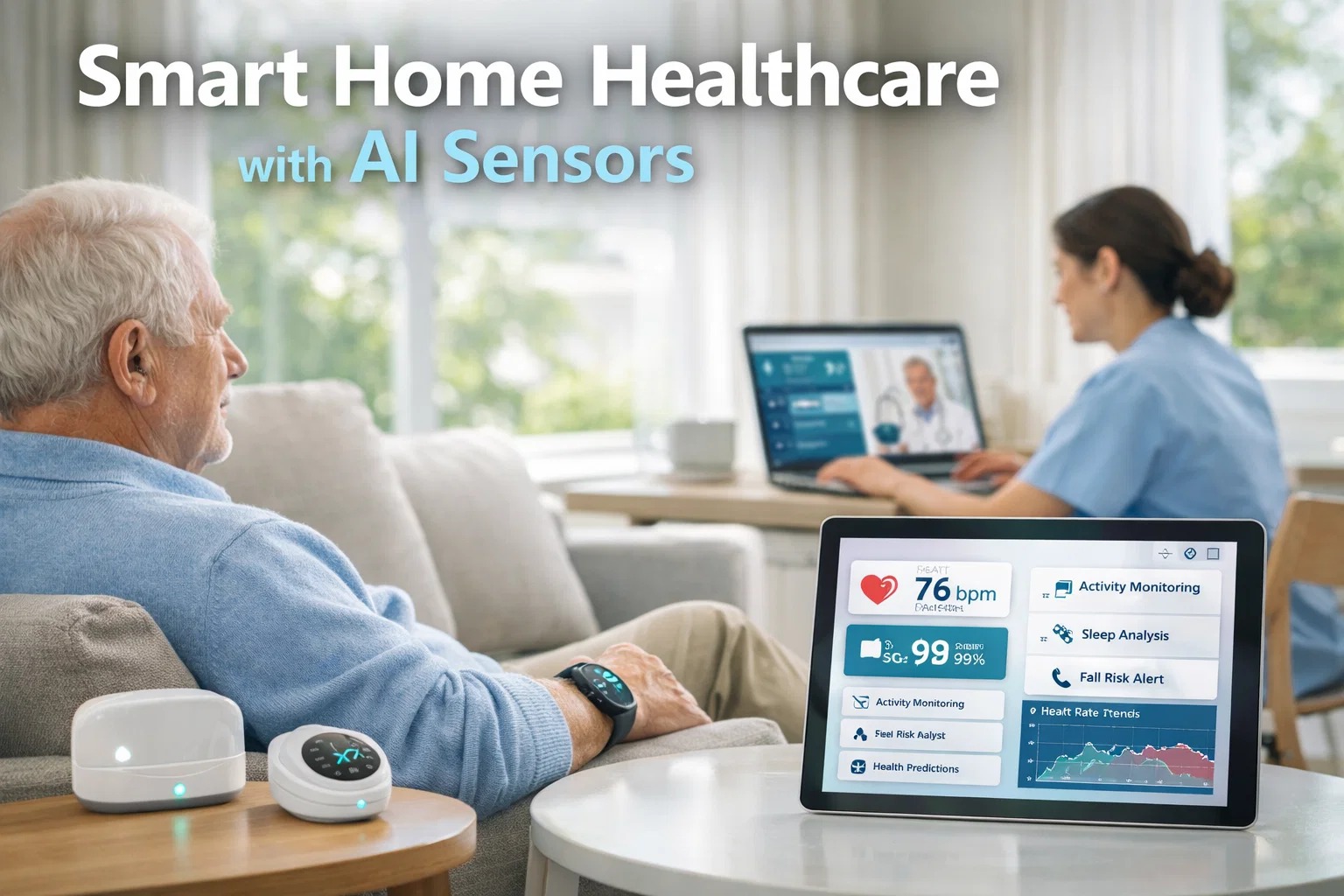
Across hospitals, senior care networks, and home health programs, the most consequential shift in patient care delivery is not happening inside clinical walls — it is happening inside patients' homes. AI-powered sensors, machine learning models trained on real patient data, and continuously connected monitoring platforms are now creating a clinical presence that traditional care models could never sustain outside a hospital setting. Smart home healthcare systems detect falls within 30 seconds, predict cardiovascular deterioration 48 hours before symptoms appear, and reduce hospital readmissions by up to 32% — all without requiring a clinician to be physically present. For the healthcare facility managers and operations teams responsible for the IoT devices and medical infrastructure powering these programs, operational reliability is not a technical issue — it is a patient safety mandate. If your organization manages smart healthcare technology and needs to eliminate unplanned device downtime, start a free trial for 30 days ,or book a demo with Oxmaint today.
Smart Home Healthcare with AI Sensors: Predictive Care and Remote Patient Monitoring
How connected sensors, AI analytics, and remote monitoring platforms are transforming patient care — and what it means for the operations teams keeping this infrastructure running reliably.
Your Healthcare Infrastructure Needs More Than Smart Technology
Smart home healthcare programs are only as reliable as the devices and systems behind them. Oxmaint gives healthcare facility and operations teams a unified platform to track every asset, prevent equipment failures before they occur, and maintain full compliance documentation — so your patient monitoring infrastructure delivers zero unplanned downtime. Ready to see the platform? Explore everything Oxmaint offers and decide if it is the right fit for your operations.
Smart Home Healthcare: A Professional Definition
Smart home healthcare is an integrated network of IoT sensors, AI analytics engines, wearable devices, and telehealth platforms that monitor a patient's health status continuously within their home environment. Unlike traditional care models that require physical visits, smart home healthcare creates a persistent clinical presence — detecting deviations in vital signs, movement patterns, sleep quality, and medication adherence in real time.
Clinical teams receive automated alerts, risk scores, and predictive forecasts that allow them to intervene before a patient's condition deteriorates to emergency level. Recent industry data shows patients enrolled in smart home monitoring programs have 27% fewer emergency department visits and 19% lower annual care costs compared to standard care models. More than 43 million patients globally were enrolled in remote monitoring programs by end of 2024 — a figure projected to exceed 70 million by 2027. For the operations teams managing this device fleet, keeping infrastructure running reliably is non-negotiable. Want to see what professional healthcare asset management looks like? Start a free 30-day trial with Oxmaint or book a demo to see the platform in action.
6 Core Components of AI-Powered Smart Home Healthcare
Each layer serves a distinct clinical function — and generates distinct operational maintenance requirements for the teams responsible for uptime.
Continuous Vital Sign Monitoring
Wearable patches, smart watches, and ambient sensors track heart rate, blood pressure, SpO2, and respiratory rate continuously. AI engines process up to 1,440 readings per patient per day, building a dynamic clinical baseline that adapts to individual health patterns.
AI Fall Detection and Risk Prediction
Motion sensors and accelerometers paired with machine learning models detect falls within 30 seconds and predict fall probability up to 72 hours ahead — critical for elderly patients and those recovering from major surgery or neurological events.
Predictive Health Analytics Engines
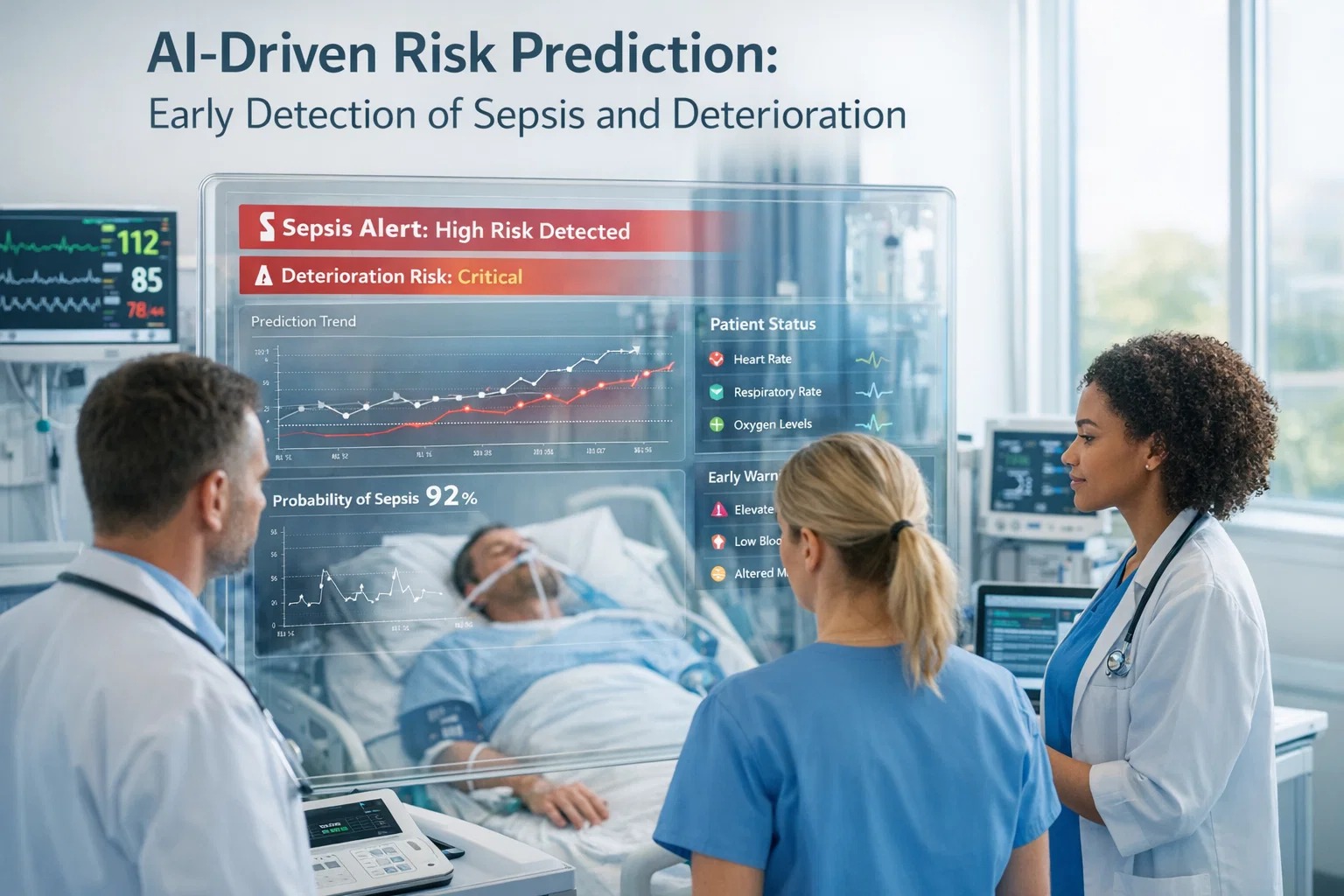
AI models trained on longitudinal health data identify deterioration signatures 48 to 72 hours before visible symptoms appear. Early intervention windows reduce ICU admissions by up to 28% in high-risk patient cohorts enrolled in active remote monitoring programs.
Remote Patient Monitoring Dashboards
Cloud platforms give clinical teams real-time visibility across entire patient populations with risk stratification, configurable alert thresholds, and direct telehealth escalation pathways — enabling one clinician to effectively monitor up to 300 patients simultaneously.
Medication Adherence and Smart Dispensing
Smart dispensers, NFC packaging, and AI-scheduled reminders log every dosage event in real time. Programs using automated adherence monitoring report a 40% reduction in missed doses — with direct downstream improvements in chronic disease outcomes across high-risk patient populations.
IoT Device and Sensor Network Management
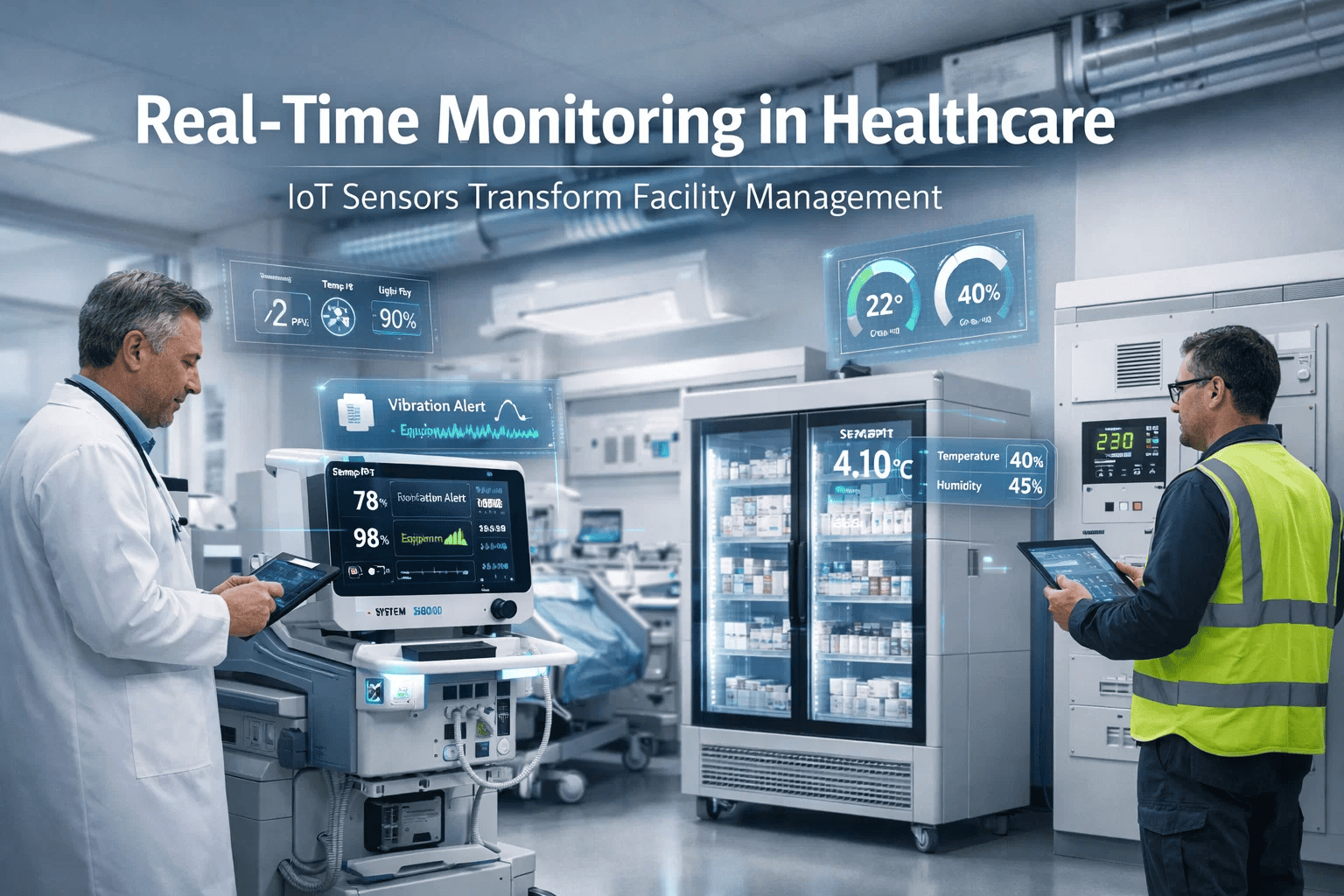
The physical hardware layer — environmental sensors, smart scales, wearable ECG patches, glucose monitors, bed pressure sensors — requires scheduled calibration, preventive maintenance, and lifecycle tracking to ensure clinical accuracy and continuous uptime across every patient in the program.
6 Failure Points That Undermine Smart Healthcare Programs
These are not technology problems — they are asset management and operations problems. Every one of them is preventable.
Undetected Device Failures
IoT sensors fail silently. Without real-time device health monitoring, a sensor can go offline for days before anyone notices — during which time critical patient data is simply missing. Up to 12% of remote monitoring alerts are missed due to unreported device downtime.
No Centralized Device Records
Maintenance histories, calibration certificates, and warranty records are scattered across spreadsheets and paper files. When a compliance audit arrives, teams spend weeks assembling documentation that should be instantly accessible in a single system of record.
Reactive Equipment Replacement
Devices are replaced only after they fail — at emergency procurement prices that cost 4.8x more than planned replacements. Without CapEx forecasting tied to actual condition data, healthcare operations teams face unpredictable budget spikes every fiscal year.
Compliance Documentation Gaps
OSHA, NHS, Joint Commission, and regional health authority standards require documented maintenance records for all patient-connected devices. Manual record-keeping produces incomplete audit trails — creating accreditation risk and significant liability exposure for healthcare operators.
No Preventive Maintenance Schedule
Most healthcare IoT programs lack formal maintenance schedules for their device fleets. Technicians respond to failures rather than preventing them — and the average unplanned repair consumes 3x the time and 4x the labor cost of a properly scheduled preventive maintenance intervention.
Zero Lifecycle Visibility
Without condition scoring and lifecycle data, facility managers cannot predict when devices need replacement. This creates budget surprises, procurement delays, and coverage gaps that directly compromise patient monitoring continuity — especially across multi-site programs managing hundreds of deployed devices.
How Oxmaint Powers Healthcare Asset Operations
Purpose-built for multi-site operations with IoT integration, CapEx forecasting, and audit-ready compliance. Healthcare organizations managing smart home programs need an asset platform that matches the reliability standards of the care they deliver. Start a free 30-day trial or book a demo to explore the full platform.
Full Asset Registry with Condition Scoring
Every IoT sensor, wearable device, gateway, and monitoring unit is logged in a structured asset hierarchy — with condition scores, maintenance history, warranty status, and real-time health data consolidated in a single operational view across your entire device fleet.
Preventive Maintenance Scheduling
Automated maintenance schedules tied directly to each device's usage history, manufacturer specifications, and live condition data. Teams receive structured work orders before failures occur — not after patients have been left unmonitored by a failed sensor or offline gateway.
IoT and SCADA Integration
Real-time device telemetry feeds directly into Oxmaint — enabling condition-based maintenance triggers driven by actual performance data rather than time-based schedules. Detected anomalies generate immediate work orders, dramatically reducing response windows and device downtime.
Work Order Management with Full Audit Trail
Every maintenance intervention is logged with technician ID, timestamp, parts used, and resolution notes. Compliance auditors receive a complete, tamper-proof maintenance record for every patient-connected device in your fleet — assembled in seconds, not weeks.
Rolling 5 to 10 Year CapEx Forecasting
AI-driven lifecycle models project device replacement timelines based on condition trends and usage patterns — giving finance and operations teams a rolling multi-year capital expenditure forecast that eliminates budget surprises and enables fully planned procurement cycles.
Audit-Ready Compliance Documentation
Digital signatures, GMP compliance tracking, and automated documentation workflows ensure device maintenance records meet OSHA, NHS, Joint Commission, UAE Health Authority, and TGA standards simultaneously — without any manual record assembly at audit time.
Traditional Device Management vs Oxmaint-Powered Operations
The difference between these two operating models is not incremental — it is the difference between reactive risk and controlled, documented reliability.
| Operational Factor | Traditional Approach | Oxmaint Platform |
|---|---|---|
| Device Visibility | Manual spreadsheets, no real-time status | Live asset registry with condition scoring |
| Maintenance Model | Reactive — repair after failure | Preventive — scheduled before failure |
| Compliance Documentation | Paper-based, incomplete, manually assembled | Digital, audit-ready, auto-generated |
| Average Device Downtime | 8 to 12 hours per incident | Under 2 hours with automated alerts |
| CapEx Planning | Annual guesswork, reactive procurement | 5 to 10 year rolling forecast, planned replacements |
| Technician Productivity | 40% admin, 60% reactive repairs | 80% value-added preventive tasks |
| Multi-Site Management | Siloed records per property | Portfolio-level view across all sites |
| Emergency Repair Cost | 4.8x standard maintenance cost | Reduced to planned maintenance rates |
What Healthcare Operations Teams Achieve with Oxmaint
Smart Home Healthcare: What Operations Teams Need to Know
What types of IoT devices are used in smart home healthcare monitoring programs?
Smart home healthcare programs typically deploy wearable vital sign monitors (heart rate, SpO2, ECG), ambient motion sensors for fall detection, smart blood pressure cuffs, glucose monitors, smart dispensers for medication tracking, bed and chair pressure sensors, environmental monitors tracking temperature and air quality, and communication gateways that aggregate and transmit data to clinical platforms. Each device category requires distinct maintenance schedules, calibration protocols, and lifecycle management — all of which can be managed centrally through a CMMS platform like Oxmaint, giving operations teams one system for every asset across every patient site.
How does predictive AI in healthcare differ from standard threshold-based alert monitoring?
Standard threshold-based alert monitoring triggers a notification when a measured value crosses a preset limit — such as heart rate exceeding 120 bpm. Predictive AI goes further by analyzing trends, subtle signal combinations, and patient-specific historical baselines to identify deterioration patterns before any individual measurement crosses a clinical threshold. AI-powered systems can flag cardiovascular risk events 48 to 72 hours before they become emergencies, enabling clinical intervention during a window when outcomes can still be decisively influenced. This predictive layer reduces emergency admissions by up to 28% in monitored high-risk patient populations and fundamentally changes the economics of care delivery.
How does Oxmaint support healthcare organizations implementing smart home monitoring programs?
Oxmaint provides healthcare facility and operations teams with a unified asset management platform covering every operational dimension of a smart home healthcare program. This includes a full IoT and medical device asset registry, automated preventive maintenance scheduling, real-time IoT integration for condition-based maintenance triggers, digital work order management with complete technician audit trails, rolling CapEx forecasting for planned device replacement, and compliance documentation for OSHA, NHS, and Joint Commission standards. The platform is mobile-first, multi-site capable, and requires no heavy implementation or extended onboarding. Start a free 30-day trial today or book a demo to see the full platform with your specific use case.
What compliance standards apply to smart home healthcare device management across different regions?
Smart home healthcare devices are subject to multiple regulatory frameworks by region and clinical classification. In the USA, applicable standards include FDA Class II medical device regulations, HIPAA for patient data, and OSHA equipment maintenance requirements. In the UK, NHS Device Safety Information protocols and CQC inspection standards apply. Australian organizations follow TGA regulatory requirements for connected medical devices. UAE healthcare programs must comply with DOH and DHA smart health regulations under Vision 2030 smart building and healthcare initiatives. In Germany, MDR (Medical Device Regulation) applies to all connected patient monitoring equipment. Oxmaint's digital documentation, audit trails, and compliance workflows are designed to support all of these regulatory environments simultaneously from a single platform.
Your Smart Healthcare Program Is Only as Reliable as Its Infrastructure
Every sensor that goes offline, every device that fails between maintenance cycles, and every compliance gap is a direct risk to patient safety and program credibility. Oxmaint gives healthcare facility managers and operations teams the asset management discipline that smart home healthcare programs demand — preventive scheduling, real-time IoT monitoring, audit-ready compliance, and CapEx forecasting built for multi-site healthcare portfolios across the USA, UK, UAE, Australia, Germany, and Canada.
Start with a 30-day free trial — no heavy implementation, no extended onboarding, no commitment required. See the difference a professional asset management platform makes to your healthcare operations in the first week of use.


.png)
.png)
