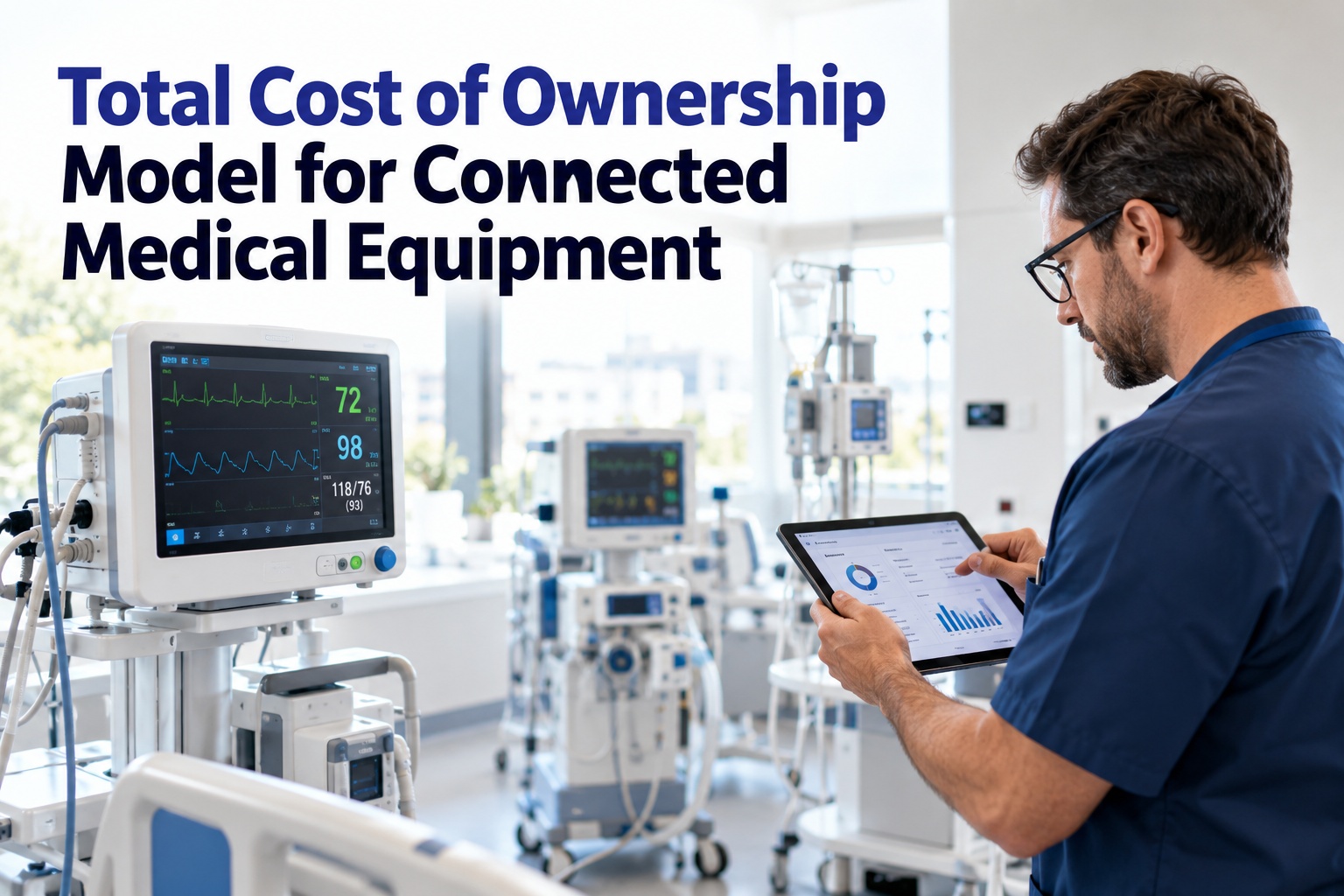
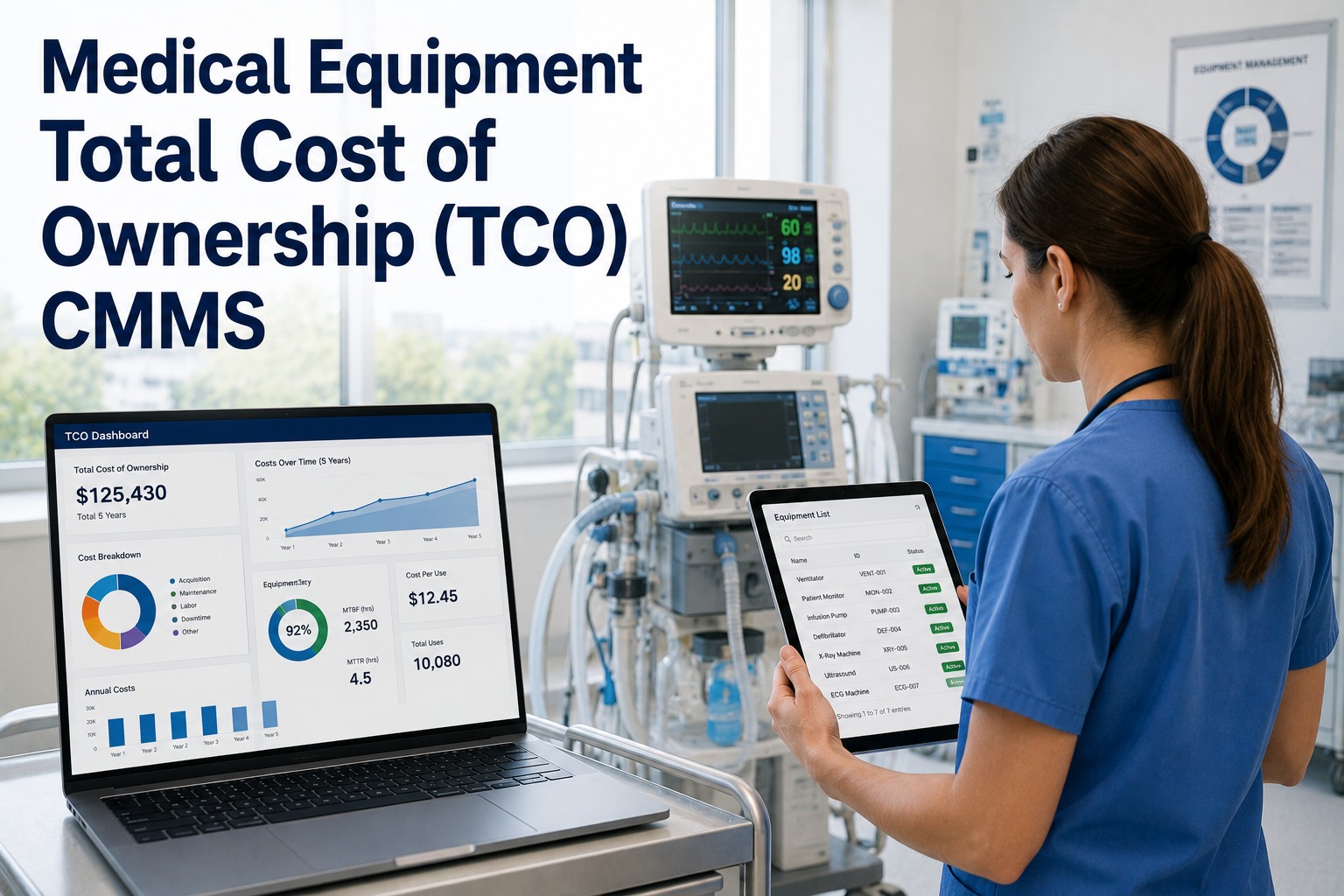
The $1.2M MRI on the capital request is the cheap part. Over its ten-year life it will cost more than three times that in downtime, service, consumables and disposal — and none of it shows on the purchase order. That's why replace-or-repair decisions made on sticker price alone are usually wrong. OXMAINT AI is AI-powered maintenance management software (CMMS) that tracks the full cost of ownership per device — service, downtime, parts and life stage — and lowers the biggest line, downtime, through predictive maintenance. Book a demo to model TCO on your own fleet.
Healthcare · Connected Equipment TCO
The Purchase Price Is Less Than a Quarter of What the Device Costs
Buy on sticker price and you budget for the smallest number. OXMAINT AI models the whole ten-year cost of a connected device — acquisition, maintenance, consumables, downtime and end-of-life — on one record, then attacks the largest slice with predictive maintenance, so the business case is built on real lifecycle cost, not the invoice.
- 1Map the full cost
- 2Find the biggest slice
- 3Cut downtime with PdM
- 4Time replacement
10-year cost of ownership
Acquisition~25%
the price you see
Downtime~28%
Maintenance~20%
End-of-life~15%
Consumables~12%
~75% of lifetime cost sits below the purchase price. Source: OxMaint medical-equipment TCO model.
The Five Cost Streams Over a Ten-Year Life
A connected device costs money in five distinct ways across roughly a decade of service. Seeing them side by side is what turns "it was expensive to buy" into a real ownership picture. Start a free trial to track all five per device.
Downtime~28%
Acquisition~25%
Maintenance~20%
End-of-life~15%
Consumables~12%
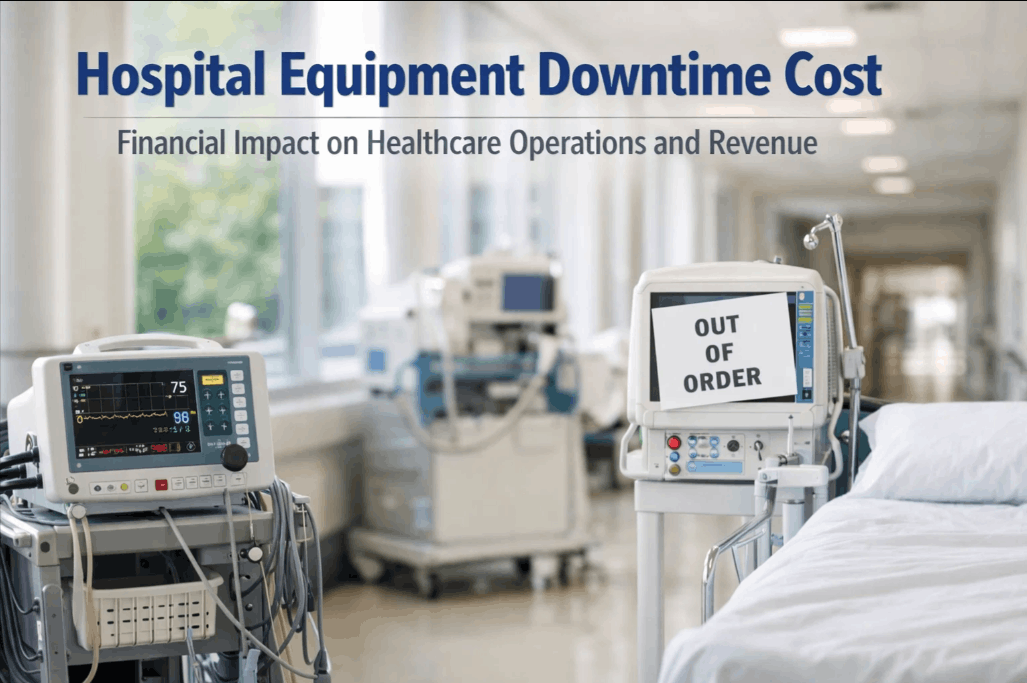
DowntimeLost revenue, idle staff, patient rescheduling and clinical risk — the single largest slice.
AcquisitionCapital purchase, installation, training and validation — the only part on the PO.
MaintenanceOEM service contracts, in-house labor, parts and calibration.
End-of-lifeDecommissioning, data sanitization and regulated disposal.
ConsumablesReagents, disposables, filters and accessories over the life.
Category shares are OxMaint's published TCO model over a 10-year lifecycle (typical service life 8–12 years). Your mix varies by modality; use these as a starting frame. Source: OxMaint medical-equipment TCO guide.
A Worked Example: the $1.2M MRI That Costs $4.1M
The gap between price and ownership is easiest to see on one asset. Here's how a single scanner's numbers land over its life. Book a demo to run this on your equipment.
$1.2M
Purchase price — the number on the capital request
$4.15M
Ten-year total cost of ownership — acquisition is only ~29% of it
Illustrative worked example from OxMaint's TCO model: a 1.5T MRI at roughly $4.15M ten-year TCO, with downtime and consumables together near 35% of the total. Figures are model estimates, not a quote for any specific device.
Attack the Biggest Slice, Not the Sticker Price
Downtime is the largest cost of ownership — see how OXMAINT AI uses predictive maintenance to shrink it, and puts the savings in your business case.
Where a CMMS Actually Lowers the Cost
You can't negotiate the purchase price down much — but the 75% below it is where a CMMS earns its keep. These are the levers that move the number. Start a free trial to pull these levers.
Cut unplanned downtime
Predictive maintenance catches failures early on critical imaging and monitoring — the biggest cost slice is also the most reducible.
Extend consumable life
Usage-meter tracking stretches high-value components — for example, MRI tube life — instead of replacing on a fixed calendar.
Replace on data, not fear
Cost and reliability history replace run-to-failure guesswork, so a device retires when the numbers say so — not too early, not too late.
Right-size service contracts
Real service history shows which OEM contracts earn their cost and which work is better done in-house.
Building the TCO Business Case in Four Moves
A defensible case doesn't need a spreadsheet nobody trusts — it needs the real numbers from your own fleet. This is the sequence. Book a demo to build yours.
1
Baseline the fleet
Capture each device's acquisition, service, downtime and consumable cost on one record.
2
Rank by lifetime cost
Sort by true cost of ownership, not purchase price — the worst devices rarely match intuition.
3
Model the intervention
Estimate the downtime and consumable savings predictive maintenance would deliver on the worst offenders.
4
Present payback
Put the saving against the cost — and let the shortest-payback assets lead the rollout.
How OXMAINT AI Models and Lowers TCO
OXMAINT AI is maintenance management software that carries each device's full cost history and drives the predictive maintenance that shrinks it — so ownership cost is a number you manage, not one you discover at replacement. Start a free trial to model your first device.
-
1
Capture
Log acquisition, service, downtime, consumable and disposal cost against each asset.
-
2
Analyze
Roll it into a true ten-year cost of ownership and rank the fleet by it.
-
3
Reduce
Apply predictive maintenance to the downtime-heavy devices where savings are largest.
-
4
Decide
Use the cost curve to time repair, contract renewal and replacement on evidence.
Frequently Asked Questions
What does total cost of ownership include?
Acquisition, maintenance and service, consumables, downtime, and end-of-life disposal — measured across the device's full service life, typically about ten years.
Start a free trial to track all five.
How much of TCO is the purchase price?
Usually under a quarter. The other ~75% comes from operating costs over the device's life — which is why buying on sticker price alone understates the real number.
Book a demo to see the full picture.
Which cost slice should we target first?
Downtime — it's typically the largest single slice and the most reducible, since predictive maintenance can prevent much of the unplanned kind.
Start a free trial to target it.
How does a CMMS help time replacement?
By tracking each device's cost and reliability curve, so you retire it when ongoing cost overtakes replacement value — not on a guess or a fixed age.
Book a demo to see the curve.
Can OXMAINT AI support a capital business case?
Yes — it holds the real per-device cost history and modeled savings, so a replace-or-repair case rests on your own numbers rather than assumptions.
Start a free trial to build it.
Budget for the Whole Iceberg, Not the Tip
Model the full cost of every connected device, shrink the downtime that dominates it, and make replace-or-repair calls on evidence — on one platform.