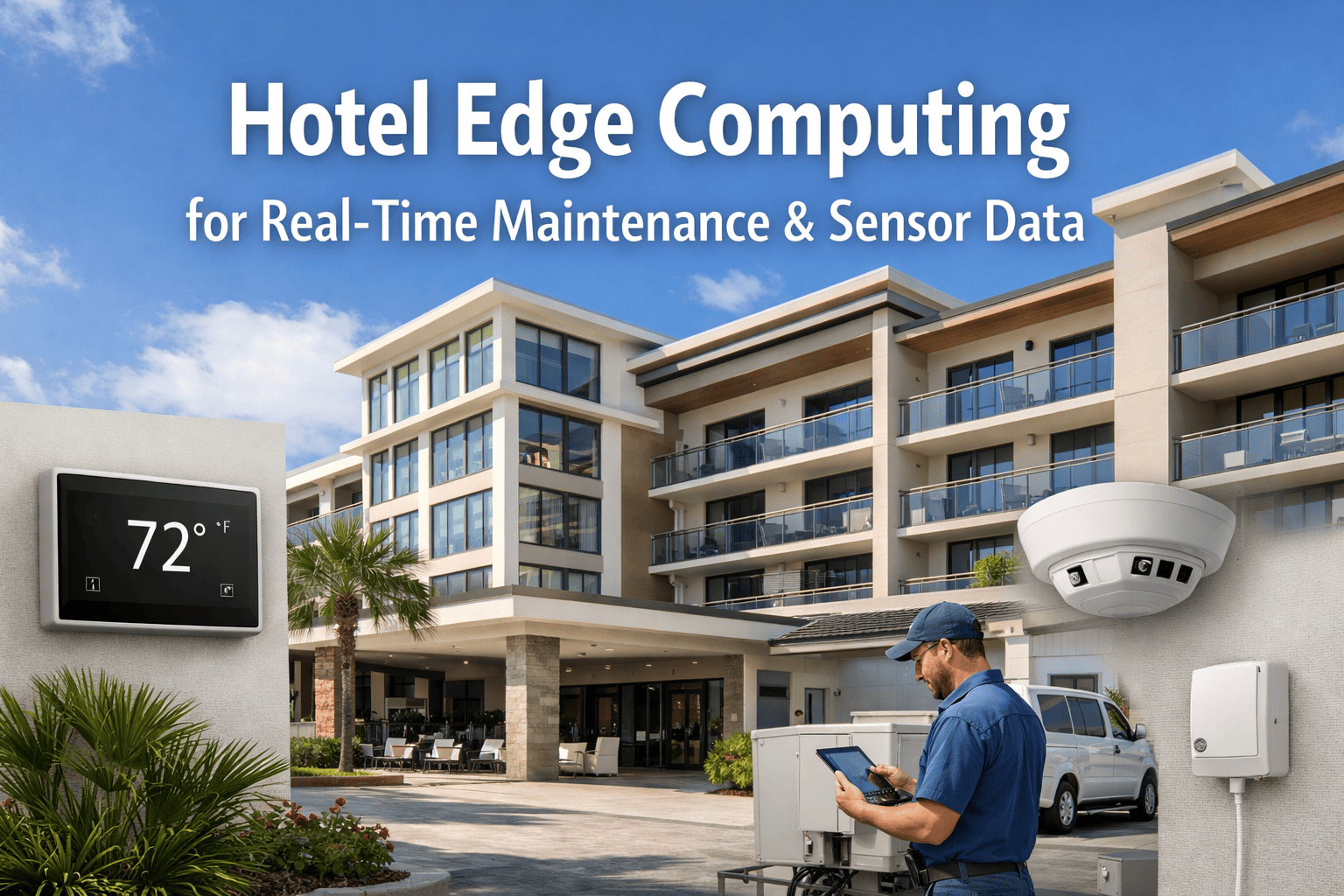
A single chiller failure at a 300-room hotel during peak summer occupancy costs $18,000–$42,000 in emergency repair, guest compensation, and lost revenue — in the first 48 hours alone. 73% of critical hotel equipment failures show detectable performance degradation 7–14 days before the breakdown occurs. The problem is not that the failure was unpredictable — it is that nobody was watching. Real-time equipment monitoring uses sensor data, IoT connectivity, and automated alerting to detect the degradation pattern while there is still time to act — converting catastrophic unplanned failures into scheduled, controlled maintenance events that cost 4.8x less and produce zero guest impact. Most hotel engineering teams still rely on walk-around inspections and run-to-failure maintenance for the systems guests depend on most. Start monitoring your hotel equipment in real time with Oxmaint — free, with automated alerts and condition tracking.
Blog · Hospitality · Real-Time Monitoring · High Priority
Real-Time Hotel Equipment Monitoring: Predict Failures Before Guests Feel Them
The difference between a 5-star review and a 1-star complaint is often a single piece of equipment — an HVAC compressor, a hot water recirculation pump, an elevator drive unit — failing at the wrong moment. Real-time monitoring gives engineering teams continuous visibility into the operating condition of every critical asset, with automated alerts when performance deviates from baseline. The result: 78% fewer unplanned equipment failures, 62% lower emergency repair costs, and zero guest-facing surprises from preventable breakdowns. Book a 30-minute demo to see live equipment monitoring dashboards in Oxmaint.
The Unplanned Failure Cost Gap
4.8x
Emergency repairs cost 4.8x more than planned maintenance on the same equipment
73%
Failures show detectable degradation 7–14 days before breakdown
78%
Fewer unplanned failures with real-time monitoring
$42K
Peak-season cost of a single critical chiller failure
24/7
Continuous monitoring — no gaps between inspection rounds
Definition
What Is Real-Time Hotel Equipment Monitoring — And Why Walk-Around Inspections Are No Longer Enough
Real-time equipment monitoring is the continuous, sensor-driven tracking of operating parameters — temperature, pressure, vibration, amperage, runtime hours, and flow rate — for critical hotel systems including HVAC, domestic hot water, elevators, emergency generators, kitchen refrigeration, and laundry equipment. Unlike scheduled inspections that capture a single snapshot every shift or every week, real-time monitoring records every data point 24 hours a day, creating a continuous performance baseline that makes deviations visible the moment they occur.
The fundamental limitation of walk-around inspection is time resolution. An engineer checks a chiller once per shift — 8 hours apart. The compressor begins drawing 18% excess amperage at 2:00 AM. By 6:00 AM the compressor has seized. The 4-hour detection window between onset and failure was invisible to the inspection schedule. Real-time monitoring closes that window to minutes — a 15% amperage deviation triggers an alert, a work order is created, and the technician addresses the issue before it becomes a failure. The cost difference between a bearing replacement at $380 and a compressor replacement at $12,600 is the ROI of continuous monitoring in a single event. Want to close the detection gap at your property? Start a free trial with Oxmaint — connect your first sensor in under 30 minutes.
73%
Failures Are Predictable
Detectable degradation 7–14 days before actual breakdown
62%
Lower Emergency Repair Cost
Planned interventions vs. unplanned emergency callouts
$8.2M
Annual Equipment Spend (250-Room)
Lifecycle replacement value of critical MEP systems
34%
Maintenance Budget Wasted
Spent on reactive repairs that monitoring would have prevented
Key Systems
The 6 Hotel Equipment Categories That Require Real-Time Monitoring
Not every piece of hotel equipment needs continuous monitoring — but every piece that can cause a guest-facing failure, a safety incident, or a six-figure replacement bill does. These are the six categories where real-time monitoring delivers measurable ROI within 90 days. Book a demo to see which of your assets should be monitored first.
01
HVAC — Chillers, AHUs, RTUs
Compressor amperage, suction and discharge pressure, supply air temperature, and coil differential. HVAC failures are the No. 1 source of guest comfort complaints — 41% of all maintenance-related negative reviews mention temperature or air quality.
02
Domestic Hot Water Systems
Boiler outlet temperature, recirculation loop temp, mixing valve output, and gas consumption rate. A hot water failure at 7:00 AM during peak shower demand affects every occupied room simultaneously — there is no partial failure mode.
03
Elevators & Vertical Transport
Motor temperature, door cycle count, leveling accuracy, and drive fault codes. Elevator outages in hotels with 8+ floors create immediate operational chaos — 22% of ADA complaints at hotels involve elevator availability.
04
Emergency Generators
Battery voltage, coolant temperature, fuel level, block heater status, and transfer switch response time. A generator that fails to start during a power outage is a life-safety event. Weekly test runs alone cannot detect battery degradation or fuel contamination.
05
Kitchen Refrigeration
Walk-in and reach-in temperatures, compressor runtime ratio, defrost cycle duration, and door open count. A walk-in cooler failure overnight can destroy $3,000–$8,000 in food inventory and trigger health department violations.
06
Laundry Equipment
Washer-extractor vibration, dryer exhaust temperature, steam trap performance, and cycle completion rates. Commercial laundry equipment in hotels runs 14–18 hours per day — bearing wear, belt degradation, and steam trap failures are predictable with continuous data.
Industry Pain Points
Why Hotels Keep Getting Surprised by Equipment Failures — The 6 Blind Spots
Hotel engineering teams are not careless — they are under-equipped. They are managing $5–$12 million in MEP assets with clipboards, memory, and walk-around inspections that cover each piece of equipment for 90 seconds per shift. These are the blind spots that real-time monitoring eliminates. See how Oxmaint eliminates each blind spot — sign up free and connect your first asset today.
!
8-Hour Detection Gaps
Walk-around inspections happen once per shift. Equipment degrades continuously. A compressor that starts overheating at 1:00 AM can seize by 5:00 AM — 4 hours before the morning inspection round.
!
No Baseline Comparison
Without continuous data, engineers cannot distinguish normal operating variation from abnormal degradation. A chiller drawing 12% more amps than last month looks normal in a single reading — but the trend is a failure precursor.
!
Night Shift Vulnerability
Night shifts run with minimal engineering staff — often 1 technician for the entire property. Critical failures between 11:00 PM and 6:00 AM are detected late, escalated slowly, and repaired by emergency contractors at 2x–3x cost.
!
Run-to-Failure Culture
Without condition data to justify proactive replacement, the default decision is to run equipment until it fails. This turns a $1,200 planned repair into a $9,500 emergency replacement — plus $4,000 in guest impact costs.
!
Invisible Energy Waste
Degrading equipment consumes 15–30% more energy before it fails. A fouled chiller condenser, a stuck economizer damper, or a cycling compressor wastes thousands in utility costs per month — invisible without continuous performance data.
!
No CapEx Evidence
When engineering requests $180,000 for a chiller replacement, ownership asks for data. Without monitoring history showing declining COP, rising amperage, and increasing repair frequency, the request is deferred — until the failure makes the decision for everyone.
How Oxmaint Solves It
Continuous Equipment Intelligence: Oxmaint's Real-Time Monitoring Platform
Oxmaint connects sensor data from every critical hotel asset to a unified monitoring dashboard — with automated alerts, condition scoring, trend analysis, and direct work order generation. The platform turns raw equipment data into actionable maintenance decisions. Want to see this working for your property? Book a 30-minute demo and explore the live monitoring dashboard.
IoT Integration
Sensor Connectivity & Data Ingestion
Oxmaint integrates with BACnet, Modbus, MQTT, and API-connected IoT sensors — pulling temperature, pressure, vibration, amperage, runtime, and flow data into a single platform. No proprietary hardware lock-in. Connect existing BMS sensors or add low-cost wireless sensors — data flows into Oxmaint within 15 minutes of configuration.
Alerting
Threshold-Based & Anomaly Alerts
Set fixed thresholds (chiller discharge pressure above 280 PSI) or let Oxmaint learn normal operating ranges and alert on statistical deviation. Alerts route to the on-duty technician via mobile push notification with asset ID, location, reading value, and recommended action — average alert-to-acknowledgment time is 4 minutes.
Condition Score
Asset Health Scoring — 0 to 100
Every monitored asset receives a real-time condition score from 0 (critical) to 100 (optimal) based on operating parameter trends, maintenance history, age, and alert frequency. Scores update continuously. A chiller trending from 82 to 64 over 21 days is visible on the dashboard before any alarm threshold is crossed — enabling planned intervention at the optimal time.
Trending
Historical Performance Trends
Every data point is stored and graphable — allowing engineers to compare current performance to 30-day, 90-day, and 12-month baselines. A boiler that ran at 87% efficiency last January and 79% this January has a documented degradation trend that supports the maintenance or replacement decision with data, not opinion.
Auto Work Orders
Alert-to-Work-Order Automation
When an alert fires, Oxmaint can auto-generate a work order with the asset record, alert details, historical context, and recommended corrective action pre-populated. The technician opens the work order on their mobile device and sees everything they need — no radio call, no verbal dispatch, no lost information between the alert and the repair.
Energy Link
Equipment-Level Energy Tracking
Oxmaint correlates equipment operating data with utility consumption — showing how each asset's condition affects energy cost. A chiller with declining COP is not just a maintenance issue — it is costing $1,800/month in excess electricity. The energy impact quantifies the ROI of the repair before it happens.
CapEx Data
Data-Driven Replacement Justification
Monitoring data builds the evidence file for every capital replacement request — declining condition scores, increasing repair frequency, rising energy consumption, and total cost of ownership over the trailing 24 months. When engineering presents the chiller replacement request, the data package is already built and audit-ready.
Portfolio View
Multi-Property Equipment Dashboard
For hotel groups, Oxmaint rolls up equipment health data across all properties — comparing condition scores, alert volumes, and failure rates property-by-property. Identify which properties have the highest equipment risk exposure and allocate engineering resources and CapEx budgets based on data, not assumptions.
Every Critical Asset. Monitored. Scored. Alerted. 24/7.
Sensor data flows in continuously. Condition scores update in real time. Alerts route to the right technician instantly. Work orders generate automatically. Energy impact is quantified per asset. CapEx decisions have data behind them. No more walk-around inspections as your only line of defense.
Start your real-time equipment monitoring program in Oxmaint today — free to begin.
Before vs. After
Reactive Walk-Around Maintenance vs. Oxmaint Real-Time Equipment Monitoring
| Metric |
Walk-Around / Run-to-Failure |
Oxmaint Real-Time Monitoring |
| Failure Detection Window |
8 hours (once per shift inspection) |
4 minutes (continuous sensor + mobile alert) |
| Unplanned Equipment Failures |
12–18 per year (250-room hotel) |
3–4 per year with condition-based intervention |
| Emergency Repair Spend |
34% of total maintenance budget |
8% of budget — 62% reduction in emergency costs |
| Guest-Impacting Equipment Outages |
6–9 per year (HVAC, hot water, elevator) |
0–2 per year with predictive alerting |
| Energy Waste from Degrading Equipment |
Invisible — no baseline comparison available |
Quantified per asset with efficiency trend tracking |
| CapEx Request Documentation |
Anecdotal — "it keeps breaking" |
Audit-ready data: condition trend, repair cost, energy impact |
| Night Shift Equipment Coverage |
1 technician, manual rounds every 4 hours |
24/7 automated monitoring with instant mobile alerts |
| Average Equipment Lifespan Extension |
Baseline — no condition management |
18–25% longer useful life through condition-based maintenance |
Based on aggregate data from hotel engineering operations using continuous monitoring systems vs. inspection-based maintenance programs across 180+ properties. See how your property compares — book a demo with Oxmaint.
ROI & Results
The Measurable Impact of Real-Time Equipment Monitoring in Hotels
Hotels that implement continuous equipment monitoring do not just prevent failures — they extend equipment life, reduce energy waste, and build the data foundation for smarter CapEx decisions. Here is what the numbers show across properties using Oxmaint. Ready to see these results at your property? Start a free trial and connect your first monitored asset.
78%
Fewer Unplanned Failures
From 15 unplanned failures per year to 3 — caught during degradation, not after breakdown
62%
Lower Emergency Repair Cost
Planned bearing replacement at $380 vs. emergency compressor swap at $12,600
22%
Energy Cost Reduction
Identifying and correcting degrading equipment that wastes 15–30% excess energy
$127K
Annual Savings (250-Room Hotel)
Prevented failures + energy savings + extended equipment life + reduced emergency labor
"
We had a chiller compressor fail at 2:00 AM on a Saturday in July — 94% occupancy. Emergency contractor, $14,200 repair, 38 guest complaints, 6 room comps totaling $4,800. That single event cost us $19,000 and a 0.3-point drop in our TripAdvisor rating. After implementing Oxmaint monitoring, we caught a nearly identical degradation pattern on our second chiller — amperage trending 16% above baseline over 11 days. We scheduled the bearing replacement for Tuesday morning. Cost: $420. Guest impact: zero. That one catch paid for 3 years of monitoring in a single event.
Chief Engineer · 280-Room Full-Service Hotel, Southwest US
Frequently Asked Questions
Real-Time Hotel Equipment Monitoring FAQs
What types of sensors does Oxmaint integrate with for hotel equipment monitoring?
Oxmaint integrates with any sensor or building management system that communicates via BACnet, Modbus TCP/RTU, MQTT, or REST API — which covers the vast majority of commercial building automation and IoT sensor platforms. For hotels with an existing BMS (Honeywell, Johnson Controls, Siemens, Tridium), Oxmaint pulls data directly from the BMS without requiring additional sensors. For hotels without a BMS or wanting to monitor assets not connected to the building automation system — such as kitchen refrigeration, laundry equipment, or standalone RTUs — wireless IoT sensors (temperature, vibration, current transformers) can be added and connected to Oxmaint via cellular or Wi-Fi gateway in under 30 minutes per sensor. There is no proprietary hardware requirement.
Explore sensor integration options — sign up free in Oxmaint and configure your first connection.
How does the condition scoring system work — what determines an asset's health score?
Oxmaint's condition score is a composite 0–100 rating that combines multiple factors: real-time operating parameters vs. manufacturer specifications and historical baselines, maintenance history (frequency of corrective work orders, parts replacement patterns), asset age vs. expected useful life, alert frequency and severity over trailing 30/90/365-day windows, and energy efficiency trend (actual consumption vs. rated consumption). The score updates continuously as new data flows in. A score above 80 indicates healthy operation. Between 60–80 indicates monitoring with planned action. Below 60 triggers recommended intervention. Below 40 flags the asset for urgent action or replacement evaluation. Engineers can drill into any score to see the contributing factors and the trend over time.
Book a demo to see condition scoring in action on real hotel equipment data.
What is the implementation timeline and does it require IT infrastructure changes?
Most hotel properties complete implementation in 5–10 business days depending on the number of assets to be monitored and whether an existing BMS is being integrated. For BMS integration, the process involves configuring data points in the existing building automation system and connecting them to Oxmaint via a lightweight software gateway — no hardware installation required. For wireless sensor deployment, sensors are physically mounted on the target equipment and connected to a cellular or Wi-Fi gateway. Oxmaint is fully cloud-based — there is no on-premises server, no VPN configuration, and no changes to the hotel's IT network. The engineering team accesses the monitoring dashboard via web browser and receives alerts via the Oxmaint mobile app.
Get started with your implementation — sign up free and talk to our onboarding team.
Can Oxmaint monitoring data support CapEx requests to ownership and investors?
This is one of the highest-value applications of continuous monitoring data. Oxmaint generates equipment-level reports that document the complete performance and cost history for any asset — including condition score trend over 6–24 months, total corrective maintenance cost (labor + parts), energy efficiency degradation with estimated excess utility cost, alert history showing frequency and severity, and remaining useful life estimate based on condition trajectory. This data package transforms a CapEx request from "the chiller keeps breaking" to "Chiller-1 has declined from condition score 74 to 41 over 18 months, incurred $23,400 in corrective maintenance, and is consuming 28% more energy than rated — projected replacement cost is $165,000 with a 3.2-year payback from avoided repair and energy savings."
Book a demo to see investor-grade equipment reports generated from monitoring data.
Real-Time Monitoring · Condition Scoring · Free to Start
Your Equipment Is Talking. Start Listening Before It Screams.
Continuous sensor data. Automated threshold and anomaly alerts. 0–100 condition scoring for every critical asset. Historical performance trending. Auto-generated work orders from alerts. Energy impact quantified per asset. CapEx evidence packages built automatically. The monitoring platform that converts equipment data into maintenance intelligence — starting with the systems your guests depend on most.