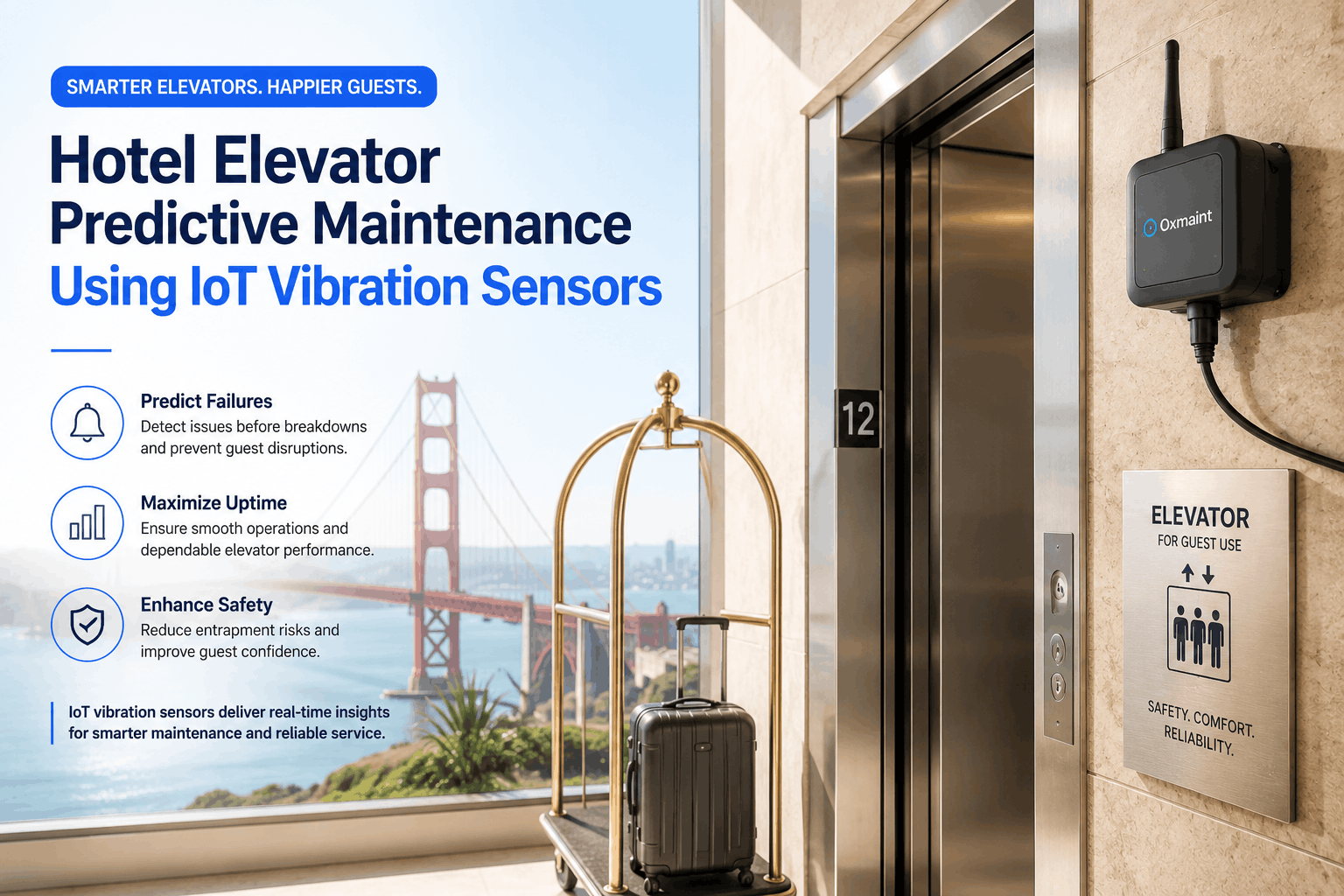
Hotel Edge Computing for Real-Time Maintenance & Sensor Data
By Mark Strong on April 18, 2026
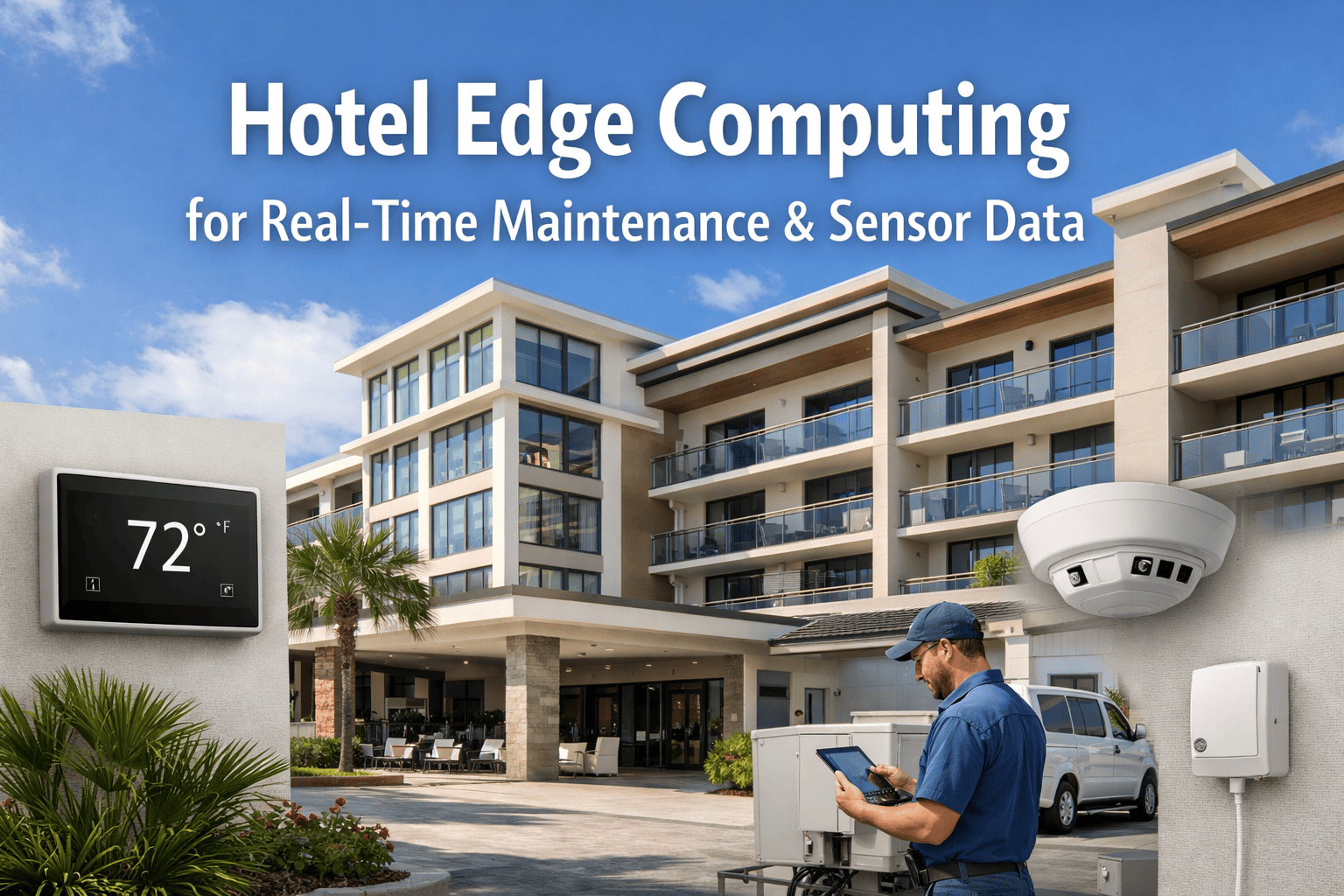
Your hotel’s HVAC system fires off 47 alerts in just 3 seconds, overwhelming your system instantly.
Meanwhile, your cloud dashboard struggles to load, creating a dangerous delay.Before the data even appears, the compressor on Floor 12 has already failed.A guest paying $600 a night is left uncomfortable and frustrated.This hidden latency issue is a major challenge in hospitality maintenance.Edge computing solves it by processing data instantly—right where it’s generated.Instead of waiting for cloud responses, decisions happen in real time at the source.Maintenance teams get immediate alerts and can act before failures escalate.Downtime is reduced, and equipment life is extended significantly.Guests experience consistent comfort, protecting your brand reputation.
Operational efficiency improves, saving both time and repair costs.In a fast-paced hospitality environment, every second saved truly matters.
Hotel Maintenance Intelligence
Edge Computing for Real-Time Hotel Maintenance
Process sensor data on-site. Respond in milliseconds. Stop equipment failures before guests notice.
5–50ms
Edge response vs 500–3000ms cloud latency
20%
Reduction in equipment downtime with on-site processing
50–200
IoT devices per hotel room generating sensor data
3.2x
More guest complaints in hotels without structured IoT management
Cloud vs. Edge: Why Milliseconds Matter in a Hotel
When a sensor on your chiller detects an anomaly, data travels to a cloud server — potentially hundreds of miles away — gets processed, and sends back an alert. That round trip takes 500 to 3,000 milliseconds. Edge computing cuts that to 5 to 50 milliseconds by processing the data right inside your property.
Cloud vs. Edge: Side-by-Side Reality Check
Cloud Processing
⚠
500–3,000ms latency — alert arrives after the failure window
⚠
Internet dependency — outage = blind maintenance team
⚠
High bandwidth costs — every sensor reading uses connectivity
⚠
Misses rapid-onset failures — 15–25% of sudden breakdowns go undetected
Edge Processing
✓
5–50ms response — real-time safety shutdowns and immediate alerts
✓
Offline capable — keeps monitoring even when internet drops
✓
Reduced bandwidth — only critical insights sent to cloud
✓
Catches rapid failures — analyzes anomalies at the moment they form
What Edge Computing Actually Looks Like Inside a Hotel
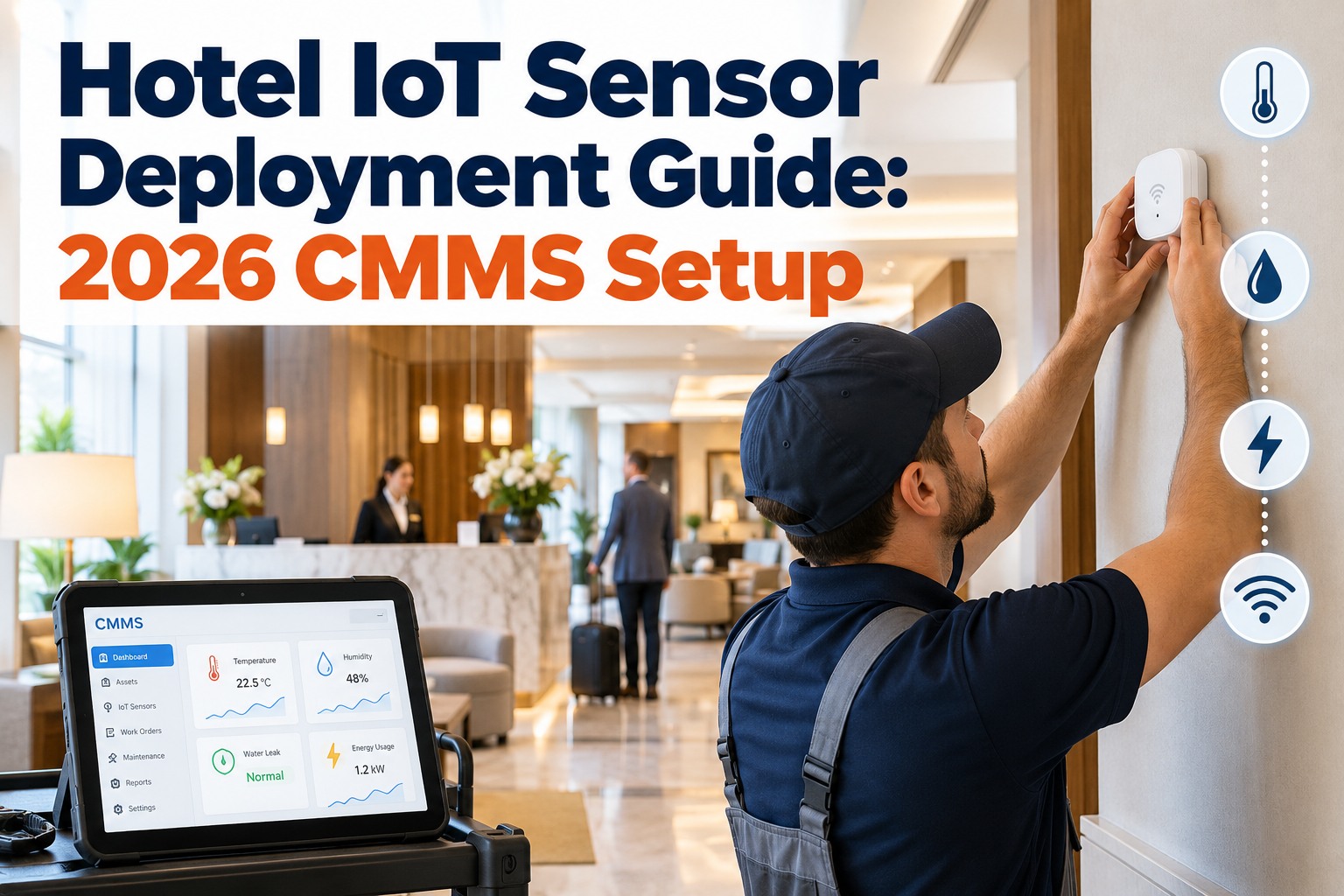
Edge computing is not a magic box. It is a local server or gateway — often installed in your hotel's server room or mechanical plant — that collects sensor data from across the property, runs AI models on-site, and only pushes summarized insights to the cloud. Your maintenance team gets alerts in real time, not after a round trip to a data center.
Hotel Edge Architecture: How Data Flows
01
Sensors Generate Data
HVAC, chillers, elevators, leak detectors, thermostats, and room automation hubs continuously produce readings — 24/7 across every floor.
↓
02
Edge Gateway Captures Locally
An on-property IoT edge gateway collects all sensor streams and runs pre-trained AI models to detect anomalies, threshold breaches, and failure patterns — entirely on-site.
↓
03
CMMS Receives Instant Work Orders
The edge platform pushes alerts and auto-generated work orders to your CMMS in milliseconds — with asset ID, location, fault description, and recommended action attached.
↓
04
Cloud Gets the Summary
Only aggregated insights, trend data, and compliance records travel to the cloud — saving bandwidth while enabling portfolio-wide analytics and long-term reporting.
The 5 Hotel Systems That Benefit Most from Edge Processing
Not every system needs edge compute equally. The highest-impact deployments target assets where a few seconds of delay translate directly into guest complaints, equipment damage, or energy waste.
01
HVAC & Chiller Plant
Temperature anomalies escalate fast. Edge AI detects compressor stress, refrigerant loss, and coil fouling before a room becomes uninhabitable.
Impact: Prevents emergency repairs averaging $5,000–$15,000 per incident
02
Elevators & Vertical Transport
Vibration and motor data processed at the edge catches bearing wear weeks before a breakdown that strands guests between floors.
Impact: 50–70% fewer unplanned shutdowns with condition-based monitoring
03
Smart Room Automation
Connected thermostats, lighting, and occupancy sensors generate thousands of data points per hour. Edge processing handles this volume without cloud latency affecting guest comfort.
Impact: Real-time room adjustments — no lag, no guest-facing glitches
04
Water & Leak Detection
A burst pipe processed by cloud takes 2–3 minutes to trigger an alert. Edge detects the flow anomaly in under 50ms — the difference between a wet towel and a flooded floor.
Impact: Water damage claims average $11,000 — most are preventable with real-time detection
05
Power & Energy Management
On-site processing correlates occupancy data with energy draw in real time — automatically adjusting loads without waiting for cloud round-trips that miss demand spikes.
Impact: 25–40% energy savings with real-time load optimization
See Edge-Powered Maintenance in Action
Oxmaint integrates with hotel IoT sensors and edge gateways to deliver real-time work orders, predictive alerts, and compliance documentation — all in one platform.
Edge vs. Cloud vs. Hybrid: Choosing the Right Architecture
Pure cloud fails rapid-onset failures. Pure edge lacks the computational depth for long-term pattern recognition. Most leading hotel operations are moving toward a hybrid model — edge for real-time protection, cloud for strategic analysis.
Architecture Decision Framework for Hotel Maintenance
Factor
Cloud Only
Edge Only
Hybrid (Recommended)
Response Time
500–3,000ms
5–50ms
5–50ms local + cloud analytics
Offline Operation
No
Yes
Yes — edge runs independently
Predictive Accuracy
85–95%
Good for immediate threats
92–98% combined effectiveness
Bandwidth Cost
High
Minimal
Low — only summaries sent to cloud
Long-term Pattern Analysis
Excellent
Limited
Full — cloud handles historical trends
The ROI Case: What Real-Time Processing Is Worth
The financial argument for edge computing in hotel maintenance is built on three levers: preventing equipment failures before they cost a fortune, eliminating guest-facing incidents that damage reviews, and reducing energy waste through real-time load control.
Three-Dimensional ROI of Edge-Powered Hotel Maintenance
Risk Avoidance
20%Reduction in equipment downtime through on-site predictive detection
50–70%Fewer emergency repair calls with condition-based triggers
3.2xFewer guest complaints in hotels with structured IoT maintenance management
Energy Savings
25–40%Energy cost reduction from real-time load optimization and HVAC control
25%Operational cost cuts from reduced cloud processing and bandwidth spend
44%Less reactive IoT remediation spend in hotels with formal device lifecycle management
Asset Longevity
2xEquipment lifespan when failures are caught in early stages rather than at breakdown
68%Of hotels have no formal IoT device inventory — leaving assets untracked and unmaintained
12–36moEarlier CapEx visibility on device replacement cycles with proper lifecycle tracking
Implementation Roadmap: Getting Edge-Ready in 90 Days
You do not need to rip out your existing infrastructure. Edge computing for hotel maintenance layers on top of what you already have — starting with high-priority assets and expanding from there.
Does edge computing replace our existing cloud CMMS?
No — edge computing works alongside your CMMS, not instead of it. The edge gateway handles real-time sensor processing and triggers instant work orders, while the cloud CMMS stores records, manages workflows, and provides long-term analytics. They are complementary layers, not competing systems.
What happens to maintenance alerts if our internet goes down?
Edge devices continue operating independently of internet connectivity. Sensor monitoring, anomaly detection, and local alert generation all continue without interruption. Work orders queue locally and sync to the cloud once connectivity is restored — ensuring no maintenance event is missed during outages.
How many sensors can one edge gateway handle in a hotel?
Modern IoT edge gateways can handle hundreds to thousands of concurrent sensor streams per unit, depending on the hardware specification. Hotels deploy 50 to 200 IoT devices per room — a mid-scale property may connect multiple gateways, each handling a floor cluster or building zone for optimal coverage and redundancy.
Is edge computing only useful for large hotels?
Not at all. Even a 100-room property with smart room automation, connected HVAC, and IoT locks generates enough sensor volume to benefit from edge processing. The latency reduction and offline reliability are valuable regardless of property size — and the hardware investment scales proportionally to the number of assets monitored.
Protect Your Guests. Protect Your Equipment. Process Data Where It Matters.
Oxmaint connects hotel IoT sensors and edge gateways to a CMMS built for real-time hotel operations — with auto-generated work orders, predictive alerts, and full compliance documentation.