AI-Driven Predictive Maintenance for Backup Generators in Hospitality

By Diddy on January 20, 2026

backup-generator-predictive-maintenance

The hotel was at 98% occupancy—a sold-out weekend with a tech conference in the ballroom, 340 guests in their rooms, and a five-star restaurant service underway—when the lights went out. The backup generator, which had passed its monthly inspection just three weeks earlier, refused to start. A corroded battery terminal that looked fine to the human eye had failed silently. Elevators stopped between floors, refrigerated food began spoiling, security systems went offline, and panicked guests flooded the front desk. By the time an emergency technician arrived, the damage was done: comp'd rooms, a viral TripAdvisor review,  and insurance claims that would cost more than replacing every generator on the property. The battery terminal that turned a profitable weekend into a six-figure loss cost $12.

73%
Failure Reduction
AI-powered predictive maintenance reduces equipment failures by detecting degradation patterns weeks before breakdown occurs.

Backup generators sit dormant for months, waiting for the moment they're needed most. When grid power fails during a storm, a conference, or a fully-booked weekend, that generator must start within seconds—no exceptions. The hospitality industry has accepted generator testing and maintenance as a cost of doing business, but the traditional approach has a fundamental flaw: it can only find problems that have already become visible. AI-driven predictive maintenance changes this equation entirely, detecting the invisible patterns that precede failure before your guests ever notice a flickering light. Hotels that start tracking generator health digitally discover problems weeks before they would have caused midnight emergencies.

The Real Cost of Generator Failure in Hospitality

Hotels don't just lose power when generators fail—they lose control of the guest experience, their reputation, and potentially their future bookings. Understanding the full impact of generator failure reveals why predictive maintenance isn't a luxury; it's business-critical infrastructure protection.

What Hotels Actually Lose During Generator Failure
$150K+
Cost per hour of downtime for organizations—98% report this threshold
Only 25%
Of hotels had working generators during major Northeast blackout
85% vs 16%
Hotels with standby generators kept power vs. those relying on batteries
$12,500
Daily revenue loss for small businesses during power outages

How AI Predictive Maintenance Actually Works

Traditional maintenance asks: "Is this generator working right now?" AI predictive maintenance asks: "Will this generator work when we need it, based on patterns invisible to human inspection?" The difference sounds subtle but changes everything about reliability. When facility managers see how predictive alerts work in a live demo, the shift from reactive to proactive becomes immediately clear.

The AI Predictive Maintenance Cycle From sensor data to prevented failures
01
Continuous Monitoring
IoT sensors track vibration, temperature, fuel quality, battery voltage, and run-time patterns—24/7, not just during scheduled tests.

02
Pattern Recognition
Machine learning algorithms analyze thousands of data points to identify subtle deviations that precede component failure.

03
Failure Prediction
AI models predict which specific component will fail, when it will fail, and how urgent intervention is—weeks before breakdown.

04
Smart Scheduling
Maintenance is scheduled during low-occupancy periods, parts are pre-ordered, and technicians know exactly what to fix.
The Maintenance Evolution
Reactive Approach
  • Wait for failure, then fix
  • Emergency repairs at premium cost
  • Unpredictable downtime
  • Guest complaints guaranteed
  • Shortened equipment lifespan
7-10 years average lifespan
AI Predictive
  • Predict failure before it happens
  • Planned repairs at standard cost
  • Zero surprise downtime
  • Invisible to guests
  • Maximized equipment lifespan
15-20 years average lifespan

What AI Actually Detects Before Humans Can

Generator failures don't happen randomly—they follow patterns. AI systems continuously learn these patterns from your equipment and across thousands of similar generators, identifying risks that would take experienced technicians years to recognize. Properties ready to move beyond guesswork can create a free account and see their generator data organized for predictive insights within days.

Early Warning Signals AI Catches
Vibration Anomalies
Micro-changes in vibration frequency indicate bearing wear, misalignment, or loose components 4-6 weeks before failure.


Temperature Drift
Gradual increases in operating temperature reveal coolant degradation, blocked airflow, or developing electrical issues.

Battery Degradation
Voltage patterns during charging/discharging cycles reveal capacity loss before startup failure occurs.

Fuel Quality Decline
Chemical analysis of fuel samples detects water contamination, bacterial growth, and oxidation degradation.

The ROI Hotels Actually See

Predictive maintenance isn't just about preventing disasters—it transforms maintenance from a cost center into an operational advantage. Hotels implementing AI-driven generator monitoring consistently report measurable improvements across multiple metrics.

Documented Outcomes from Predictive Maintenance Based on Deloitte research and industry implementations
70%
Reduction in unexpected breakdowns
45%
Decrease in downtime events
30%
Lower maintenance costs
40%
Extended asset lifespan
Ready to Predict Instead of React?
See how Oxmaint brings AI-powered predictive maintenance to your generator fleet—with automated scheduling, real-time alerts, and inspection-ready documentation.

NFPA 110 Compliance Made Automatic

Fire marshals and insurance auditors don't just want to know your generator works—they want documented proof of testing compliance. NFPA 110 mandates specific testing intervals, and missed documentation can void insurance coverage or delay certificate of occupancy renewals. Teams that schedule a walkthrough of automated compliance tracking typically discover they've been over-documenting some tasks while missing critical requirements on others.

Required Testing Schedule for Hotel Generators
Frequency Required Test What AI Tracks Documentation Generated
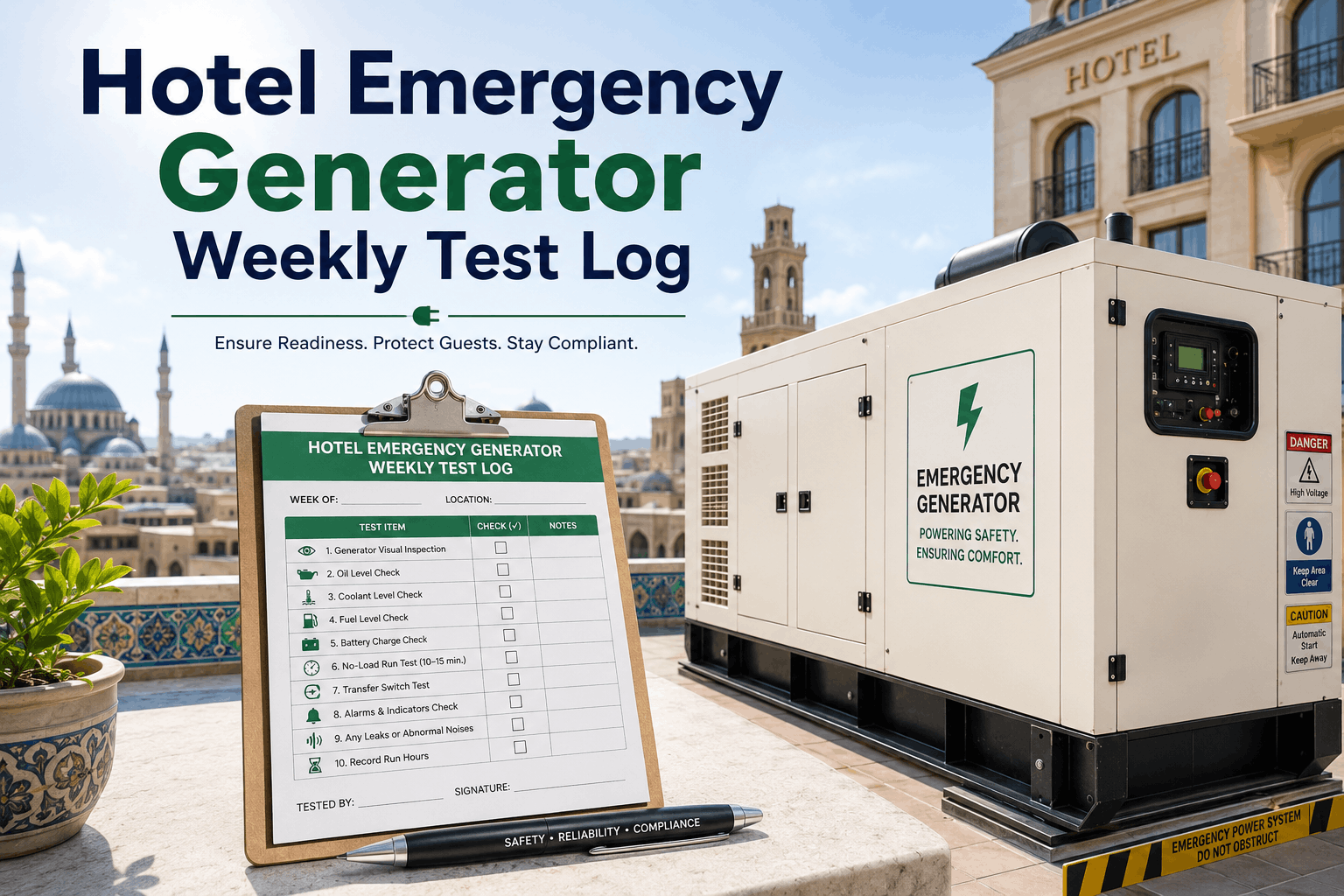
Weekly No-load run test (30 min) Start time, voltage stability, abnormal sounds, fluid levels Timestamped run log with sensor readings
Monthly Load bank test (30% minimum) Load acceptance, temperature rise, exhaust quality, fuel consumption Load curve analysis, performance trending
Quarterly Transfer switch test Transfer time, voltage transients, load sequencing Transfer event recording, circuit verification
Annual Full-load test (2+ hours) Sustained performance, cooling system efficiency, all-system integration Comprehensive inspection certificate
Oxmaint automatically schedules all required tests, sends reminders, and generates inspection-ready documentation for every compliance requirement.

What Implementation Actually Looks Like

Transitioning to AI-driven predictive maintenance doesn't require replacing your generators or overhauling your operations. Modern CMMS platforms integrate with existing equipment and staff workflows. Most properties start with a free trial to test the mobile app and scheduling features before committing to full implementation.

Typical Implementation Timeline
Week 1
Asset Setup
Generator inventory entered QR code tags installed Maintenance history imported
Week 2
Schedule Configuration
NFPA 110 tasks automated Team assignments created Alert thresholds set
Week 3
Team Training
Mobile app deployment Inspection workflows learned Reporting dashboards reviewed
Week 4+
Predictive Operations
AI learning from your data Predictive alerts active Compliance documentation automatic
The shift from calendar-based to condition-based maintenance eliminates the guesswork from maintenance planning. AI systems identify abnormal conditions faster and more accurately than conventional methods.
— Industry Analysis on Predictive Maintenance Impact

Your Generator Is Waiting to Be Called

Somewhere in your building, a backup generator sits ready for the moment it matters most. The question isn't whether you're maintaining it—you probably are. The question is whether you'll know it's about to fail before your guests do. AI-driven predictive maintenance is the difference between hoping your generator works and knowing it will.
Don't Wait for the Failure That Proves You Needed This
Oxmaint transforms generator maintenance from a checkbox exercise into genuine reliability assurance. Automated compliance, predictive alerts, and instant documentation—all from the platform trusted by facility teams across hospitality.

Frequently Asked Questions

How does AI predict generator failures before they happen?
AI analyzes continuous data streams from sensors monitoring vibration, temperature, voltage, and performance patterns. Machine learning algorithms compare this data against known failure signatures and historical patterns from thousands of similar generators. When subtle deviations appear—changes invisible to human inspection—the system flags them weeks before they would cause actual failure, allowing scheduled repairs during convenient times.
What testing does NFPA 110 require for hotel generators?
NFPA 110 mandates weekly no-load tests (minimum 30 minutes), monthly load tests (at least 30% of rated capacity), and annual full-load tests lasting two or more hours. Transfer switches must be tested to verify proper operation and transfer timing. All tests require documented records showing date, duration, personnel, and any issues discovered. Missing documentation can result in insurance coverage issues and inspection failures.
How much does predictive maintenance reduce generator costs?
Industry research shows predictive maintenance programs reduce overall maintenance costs by 25-30% while decreasing unexpected breakdowns by 70-75%. The savings come from eliminating unnecessary scheduled replacements, preventing catastrophic failures that damage multiple components, and extending equipment lifespan by 40% or more. For hotel generators, this typically means avoiding a single $50,000+ emergency replacement pays for years of predictive monitoring.
Can predictive maintenance work with our existing generators?
Yes. Modern CMMS platforms like Oxmaint work with any generator regardless of age or manufacturer. Basic implementation uses your existing testing schedule with digital documentation and automated alerts. Advanced implementations can add IoT sensors to older equipment for continuous monitoring. The system adapts to your current infrastructure rather than requiring equipment replacement.
How quickly can we implement AI-driven generator maintenance?
Most hotels achieve full implementation within 2-4 weeks. Week one covers asset setup and historical data import. Week two establishes automated scheduling and compliance workflows. Week three trains staff on mobile apps and dashboards. By week four, the system is generating predictive insights based on your equipment's specific patterns. Many properties see compliance improvements immediately upon digitizing their documentation.

Share This Story, Choose Your Platform!