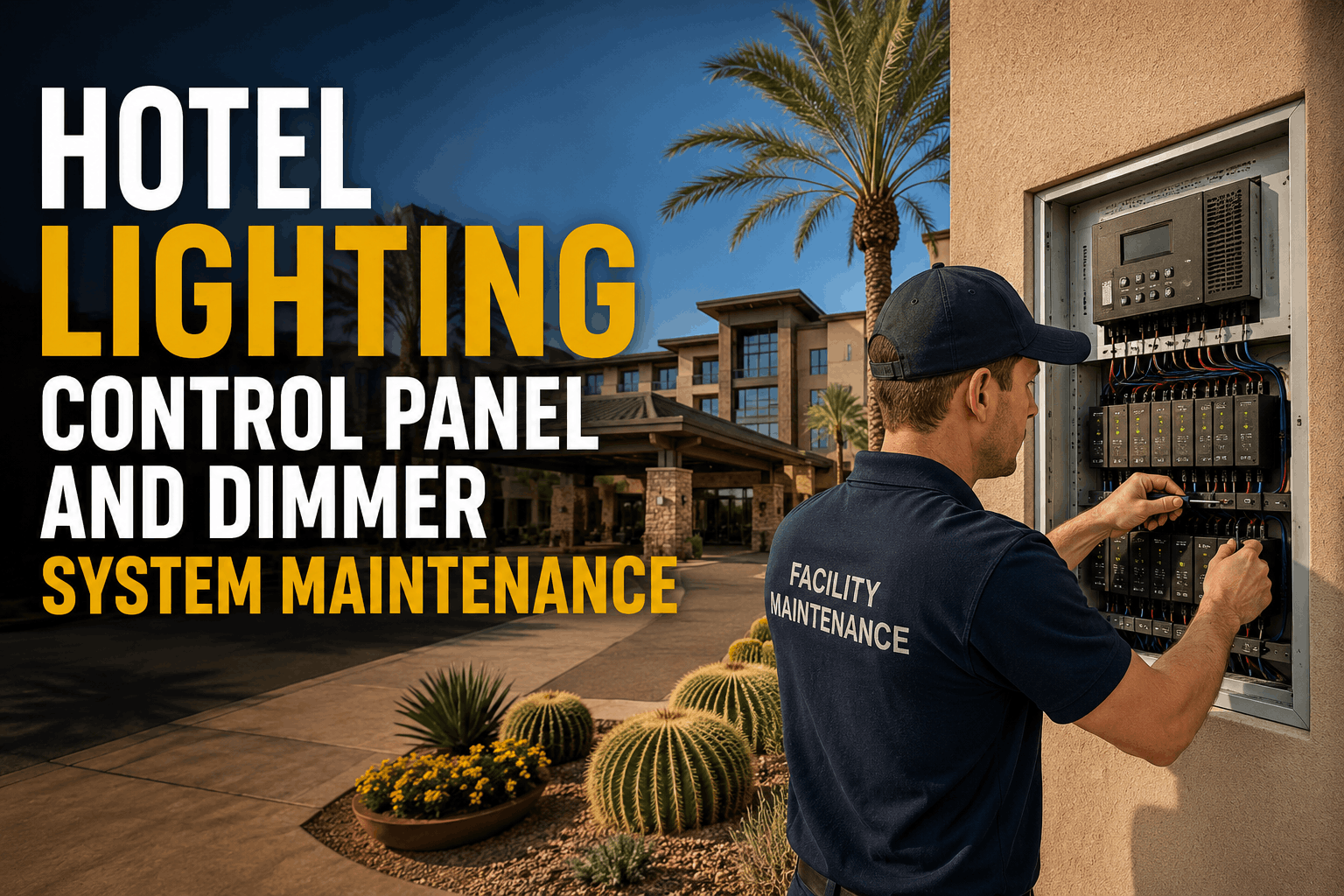
Hotel Lighting Control Panel and Dimmer System Maintenance
By Alex Jordan on June 3, 2026
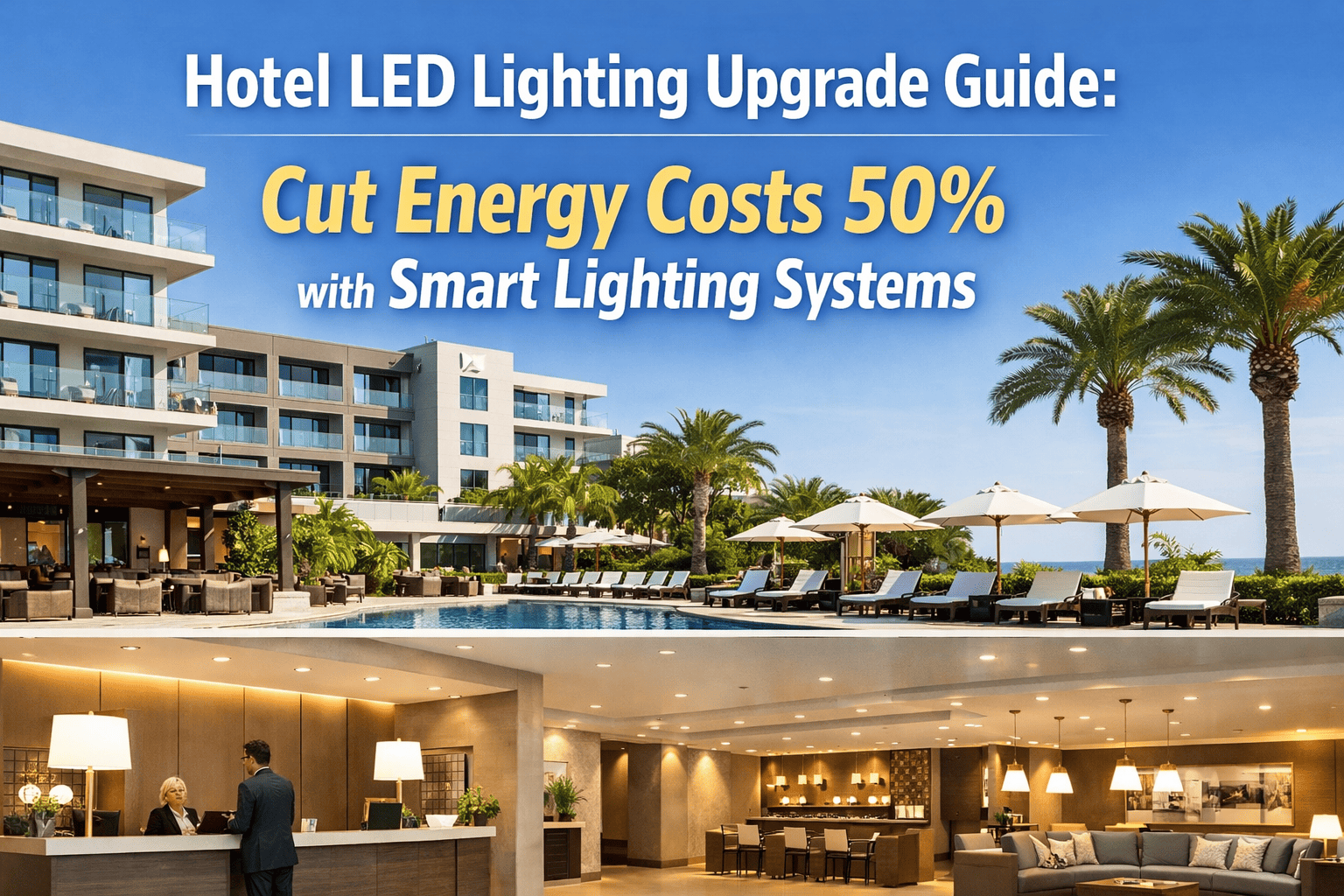
Hotel lighting systems run 24/7, consuming 15–25% of total energy costs. Yet most hotels operate these systems on timers or manual switching — burning electricity in unoccupied rooms, empty hallways, and vacant conference spaces. The result is wasted energy, inflated utility bills, and missed opportunities for guest experience improvement. Smart lighting control systems with occupancy sensors and dimming technology reduce lighting energy by 40–60% while improving guest comfort and enabling real-time energy management. Hotels implementing systematic lighting control programs report $150–$375 per room annual energy savings, combined with enhanced guest experience from dimming and bio-adaptive color temperature. For a 200-room hotel, that's $30,000–$75,000 annual utility savings — paid back in 18–24 months through reduced energy costs. The maintenance component is straightforward: quarterly sensor cleaning, annual ballast testing, and preventive bulb replacement. Get the maintenance discipline right, and the payback compounds every single year.
HOTEL ENERGY MANAGEMENT · OXMAINT PLATFORM
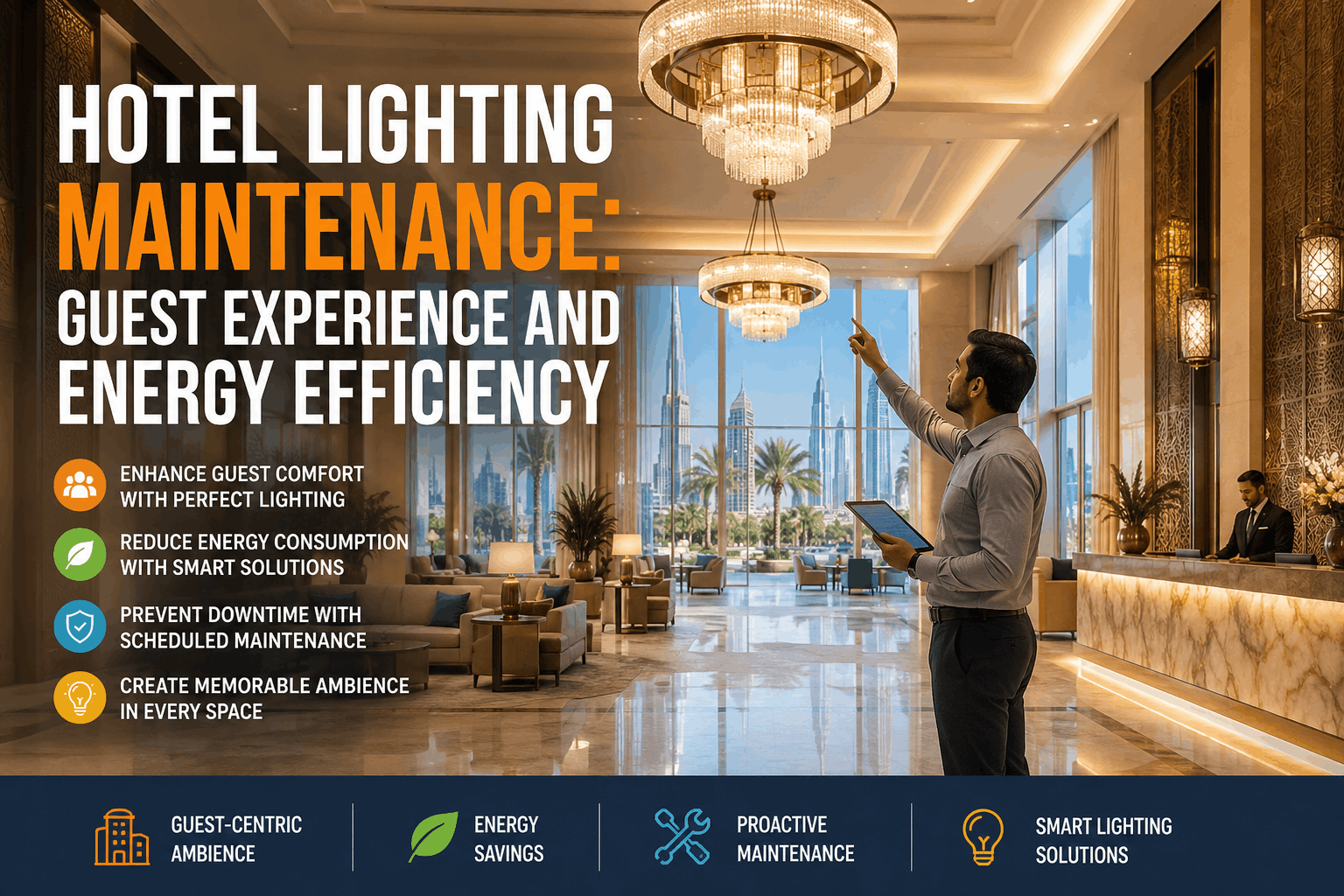
Intelligent Lighting Maintenance — Saving Energy & Protecting Guest Experience
Track sensor cleanliness, dimmer calibration, and occupancy function monthly. Prevent flickering, maintain color temperature accuracy, and capture energy savings. Smart maintenance + smart systems = maximum ROI.
Lighting Energy Consumption & The Maintenance Factor
Most hotel owners understand that LED lighting saves energy compared to incandescent. What they often miss is that the savings only materialize if the system is maintained properly. Dirty occupancy sensors don't detect guests and leave lights on. Uncalibrated dimmers flicker and create guest complaints. Broken ballasts degrade light quality. Unmaintained fixtures accumulate dust and lose 20–30% of output. Smart lighting requires smart maintenance. Here's the data.
Hotel Lighting System Energy Impact & Savings Potential
Energy analysis: 200-room US hotel property, actual utility data 2024–2025
LED Conversion (Baseline)
40–50% energy reduction vs. incandescent
Upgrading all 200-room fixtures from incandescent to LED reduces lighting energy from $60,000/year to $30,000–$36,000/year. This is the standalone LED benefit — no controls, no sensors, just better bulbs running 24/7 in the same way as before.
Occupancy Sensors (Active Control)
Additional 30–40% reduction on top of LED
Guest rooms, corridors, stairwells, and service areas get occupancy sensors. Lights turn off automatically when unoccupied. Corridor energy alone drops 50–70% because these lights run full brightness 24/7 without sensors but only need illumination when people are present. Annual savings: additional $9,000–$14,400.
Daylight Harvesting (Window Areas)
Additional 15–25% reduction in daylit zones
Lobbies, atria, restaurant areas, and windowed corridors use daylight sensors to dim artificial lights proportionally to available daylight. A sunlit lobby running at 30% output at noon vs. full brightness automatically — no guest action required. Estimated annual savings: $4,500–$7,500.
Maintenance & System Efficiency
5–10% additional savings from optimal performance
Clean sensors detect occupancy reliably. Calibrated dimmers work accurately. Well-maintained ballasts don't degrade performance. System runs at design efficiency instead of 80% efficiency. Estimated annual savings: $1,500–$3,000. This is where maintenance discipline delivers direct ROI.
Total Annual Lighting Savings
$25,500–$39,900 for 200-room hotel
Baseline lighting cost: $60,000/year. With LED + occupancy + daylight + maintenance: $20,100–$34,500/year. This compounds annually — energy rates increase 2–3%/year, so the dollar savings grow. 5-year cumulative: $135,000–$210,000.
Lighting Control System Architecture: Guest Rooms, Corridors & Common Areas
Different hotel zones require different control strategies. Guest rooms prioritize guest control and energy efficiency. Corridors and emergency stairwells prioritize safety and automatic control. Restaurant and lobby lighting prioritizes guest experience and ambience. Below is how maintenance strategies differ by zone — each one optimized for that specific environment.
Guest Room Lighting Control
Guest rooms use manual-on occupancy sensors with automatic-off timers and dimming capability. Guests override automatic function via wall switches. Maintenance focus: sensor lens cleanliness (quarterly), dimmer calibration (monthly), warm color temperature verification (2700K baseline), and flickering assessment (monthly).
Corridor & Stairwell Sensors
Corridors, stairwells, and back-of-house areas use motion sensors with short time-delay settings (2–5 minutes). Lights turn off when space is unoccupied. Maintenance focus: sensor positioning check (monthly — dust and spider webs block detection), time-delay calibration (quarterly), and failsafe testing (ensuring lights stay on during emergencies).
Daylight Harvesting Sensors
Photosensors in windowed areas (lobby, atrium, restaurant) measure available natural light and dim artificial fixtures proportionally. Maintains constant light level (typically 300–500 lux in daytime workspaces). Maintenance focus: sensor lens cleaning (bi-monthly), light level calibration (quarterly), and integration testing with dimmer feedback.
Dimming Ballasts & Driver Integration
Modern LED drivers accept 0–10V dimming signals and respond linearly. Older magnetic ballasts require careful calibration. Maintenance focus: voltage signal verification (monthly testing with multimeter), flicker frequency check (shouldn't be perceptible), color temperature stability under dimming (no color shift), and ballast thermal management.
Central Scheduling & Scene Control
Banquet halls, conference rooms, and event spaces use scene controllers programmed with time-of-day and event-based schedules. 8 AM — lights ready at 70%. 10 AM breakfast — ambient full brightness. 2 PM — presentation mode (50% brightness). Maintenance focus: schedule accuracy testing (monthly), scene transition smoothness, and integration with PMS for event-driven activation.
Monthly Lighting Maintenance Checklist for Smart Systems
Systematic maintenance ensures lighting systems perform at design efficiency and maintain guest experience quality. This is the operational discipline that converts purchased energy savings into realized savings — and sustains them year after year.
WEEK 1
Occupancy Sensor Lens Cleaning
Dust and spider webs block sensor detection. Walk corridors, guest rooms, and service areas. Visually inspect each sensor lens. Use a soft, dry microfiber cloth to gently clean lens surface. Test by waving your hand through sensor range — light should turn on within 2 seconds. Document any non-responsive sensors for repair.
CLEAN
WEEK 2
Dimmer Flicker Assessment
Dimmed lights should not flicker perceptibly. Walk through guest rooms and dimmed common areas. Observe lights at 25%, 50%, 75%, and 100% brightness levels. Any visible flicker indicates ballast or driver issues. Test multiple fixtures at each brightness level. Document flickering locations and brightness levels for technical service call.
ASSESS
WEEK 3
Color Temperature Verification
Guest rooms should maintain warm color temperature (2700K). Conference rooms should support both warm (3000K) and neutral (4000K) options. Lobby should support 3000K warm or 4000K energy-focused. Use a smartphone light meter app to estimate color temperature. Any significant deviation indicates ballast age or driver firmware issue. Color shift during dimming indicates incompatible ballast-driver pairing.
TEST
WEEK 4
Fixture Output & Ballast Thermal Check
LED fixtures dim with age and dust accumulation. Observe brightness consistency across similar fixture types and age. Ballasts should not feel hot to the touch (safe: <140°F). Overheating indicates failing ballast. Check fixture mounting and ensure no obstructions restricting air flow. Any fixture dimmer than similar fixtures in same age group warrants cleaning or replacement assessment.
INSPECT
Real-World Energy & Satisfaction Results: Lighting Maintenance Impact
Data from 35+ US hotels implementing systematic lighting control and maintenance shows consistent patterns. Energy savings are measurable within 30 days. Guest satisfaction improvements appear by day 60. The key is that maintenance discipline protects the savings — without it, dirty sensors and misaligned dimmers cause the system to revert to manual operation.
Smart Lighting System Results: 60-Day Implementation
Real property data from 35+ US hotels, 2024–2025
Total Lighting Energy Reduction
Annual Energy Savings 200-Room
Month Payback Period
Guest Satisfaction Score Increase
Maintenance Cost Reduction
System Uptime Reliability
Lighting System Performance: With vs. Without Maintenance
200-room US hotel property, operational analysis 2024–2025
System With Preventive Maintenance
System Without Maintenance
Occupancy Sensor Detection Rate
96%
68%
Dimmer Flicker Complaints
2–3 per quarter
18–25 per quarter
Actual Energy Savings vs. Target
94% of target
54% of target
Ballast Replacement Schedule
Every 8–10 years
Every 5–7 years
Guest Lighting-Related Complaints
−72%
Baseline
Preventive Maintenance Cost
$4,200/year
$0 (then emergency repairs)
"Smart lighting with occupancy sensors saved us $32,000 in year one. But the maintenance part is critical — we clean sensors quarterly and calibrate dimmers monthly. That discipline is what keeps us at 94% of projected energy savings. Without that maintenance, I believe we'd be at 55%."
— Director of Engineering, 220-room Upscale Hotel, Arizona USA · 2025
Frequently Asked Questions — Smart Lighting Systems & Maintenance
What's the cost difference between LED + controls vs. LED alone?
LED retrofit: $60,000–$100,000 for 200 rooms. LED + occupancy sensors + daylight harvesting: $80,000–$140,000. Additional cost: $20,000–$40,000. Payback from additional energy savings: 18–24 months. After payback, additional savings compound annually.
Can guest rooms use automatic-off sensors without guest complaints?
Yes, with manual-on occupancy sensors. Guests must actively turn on lights (switch or motion), but lights turn off automatically after 15–30 minutes of inactivity. This prevents lights running all day in unoccupied rooms while respecting guest control and avoiding accidental shutoffs during sleep.
How often should ballasts be tested and replaced?
Well-maintained ballasts last 8–10 years. Test ballast thermal output (should be <140°F) quarterly. Replace ballasts showing thermal stress, color shift, or flickering. Ballast replacement: $150–$300 per fixture. Plan replacements during slow seasons to minimize disruption.
What's the return on investment for smart lighting in hotels?
18–24 month payback from energy savings alone. $32,000 annual savings on $80,000 system cost = 2.5 year payback. Additional benefits: 0.4-point guest satisfaction improvement (worth $180,000–$280,000 in occupancy protection) and 58% reduction in lighting maintenance costs.
Can we integrate smart lighting with our PMS for room-based automation?
Yes. Modern lighting systems integrate with PMS via API. Room occupancy status automatically adjusts lighting. Checkout room lights go into low-power mode. Check-in room lights reset to standard brightness. This automation improves guest experience and energy efficiency simultaneously.
How do we track maintenance compliance for lighting systems?
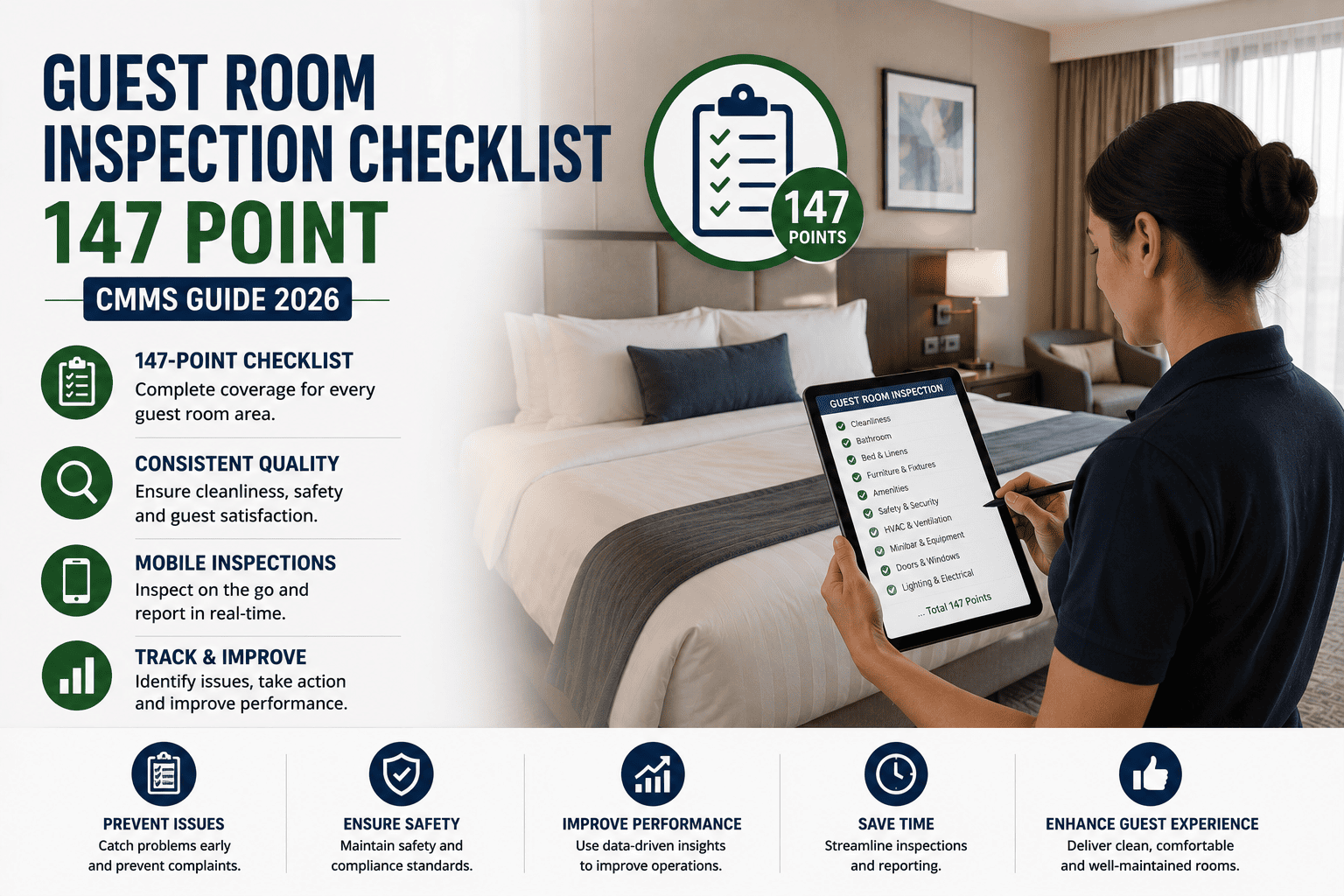
Use a CMMS platform with checklists for sensor cleaning, dimmer calibration, color temperature testing, and thermal assessment. Assign tasks monthly by zone. Track completion and document any anomalies or failing components. Monthly reports show compliance percentage and maintenance costs.
Can Oxmaint help manage lighting system maintenance schedules?
Yes. Create monthly checklists for each zone (guest rooms, corridors, lobby). Assign tasks to maintenance staff with photo documentation requirements. Track sensor cleanliness, dimmer performance, and ballast thermal conditions. Automatic escalation for overdue or failed inspections.
OXMAINT HOTEL LIGHTING MAINTENANCE PLATFORM · ENERGY + GUEST EXPERIENCE