A hotel kitchen extract fan that fails during Saturday dinner service does not close a guest room — it closes the restaurant. A laundry machine drum bearing that fails mid-week does not affect one reservation — it creates a linen shortage that cascades to housekeeping and reduces room availability within 24 hours. A loading dock compactor that jams during a peak departure morning does not create a single complaint — it backs up waste removal across every department simultaneously. Back-of-house failures are invisible to guests until the moment they are not. The maintenance programme that treats BOH areas as secondary to guest-facing spaces consistently creates the operational failures that become visible at the worst possible time. Start your hotel BOH maintenance programme free in Oxmaint — every kitchen zone, every laundry machine, every cold room, and every loading dock tracked with the same rigour as your guest-facing assets.
Hotel Back-of-House Maintenance: Six Zones, Three Regulatory Frameworks, One Operational Standard
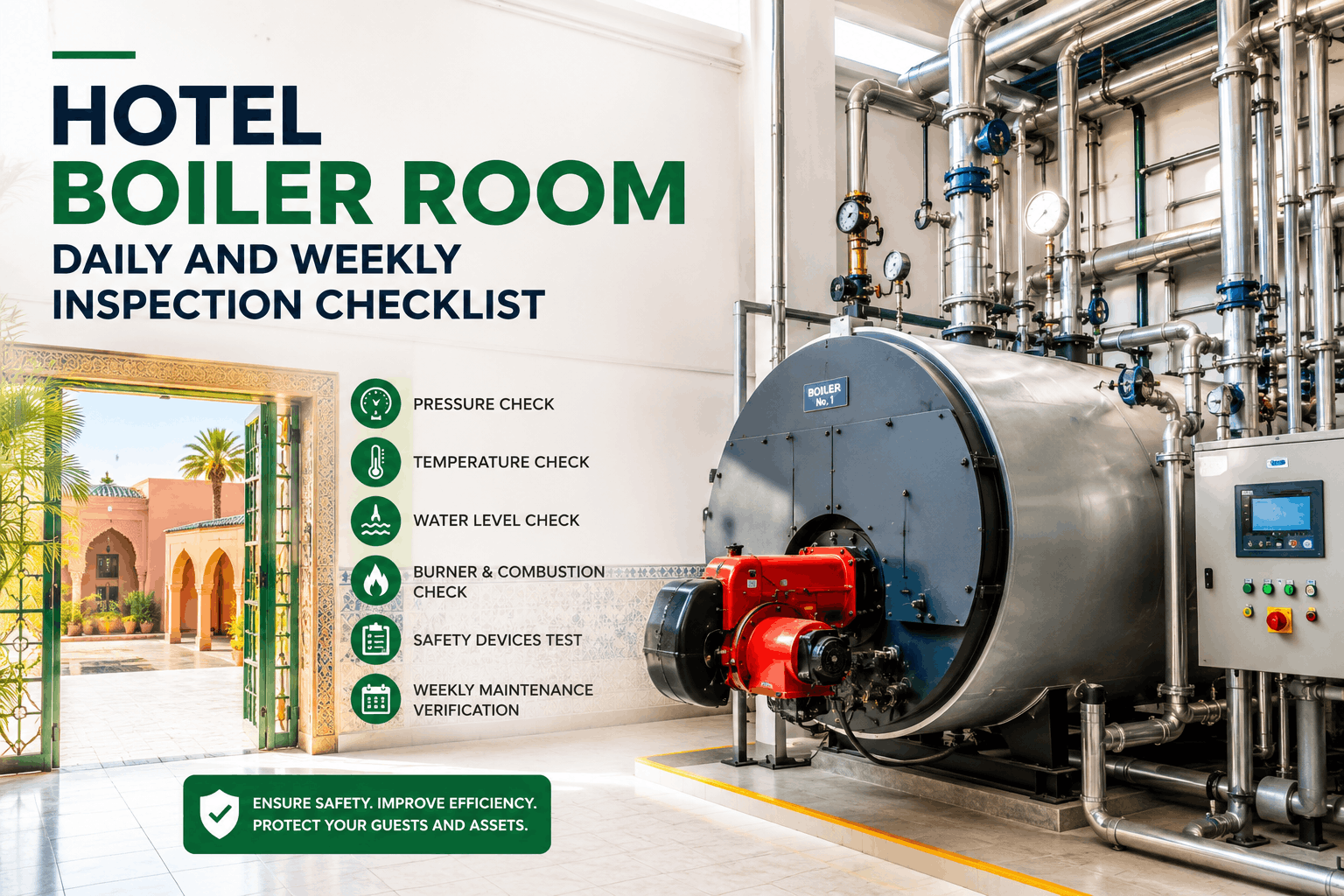
Back-of-house maintenance failures are governed by overlapping regulatory frameworks that guest-facing maintenance is not: HACCP food safety requirements for kitchen and cold storage zones, NFPA 96 standards for commercial kitchen exhaust systems, OSHA workplace safety requirements for chemical handling and staff areas, and local environmental health authority standards that apply to food preparation and storage separately from the hotel's general operating licence. A BOH maintenance failure that creates a health authority citation can close the food operation independently of the hotel's overall compliance status. Load all six BOH inspection zones as scheduled recurring tasks in Oxmaint free.
Complete Hotel Back-of-House Maintenance Checklist
Six inspection zones below, each with the regulatory framework it addresses, required inspection frequency, and the specific failure mode the checklist is designed to prevent. Oxmaint schedules daily, weekly, and monthly BOH inspection tasks automatically and assigns them to the responsible team.
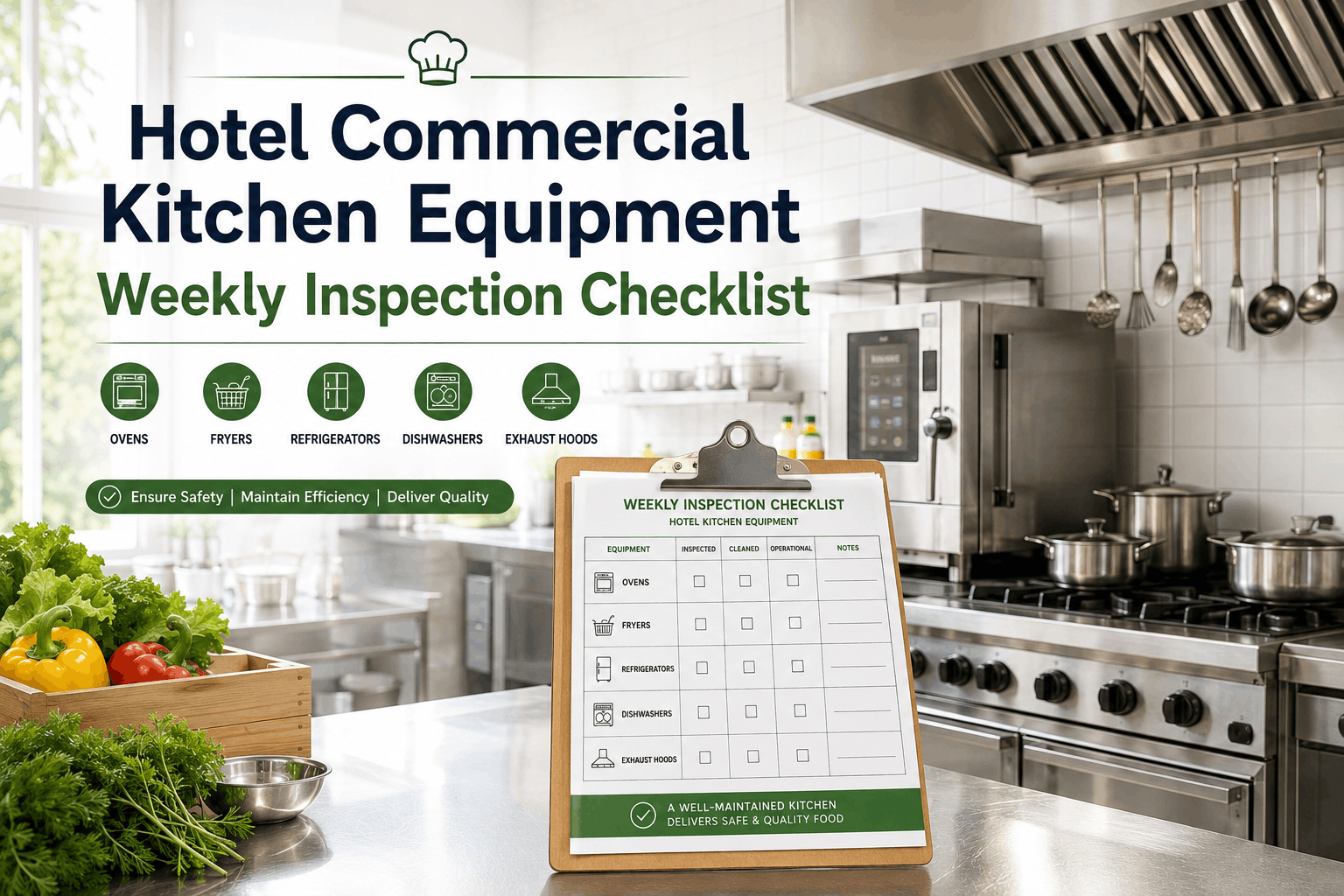
Commercial kitchen equipment operates at higher duty cycles than almost any other hotel system — cookers and fryers run continuously during service periods, refrigeration units cycle constantly around the clock, and extract fans run for 12–16 hours daily. The failure modes that create operational shutdowns are all detectable with structured inspection: extract fan belt wear, grease buildup in ductwork, refrigerator door seal degradation, and dishwasher temperature shortfall. NFPA 96 requires kitchen exhaust ductwork to be professionally cleaned at intervals that depend on the type of cooking — monthly for high-volume solid fuel cooking, quarterly for most hotel kitchen operations. Cleaning intervals that are not tracked against a documented schedule create both a fire risk and a compliance gap. Book a demo to see how Oxmaint tracks kitchen extract cleaning intervals against NFPA 96 requirements.
Hotel laundry operations are a high-duty-cycle mechanical environment where preventive maintenance determines whether linen production capacity is maintained across the full operating week. A washer-extractor drum bearing that is allowed to reach audible noise before service replacement creates a 5–7 day equipment downtime for bearing replacement versus a 2-hour planned bearing change. A dryer lint filter that is not cleaned daily creates a fire risk that is entirely preventable — lint accumulation in dryer exhaust ducts is the leading cause of commercial laundry fires. The laundry maintenance programme is not optional PM — it is the minimum required to maintain linen capacity and prevent fire events. Sign up to track all laundry asset PM schedules in Oxmaint.
A walk-in cold room that loses its temperature setpoint overnight destroys a multi-thousand-dollar food inventory before the morning kitchen team arrives. The maintenance programme for cold storage does not primarily consist of equipment repairs — it consists of the daily temperature logging programme that detects refrigeration system degradation before it produces a full temperature loss event. A cold room whose temperature is trending from -18°C to -15°C over three consecutive weeks is experiencing refrigerant leakage or condenser fouling that will progress to a full loss event unless addressed. The trend is only visible in a consistent temperature log. Book a demo to see how Oxmaint's automatic out-of-range alerts flag cold room temperature drift before food loss occurs.
Dry goods storage areas accumulate the pest evidence that results in environmental health citations more frequently than any other BOH zone — not because the pest activity is necessarily worse in dry stores, but because the conditions that allow pest establishment (food debris accumulation, poor shelving practices, gaps in building fabric) are most concentrated in storage areas. The monthly full inspection of dry goods storage is as much a pest evidence survey as it is an equipment and facility check. Sign up to Oxmaint to schedule monthly dry goods storage inspections with pest evidence documentation as a mandatory photo-completion item.
Staff facilities in poor condition directly affect retention, recruitment, and operational staff satisfaction — survey data consistently places toilet and locker room condition among the top factors affecting back-of-house staff satisfaction scores. Beyond the welfare dimension, service corridors with poor lighting, damaged flooring, or obstructed emergency routes create genuine workplace safety risks that generate OSHA citations. The weekly staff area inspection is both a welfare obligation and a safety compliance requirement.
The loading dock is the intersection of the hotel's operational supply chain and its waste management programme — and it is consistently the least-maintained BOH zone at properties without a structured inspection programme. A compactor that jams at 07:00 on a peak checkout morning creates a waste accumulation crisis within hours. A delivery bay with no defined pedestrian-forklift segregation creates an OSHA recordable incident waiting to occur. The dock leveller that failed without warning during a large delivery was almost certainly showing signs of hydraulic wear for months before it failed — signs that a weekly inspection would have detected. Sign up to Oxmaint to assign daily loading dock operational checks and weekly full inspections to the facilities team with photo evidence requirements at each.
How Oxmaint Manages Hotel BOH Maintenance Across All Six Zones
Oxmaint assigns cold room and kitchen equipment temperature logging tasks to the kitchen team's mobile devices at the specified recording times. Each entry is timestamped at the moment of input — a temperature logged at 06:45 is verifiably different from one entered retrospectively to fill a log gap. The temperature log is available for immediate EHO export for any date range, without opening a paper binder or searching for a physical log. Out-of-range readings trigger automatic alerts to the executive chef and director of engineering before the drift becomes a food safety event. Start mobile HACCP temperature logging free in Oxmaint.
Oxmaint tracks the kitchen extract cleaning schedule against the NFPA 96-specified interval for the hotel's cooking type — monthly for high-volume solid fuel cooking, quarterly for standard hotel kitchen operations. The cleaning due date alert reaches the engineering manager 30 days before the interval expires. The cleaning record — contractor name, date, observed grease depth — is attached to the extract system's asset record, creating the documented compliance trail required for fire authority and insurance purposes. See NFPA 96 compliance tracking in a 30-minute demo.
Every washer-extractor, dryer, walk-in cold room, and commercial refrigerator is a named asset in Oxmaint — with its own PM schedule, service history, and failure record. When the calendar ironer reaches its roller inspection interval, Oxmaint generates the work order before the chef notices uneven ironing quality on the breakfast service linen. When a cold room temperature trends above setpoint for three consecutive readings, the trend is visible in the asset's reading history — not discovered as a food loss event at 06:00. Build your hotel BOH asset register free in Oxmaint.
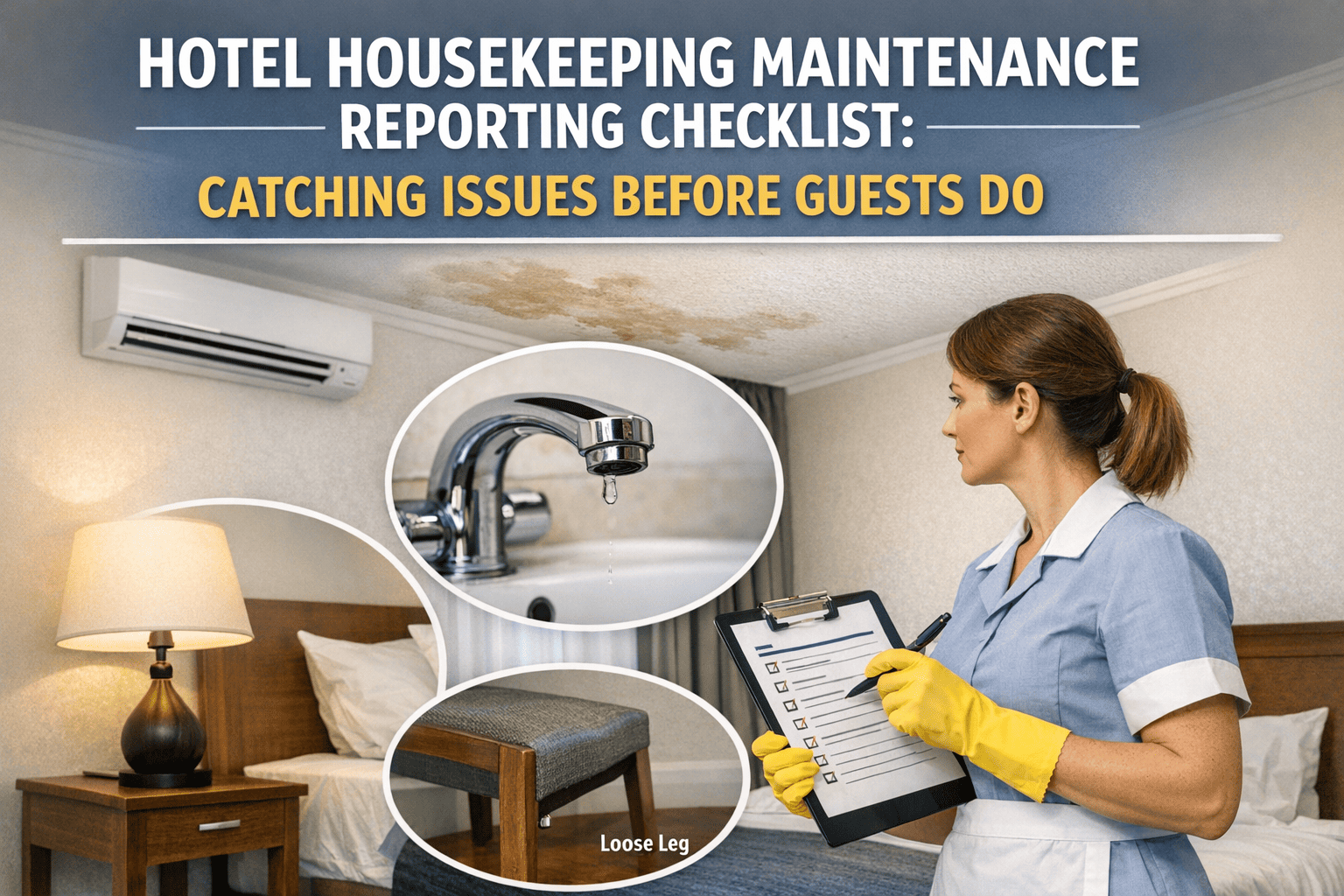
Any BOH staff member can report a safety hazard — a wet floor in a service corridor, a damaged dock leveller, a compactor safety interlock concern — from their mobile device directly into the Oxmaint work order system. The report is timestamped, assigned to the responsible technician, and visible to the engineering manager immediately. The 24-hour gap between a hazard being identified by a kitchen porter and it reaching the maintenance team through a paper reporting chain is eliminated. That gap is where workplace injuries occur. Book a demo to see mobile safety hazard reporting workflow.
We had an EHO inspection six months after going live on Oxmaint. The inspector asked for our cold room temperature records for the previous 90 days and our kitchen extract cleaning certificate. We exported the temperature logs and pulled up the cleaning certificate in under two minutes on a tablet at the kitchen door. The inspector told us it was the fastest records retrieval he had seen at a property of our size. We passed with no citations. Before Oxmaint, we had paper logs that were three months behind and a cleaning certificate we eventually found in a filing cabinet in the engineering office. The difference was not the records — it was being able to produce them.