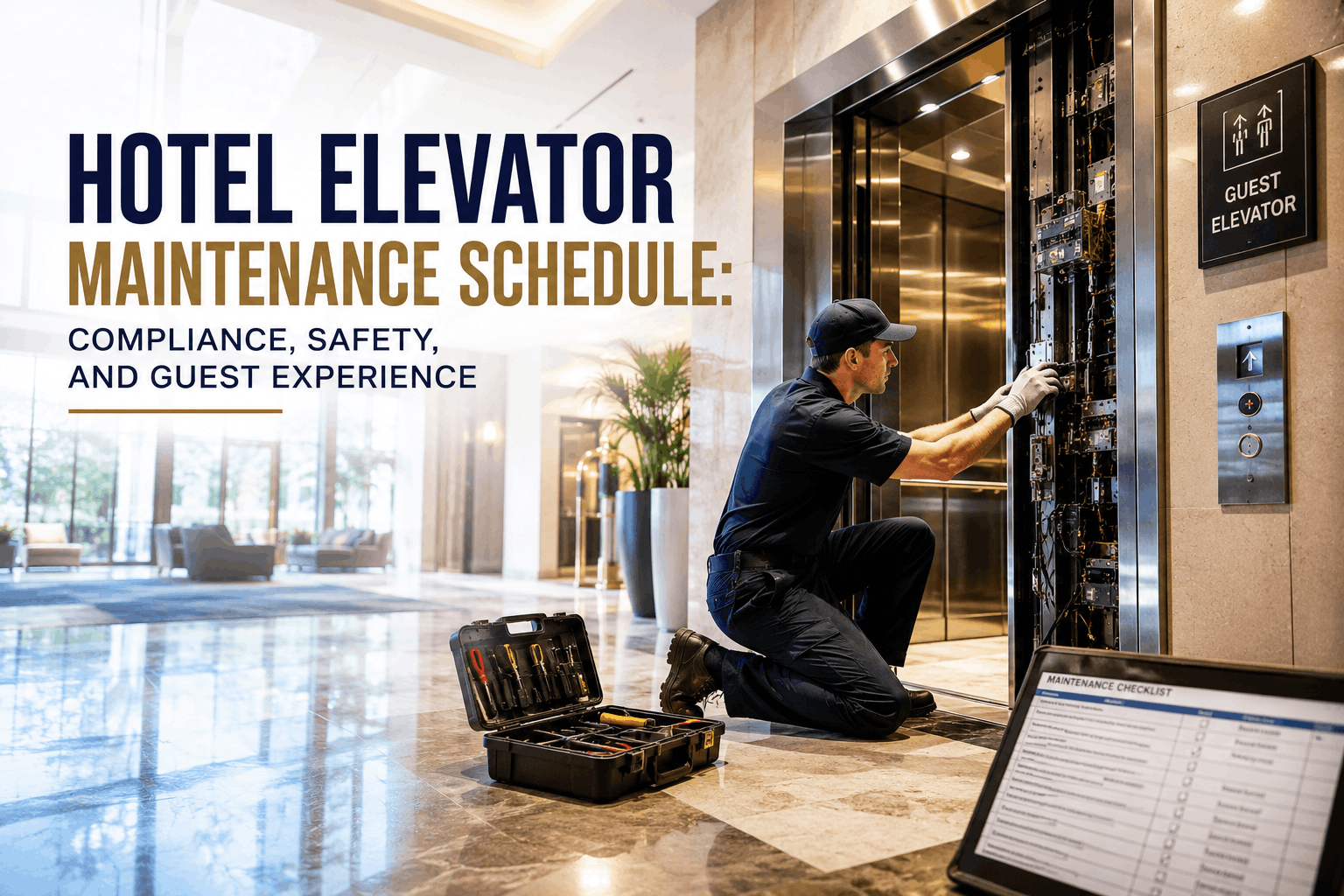
A hotel elevator is a high-use asset carrying 200–400 passengers per day through 20–40 floor cycles. The ASME A17.1 Safety Code for Elevators and Escalators — adopted by all 50 states as the minimum safety standard — mandates monthly mechanical and safety device testing, annual comprehensive inspections, and five-year full reassessments by state-appointed inspectors. But an elevator with a malfunctioning door safety system, a degraded cable, or a stuck safety brake is not visibly broken — guests use it regularly, the cable looks fine, and the brake seems to engage. The first indication of failure is often catastrophic: a door that closes too fast injures a guest, a cable snaps mid-cycle, or a safety brake fails to stop during overspeed conditions. Monthly door force testing, cable tension verification, and safety device checks catch degradation weeks before failure, preventing the guest injury lawsuits and regulatory closure orders that can cost a hotel millions. This checklist gives your maintenance team a complete monthly and annual inspection framework covering door operation, safety devices, hydraulic systems, electrical interlocks, and regulatory compliance — all tracked in OxMaint's CMMS, creating the audit evidence that keeps elevators safe and passing annual state inspections.
Hotel Elevator Inspection Checklist: Monthly Safety & Compliance Tasks
Monthly door operation and safety testing, load balancing verification, cable tension and condition assessment, safety brake functionality, emergency communication system testing, annual full reassessment by state-certified inspector — structured for hotel engineering teams complying with ASME A17.1, ADA accessibility requirements, and state elevator inspection codes.
Why Monthly Door Force Testing Prevents Guest Injuries
The door system is responsible for over 40% of all elevator-related injuries and 60% of callback complaints. A door that closes with excessive force (>30 lbs) can cause hand and arm injuries to guests. Monthly door force testing using a calibrated force meter catches degradation in door springs, operators, and control systems before doors become dangerously fast. Guests expect reliable, safe elevators — monthly testing delivers both.
Door Operation and Safety Device Testing
The car door and landing doors are the first interface guests experience. Door closing force must be within safe limits (ASME maximum 30 lbs for new equipment). Safety edges must reverse the door within 2 seconds if interrupted by an obstruction. Door timing should be consistent month-to-month; degradation signals wear requiring maintenance.
Door Force Test
Measure with calibrated meter — max 30 lbs per ASME
Safety Edge Test
Reverse door within 2 seconds of obstruction contact
Timing Trend
Cycle time increasing month-to-month signals motor wear
Cable, Load, and Safety Brake Verification
Elevator cables support the entire car load (2,500–5,000 lbs plus passengers). Cable degradation from corrosion, abrasion, or fatigue is invisible until failure occurs mid-cycle. The safety brake engages automatically if cables fail or the car overspeeds. Annual cable tension measurement and brake testing are mandatory ASME requirements.
Elevator Monthly & Annual Test Matrix
| Test | Frequency | ASME Standard | Status |
|---|---|---|---|
| Door Force Test | Monthly | ASME A17.1 8.5.8.3 | ✓ |
| Safety Edge Test | Monthly | ASME A17.1 8.5.8.2 | ✓ |
| Cable Visual Inspection | Biannual | ASME A17.1 2.13.4 | ✓ |
| Cable Tension Measurement | Annual | ASME A17.1 2.13.4.3 | ✓ |
| Safety Brake Test | Annual | ASME A17.1 2.4.13 | ✓ |
| Emergency Communication | Monthly | ASME A17.1 8.4.10 | ✓ |
| Load Test w/ Emergency Stop | Annual | ASME A17.1 8.6.2 | ✓ |
Emergency Communication and Annual State Inspection
Passengers trapped in an elevator must be able to communicate with building personnel or emergency services. The emergency communication system is a required safety device that must be tested monthly. Annual certification by a state-appointed elevator inspector is legally mandated — operating without current certification is a violation subject to fines and forced closure orders.
"We had a door force that crept up to 42 lbs over several months — guests were complaining about hard-closing doors. Our elevator tech measured it monthly with OxMaint and caught the creeping trend. We replaced the door operator spring pack before a guest got a hand injury. State inspector came for annual certification and didn't find any violations because we had documented monthly testing showing we caught degradation early. Monthly testing isn't paperwork — it's guest safety and regulatory compliance."
Frequently Asked Questions
What is the maximum door closing force allowed by ASME A17.1?
Maximum 30 lbs for new equipment; 45 lbs for equipment in service. Door force >30 lbs risks hand and arm injuries to guests. Monthly force meter testing catches degradation in springs and operators before force becomes hazardous.
How long is an elevator inspection certificate valid?
Annual certification is required in most states — valid 12 months from inspection date. Operating beyond expiry date is a state code violation. OxMaint schedules annual inspections 30 days before expiry to ensure appointment availability.
What does it mean if door safety edges don't reverse the door when contacted?
Safety edges detect obstructions and signal the door operator to reverse. Failure to reverse within 2 seconds is an immediate safety violation. Door should be removed from service until edges are replaced and tested.
Why is cable tension measurement important, and what's the acceptable variance?
Cable tension should be within 5% between cables. Unequal tension indicates uneven wear, misaligned pulleys, or load imbalance. Variance >5% requires investigation and possible cable replacement to prevent catastrophic failure.
What is an emergency stop test and why is it part of annual inspection?
Car is loaded with 125% of rated capacity, emergency stop button pressed, and safety brake must engage and hold the load. Brake failure to engage or inability to hold load is immediate deficiency requiring repair before next use.
Can elevator inspections be performed by hotel maintenance staff?
Monthly safety device testing (door force, safety edges, emergency communication) can be performed by hotel maintenance. Annual comprehensive inspection must be performed by a state-appointed or licensed inspector — this is a legal requirement.
What is the consequence of operating an elevator without a current inspection certificate?
Operating without current certificate is a state code violation subject to fines (typically $500–$5,000 per day), forced closure orders, and potential liability exposure if an incident occurs. OxMaint prevents this with automatic inspection scheduling.
How does OxMaint help manage elevator compliance?
OxMaint schedules monthly door force and safety edge tests, quarterly gate operation checks, annual cable tension measurements and brake tests, and tracks state inspection certification dates. All results are time-stamped and inspection certificates are uploaded automatically for audit readiness.
Every Door Tested. Every Cable Checked. Every Guest Safe.
OxMaint's hotel elevator inspection checklist automates monthly door force and safety edge testing, quarterly cable inspection, annual cable tension and brake verification, and state certification scheduling — giving your engineering team the systematic testing program that prevents guest injuries and passes state inspection with zero violations.