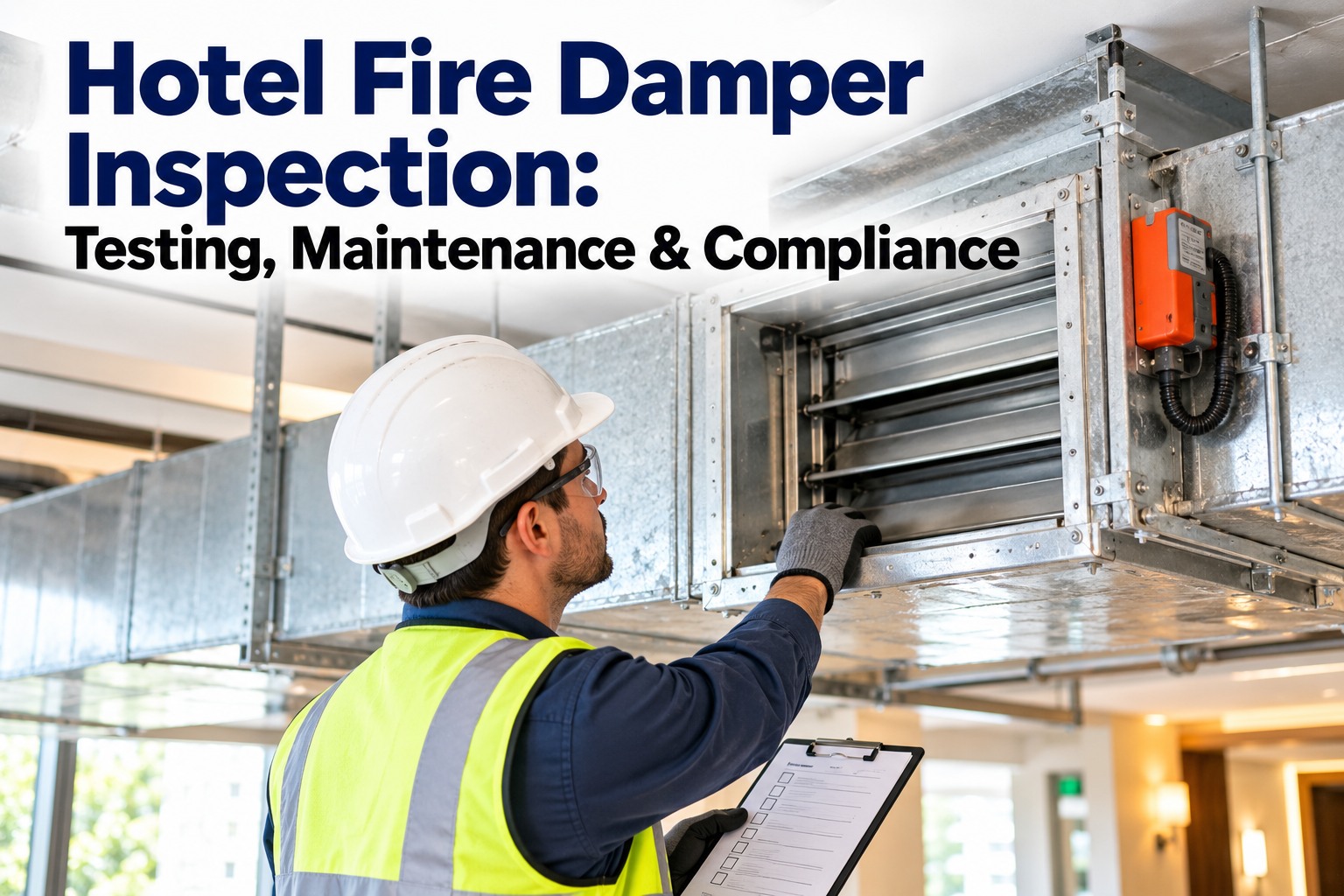
Hotel Fire Damper Inspection: Testing, Maintenance & Compliance
By Willam Jerry on October 28, 2026
You cannot test what you cannot find. Fire and smoke dampers sit inside ductwork where it passes through fire-rated walls and floors, usually above ceilings, behind panels or in shafts. Out of sight, they drop off the routine round, and because the test interval is measured in years rather than weeks, it is easy for a hotel to lose track of which dampers were tested, when, and by whom. The consequence is not just a failed audit. A damper that does not close can let fire and smoke travel along the duct into sleeping areas. OxMaint AI maintenance management software gives every damper an asset record with its location, due date, inspection history and corrective work orders, so none of them stay hidden.
Hotel Fire Safety & Compliance · Fire & Smoke Dampers · Life Safety · 2026
Hotel Fire Damper Inspection: Testing, Maintenance & Compliance
A practical guide to finding every fire and smoke damper in your hotel, planning access, testing them on schedule, keeping records an inspector will accept, and fixing failures fast. The test cycle below follows NFPA 80 and NFPA 105, so check your local code and authority too.
1 Duct crossing a guest room wall above the corridor ceiling
2 Corridor cross-wall or compartment line
3 Stair, lift lobby or plant room enclosure
4 Riser shaft at each floor slab
5 Bathroom or kitchen exhaust duct through a rated wall below
Illustration only. Your drawings, fire strategy and a physical survey decide where your real dampers are.
The Test Cycle: Mark It on the Calendar
In the NFPA 80 and NFPA 105 cycle used in the US, each damper is tested and inspected one year after installation, then every four years (every six years in hospitals, which hotels are not). Start free and let OxMaint AI count the years for you.
Install
Acceptance test and register the damper
+1 year
First periodic test and inspection
+4 years later
Next test and inspection
Every 4 years
Repeat, with records kept each time
Smoke dampers also depend on detection. The duct or spot smoke detector that triggers a smoke damper is tested on its own schedule, typically annually under fire alarm rules, so link the two in your plan.
Your local rule may be stricter. The authority having jurisdiction, your insurer or national code outside the US can require more frequent checks. Always confirm before you set the interval.
Confirm access. Full, unobstructed access to the damper is verified, and the panel opens.
2
Inspect the damper. Check the frame, blades, sleeve and surroundings. Nothing should penetrate the frame or block the blades.
3
Operate it. For fusible-link types, remove the link and confirm the damper closes fully, simulating a fire condition. Cycle motorised dampers with their actuator or detector test.
4
Reset it. Reinstall the fusible link and return the damper to the open position. Make sure nothing is left disabled.
5
Record it. Log the result, with a photo, before the technician leaves the area.
A Damper You Can't Find Is a Damper You Can't Prove You Tested.
Start with a complete damper register: every unit, its floor and location, its type, its last test and its next due date. OxMaint AI schedules the tests, sends each to a named technician, and keeps the evidence an inspector expects to see.
Codes expect every inspection and test to be documented. At minimum, record the damper's location, the date, the inspector's name and any deficiencies found. Adding a photo and the repair outcome makes the record far stronger. Start free and capture all of it on mobile.
DAMPER INSPECTION RECORD sample layout
Damper IDFD-L3-017
LocationLevel 3, corridor wall at rooms 310/311
TypeFire damper, fusible link
DateDate of test
InspectorName and company
ResultPass / Fail
Deficiencies & actione.g. blade not fully closed, work order raised, retest due
EvidenceBefore and after photos attached
Common Deficiencies to Watch For
No access panelDamper cannot be reached or tested.
Blocked bladesCables, pipes or debris in the way.
Frame penetratedForeign objects through the damper frame.
Won't fully closeBlade or link fault, or actuator failure.
Link not replacedLeft out after testing or painted over.
Not on the registerDamper found but never recorded.
This page is general guidance and not legal advice. Fire damper testing should be carried out by competent people, following the manufacturer's instructions and the rules that apply where your hotel operates.
Frequently Asked Questions
How often should hotel fire dampers be inspected?
Under NFPA 80 and 105, dampers are tested one year after installation and then every four years, though local codes or your authority may require more. Start free and schedule by damper.
What records are required?
Codes expect the damper's location, the date, the inspector's name and any deficiencies found, with repair details. Photos strengthen the record. Book a demo of inspection records.
What is the difference between a fire damper and a smoke damper?
A fire damper closes to stop fire spreading through a duct, while a smoke damper limits smoke movement and is usually triggered by detection. Combination units do both. Start free and register each type.
How do I find all the dampers in my hotel?
Combine drawings, the fire strategy, past inspection reports and a physical ceiling and shaft survey, then register each one with a unique ID. Book a demo of the register.
Can a CMMS manage fire damper compliance?
Yes. OxMaint AI keeps a damper register, schedules the tests, captures mobile records and photos, and turns failures into tracked work orders. Start free and see it work.
Hidden in the Ceiling. Never Hidden From Your Records.
Register every damper, schedule every test and keep every result in one place, so you can show exactly what was tested, when and by whom.