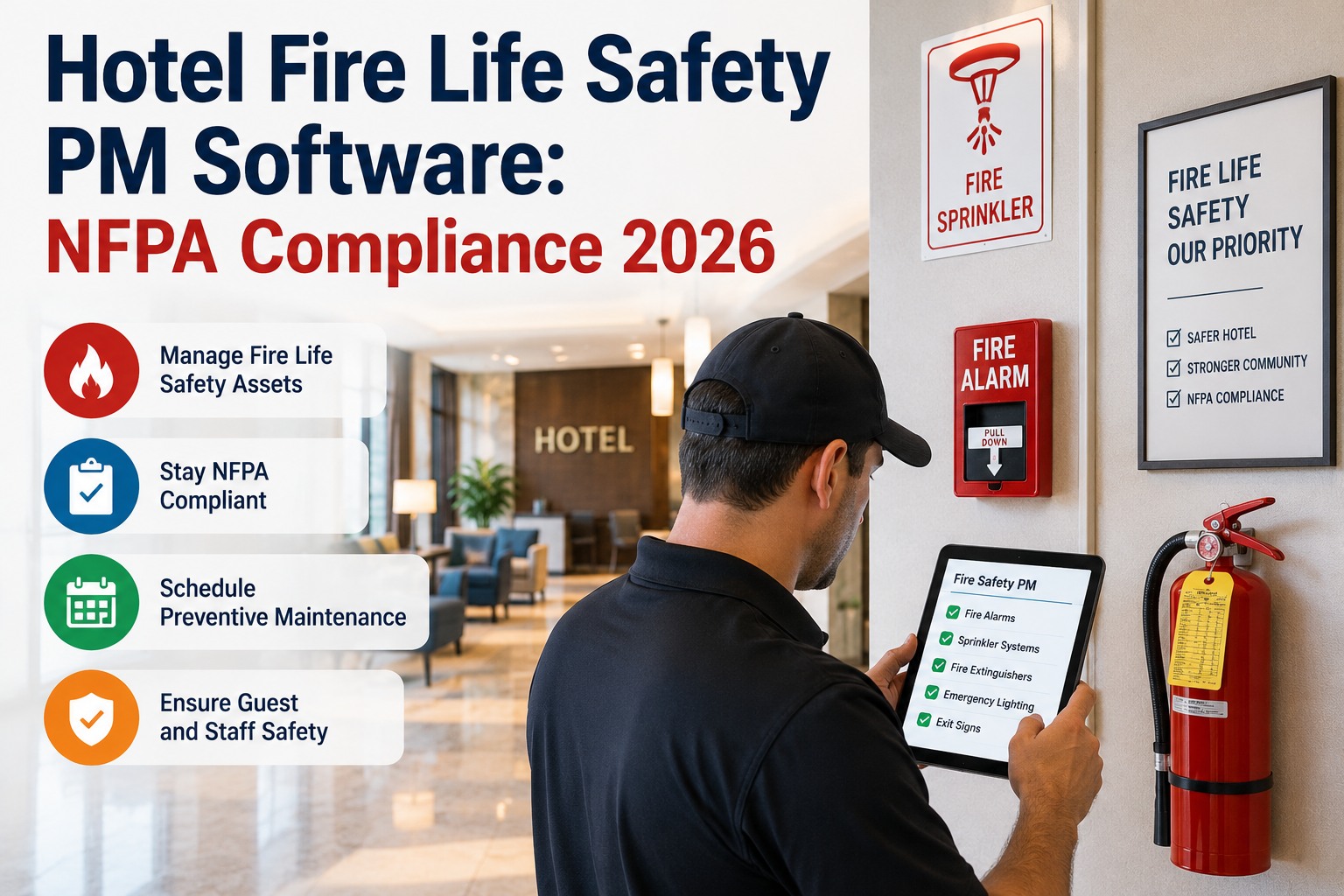
The fire marshal walked into a 340-room Nashville hotel at 9:47 a.m. and was gone by 11:15 a.m. — with a passed inspection, zero violations, and a compliment on the documentation system. Two properties down the street received closure orders the same week: one for a waterflow alarm test overdue by 11 days, one for four portable extinguishers with unsigned annual service tags. The difference between those three outcomes was not the quality of the equipment. It was the presence or absence of a documented, interval-driven compliance program. Load your NFPA hotel fire safety checklist free in Oxmaint — every zone, every interval, every signed record stored permanently.
Hotel Fire Safety Inspection Checklist: NFPA Compliance for Every Property
This checklist covers all six NFPA-governed fire safety systems in hotel properties. Each section states the governing standard, required inspection interval, and the most commonly cited violation observed by fire marshals during hotel inspections. Use it as a self-inspection guide — or load it into Oxmaint as a digital workflow with technician sign-off, photo capture, and automatic re-scheduling at each required interval.
A Signed, Dated Record Is Worth More Than Working Equipment With No Paper Trail
Fire marshals issue citations identically for equipment that was never serviced and equipment that was serviced but not documented. A sprinkler waterflow test completed 11 days past the 90-day quarterly interval is treated the same as one that was never performed. Oxmaint schedules every NFPA interval automatically — monthly, quarterly, semi-annual, and annual — with digital sign-off required before each inspection closes.
Complete Hotel Fire Safety Checklist by NFPA Zone
FAL Fire Alarm Systems — NFPA 72 Quarterly supervisory · Semi-annual elevator detectors · Annual all devices +
NFPA 72 requires quarterly testing of supervisory signals, semi-annual testing of smoke detectors in elevator lobbies, and annual full-system testing of all initiating devices and notification appliances. Every test must be documented with device address, location, result, and technician identity. Oxmaint schedules all four NFPA 72 intervals automatically.
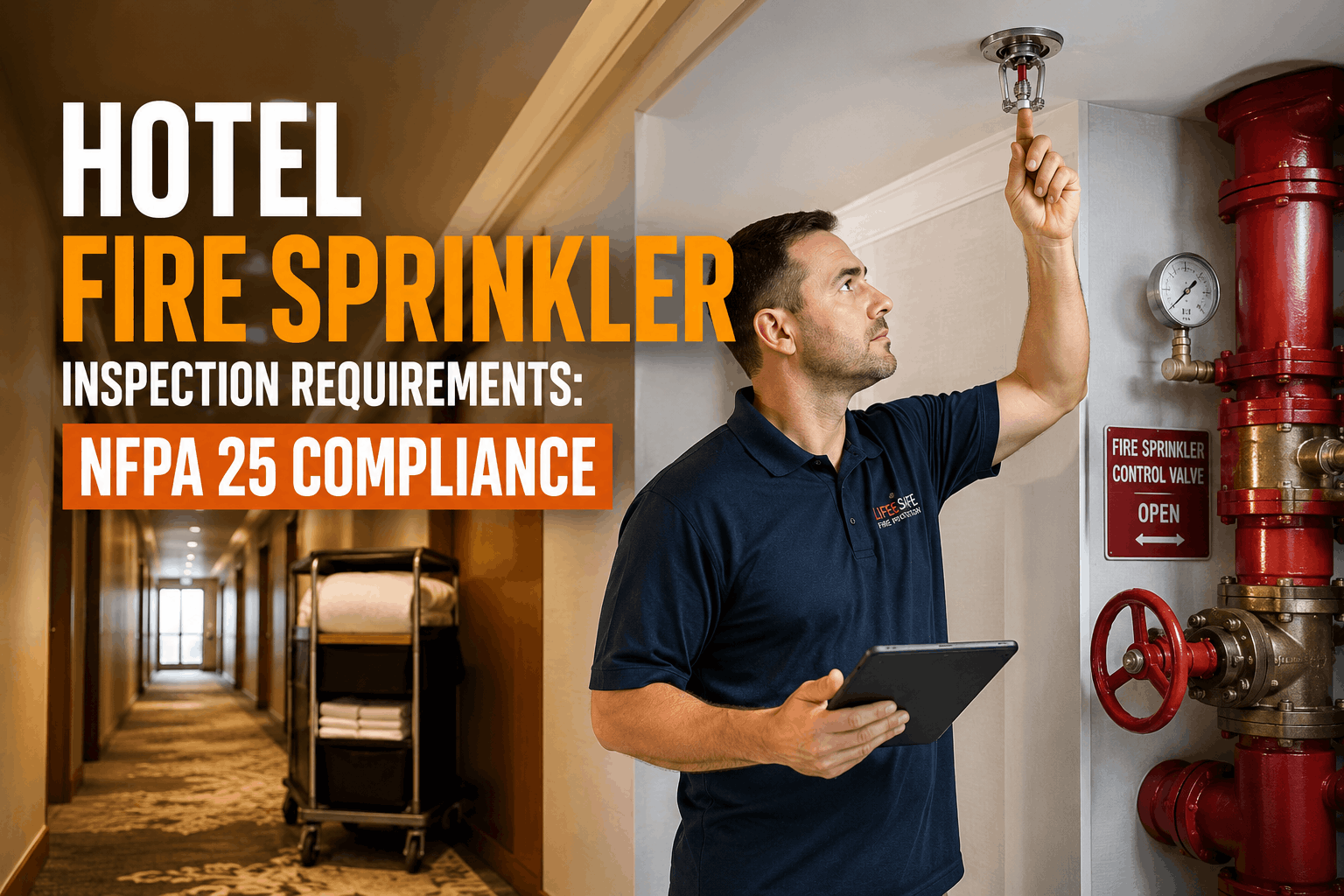
SPR Automatic Sprinkler Systems — NFPA 13 / NFPA 25 Weekly gauges · Quarterly waterflow · Annual inspection · 5-year flow test +
NFPA 25 requires weekly gauge inspection for wet-pipe systems, quarterly waterflow alarm testing, annual inspection of all system components, and a full flow test every 5 years. The most complex record-keeping requirement of any hotel fire safety system — and the most commonly found incomplete at inspections.
EXT Portable Fire Extinguishers — NFPA 10 Monthly visual · Annual technician service · 6-year internal exam +
NFPA 10 requires monthly visual inspections documented on the extinguisher tag (with inspector initials and month/year), annual maintenance by a certified technician (with license number on the service tag), and 6-year internal examinations and hydrostatic tests by extinguisher type. Missing any documentation element is a NFPA 10 violation even if the equipment is fully functional.
EGR Emergency Egress & Life Safety — NFPA 101 Monthly 30-sec exit light test · Annual 90-minute battery discharge +
NFPA 101 governs all hotel emergency egress elements — exit signs, emergency lighting, fire doors, stairwell hardware, and corridor width. Monthly 30-second battery tests and annual 90-minute discharge tests are both required and documented. Exit signs and emergency lights are the most commonly failing elements because battery degradation is not visible until the test reveals it.
KIT Kitchen Suppression Systems — NFPA 96 Semi-annual suppression service · Monthly–semi-annual hood cleaning by load +
NFPA 96 requires semi-annual inspection and service of kitchen fire suppression systems by a technician certified for the specific installed system type (Ansul, Amerex, Badger, or equivalent). Hood and duct cleaning intervals are based on cooking type — monthly for solid fuel and 24-hour operations, quarterly for high-volume wok and charbroiler operations, semi-annually for moderate loads. Track both the suppression service and hood cleaning intervals in Oxmaint against the kitchen suppression asset record.
SMK Smoke Detection & Control — NFPA 72 / NFPA 101 Annual battery replacement · Biennial sensitivity test · Annual stairwell pressurization +
Hotel smoke detection requirements span both NFPA 72 (testing standards) and NFPA 101 (coverage and placement requirements). Every guest room, corridor, stairwell top, elevator lobby, and mechanical space requires smoke detection. In-room battery-powered units not connected to the building fire alarm system require individual tracking by room number.
How Oxmaint Closes Every NFPA Documentation Gap
Each portable extinguisher, smoke detector, sprinkler riser, and suppression unit is a named record in Oxmaint with its own inspection schedule, service history, and hydrostatic test dates. When the fire marshal asks for the history of extinguisher 47 in Corridor 3B, the full record is available in 30 seconds. Create your asset inventory free.
Every Oxmaint inspection workflow requires the inspecting technician's digital signature before the task closes. The unsigned-tag violation that triggered the Nashville Notice of Violation cannot occur in Oxmaint — the workflow will not complete without sign-off. See mobile sign-off in a live demo.
Monthly visual extinguisher checks, quarterly sprinkler waterflow tests, semi-annual kitchen suppression service, annual fire alarm device tests — Oxmaint schedules each at the exact NFPA-required interval with 30-day and 7-day advance alerts. No interval is missed because it was forgotten. Configure your NFPA inspection schedule free.
When the fire marshal arrives on-site, the director of engineering exports the complete fire safety compliance record — all six zones, any date range, with photos and technician sign-offs — as a single PDF in under three minutes. A hotel with this capability has never failed an inspection for documentation reasons alone. Book a 30-minute demo to see the compliance export.
After failing our fire marshal inspection for documentation reasons — not equipment — we implemented Oxmaint across all six NFPA zones. Our next fire marshal inspection was a 20-minute walkthrough. The marshal said it was the cleanest compliance file she had reviewed in seven years. No re-inspection fee. No Notice of Violation.