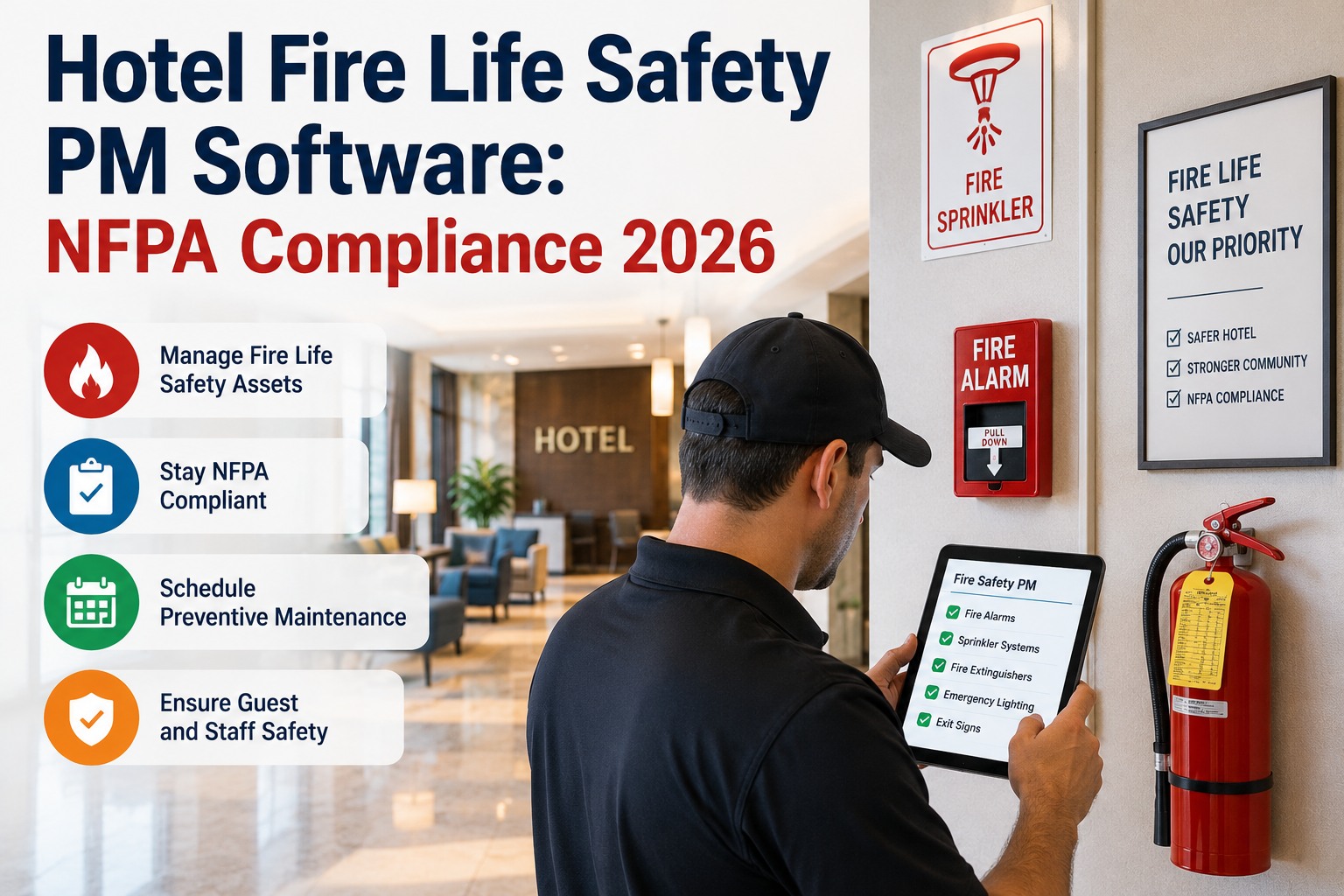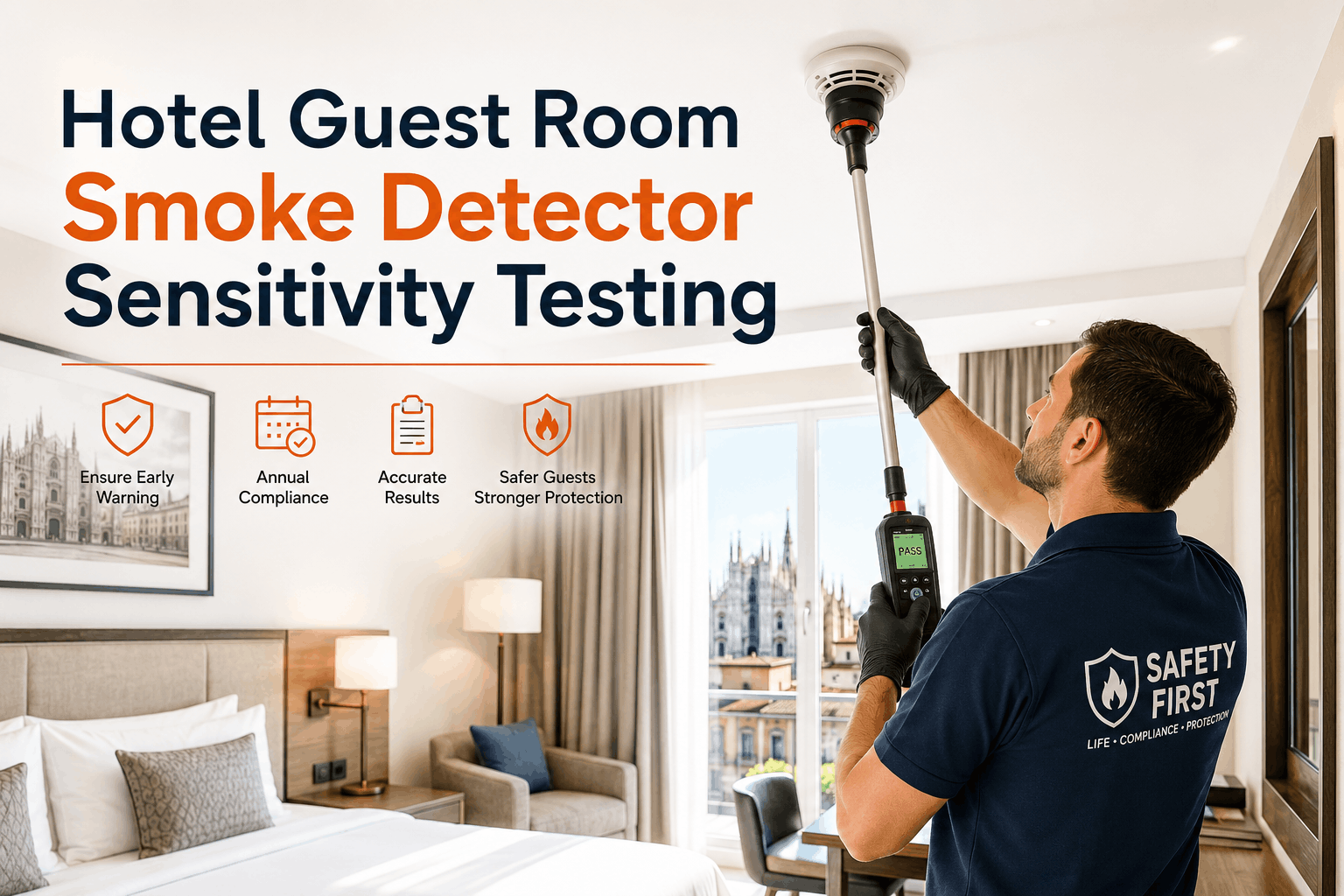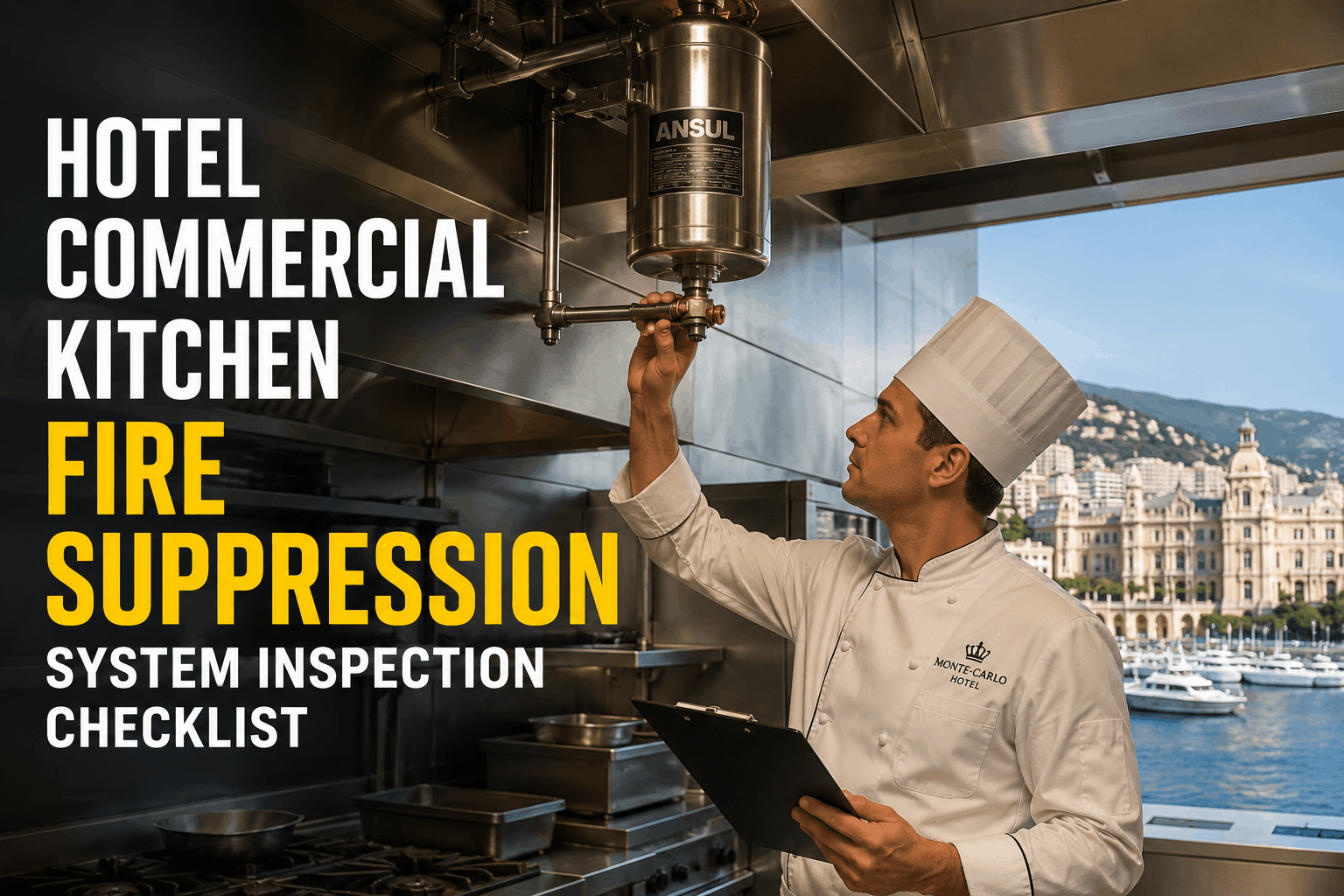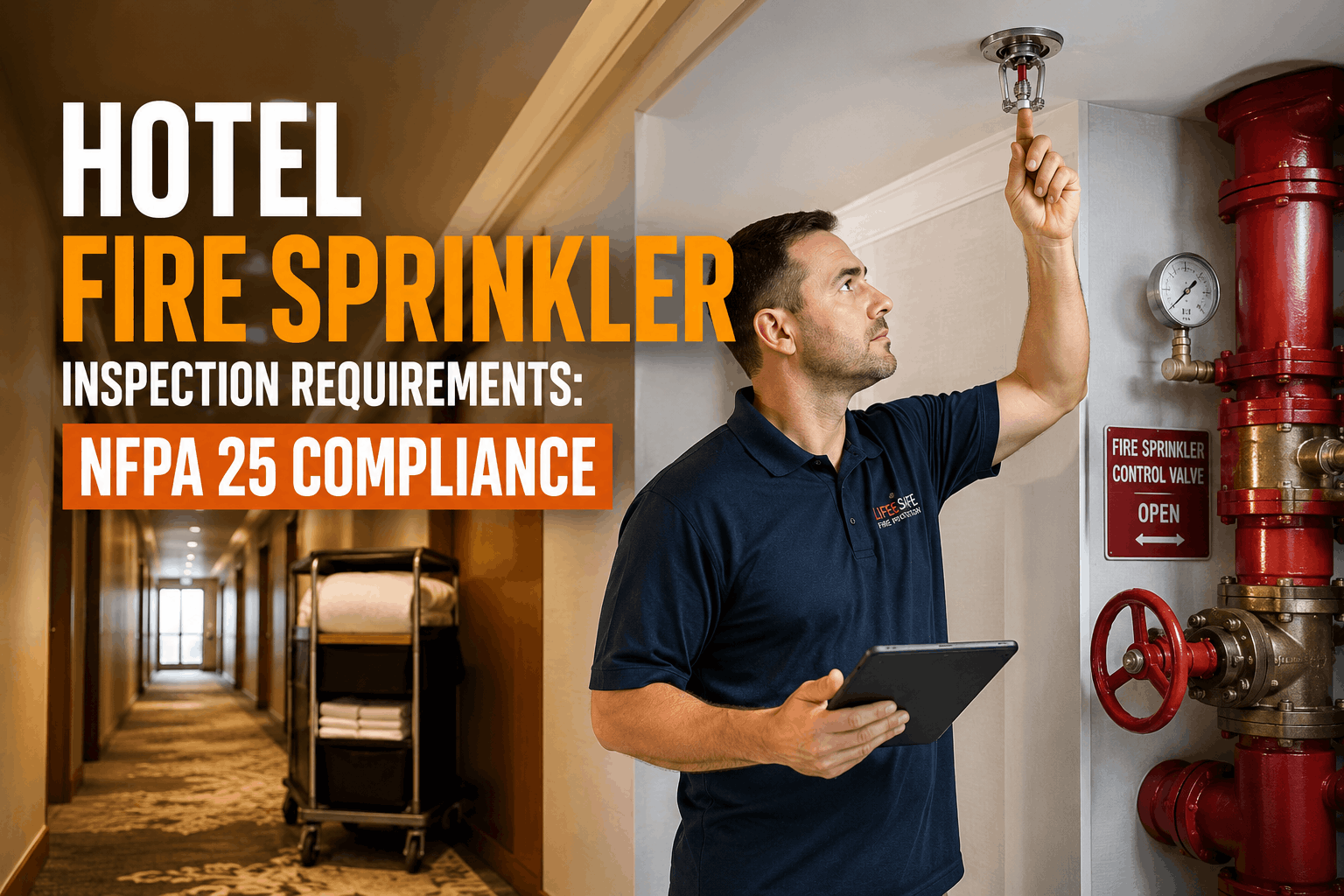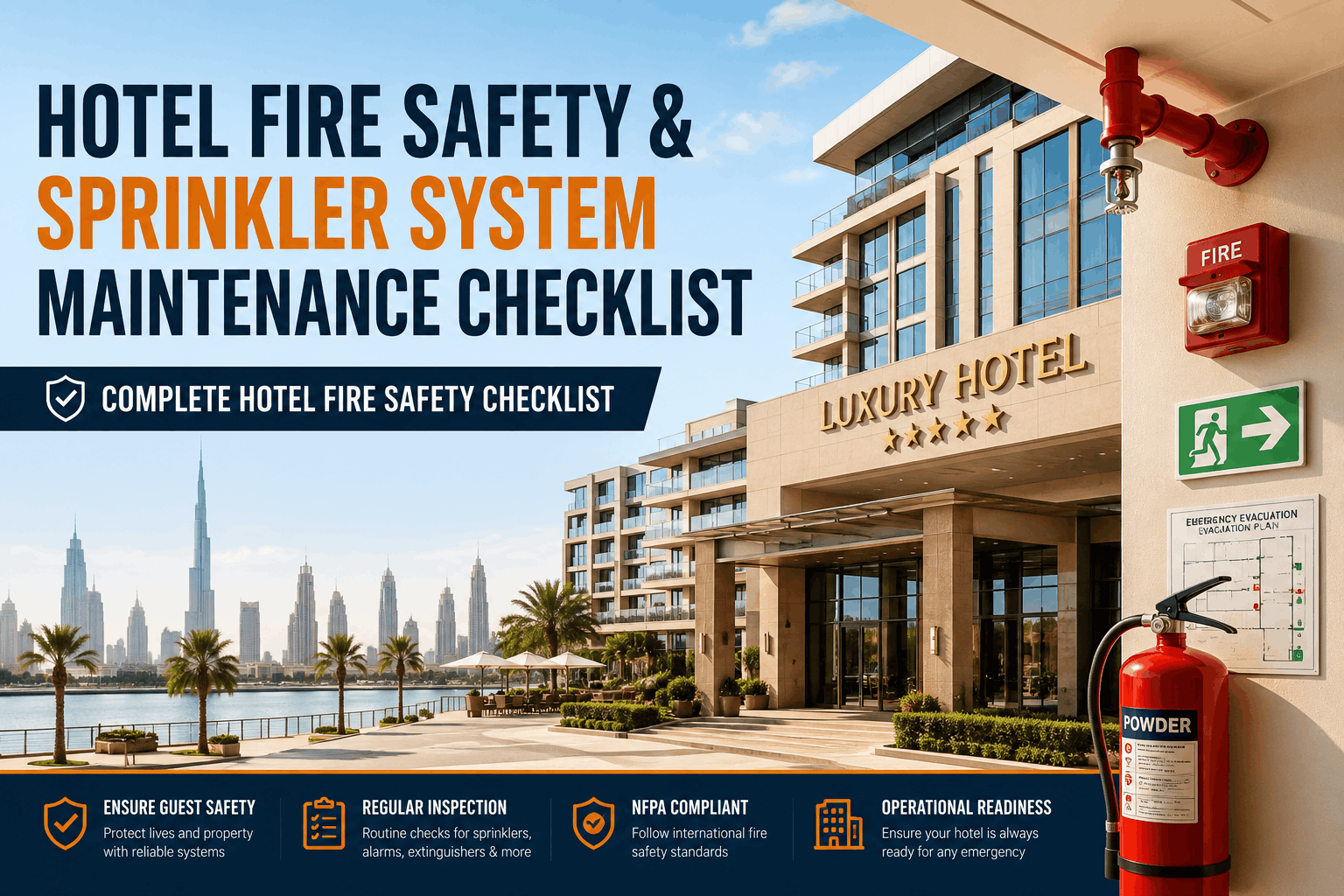
Hotel fire safety compliance demands systematic inspection across critical system categories governed by NFPA standards. Fire sprinkler systems require quarterly flow tests, annual main drain tests, and five-year internal inspections per NFPA 25 standards. Fire alarm systems need monthly testing of notification devices, quarterly battery checks, and annual system-wide certification under NFPA 72 protocols. Emergency lighting and exit signs require monthly 30-second tests and annual 90-minute battery discharge tests. Fire extinguishers demand monthly visual inspections, annual maintenance by certified technicians, and hydrostatic testing every 5-12 years depending on type. Fire doors must be inspected annually for proper closure, latch engagement, and seal integrity. Kitchen suppression systems require semi-annual inspections with filter cleaning and nozzle verification. Hotels achieving 100% fire safety compliance while reducing inspection management time by 64% use automated scheduling platforms with mobile inspections and complete documentation in one system.
Achieve NFPA Compliance with Automated Fire Safety Tracking
OxMaint connects fire sprinkler history, alarm system tests, and extinguisher records to give hotel managers documented evidence of compliance—and the data to pass fire marshal inspections every time.
Fire Safety Inspection Requirements for USA Hotels
Hotel fire safety compliance is not optional—it is mandated by NFPA codes, local fire marshals, and insurance requirements. The most commonly cited violation across USA hotel properties during fire marshal inspections is documentation failure, not equipment failure. A hotel can have perfectly functional fire sprinklers, extinguishers, and alarm systems, but if monthly visual inspection records, quarterly waterflow test documentation, and annual service certificates are missing or incomplete, the property fails compliance. Most fire code violations trigger immediate correction requirements within 30-90 days depending on violation severity. Life safety violations—non-functional sprinklers, blocked exits, disabled alarms—may result in immediate occupancy restrictions until corrected. Fines range from $5,000 to $50,000+ per violation depending on jurisdiction and violation severity. Multiple violations can result in facility closure until compliance is achieved. Hotels face increased insurance premiums, potential policy cancellation, and severe reputation damage if violations become public. When the fire marshal arrives on-site, the director of engineering can export the complete fire safety compliance record—all six zones, any date range, with photos and technician sign-offs—as a single PDF in under three minutes when using digital inspection management systems.
Weekly visual inspections of gauges and control valves, quarterly inspector tests, annual main drain flow tests, and comprehensive five-year internal pipe inspections ensure water-based fire protection systems remain operational and effective.
Monthly testing of notification devices, quarterly battery checks, and annual system-wide certification validates that fire alarm systems detect and communicate fire emergency signals to monitoring stations and occupants within code-required timeframes.
Monthly visual inspections with documented pressure gauge readings, annual technician service with internal examination, and hydrostatic testing every 5-12 years by extinguisher type create the compliance record fire marshals require during property inspections.
Monthly 30-second operational tests and annual 90-minute battery discharge tests verify that emergency exit pathways remain illuminated during power failure, allowing guests and staff to safely evacuate during fire events.
Annual inspections per NFPA 80 verify that fire-rated doors can contain fire and smoke properly, maintaining their ability to create fire-resistive barriers between occupied spaces and fire hazard zones.
Semi-annual inspections including filter cleaning, nozzle verification, and discharge system testing ensure that commercial cooking fire suppression systems activate reliably when cooking fires occur in hotel restaurants and food preparation areas.
Critical Fire Safety Metrics and Compliance Tracking
Quarterly waterflow tests on sprinkler systems must be documented within 90-day intervals per NFPA 25. A hotel with 40 guest room zones requires four separate quarterly tests per year—16 documented tests annually. Missing a single quarterly test creates a compliance gap that fire marshals identify immediately. Hotels tracking waterflow test scheduling with automated reminders and mobile documentation achieve 100% compliance rates. Facilities using manual calendars or email reminders report 30-40% missed test rates. The difference between passing and failing a fire marshal inspection often comes down to whether all quarterly tests are documented with timestamps, technician signatures, and test results recorded in a searchable system.
NFPA 10 requires monthly visual inspections documented on the extinguisher tag with inspector initials and month/year. A property with 100 extinguishers needs 1,200 documented inspections annually. Most hotels fail this requirement not because inspections don't happen, but because documentation is incomplete or inconsistent. Pressure gauge readings must be in the green zone, pin must be intact, tamper seal must be unbroken, and no physical damage is visible. A broken tamper seal requires the extinguisher to be removed for technician inspection immediately—a compliance deficiency that fire marshals cite as a violation. Hotels implementing mobile inspection apps that auto-populate month/year, capture technician signatures, and photograph pressure gauge readings achieve 95%+ documentation completion rates. Facilities using printed inspection tags only report 40-60% complete documentation.
NFPA requires hotel smoke detectors in guest rooms and corridors to meet current standards with battery-operated units having 9V batteries replaced every six months and hard-wired units tested annually. The most common violation fire marshals observe is in-room smoke alarm batteries expired or units past the 10-year replacement threshold without individual room-level tracking records to demonstrate replacement compliance. Hotels with 200 guest rooms and 50 corridor smoke detectors need to track 250 individual units with 10-year replacement dates and 600 semiannual battery changes per year. Maintaining this tracking on spreadsheets fails because room turnover is rapid, staff change, and consistency deteriorates. Digital asset tracking systems that tag each smoke detector with its installation date, battery replacement date, and next replacement due date enable hotels to query which units need battery service this week—converting a compliance nightmare into a routine maintenance task.
NFPA 101 (Life Safety Code) introduced integrated testing requirements in 2018, requiring that all functions of intertwined building systems—fire alarm, sprinkler control, door locking, elevator recall, and smoke evacuation—operate together as a whole. A fire alarm system that tests correctly in isolation but fails to trigger sprinkler control valves or unlock fire-rated doors during integrated testing is a compliance failure. Hotels must document annual integrated testing with certified technicians, proving that system activation sequences follow code-required sequence and timing. For multi-building or multi-zone properties, integrated testing becomes complex: one building's fire alarm must not interfere with adjacent buildings; lobby fire alarm activation must not trigger guest room door locks that trap occupants. Professional testing with documented results is now a licensing requirement for properties to maintain insurance coverage and pass fire marshal certification.
Every five years from the last documented five-year inspection or acceptance test, hotels must schedule a comprehensive internal inspection of sprinkler piping, gauge calibration or replacement, check valve internal inspection, and internal pipe inspection for corrosion, scaling, or obstructions. This inspection goes far beyond quarterly tests—it verifies that the entire system from valves to gauges to internal piping will perform exactly as intended in an actual fire event. Many hotel properties lose track of their five-year anniversary dates because the inspection occurs only once per five-year cycle and responsibility often transfers between facility managers or contractors. Missing this single inspection every five years creates a compliance gap that can render a property liable if a fire occurs and the sprinkler system fails to function due to internal corrosion discovered after the fact. Hotels that track five-year inspection due dates automatically and send reminders 90 days before the anniversary date maintain compliance consistently. Hotels using manual tracking report 40% of properties past their five-year inspection deadline at any given time.
When a fire marshal arrives on-site for a scheduled inspection or follows up on a fire incident, hotel properties with complete digital records in a single system pass compliance audits in under 30 minutes. Properties with fragmented records—sprinkler tests in one contractor folder, alarm tests in another email thread, extinguisher records with the supplier—fail audits because critical documents cannot be produced within the inspection window. A complete fire safety audit requires demonstrating: all quarterly sprinkler waterflow tests for the past three years with results documented; all monthly extinguisher inspections with tags or mobile photos; all battery replacements for 250+ smoke detectors; all fire alarm annual certifications; all five-year sprinkler inspections completed on schedule; all fire door annual inspections; and all kitchen suppression semi-annual services. A hotel that can generate this complete compliance portfolio as a single searchable PDF in under three minutes demonstrates to the fire marshal that inspections are systematic, documented, and auditable. Hotels without this capability waste 2-4 hours gathering documents from multiple sources—and inevitably discover missing documentation that creates violations.
Fire Safety System Inspection Schedule Reference
| Fire Safety System | Inspection Interval | NFPA Standard | Critical Documentation | Common Violation |
|---|---|---|---|---|
| Sprinkler Waterflow Test | Quarterly (90 days) | NFPA 25 | Date, technician, test results | Missing quarterly test documentation |
| Fire Extinguisher Inspection | Monthly | NFPA 10 | Gauge reading, initials, month/year | Incomplete or missing inspection tags |
| Smoke Detector Battery | Every 6 months | NFPA 72 | Individual room records with dates | No room-level tracking data |
| Fire Alarm Annual Test | Annually | NFPA 72 | Certified technician certification | Missing annual certification documentation |
| Five-Year Sprinkler Inspection | Every 5 years | NFPA 25 | Internal condition report by contractor | Property past 5-year inspection due date |
How OxMaint Solves Fire Safety Compliance Tracking
Hotel fire safety compliance transforms from a scattered documentation nightmare into a systematic, auditable process when fire safety records are connected in a single platform. OxMaint assigns each fire safety asset—every sprinkler zone, every extinguisher, every smoke detector—its own digital record with inspection schedules tied to NFPA-required intervals. When a quarterly sprinkler waterflow test is due, the system sends a technician reminder automatically 30 days in advance. When the test is completed, the technician signs off digitally, attaches photos of pressure gauges, and logs results in the asset record. The system automatically schedules the next quarterly test 90 days forward. For smoke detectors, the system tracks the 10-year replacement deadline individually per room, generates a list of which rooms need battery service this week, and marks each completed battery replacement with date and technician initials. When the fire marshal arrives on-site, the director of engineering exports the complete compliance record—all systems, all intervals, all documentation—as a PDF in under three minutes. This is the difference between passing and failing a fire marshal inspection: not better equipment, but documented evidence that inspections happen on schedule, every time.
Implementation Steps for Fire Safety Compliance Programs
Inventory All Fire Safety Assets
Walk the property and catalog every sprinkler zone, alarm device, extinguisher location, smoke detector, fire door, and kitchen suppression unit. Assign each asset a unique identifier and location code to enable systematic tracking and compliance auditing.
Document Baseline Compliance Status
Review all existing inspection records, contractor certificates, and maintenance tags. Identify which assets are current on inspections, which are overdue, and which have missing documentation—creating a baseline snapshot of compliance status before implementation.
Configure NFPA Inspection Schedules
Enter each asset into the system with its NFPA-required inspection interval—quarterly for sprinkler tests, monthly for extinguishers, annually for fire alarms, every five years for internal sprinkler inspections. Set automatic reminder alerts 30 days before each due date.
Train Staff on Digital Inspection Workflows
Conduct 30-minute training sessions with facility staff and contractors on how to complete inspections via mobile app, capture photos of gauge readings, and provide digital signature sign-off. Ensure all technicians understand that each inspection requires documentation completion before the task closes.
Conduct First Compliance Audit
Run a comprehensive compliance report showing all fire safety assets, their inspection status, and any overdue intervals. Address any missing or incomplete documentation by contacting contractors for historical records. This creates your certified baseline for fire marshal audits.
Schedule Annual Fire Marshal Presentation
Once monthly inspections have completed a full cycle (12 months minimum), schedule a demo with your fire marshal showing the complete compliance audit export. Most fire marshals recognize systematic digital tracking as evidence of a mature compliance program and reduce inspection frequency accordingly.
Fire Safety Compliance: Frequently Asked Questions
What is the most common fire safety violation fire marshals cite at hotels?
Missing or incomplete documentation of required inspections, not equipment failure. Hotels with functional sprinklers, alarms, and extinguishers fail inspections because quarterly waterflow tests are not documented or smoke detector battery replacements lack room-level tracking records.
How often must hotel sprinkler systems be inspected under NFPA 25?
Quarterly waterflow tests (every 90 days), annual main drain tests, and comprehensive five-year internal inspections. Missing a single quarterly test creates a compliance gap that disqualifies the property during fire marshal audits.
What is required on fire extinguisher monthly inspection tags?
NFPA 10 requires inspector initials, month/year, and pressure gauge reading verification. A tamper seal that is broken requires the extinguisher to be removed for technician service immediately—a violation if documentation is missing.
How long can smoke detectors operate without replacement?
Most fire codes require replacement every 10 years regardless of function. Battery-operated units need 9V battery replacement every 6 months. Individual room-level tracking records are required to demonstrate compliance during fire marshal inspections.
What are integrated fire system tests and why are they required?
Integrated testing verifies that fire alarm activation triggers sprinkler control, door locking, and evacuation sequences correctly—not just that each system operates in isolation. Annual testing with certified technician certification is now required under NFPA 101.
How long does a fire marshal inspection take if documentation is complete?
Under 30 minutes when all records are organized in a single system. Hotels typically spend 2-4 hours gathering fragmented documents from contractors, email threads, and storage boxes—often discovering missing documentation during the audit.
What are the financial penalties for fire code violations?
Fines range from $5,000 to $50,000+ per violation depending on jurisdiction severity. Life safety violations can result in immediate occupancy restrictions and facility closure until corrected, generating lost revenue during closure periods.
Can digital inspection systems replace on-site fire protection contractors?
No. Fire codes still require certified contractors to perform complex inspections like five-year internal sprinkler tests and annual fire alarm certifications. Digital systems organize contractor results and ensure inspections occur on schedule consistently.
Pass Every Fire Marshal Inspection with Documented Compliance Evidence
OxMaint automatically schedules fire safety inspections at NFPA intervals, captures digital technician sign-offs, and generates audit-ready compliance reports that fire marshals recognize as proof of a systematic inspection program.