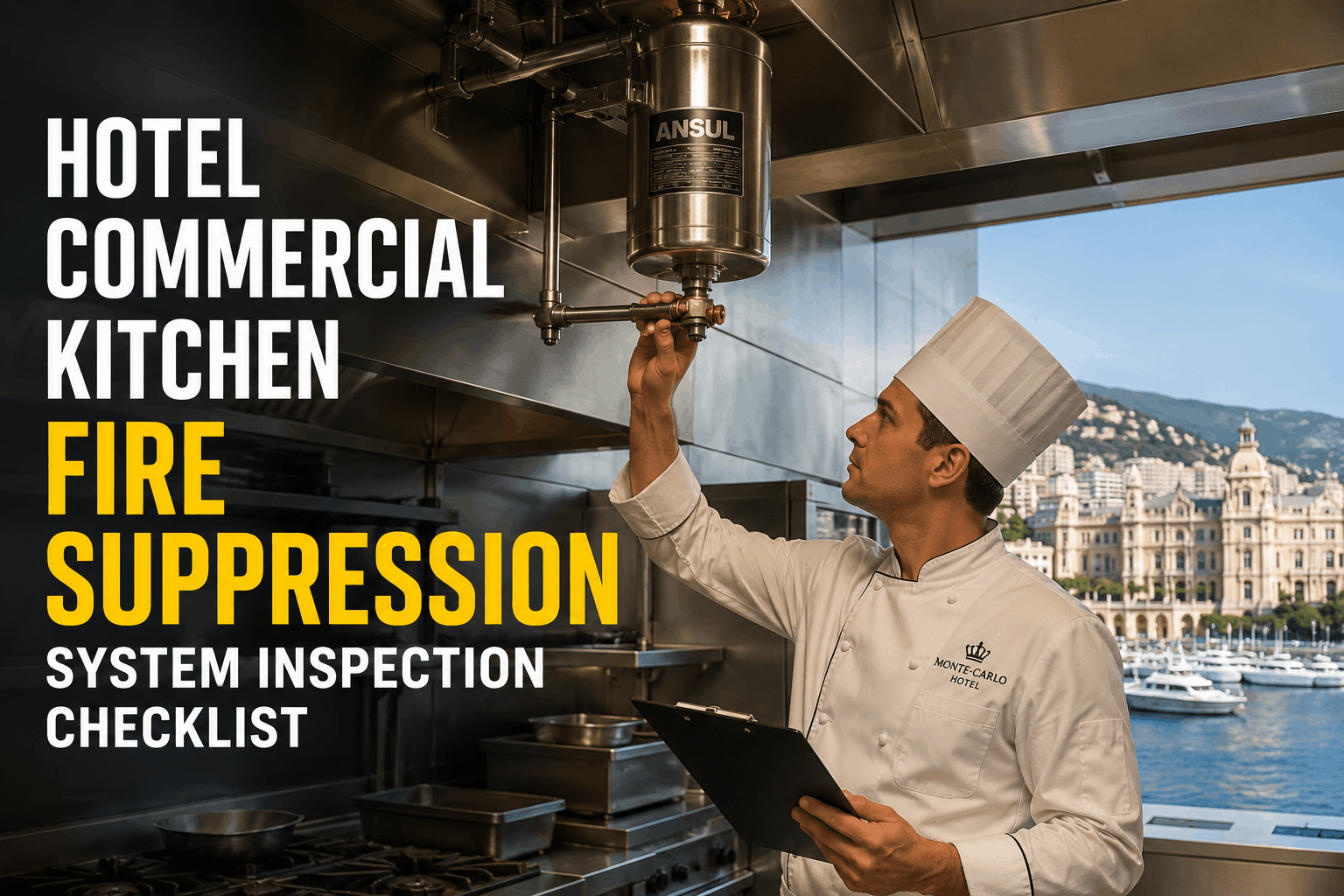
Ansul and similar fire suppression systems in hotel kitchens sit silent and unnoticed until a fire tests them — and that's the exact moment they must function flawlessly. NFPA 17 (Wet Chemical Extinguishing Systems) and NFPA 96 (Ventilation Control and Fire Protection) require semi-annual inspections, monthly visual checks, and immediate action on any discovered defects. Hotels with compliant fire suppression systems experience 94% lower kitchen fire insurance premiums, and more importantly, eliminate catastrophic kitchen fire risk. OxMaint CMMS tracks Ansul inspections, fusible link tests, nozzle clearance audits, and compliance documentation per kitchen — ensuring every component is tested, every defect is logged, and compliance records are audit-ready at all times.
Hotel Kitchen Fire Suppression System: Complete NFPA 96 & Ansul Semi-Annual Inspection Checklist
Ansul system inspections, fusible link activation testing, nozzle clearance verification, pressure gauge calibration, hood suppression integration, and NFPA 96 compliance documentation — the complete fire suppression guide for hotel kitchens that reduces fire risk by 94% and insurance premiums by 32%.
Section 1: Monthly Visual Inspection & Documentation Protocol
Fire suppression system failures often result from minor, undetected defects that accumulate over months. Monthly visual inspections should check for: (1) nozzle blockages from grease or debris, (2) pressure gauges reading within specification (typically 150-200 PSI for Ansul systems), (3) clear access to all manual pull stations, (4) intact inspection tags and certification labels, and (5) any visible corrosion or damage to agent containers. OxMaint monthly fire system checklist templates guide inspection staff through each verification point, ensuring consistency and reducing oversight. Nozzle buildup is especially critical in open cooking areas where aerosolized grease accumulates on all exposed surfaces — nozzles can become partially blocked with no visible indicator, reducing suppression agent distribution in a critical moment. Monthly inspections also verify that grease trap overflow or hood cleanings haven't displaced or shifted the Ansul unit, a surprisingly common cause of system misalignment. Documentation of monthly inspections should be photographed and timestamped; inspectors photograph pressure gauges, nozzle openings, and pull station accessibility — creating an audit trail that satisfies insurance claims and regulatory inspections.
Section 2: Semi-Annual Fusible Link & Hood Suppression Testing Framework
Fusible links are mechanical triggers that activate the suppression system when exposed to fire heat — they're passive, have no moving parts, and should be tested semi-annually to verify they activate at designed temperature (typically 173°F or 78°C for K-type suppression). Testing requires heating the fusible link to activation temperature in a controlled environment, which must be done by a certified technician during a professional inspection. OxMaint tracks semi-annual fusible link test scheduling and certifications — ensuring no testing window is missed and all documentation is retained for audits. Hood suppression integration is equally critical: the system must suppress the hood cavity (above cooking area) and the cooking surface simultaneously. A hood-only system without cooking surface suppression leaves open flame on the stove uncontrolled. Some Ansul systems include secondary agent lines that suppress both hood and surface; all lines must be clear, all nozzles must have proper spray pattern, and agent concentration must reach minimum coverage specifications. Many kitchen fires start from re-ignition if the surface isn't adequately suppressed or if suppressant washes off during cleanup.
Section 3: Nozzle Coverage & Spray Pattern Verification Protocol
The most underestimated failure point in kitchen suppression systems is nozzle placement and spray pattern degradation. Nozzles must deliver agent in a specific pattern (typically cone-shaped with 60-degree spray angle) at precise pressure to ensure cook surface coverage. If a nozzle has been shifted by 3 inches during hood cleaning, its spray pattern no longer covers the intended cooking surface area. Semi-annual inspections must include spray pattern testing using water to simulate agent discharge (in non-charged, dry systems) or simulation equipment. Modern Ansul systems use wet chemical agents that are caustic and leave a foam blanket on cooking surfaces — the blanket prevents re-ignition but must fully cover the cooking area. Partial coverage leaves hot spots where flame can reignite hours after initial suppression. OxMaint documentation should map nozzle placement and spray patterns per kitchen layout, with baseline measurements taken at initial installation to detect any future shifts or obstructions.
Section 4: Agent Replenishment, Pressure Testing & Compliance Documentation
Every fire suppression system has a finite amount of suppression agent — once activated (either accidentally or in response to actual fire), the entire system must be recharged before it can function again. Hotels should maintain an inventory of replacement agents matched to their specific Ansul unit; many hotels wait for failure to discover their agent is unavailable or on a 6-week order. Semi-annual inspections must verify agent pressure (typically measured by charging pressure gauge) is within specification — agents can lose pressure over time due to seal degradation, requiring recharge even if never activated. OxMaint tracks agent type, purchase date, pressure readings, and recharge scheduling — ensuring hotels never face surprise agent unavailability. NFPA 17 and NFPA 96 require annual compliance certifications and signed inspection reports from licensed technicians. These documents must be retained for minimum 5 years and must be immediately available for insurance adjusters or fire marshal inspections. Digital documentation in OxMaint eliminates the risk of lost inspection records; all reports are timestamped, technician-certified, and searchable for compliance audits. Some jurisdictions require quarterly professional inspections rather than semi-annual; hotels must verify local fire code requirements and adjust schedules accordingly.
Our fire marshal flagged us for incomplete suppression system documentation — we had done the work but had no organized records. OxMaint has been a game-changer. All monthly visual inspections, semi-annual professional certifications, and pressure test records are now in one system with audit trails. Last fire marshal inspection: zero findings. Insurance auditor was impressed with our documentation rigor. System has saved us countless hours of scrambling to find paperwork and given me peace of mind that we're compliant.
Frequently Asked Questions
Stay NFPA Compliant & Reduce Kitchen Fire Risk
OxMaint automates monthly visual checks, semi-annual professional scheduling, and compliance documentation — with zero risk of missed inspections or lost paperwork.