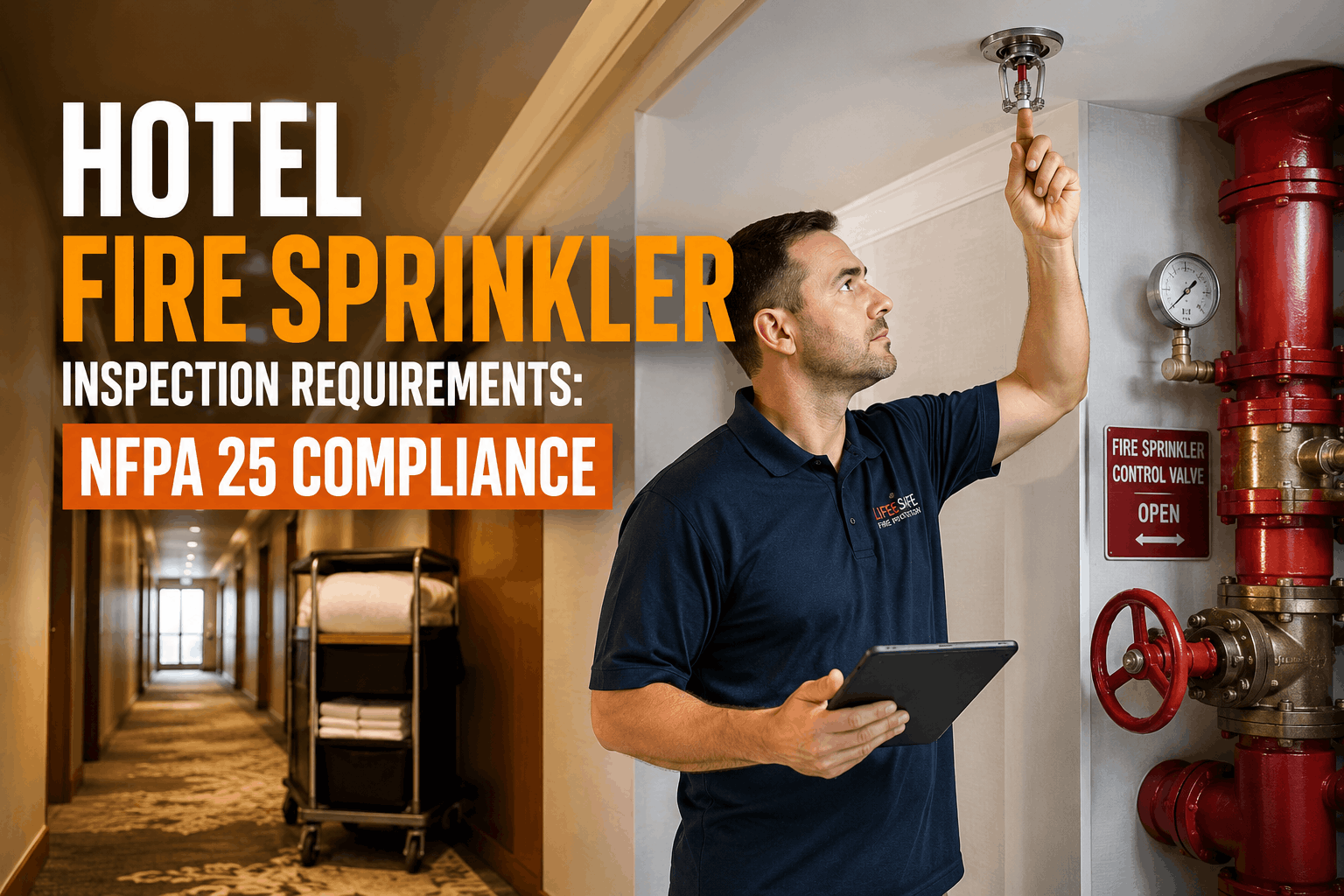
Hotel Fire Sprinkler Inspection Requirements: NFPA 25 Compliance
By Alex Jordan on June 1, 2026
Fire sprinkler systems protect guest lives and assets, but they only function if maintenance is meticulous. NFPA 25 compliance requires weekly, monthly, quarterly, and annual inspections of control valves, water pressure, sprinkler heads, and activation systems. Failure to document inspections leaves your hotel liable for lawsuits if a fire occurs. Contact support to deploy Oxmaint's CMMS for automated sprinkler system compliance calendars, inspector scheduling, pressure test logs, and audit-ready documentation across all guest rooms and common areas.
SAFETY COMPLIANCE TEMPLATE · FIRE PROTECTION · 2026
NFPA 25 Sprinkler Inspection and Compliance Management
Track weekly main drain tests, monthly control valve inspections, quarterly pressure gauge verification, annual backflow prevention testing, and full system activation drills. Maintain continuous compliance documentation for insurance audits and fire marshal inspections.
NFPA 25 Sprinkler System Requirements and Hotel Application
NFPA 25 is the National Fire Protection Association standard governing maintenance, inspection, and testing of water-based fire protection systems, including sprinkler systems found in all commercial hotels. The standard requires weekly visual inspections of control valves, monthly pressure gauge readings, quarterly flow tests, and annual full-system activation drills. Hotel sprinkler systems typically consist of: (1) water supply main (municipal or tank-fed at 40–90 PSI), (2) main control valve with tamper switch (monitored continuously), (3) pressure relief valve (set at system design pressure, typically 80–100 PSI), (4) water flow detection system, (5) check valve preventing backflow, and (6) branch lines serving individual guest room heads and common area coverage. Each sprinkler head must be inspected for corrosion, glass bulb integrity, orifice obstruction, and proper orientation. NFPA 25 mandates different intervals for different system types: dry pipe systems (common in cold climates) require weekly main drain tests; wet pipe systems (common in mild climates) require monthly control valve inspection; foam systems require annual certification. Hotels must maintain inspector certifications, document every test with timestamps and pressure readings, and provide audit-ready files demonstrating continuous compliance. Failure to maintain NFPA 25 compliance voids insurance coverage, creates liability exposure if fires occur, and results in fire marshal citations (fines $500–2,000 per violation). Oxmaint's CMMS automates all inspection calendars, routes work orders to certified inspectors, logs pressure data automatically, generates annual compliance summaries, and prepares documentation for insurance underwriters.
NFPA 25 Inspection Schedule by Component and Frequency
WEEKLY CRITICAL
Main Control Valve and Water Supply
Visually inspect main control valve for proper seal position, confirm tamper switch indicator light is ON (meaning valve is not locked shut), test pressure gauge reads within 5 PSI of design pressure, perform main drain test opening valve for 3 seconds and observing water flow. Record all observations in CMMS.
MONTHLY ROUTINE
Pressure Gauge and Relief Valve Verification
Document pressure gauge reading (target 40–90 PSI depending on system design) and verify needle moves smoothly. Test pressure relief valve manual test lever monthly to confirm valve opens without sticking. Check for any leaks from relief valve drain. Verify check valve holds pressure (no backflow).
QUARTERLY CHECK
Sprinkler Head Inspection and Flow Testing
Physically inspect 20% of sprinkler heads in each zone for glass bulb color (red for most commercial settings), check for debris or paint buildup in orifice, verify head orientation is correct (deflector pointing down), test water flow from uppermost branch line by opening control. Log any corroded or damaged heads for replacement.
ANNUAL MANDATE
Full System Activation Test and Certification
Licensed fire protection contractor performs full system activation test triggering water flow alarm, confirms all alarm bells ring (visual and audible), tests flow switches and pressure switches respond, and inspects underground water supply lines via flushing. Annual backflow prevention device certification required (state-mandated for water quality compliance).
Compliance Documentation and Audit Trail Requirements
Document Type
Retention Requirement
CMMS Benefit
Weekly Inspection Logs
3 years (52 entries annually = 156 total)
Auto-generates timestamp-stamped logs; no manual data entry errors
Monthly Pressure Readings
3 years (36 readings; alerts if reading deviates >5 PSI)
3 years (4 quarterly cycles = 12 photo sets minimum)
Mobile app captures photos linked to work order, auto-uploaded to secure cloud storage
Annual Contractor Certification
3 years (annual report with P&ID drawings)
Stores contractor reports in centralized document vault, auto-reminds for license renewal
Backflow Prevention Testing
3 years (annual certification + biennial cross-connection audit)
Alerts for certification expiration; coordinates with municipal water authority requirements
Fire Marshal Inspection Records
Indefinite (evidence of violation remediation)
Generates audit-ready summary showing all violations closed within required timeframe
CMMS Workflow for Continuous NFPA 25 Compliance
Automated Inspection Scheduling
CMMS calendar auto-generates work orders for weekly main drain tests, monthly control valve checks, quarterly sprinkler head inspections, and annual full-system tests. Inspectors receive mobile app notifications with task details and historical reference data.
Pressure and Flow Data Logging
Mobile inspectors log pressure gauge readings, flow test results, control valve status, and relief valve behavior directly into CMMS. System records timestamp, inspector ID, and automatically flags readings outside acceptable ranges for investigation.
Head Inspection and Photo Documentation
Mobile app enables inspectors to photograph sprinkler heads, document defects (corrosion, bulb color, orientation), and mark heads requiring replacement. Photos auto-attach to work orders and stored in audit-ready cloud vault.
Compliance Certification Management
CMMS stores annual contractor certifications, backflow prevention test reports, and fire marshal inspection records. System auto-alerts 60 days before license/certification expiration, ensuring continuous compliance without gaps.
Audit Trail and Fire Marshal Reporting
One-click compliance report generation shows continuous inspection history, all test results, and violation remediation timeline. Fire marshal inspections import findings directly into CMMS, auto-generating corrective action work orders.
Multi-Property Compliance Dashboard
For hotel chains, centralized dashboard shows compliance status across all properties: completed inspections, outstanding work orders, pressure trend warnings, and certification expiration alerts. Identify underperforming locations immediately.
100%
Inspection Completion
CMMS-managed hotels achieve 100% NFPA 25 compliance vs. industry average 73% completion.
Customer Success: Fire Safety and Compliance Excellence
"Before Oxmaint, we were managing NFPA 25 compliance manually on spreadsheets—with inconsistent documentation and missed tests. A fire marshal inspection found 12 overdue inspections and cited us for inadequate pressure records. After implementing Oxmaint CMMS, every weekly, monthly, quarterly, and annual inspection is now automatically scheduled and logged. We've achieved 100% compliance, and our insurance carrier confirmed our coverage is solid. The peace of mind knowing guest safety systems are properly maintained is invaluable."
What is the penalty for failing NFPA 25 compliance inspections?+
Fire marshal violations range from $500–2,000 per missed inspection. More critically, insurance carriers void coverage entirely if sprinkler system maintenance is inadequate, leaving your hotel liable for 100% of fire losses—often $1–5 million+ in damages.
Can a hotel self-perform NFPA 25 sprinkler inspections or must a licensed contractor handle them?+
Weekly and monthly inspections can be performed by trained hotel maintenance staff (documented in CMMS), but the annual full-system activation test and backflow prevention certification must be performed by state-licensed fire protection contractors. Oxmaint tracks who performed each test and certifies authority.
How long must NFPA 25 inspection records be retained?+
Inspection records must be retained for 3 years minimum. Oxmaint stores all logs in secure cloud vaults with automated backup, accessible for fire marshal audits and insurance reviews at any time.
What does NFPA 25 specify about sprinkler head glass bulbs?+
Sprinkler bulbs are color-coded by temperature rating: red (155°F standard), orange (200°F), yellow (250°F), green (300°F). During quarterly inspections, verify bulb color matches system design and check for cracks or cloudiness indicating age-related failure risk.
How does NFPA 25 define the monthly control valve inspection?+
Monthly control valve inspection includes: visual check valve seal is intact and properly seated, tamper switch indicator confirms valve is NOT locked shut, pressure gauge reads correct operating pressure (typically 40–90 PSI), and relief valve manual test lever moves smoothly without sticking.
What is a main drain test and why does NFPA 25 require weekly testing?+
Main drain test opens the main control valve's test port for 3 seconds, allowing water to flow—confirming system is under pressure and water supply is available. Weekly testing catches pressure loss or supply blockages immediately, preventing undetected system failure during an actual fire event.
How does Oxmaint ensure NFPA 25 compliance across multi-property hotel chains?+
Oxmaint's centralized dashboard shows compliance status for every property: completed inspections, outstanding work orders, pressure abnormalities, and certification expiration dates. Chain operators can identify underperforming locations and enforce consistent NFPA 25 standards across all hotels.
What is backflow prevention testing and how often is it required?+
Backflow prevention devices (check valves) prevent contaminated water from flowing backward into municipal water supply. Annual certification by licensed contractor is required; state/local authorities may mandate biennial cross-connection audits. Oxmaint auto-alerts for certification renewal.
Achieve 100% NFPA 25 Compliance and Protect Guest Safety
Oxmaint CMMS automates weekly, monthly, quarterly, and annual sprinkler system inspections, maintaining continuous compliance documentation and eliminating liability exposure. Secure compliance audit trails defend against fire marshal violations and insurance disputes while ensuring guest safety systems function flawlessly.