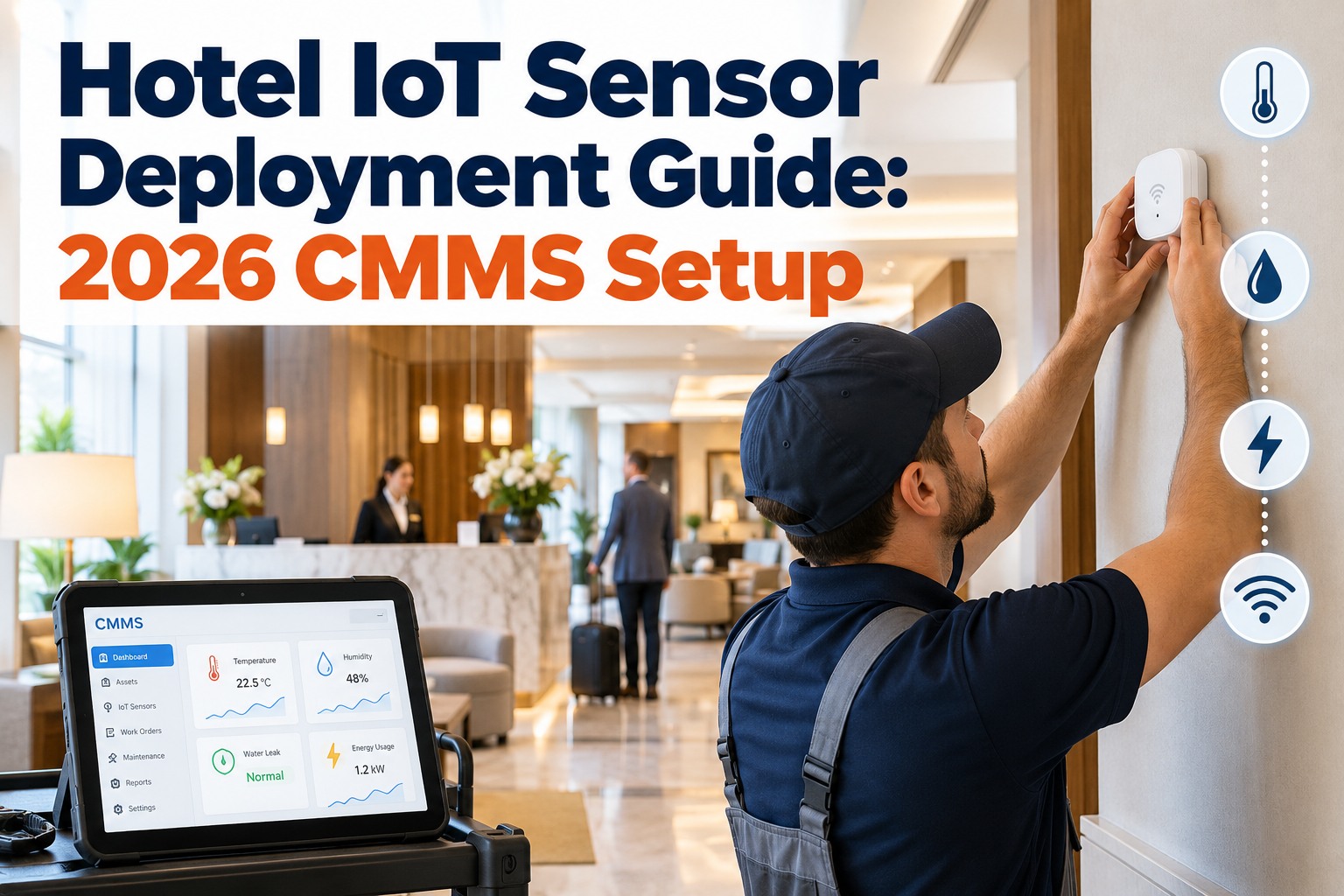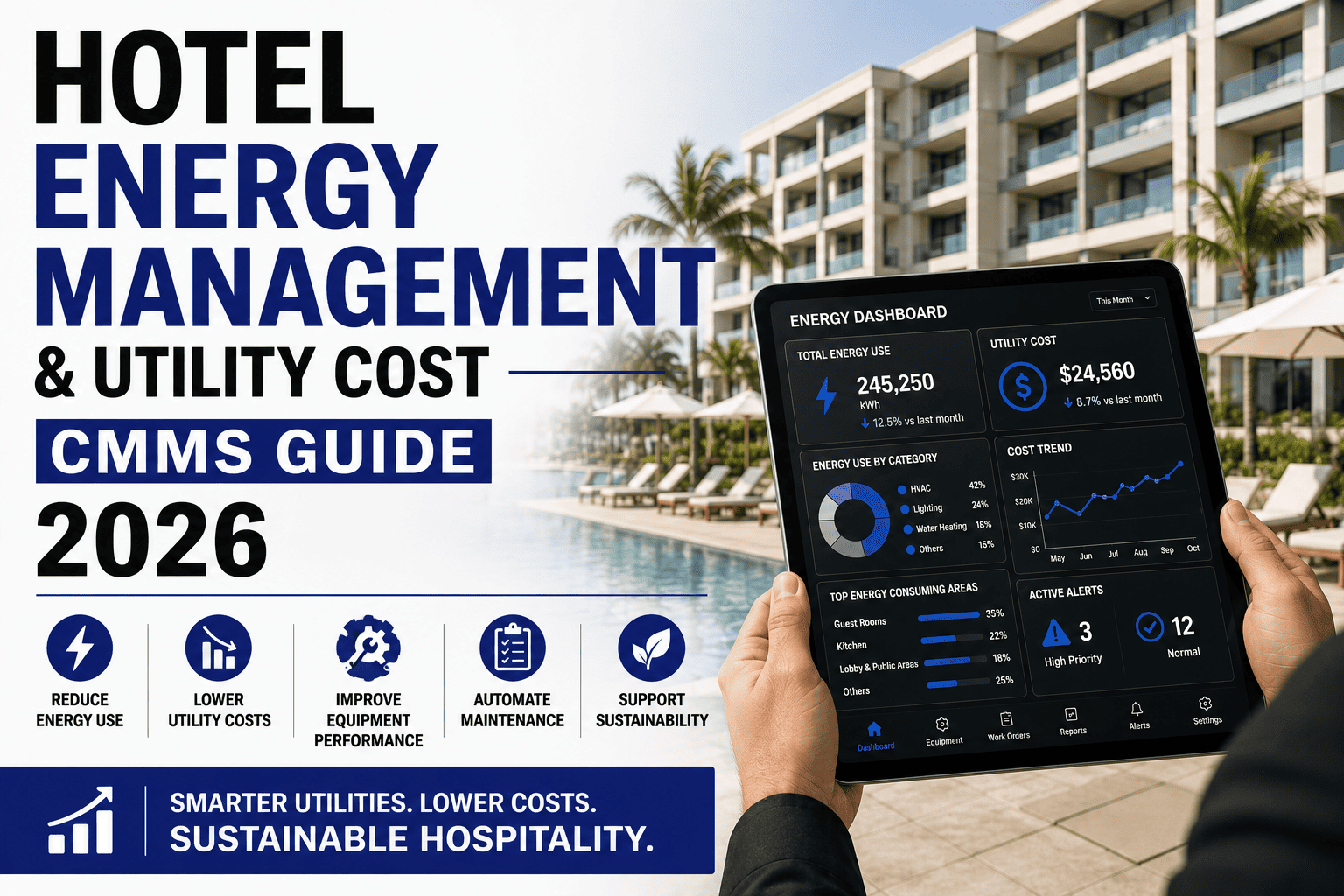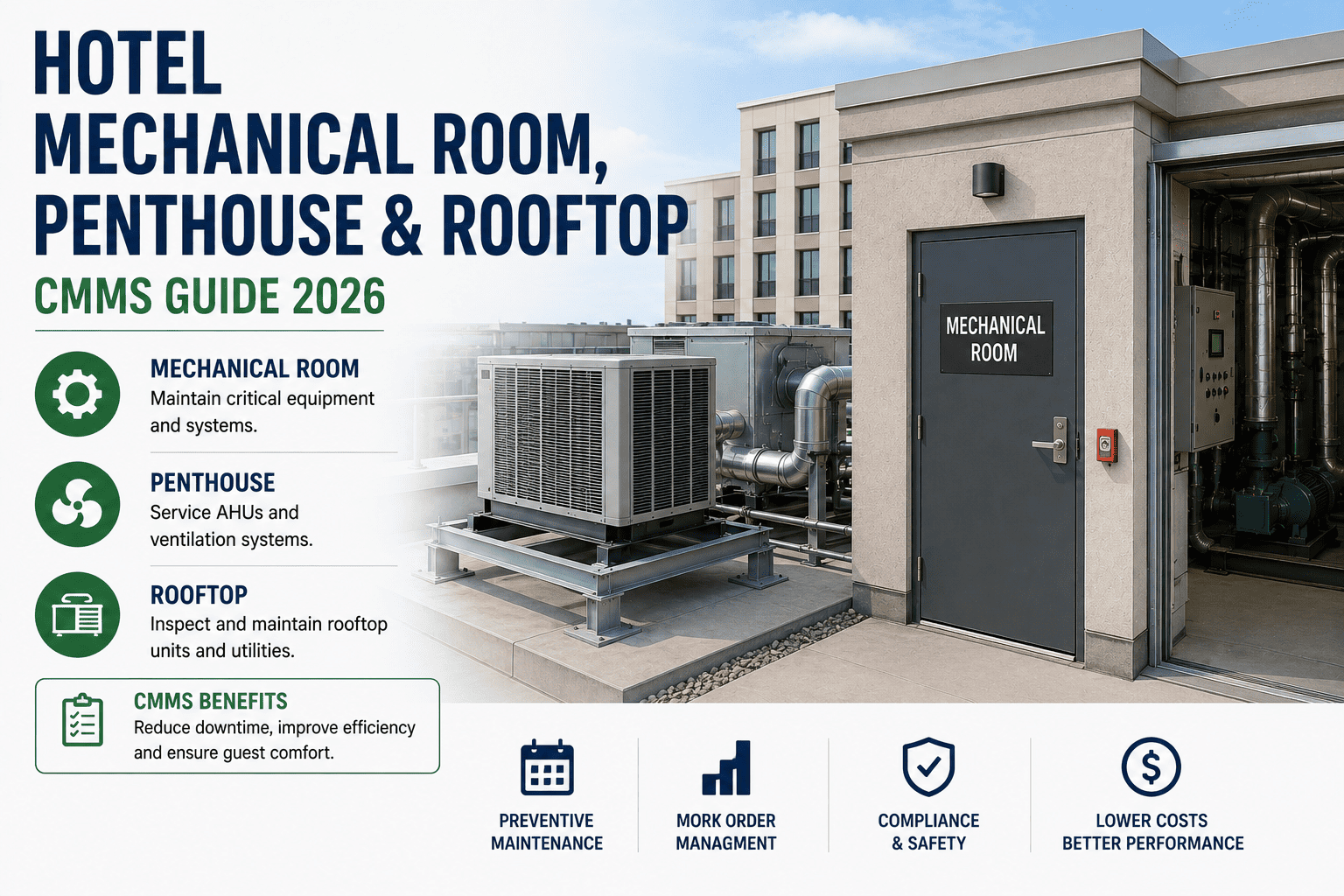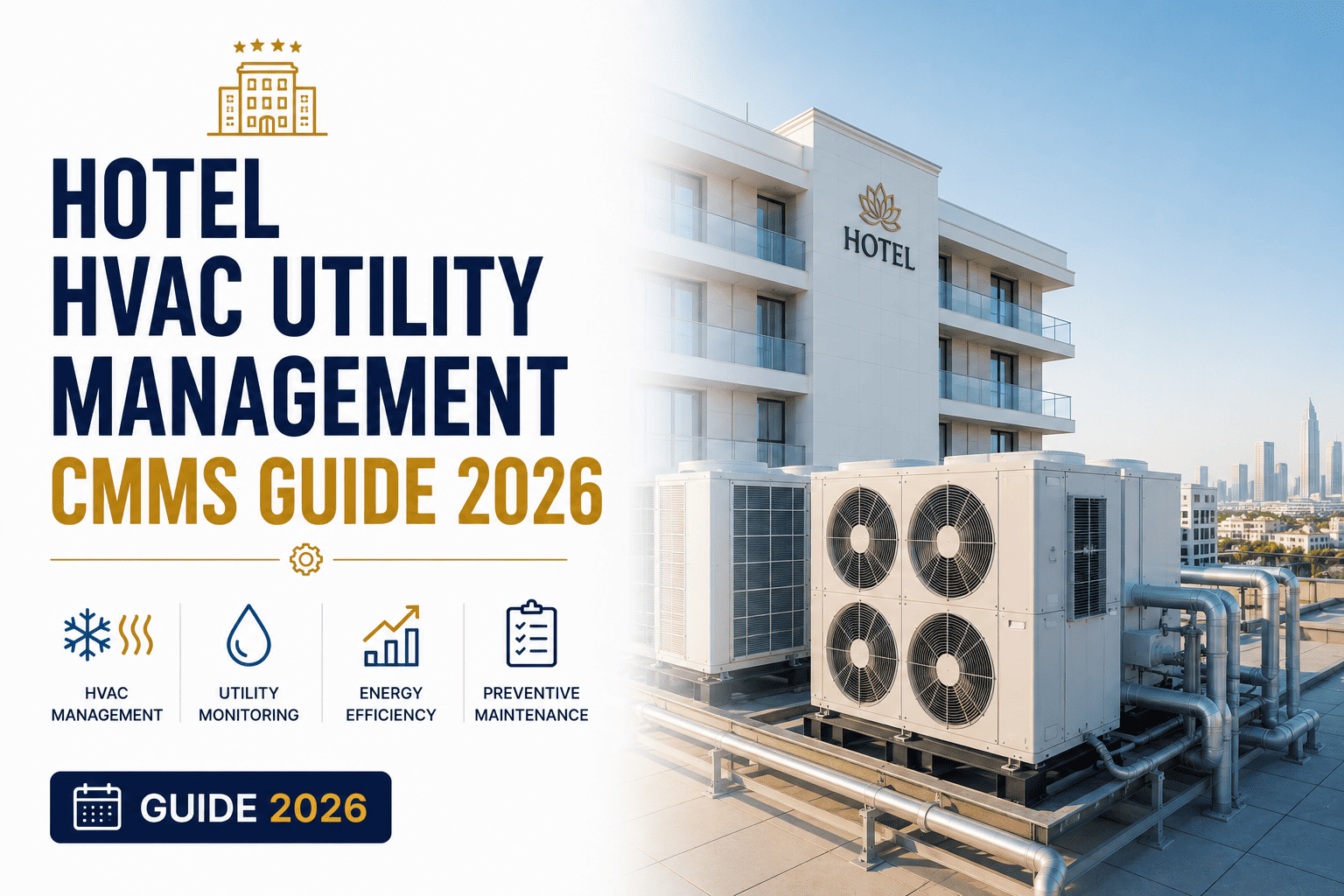
Across the hospitality sector, HVAC and utility expenditures consume 40 to 60 percent of a property's total operating energy budget, making it the single largest line item draining a hotel's net operating income. In 2026, with rising utility tariffs and tightening corporate ESG reporting mandates, relying on reactive maintenance or disconnected building management systems guarantees inflated costs and poor guest comfort scores. By unifying PTAC units, central chillers, commercial boilers, and electrical distribution through a Computerized Maintenance Management System (CMMS), engineering directors can systematically reduce energy waste by 15 to 25 percent within the first year. This guide breaks down the preventive maintenance schedules, controls optimization strategies, and utility cost tracking workflows needed to achieve those returns. You can implement these exact frameworks today when you Start Free Trial of our hospitality-tuned CMMS platform.
Is unmanaged HVAC quietly draining 40-60% of your property's energy budget?
Every hour a chiller short-cycles, a boiler scales up, or a PTAC unit runs against an open balcony door, capital evaporates from your P&L. Unifying mechanical systems and utility tracking under a single CMMS stops the leak — consistently cutting energy spend 15-25% while elevating guest comfort scores.
Core Mechanical Assets That Drive Utility Spend
A 200-key full-service hotel typically operates 250+ PTAC/VTAC units, 2-3 central chillers, high-pressure boilers, and miles of electrical distribution. Standardizing CMMS-driven preventive maintenance across these specific asset classes is the fastest path to recovering lost margin.
PTAC & VTAC Units
In-room terminals represent 35-45% of guestroom energy. Bi-monthly coil cleaning and filter swaps restore rated efficiency, preventing the 15% degradation that spikes compressor amperage and guest complaints about humidity.
Central Chillers
Tube fouling of just 0.006 inches increases chiller energy use by 11%. Automated CMMS work orders for eddy-current testing, refrigerant log tracking, and condenser tube brushing secure the 0.6 kW/ton benchmark.
Commercial Boilers
A 1/32-inch layer of scale on boiler tubes hikes fuel consumption by 8.5%. Schedule combustion analysis, blowdown heat recovery, and tube inspection via CMMS to maintain 80-85% thermal efficiency.
Electrical & Power
Loose bus connections and uncorrected power factor cause hidden resistive losses. Infrared thermography routes via CMMS catch 90% of catastrophic failure precursors before they trip breakers or cause guest-floor outages.
The CMMS Utility Management Formula
Managing utility costs is not about turning off lights; it is about aligning mechanical runtime with actual occupancy and demand. Here is the baseline formula a CMMS enforces to drive the 15-25% reduction.
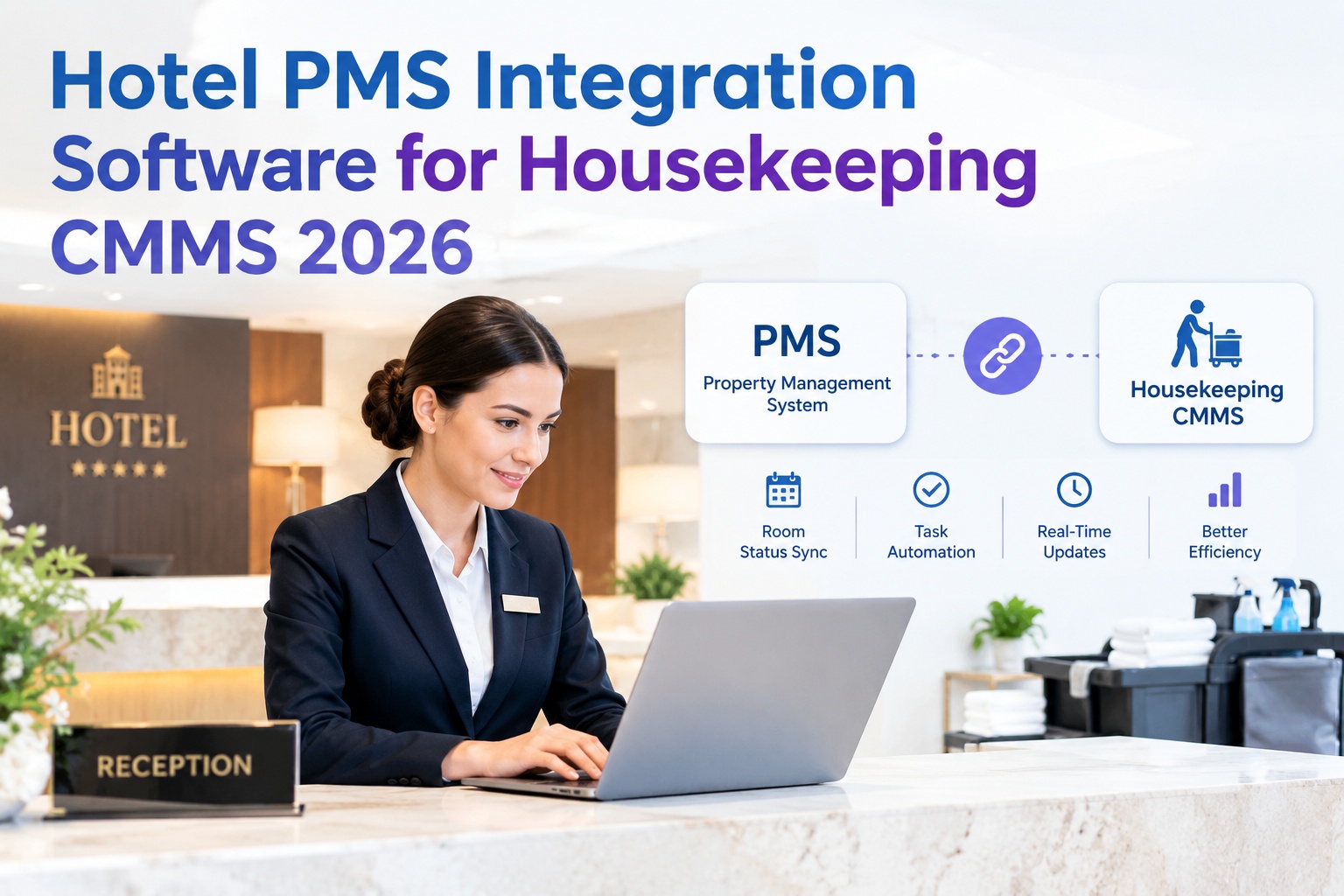
Integrating PMS check-in/check-out data with the BMS via the CMMS slashes unnecessary heating and cooling of unoccupied guestrooms by an average of 3.5 hours per room daily.
Rigorous PM scheduling for coils, filters, and burners restores mechanical equipment to within 2% of OEM efficiency, directly lowering kWh and therm consumption.
Enforcing strict 2°F deadbands and optimal start/stop sequences eliminates simultaneous heating and cooling, a silent waste affecting 60% of legacy hospitality properties.
12-Month HVAC Utility Optimization Roadmap
A property-wide utility transformation requires disciplined sequencing. Here is the deployment timeline engineering teams follow inside the CMMS to realize compounding savings without disrupting guest experience.
Asset & Utility Baseline
Import all mechanical asset data into the CMMS. Connect 12 months of utility bills and sub-meter readings to establish a normalized kWh/square-foot and cost-per-occupied-room baseline.
PM Schedule Activation
Deploy automated work order triggers for PTAC filters, chiller run-hours, boiler combustion tests, and electrical IR scans. Route tasks to mobile devices for closed-loop execution and verification.
Controls & Setpoint Tuning
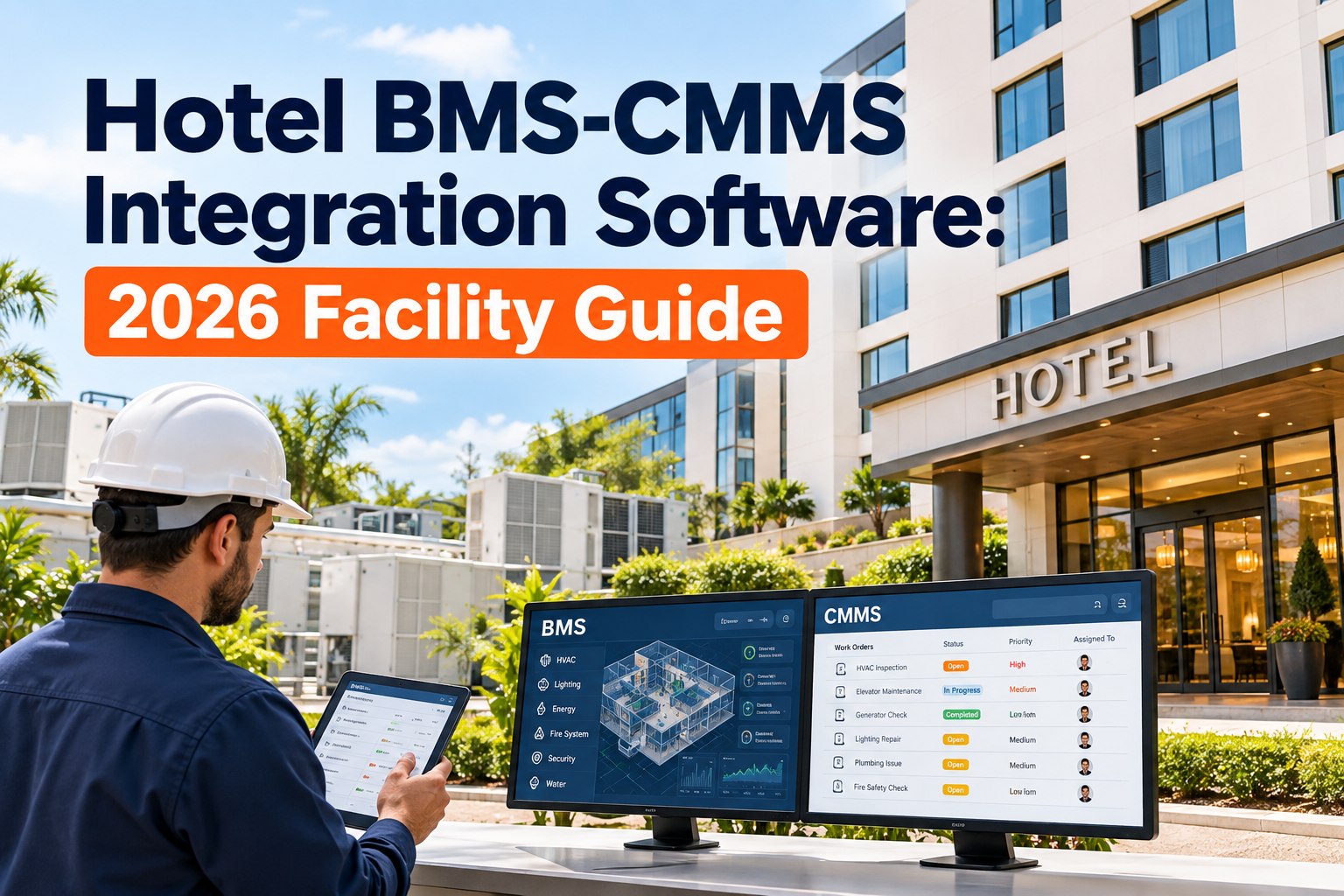
Integrate BMS data into the CMMS dashboard. Calibrate sensors, enforce deadbands, and activate occupancy-based setback schedules. Flag systems operating outside of design parameters.
Variance & Cost Tracking
Transition to predictive maintenance using CMMS analytics. Audit monthly utility variance against the baseline, calculate exact ROI of PM activities, and refine capital replacement forecasts.
The Real Cost of Reactive Maintenance
Consider a 220-key resort in a cooling-dominant climate operating two 300-ton centrifugal chillers, a high-pressure steam boiler plant, and 220 individual PTAC units. Below is the quantifiable impact of transitioning from a reactive breakdown model to a unified CMMS strategy.
| Metric | Reactive Operation | CMMS-Managed (Year 1) | Annual Savings |
|---|---|---|---|
| Annual Energy Spend | $980,000 | $735,000 | $245,000 |
| Unplanned Downtime | 140 hours | 22 hours | 118 hours |
| Emergency Repair Parts | $58,000 | $19,500 | $38,500 |
| Guest Comfort Complaints | 410 tickets | 95 tickets | 77% Drop |
| System Lifespan Extension | 12 years (avg) | 17 years (avg) | 5 Years Deferred CapEx |
By catching a failing compressor bearing during a scheduled CMMS-triggered vibration analysis instead of during a peak July heatwave, this property avoided a $14,000 emergency chiller rebuild, saved 22 hours of guest-floor downtime, and secured a 4.8/5 comfort rating during peak season.
Stop Writing Checks to the Utility Company
Deploy a unified CMMS to automate HVAC preventive maintenance, track real-time utility variance, and recover the 15-25% of energy spend leaking from your property today.
Hotel HVAC & Utility CMMS Essentials
How does a CMMS reduce hotel energy costs by 15-25%?
A CMMS cuts utility spend by automating preventive maintenance schedules so equipment operates at OEM efficiency, and by integrating with your BMS to enforce occupancy-based runtime scheduling. This eliminates the energy waste caused by scaled boilers, fouled chiller tubes, and conditioning unoccupied rooms. You can see this exact workflow by setting up a sandbox when you Start Free Trial.
Can a CMMS integrate with our existing Building Management System (BMS)?
Yes. Modern hospitality CMMS platforms use API connectors and BACnet gateways to pull runtime, alarm, and setpoint data directly from the BMS. This allows the CMMS to automatically generate work orders when a chiller short-cycles or a boiler exceeds temperature thresholds, bridging the gap between facilities and engineering teams.
What is the typical payback period for implementing a hotel utility CMMS?
For a mid-to-large scale hotel, the payback period is typically 4 to 7 months. The combination of immediate energy reduction (enforcing deadbands and scheduling) and the elimination of emergency mechanical repairs usually offsets the software and implementation costs within the first cooling or heating season.
How does CMMS software handle PTAC unit maintenance across hundreds of rooms?
The CMMS groups identical assets and triggers staggered work orders based on calendar dates, runtime hours, or guest turnover data from the Property Management System (PMS). Engineers receive optimized routes on their mobile devices, ensuring filter swaps, coil cleaning, and drain pan treatments are completed without disrupting occupied rooms.
Does the CMMS help with ESG reporting and carbon tracking?
Absolutely. The system automatically compiles utility consumption data (kWh, therms, gallons) and converts it into Scope 1 and Scope 2 carbon emissions. This creates audit-ready reports for corporate ESG mandates and LEED recertification, eliminating the manual data entry that plagues engineering directors. To review these reporting features, you can Book a Demo with our team.
Transform Your Property's Mechanical Operations Today
Join hundreds of hospitality engineering teams using Oxmaint to centralize HVAC maintenance, slash utility costs, and deliver flawless guest comfort.
Free 14-day trial · No credit card required