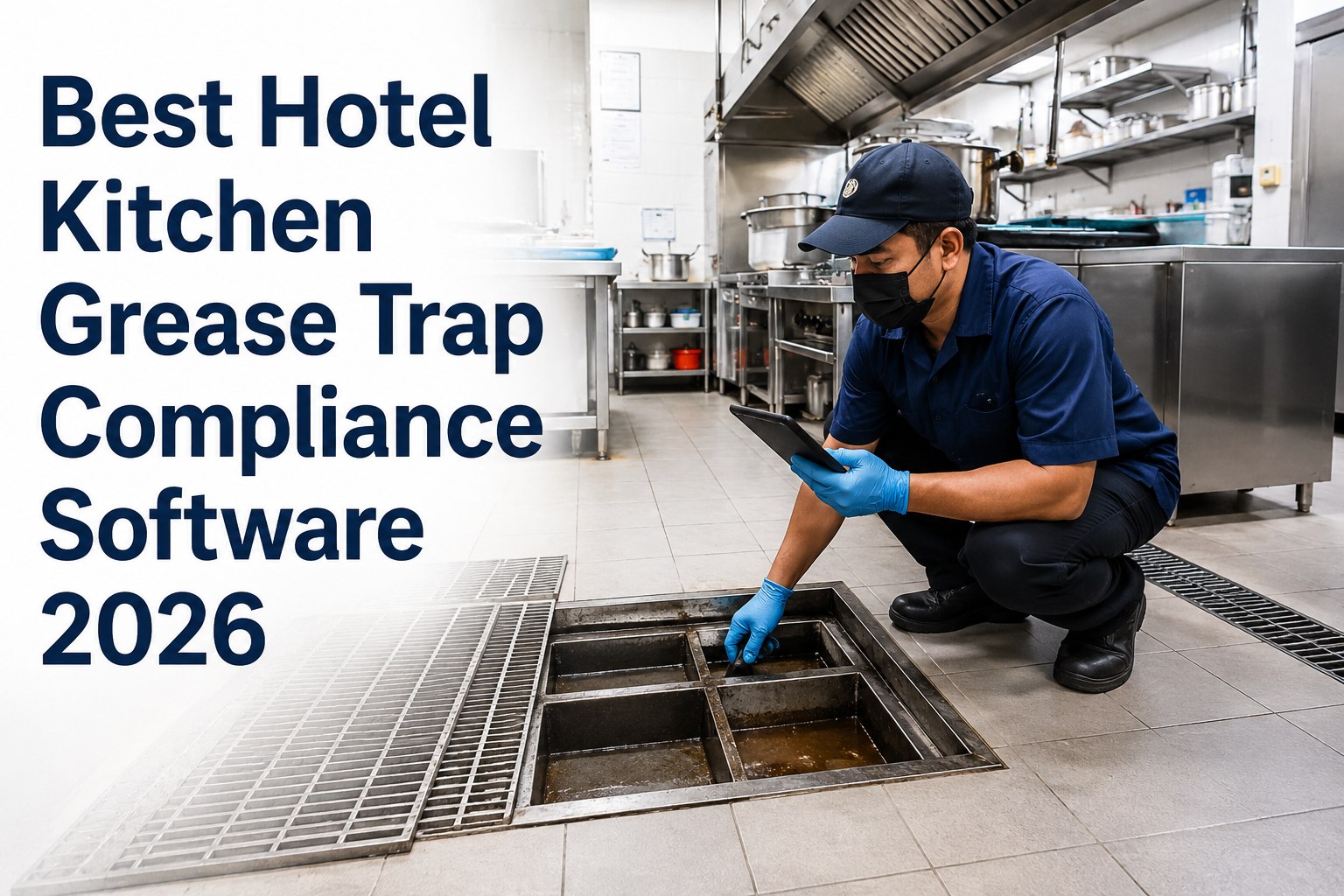
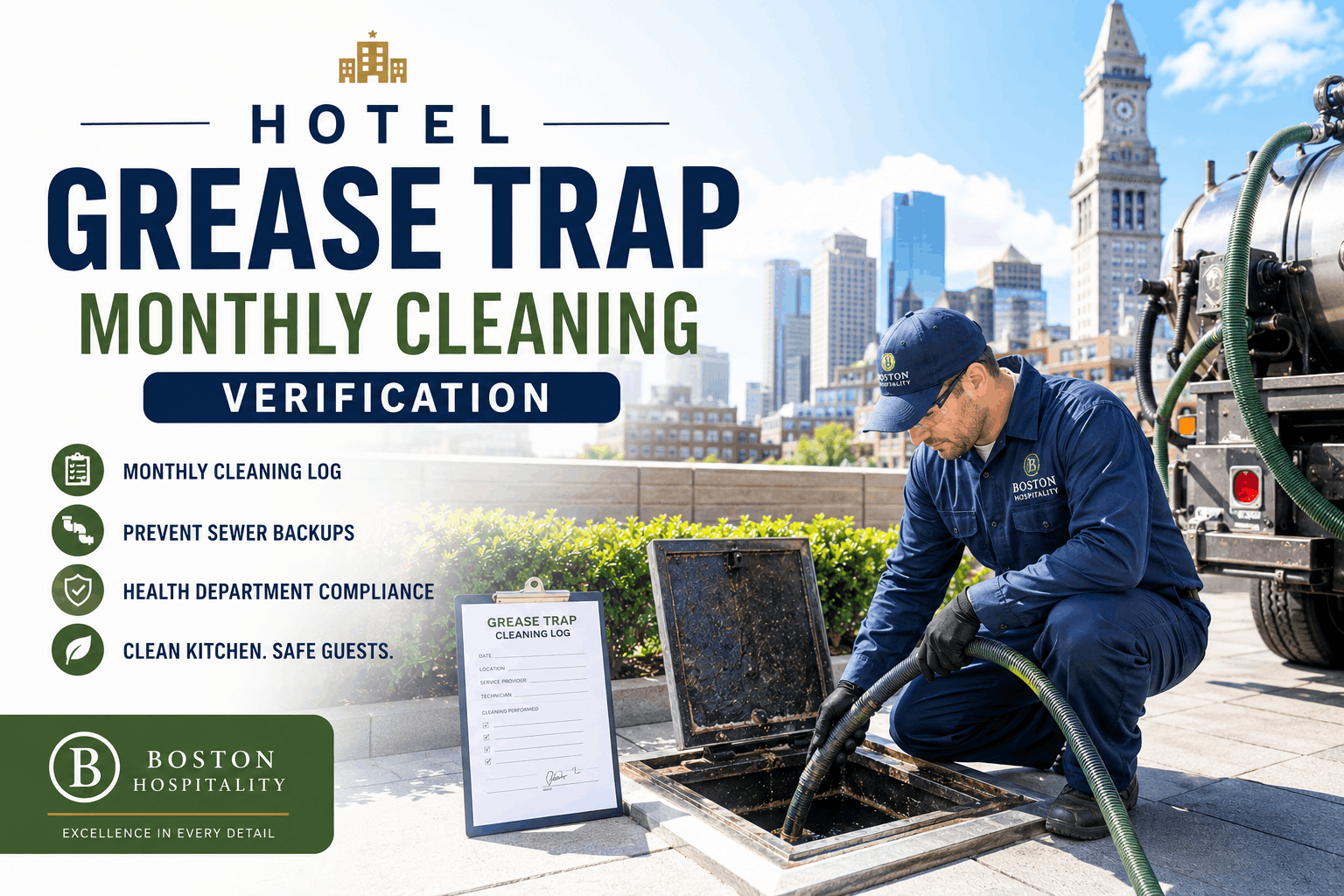
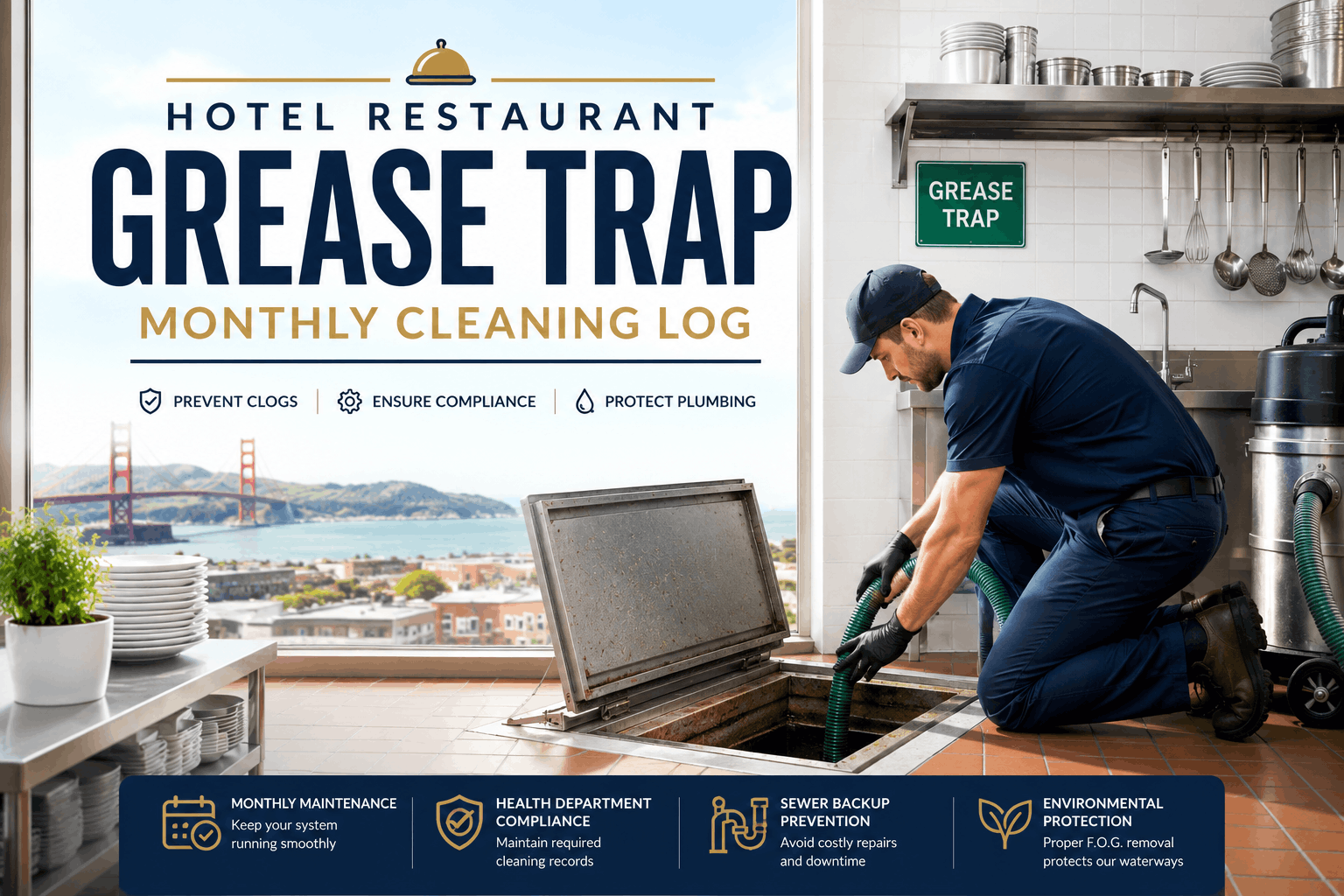
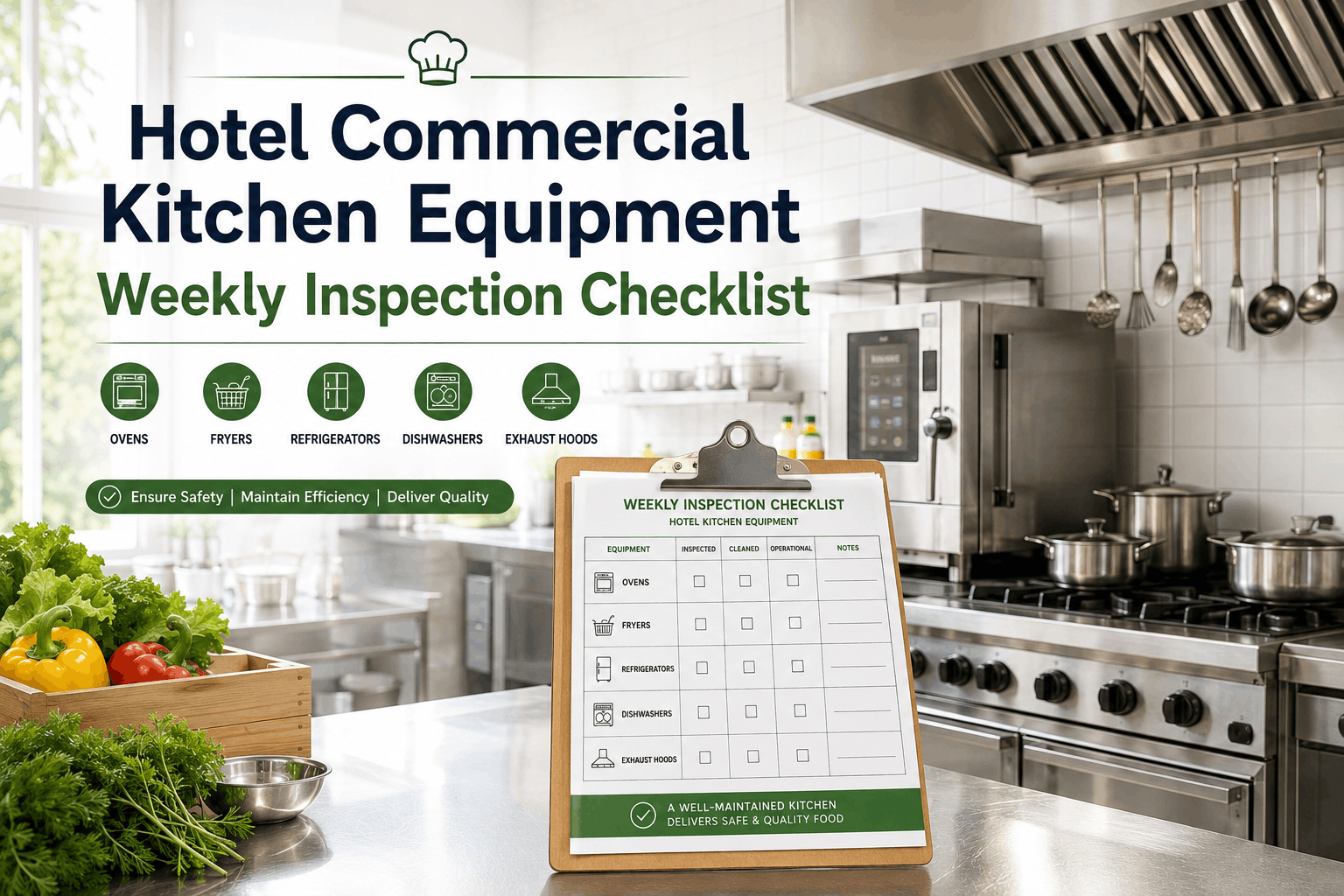
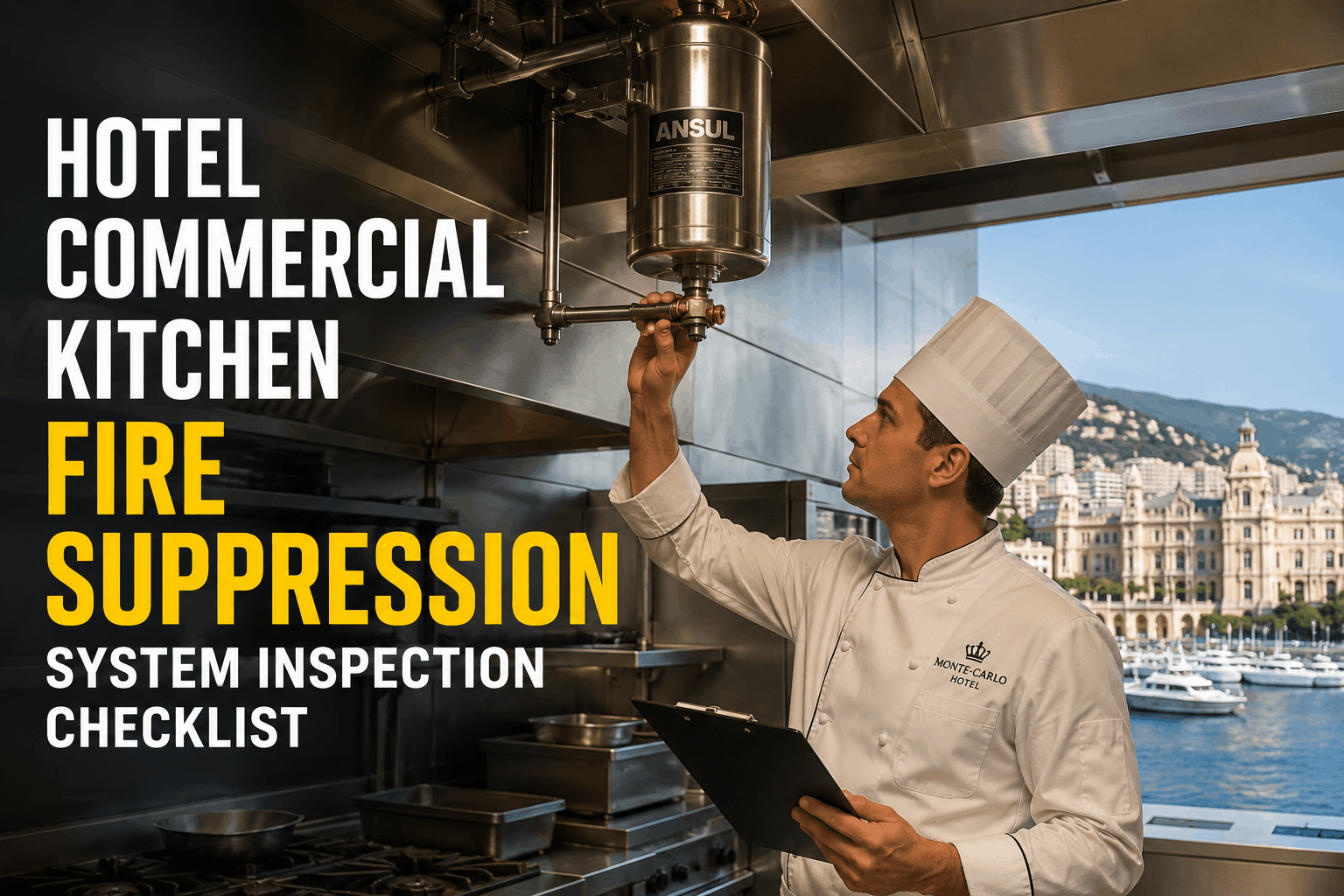
A hotel kitchen exhaust hood is the first line of defense against kitchen fires — capturing grease-laden vapor from cooking equipment and ducting it safely away. But every day the hood operates, grease accumulates on filters, inside ductwork, and on baffles — creating a flammable layer that ignites when temperatures exceed the flashpoint of grease (around 600°F). NFPA 96 (Kitchen Hood, Grease Duct & Exhaust Standard) mandates cleaning frequencies based on cooking volume: heavy-use kitchens (12+ hours continuous cooking) require quarterly professional cleaning; moderate-use require semi-annual cleaning. A kitchen hood system with overdue grease filters or ductwork accumulation is a fire waiting to happen — and the most commonly cited kitchen violation during fire inspections. This checklist gives your F&B and maintenance teams a complete daily, weekly, monthly, and quarterly inspection framework for hood filter condition, grease cup levels, ductwork cleanliness, fire suppression system function, and grease trap maintenance — all tracked in OxMaint's CMMS, creating the compliance documentation that prevents kitchen fires before fire marshals arrive.
Hotel Kitchen Exhaust Hood & Grease Trap Maintenance Checklist
Daily hood filter visual inspection, weekly grease cup emptying, monthly ductwork assessment, quarterly professional hood cleaning with certification, semi-annual grease trap pumping — structured for hotel F&B directors and maintenance teams complying with NFPA 96, local fire codes, and health department FOG (fats, oils, grease) discharge regulations.
Kitchen Fire Reality: Grease Duct Accumulation
Grease accumulation in ductwork is the primary accelerant in kitchen fires that extend beyond the hood area into the building structure. A kitchen fire that starts in accumulated duct grease can spread into walls, above ceilings, and through the entire building envelope — causing multi-million-dollar damage. NFPA 96 §11.6.2 requires cleaning to bare metal before surfaces become heavily contaminated. Quarterly professional cleaning with certification is not optional — it's the fire prevention mandate.
Hood Filters and Grease Cup Management
Hood filters trap airborne grease particles before they enter ductwork. Saturated filters restrict airflow, reduce hood capture efficiency, and create fire risk. Grease cups collect overflow and must be emptied before overflow drips onto cooking surfaces below. Weekly filter cleaning and daily grease cup inspection are minimum prevention measures.
Filter Inspection
Daily visual check — clean immediately if grease pooling observed
Grease Cup Level
Empty weekly — log volumes to detect capacity issues
Ductwork Protection
Quarterly professional cleaning per NFPA 96 mandate
Exhaust Fan and Ductwork Assessment
The exhaust fan creates the suction that pulls cooking vapors into the hood and ductwork. Fan blockage, belt degradation, or bearing failure stops the hood from capturing grease-laden air — allowing it to escape into the kitchen environment. Quarterly ductwork cleaning by a certified contractor removes grease accumulation before it creates fire risk.
Kitchen Hood Compliance Frequency Matrix
| Task | Frequency | Standard | Status |
|---|---|---|---|
| Filter Visual Inspection | Daily | NFPA 96 §6.3 | ✓ |
| Grease Cup Emptying | Weekly | NFPA 96 §8.1 | ✓ |
| Filter Cleaning | Weekly | NFPA 96 §6.3 | ✓ |
| Hood/Ductwork Assessment | Monthly | NFPA 96 §11.6 | ✓ |
| Professional Hood Cleaning | Quarterly (heavy-use) | NFPA 96 §11.6.2 | ✓ |
| Grease Trap Pumping | Semi-Annual | Local Health Code | ✓ |
Fire Suppression System and Grease Trap Management
The fire suppression system (hood extinguisher) is the kitchen's last line of defense against uncontrolled fires. The system automatically shuts off fuel and discharges suppression agent when fire is detected. Grease traps prevent kitchen wastewater FOG (fats, oils, grease) from entering municipal sewers — a legal requirement with significant penalties for non-compliance.
"Fire marshal's inspection found our quarterly hood cleaning certificates were expired — we had cleaning done but didn't file the paperwork. He cited us for non-compliance with NFPA 96. Insurance threatened to deny coverage. Now with OxMaint, hood cleaning service dates are auto-scheduled, certificates are uploaded directly from the contractor and stored in the CMMS, and I can pull the last 2 years of cleaning certificates in seconds. Fire marshal comes in, sees complete documentation, zero violations."
Frequently Asked Questions
How often should kitchen exhaust hoods be professionally cleaned?
NFPA 96 mandates quarterly cleaning for heavy-use kitchens (12+ hours continuous cooking) and semi-annual for moderate use. Heavy-use hotel kitchens require quarterly. Professional cleaning must include ductwork disassembly and cleaning to bare metal per §11.6.2.
What does "cleaning to bare metal" mean in NFPA 96?
Removing ALL grease accumulation from interior ductwork surfaces down to the bare metal — not just surface scrubbing. Grease thickness exceeding 1/8 inch on duct interior triggers professional cleaning. Missing cleaning certificates are among the most cited kitchen fire violations.
What is the 25% rule for grease traps, and why is it enforced?
When combined depth of grease and solids exceeds 25% of the trap's hydraulic depth, pumping is required by most municipal codes. Failure to pump results in FOG passing into the sewer system, triggering environmental violations and surchargeback fines from the municipality.
What should I do if the fire suppression system's pull station is blocked?
Immediately clear the blockage and keep the area clear of all obstructions and equipment. The pull station must be accessible in an emergency — blocked access is an immediate safety violation. Document the clearance and verify monthly that access remains unobstructed.
How often should hood filters be cleaned if they show visible grease pooling?
Clean immediately — do not wait for scheduled weekly cleaning. Grease-saturated filters restrict airflow, reduce capture efficiency, and create fire risk. If filters consistently reach pooling condition before the next scheduled cleaning, increase cleaning frequency.
What happens if a fire inspector finds missing hood cleaning certificates?
Missing certificates = compliance violation. Fire marshal will cite non-compliance with NFPA 96 regardless of whether cleaning was actually performed. Insurance may deny coverage claims related to fire. OxMaint auto-schedules cleaning and stores certificates for instant retrieval during inspection.
Can I clean the hood and ductwork in-house or does it have to be professional?
NFPA 96 requires professional cleaning by certified hood cleaning contractors for ductwork. In-house staff can clean filters weekly, but ductwork cleaning to bare metal per §11.6.2 must be performed by certified professionals using proper equipment and safety protocols.
How does OxMaint help maintain kitchen exhaust hood compliance?
OxMaint schedules daily filter inspections, weekly grease cup emptying, monthly ductwork assessment, quarterly professional cleaning, and semi-annual grease trap pumping. Contractors upload certificates directly; records are time-stamped and ready for fire inspector or insurance auditor review instantly.
Every Filter Cleaned. Every Cup Emptied. Every Cleaning Certified.
OxMaint's hotel kitchen exhaust hood checklist automates daily filter inspection, weekly cleaning, monthly ductwork assessment, quarterly professional hood cleaning scheduling, and semi-annual grease trap pumping — giving your F&B team the systematic documentation that prevents kitchen fires and passes fire marshal inspections with zero violations.