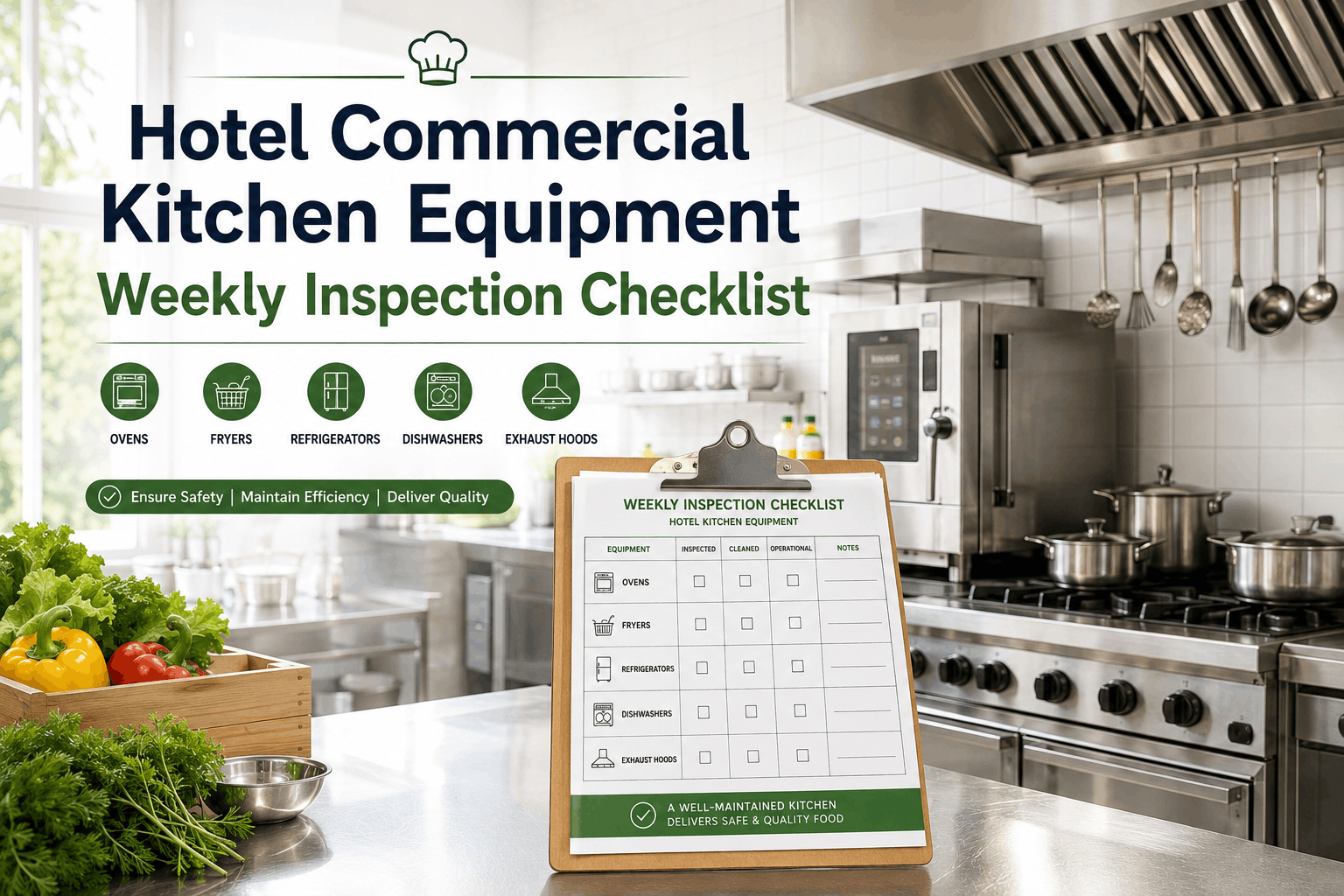
Hotel Commercial Kitchen Equipment Weekly Inspection Checklist
By Alex Jordan on June 6, 2026
Hotel pool and spa water chemistry is the primary regulatory compliance domain in USA hospitality operations. Most state health codes require chemical testing at least twice daily with all results logged in dated records available for health inspector audit. Failure to maintain proper chlorine levels (1–3 ppm for pools, 3–5 ppm for spas), pH balance (7.2–7.8), or total alkalinity (80–120 ppm) results in pool closure orders and substantial fines. A single health code violation can force a property to close its pool for weeks during peak season, generating 30–50% lost ancillary revenue. Oxmaint's daily chemical testing log system automates pH, chlorine, alkalinity, temperature, and calcium hardness testing, alerts technicians immediately when readings fall outside compliance thresholds, generates corrective action work orders, and maintains uninterrupted audit-ready documentation for all health department inspections and guest liability defense. Implement systematic twice-daily testing and automated alert response to maintain CDC Model Aquatic Health Code (MAHC) compliance.
Maintain Health Code Compliance AutomaticallyDaily chemical testing logs, automated out-of-range alerts, corrective action tracking, and health inspection-ready documentation for all pools and spas on your property.
1. Daily Opening & Closing Pool Chlorine & pH Testing
Minimum twice-daily testing (at opening and midday) is required by most state health codes. Free chlorine and pH must be measured at the same location—midpool, 18 inches below surface—to ensure representative samples.
2. Weekly Total Alkalinity, Calcium Hardness & Saturation Testing
Weekly testing of total alkalinity and calcium hardness prevents permanent water imbalance that makes it impossible to maintain stable pH and chlorine. The Langelier Saturation Index predicts whether water will etch plaster or scale equipment.
Water circulation pump performance and filter pressure are early warning indicators of filtration failures. High filter pressure indicates impending clogging. Low circulation flow indicates bypass or pump cavitation.
4. Spa-Specific Chemical Testing & Temperature Control
Spas require more frequent testing and higher chlorine than pools due to higher temperature, smaller water volume, and higher bather density per square foot. Temperature must never exceed 104°F.
5. Chemical Log Documentation, Corrective Action & Health Compliance
Missing, backdated, or inaccurate chemical logs are the most cited health code violation. Every test result must be recorded with date, time, tester name, and chemical adjustments made. Logs must be retained on-site and presented to health inspectors on demand.
Automate Pool & Spa Compliance TrackingDaily chemical logs with automatic out-of-range alerts, immediate corrective action work order generation, health inspection-ready documentation, and mobile field capture for all testing technicians.
Frequently Asked Questions — Hotel Pool & Spa Chemical Testing & Compliance
1. What happens if a health inspector finds your pool closed due to chemical imbalance during a surprise inspection?
A closure violation typically results in a conditional use permit and required re-inspection. Re-inspection lead times average 1–2 weeks, forcing the pool to remain closed during busy travel season. A 3-day unplanned closure at a 200-room resort loses $40,000–$60,000 in spa, restaurant, and room revenue. Preventive chemical monitoring makes closures extremely rare.
2. How much does one guest become sick from poor pool chemistry cost the hotel in liability and reputation?
A documented pool-related illness claim typically costs $10,000–$50,000 in settlement. A guest death or permanent injury can cost $500,000 to $2,000,000. Beyond liability, negative online reviews of pool illness travel fast—Google reviews and social media discussion damage reputation for months. Proper chemical maintenance prevents 99%+ of pool-related illness claims.
3. Why is consistent logging more important than perfect water chemistry?
Health inspectors evaluate compliance based on logs—missing entries or gaps are violations even if water chemistry is correct. A property with perfect chemistry but poor documentation fails inspection. A property with minor chemistry drift but complete, current documentation passes. Logging proves due diligence. Digital logs with automatic timestamps eliminate manual documentation errors.
4. Is daily testing sufficient or should pools have automated continuous monitoring sensors?
Most state codes require a minimum twice-daily manual test. Automated continuous sensors (ORP, pH, chlorine) with data logging are optional but increasingly valuable—they catch rapid chemical drift between manual tests and prove immediate alert response. Many USA hotels use hybrid approach: daily manual testing plus continuous sensors for real-time monitoring and backup documentation.
5. How do you prevent technician errors in chemical testing (wrong reading interpretation, transcription mistakes)?