It's 2:17 AM. The lobby is quiet. Sixty-three percent of your rooms are occupied, your engineering team is one person, and the night auditor just flagged a leak in Room 412 — the same room that had a plumbing issue six weeks ago. Nobody logged it properly. Nobody scheduled the follow-up. Now you have a wet ceiling, a displaced guest, and a repair that costs three times what it would have if someone had caught it earlier. This is not a staffing problem. It is a systems problem. And it plays out in hotels across the country every single night.
Hotel Night Operations
The Night Shift Is Your Biggest Maintenance Opportunity. Most Hotels Miss It.
Low occupancy. Minimal guest disruption. Maximum access to equipment. The overnight window is the most underused maintenance asset in hospitality — here is how top-performing properties are changing that.
Why the Overnight Window Is Gold — And Most Hotels Waste It
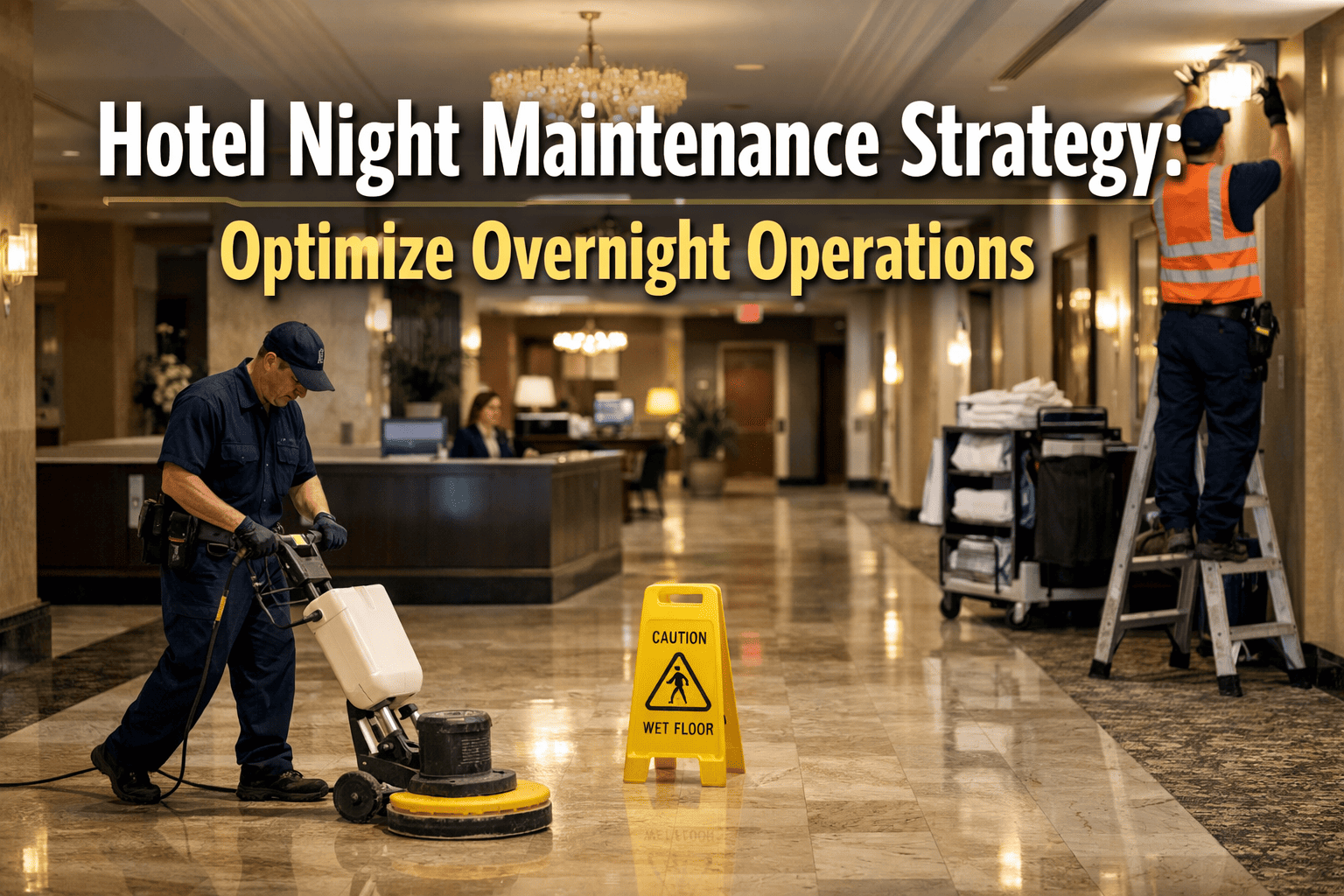
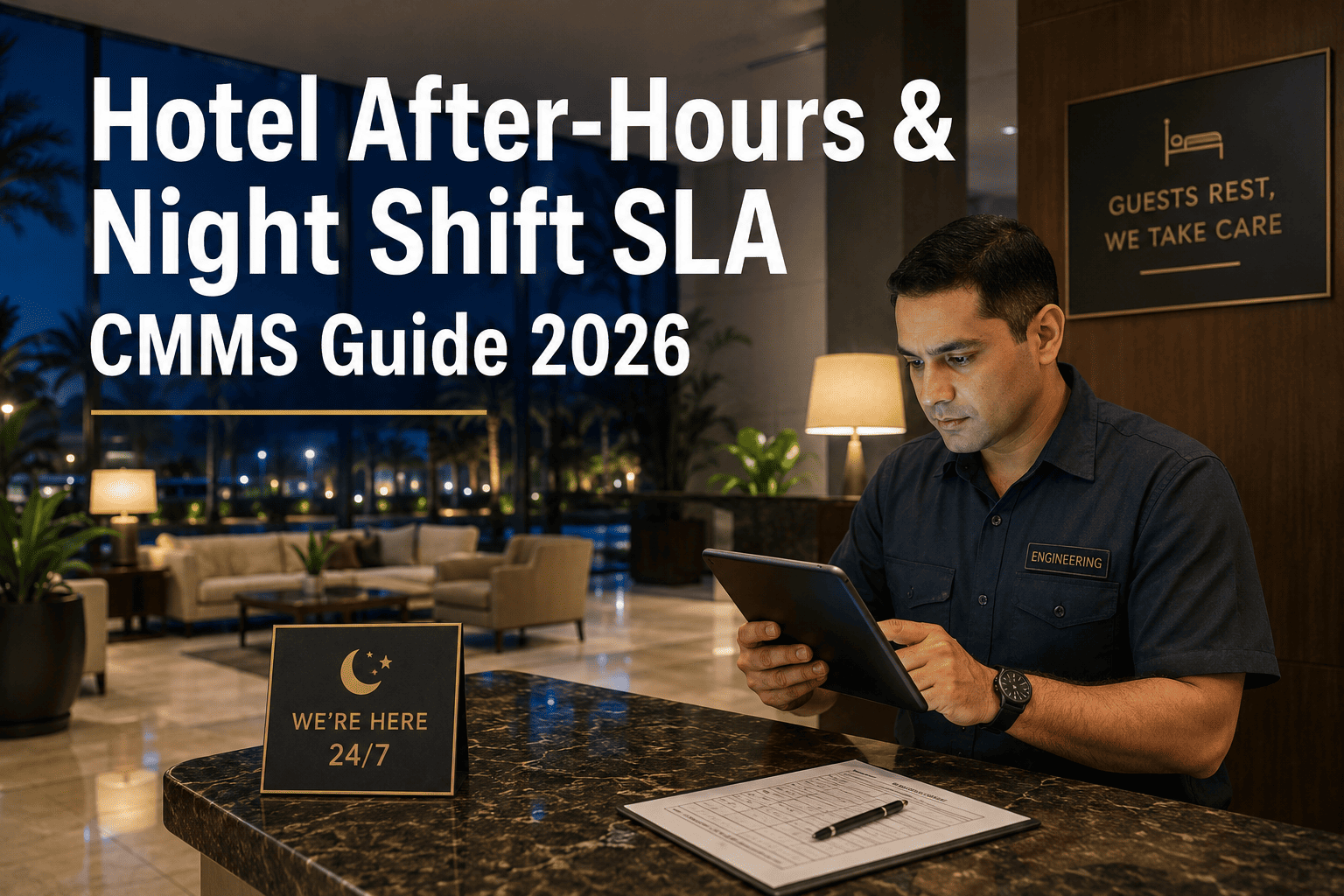
Between 11 PM and 6 AM, the average hotel runs at 35–50% occupancy. Hallways are clear. Elevators are idle. HVAC rooms are accessible. The pool deck is empty. This is the window where a well-organized engineering team can accomplish in four hours what would take two days of coordination during peak operations. Yet most hotels enter that window with no structured plan — just a single engineer on call reacting to whatever the front desk radios in.
63%
of hotels have no formal overnight PM schedule
2–3x
higher repair cost when issues go unlogged past shift
340+
hours/year saved annually with digital night shift work orders
40%
faster issue resolution with connected engineering and front desk
What the Night Audit Knows That Engineering Never Hears
The night auditor reviews room statuses, flags maintenance-related discrepancies, and generates occupancy reports — but in most hotels, that information never reaches the engineering team in a structured way. It sits in a PMS report that nobody in maintenance reads until morning. By the time the day shift picks it up, three more guests have already checked into a room with a known issue.
Night Audit Knows
Which rooms are vacant right now and for how long
Guest complaints logged during evening check-in
Room status discrepancies — rooms flagged but not updated
Out-of-order rooms blocking revenue right now
Predicted vacancy windows for the next 6 hours
Engineering Gets
A radio call when something is actively broken
A paper log from yesterday's day shift
Word-of-mouth handoffs with no documentation
No visibility into which rooms are actually accessible
A morning briefing — hours after the opportunity closed
The Five Highest-Value Tasks for an Overnight Maintenance Window
Not everything belongs on a night shift. The right overnight PM program targets tasks that are high-disruption during the day, require extended access to mechanical spaces, or have been deferred because occupied rooms block the work. Here is what top-performing hotel engineering teams schedule into the 11 PM–6 AM window.
01
HVAC Filter and Coil Service
Why overnight: Coil cleaning requires system shutdown. Doing it at 2 AM means zero guest comfort complaints and full system restart before the 6 AM wake-up surge.
Impact: Prevents the Friday-night HVAC failure that displaces guests and generates comp rooms.
02
Elevator Pit and Shaft Inspection
Why overnight: Elevator access requires taking a car out of service. At 2 AM, one car offline is invisible to guests. At 11 AM during checkout, it creates lines and complaints.
Impact: Catches lubrication, cable, and door sensor issues before they trigger regulatory shutdowns.
03
Plumbing Inspection on Vacant Floors
Why overnight: Night audit identifies which floors have consecutive vacant rooms. Engineering accesses supply lines, drain traps, and shower valves with zero guest impact.
Impact: A $40 valve replacement at 3 AM prevents the $4,000 water damage claim at 9 AM.
04
Kitchen Exhaust and Hood Cleaning
Why overnight: Fire code requires regular hood service. The restaurant is closed, the kitchen crew is gone, and the work can be done without any operational interruption.
Impact: Directly tied to fire safety compliance and insurance audit requirements.
05
Back-of-House Equipment PM
Why overnight: Laundry machines, boilers, water heaters, and generator systems can be serviced without guest-facing disruption. Day shift can't access these safely while in full operation.
Impact: Extends equipment life, reduces emergency repair frequency, and keeps laundry operations running for housekeeping.
Your Night Shift Has a Maintenance Window. Does It Have a Plan?
Oxmaint CMMS helps hotel engineering teams build structured overnight PM programs — automatically scheduling work orders into vacancy windows, connecting night audit data to maintenance queues, and giving your single overnight engineer a clear, prioritized task list.
How CMMS Changes the Overnight Workflow: Before vs. After
Without CMMS
10:45 PM
Night engineer arrives. Checks a paper log from the afternoon shift. Three items listed, no context, no room numbers for two of them.
11:30 PM
Front desk radios about a noise complaint in 318. Engineer investigates — loose HVAC cover. Fixed, but not logged anywhere.
1:00 AM
Engineer does a walk of mechanical rooms — no checklist, no record of what was checked. Relies on memory and experience.
5:30 AM
Handoff to day shift: verbal briefing in the locker room. Two items are forgotten. Day shift discovers the plumbing issue in 412 when a guest checks in at 8 AM.
With Oxmaint CMMS
10:45 PM
Night engineer opens the app. Sees a prioritized work order queue built from night audit vacancy data, deferred PM items, and open guest complaints — all in one screen.
11:30 PM
HVAC cover in 318 repaired, photographed, and logged in 90 seconds. Work order closed. Day shift manager sees it in the morning report automatically.
1:00 AM
Digital checklist for mechanical room walk — every item timestamped, every reading logged. Triggers a work order automatically when a reading is out of range.
5:30 AM
Digital shift handover report sent to day shift before the engineer leaves. Every completed task, every open issue, every deferred item — documented and searchable.
The Real Cost of a Poor Overnight Maintenance Process
Hotels track RevPAR obsessively. They rarely calculate the maintenance revenue leak — rooms blocked from inventory due to unresolved issues, comp nights issued for problems that could have been caught overnight, and emergency repair premiums paid because a $60 part was not replaced during the window when it was accessible.
Property Size
Rooms Blocked/Month
Emergency Repair Premium
Comp Nights/Year
Est. Annual Revenue Leak
80-room Boutique
4–6 rooms
$8,000–$14,000
18–30 nights
$28,000–$48,000
200-room Full Service
10–16 rooms
$22,000–$38,000
45–70 nights
$72,000–$120,000
400-room Convention
20–30 rooms
$45,000–$75,000
90–140 nights
$140,000–$220,000
Estimates based on average ADR of $189, emergency contractor premiums of 2.4x standard rates, and industry benchmark comp night frequency for properties without structured overnight PM programs.
Building Your Hotel's Overnight PM Program: A Practical Framework
A structured overnight maintenance program does not require adding headcount. It requires giving your existing overnight engineer a clear system — what to check, when to do it, and how to hand it off. Here is the framework that top-performing hotel engineering teams follow.
1
Connect Night Audit to Work Orders
Set up an automatic work order trigger for every room the night auditor flags as maintenance-related. Vacant rooms with open issues should enter the engineering queue before midnight — not after the 8 AM briefing.
2
Map Your Vacancy Windows Weekly
Review occupancy forecasts every Sunday. Identify which floors and rooms will have extended vacancy over the coming week. Pre-schedule HVAC, plumbing, and cosmetic work into those windows before the week starts.
3
Build a Tiered Overnight Checklist
Tier 1: safety-critical checks (fire suppression, emergency lighting, exit signage) — every night. Tier 2: mechanical rounds (boiler, chiller, water heater readings) — every night. Tier 3: PM tasks by schedule — weekly and monthly rotation.
4
Require Digital Shift Handover
No verbal-only handoffs. Every overnight shift ends with a completed digital report: tasks done, tasks deferred, anomalies noted, parts needed. Day shift reads it before the morning briefing — not during it.
5
Track Repeat Issues by Room
If Room 412 has had three plumbing work orders in six months, that pattern should surface automatically — not when a frustrated guest checks in. A CMMS with repeat-issue tracking flags chronic problems before they become guest-facing emergencies.
Frequently Asked Questions
What maintenance tasks are best suited for hotel night shifts?
Tasks that require system shutdowns or extended room access — HVAC servicing, elevator inspection, plumbing checks on vacant floors, kitchen hood cleaning, and back-of-house equipment PM — are ideal for overnight windows. These require no guest coordination and benefit from full mechanical access that daytime operations cannot provide.
How does a CMMS help hotel overnight maintenance specifically?
A CMMS gives the overnight engineer a structured, prioritized work order queue instead of a paper log or radio calls. It connects night audit room flags to maintenance tasks automatically, provides digital checklists with timestamped completion, and generates shift handover reports that transfer knowledge to the day team without verbal briefings or lost paperwork.
How should night audit and engineering coordinate in a hotel?
The night auditor has real-time visibility into which rooms are vacant, which have active maintenance flags, and which are blocked from inventory. When this data flows directly into the CMMS as work orders, engineering can prioritize overnight repairs based on actual vacancy windows — not assumptions. Without that connection, the two teams operate in information silos and opportunities are missed every night.
How many engineers do you need for an overnight shift?
Most hotels — 80 to 300 rooms — operate overnight with one engineer on-site or on-call. The goal is not to increase overnight headcount but to maximize what that one engineer accomplishes with a clear system. A structured PM program with a digital work order queue enables a single engineer to execute three to five significant maintenance tasks in a four-hour overnight window rather than waiting reactively for radio calls.
What is the ROI of a hotel CMMS for overnight operations?
Properties using CMMS-driven overnight PM programs report 30–40% fewer emergency repair calls, measurable reduction in rooms blocked from inventory, and 340+ hours of engineering staff time recovered annually from reduced manual coordination. For a 200-room hotel, the revenue recovered from blocked rooms and comp nights alone typically exceeds the CMMS subscription cost within the first quarter.
Start Optimizing Tonight
Turn Your Hotel's Overnight Window Into a Maintenance Advantage
Oxmaint CMMS connects your night audit to engineering, turns vacancy windows into scheduled PM opportunities, and gives your overnight team a structured plan — not just a radio. Properties see measurable results in the first 30 days.
30–40%
fewer emergency repairs
340+
engineering hours saved/year
4–8 wks
to go live on your property