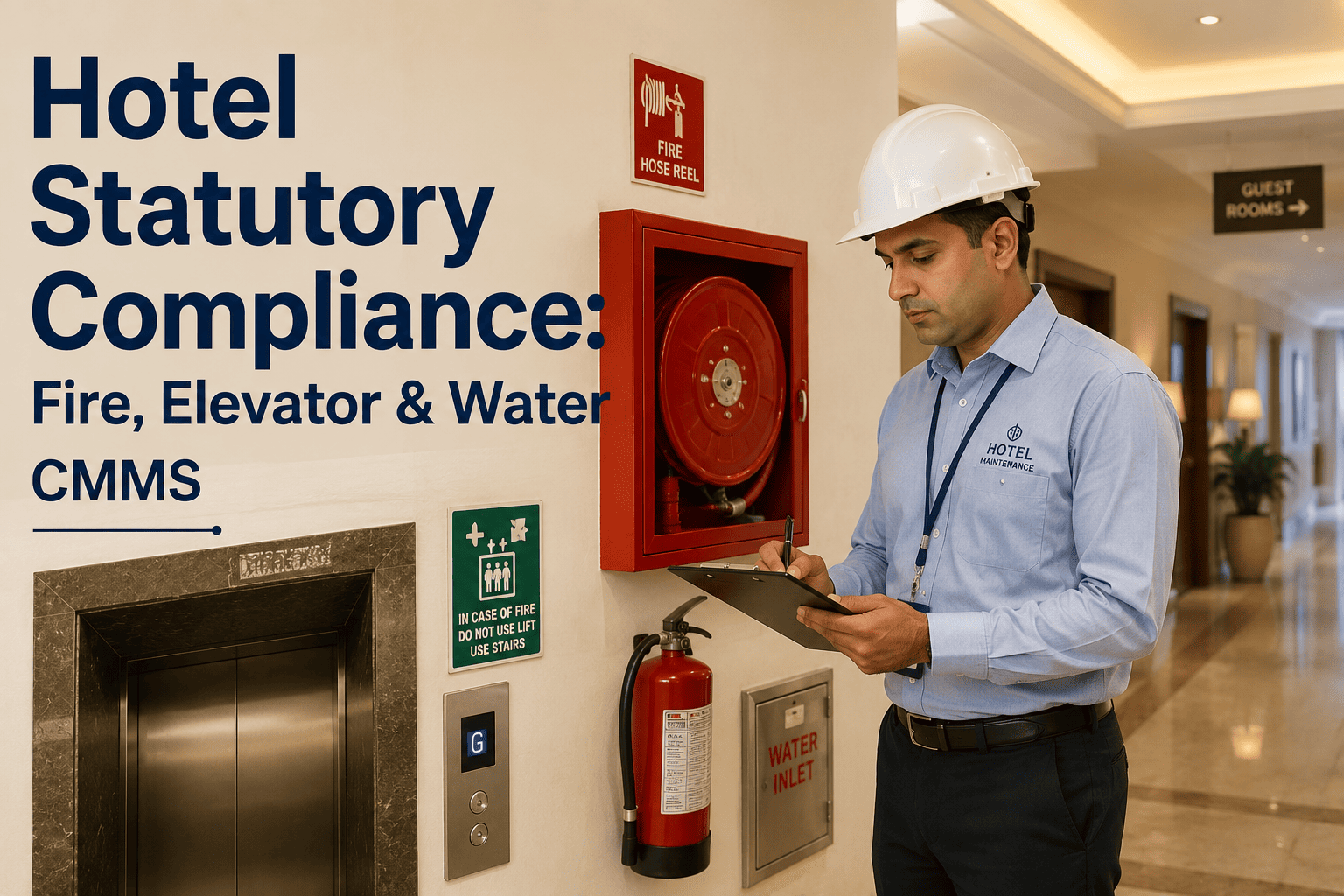
Hotel statutory compliance spans fire, elevator, water, boiler, and health-safety systems, and a single lapsed inspection can trigger fines of $5,000–$50,000 per violation or, worse, a license suspension that halts operations overnight. This CMMS hotel statutory compliance guide breaks down the inspection cadences, certification tracking, and documentation cycles for fire, elevator, and water systems—plus the compliance calendar that keeps every statutory requirement current across the property. Whether you manage a single boutique hotel or a multi-property portfolio, automating these cycles with a CMMS eliminates manual spreadsheet tracking and audit panic. Explore the framework below, then Start Free Trial to configure your property's compliance calendar in under an hour.
One lapsed fire inspection. One elevator certificate. That is all it takes to shut a hotel down.
Fire systems, elevators, and water networks each carry distinct statutory deadlines that vary by city, state, and country. A CMMS-based compliance calendar automatically schedules every inspection, generates 30-day alerts, and produces audit-ready documentation—so no certificate ever expires silently on your watch.
Fire, Elevator & Water Compliance Cycles Every Hotel Must Track
Hotel statutory compliance is not a single annual event—it is a mesh of overlapping inspection cycles, each with its own jurisdiction-specific cadence, certifying authority, and documentation standard. Missing any one of them can void insurance coverage or trigger regulatory action. Below is the core compliance framework a CMMS enforces across every asset class.
Fire Safety Compliance
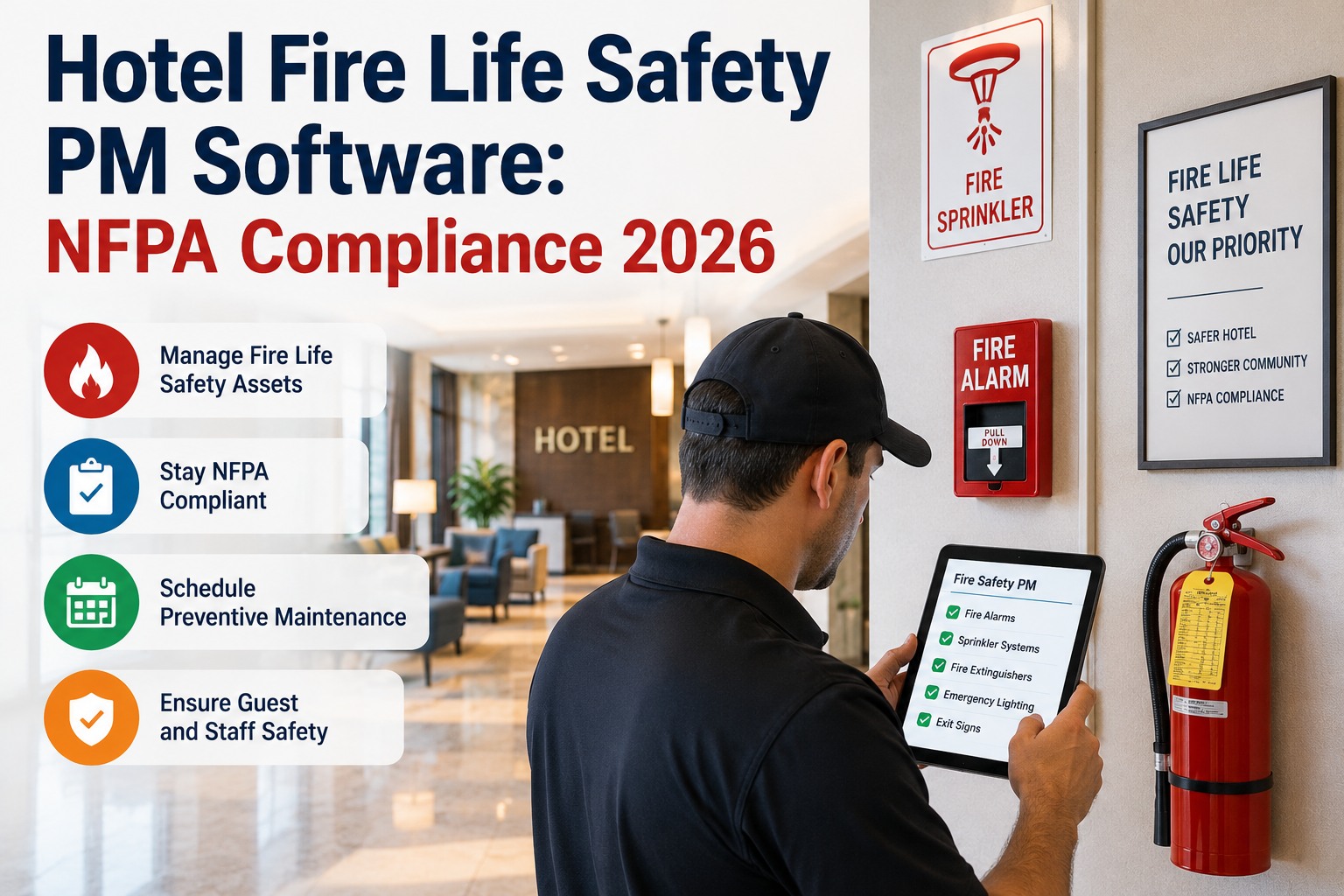
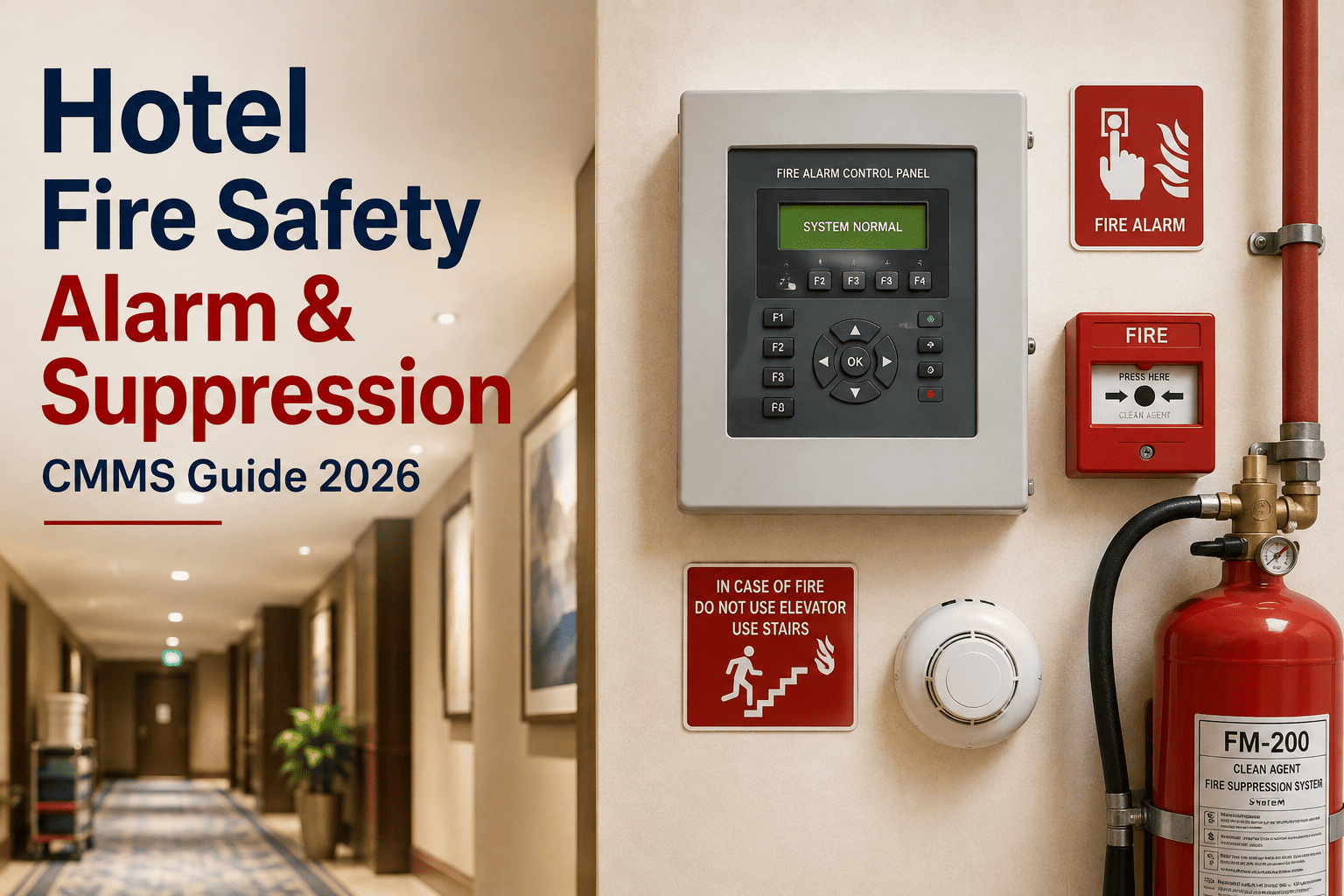
Fire alarms, sprinkler systems, extinguishers, emergency lighting, and smoke detectors each carry distinct inspection intervals. Monthly visual checks, quarterly functional tests, and annual full-system certifications by licensed contractors are mandatory under NFPA 72 and local fire codes. Non-compliance fines range from $5,000 to $25,000 per missed cycle.
- Monthly extinguisher & exit-light inspections
- Quarterly sprinkler & alarm functional tests
- Annual full-system fire certification
- Hydrant flow tests every 3 years
Elevator Compliance
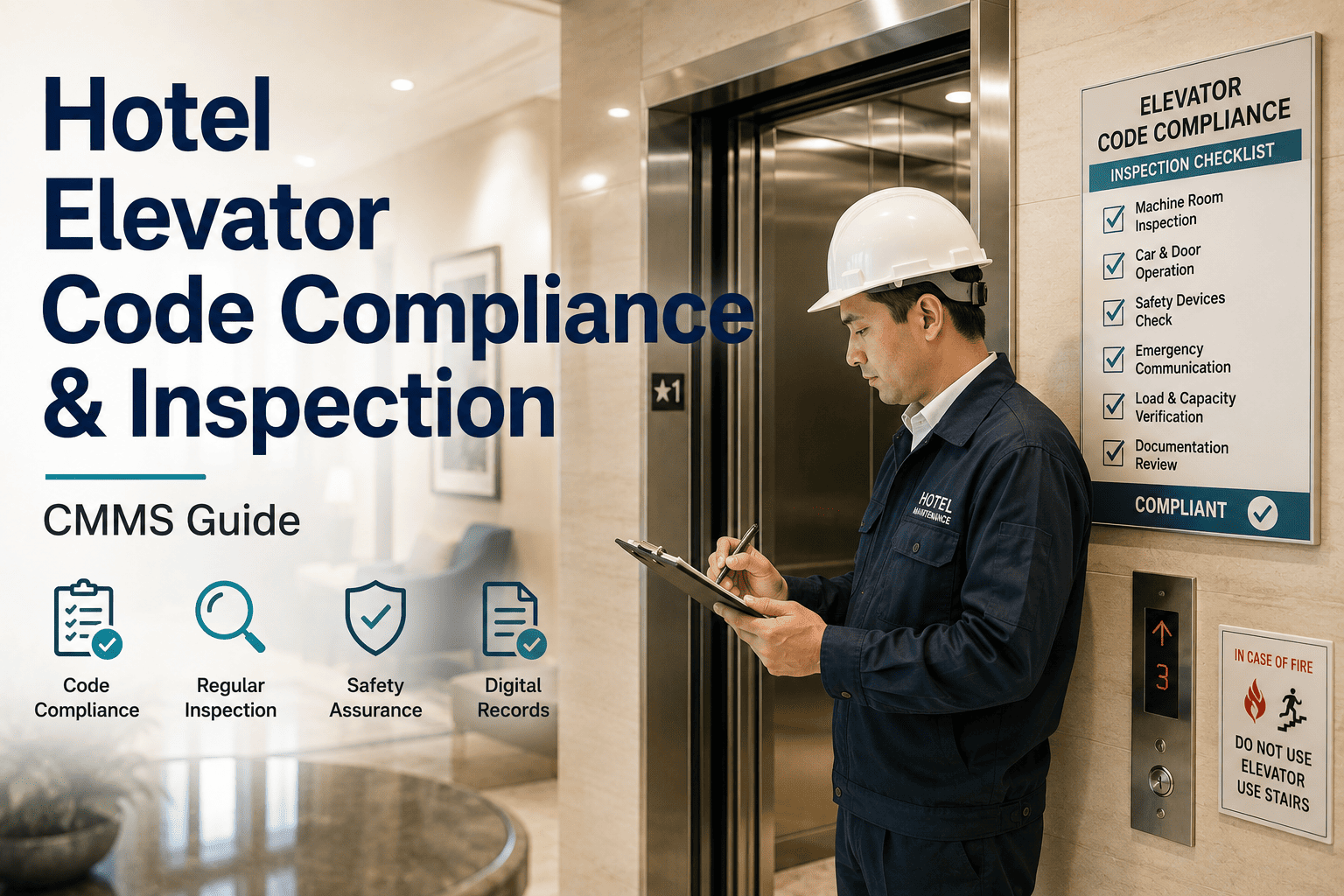
Elevators require monthly maintenance visits, biannual safety inspections, and annual load-weight certifications by licensed elevator contractors. ASME A17.1 standards mandate Category 1 (annual) and Category 5 (5-year) full-load tests. A lapsed certificate can result in immediate elevator shutdown, occupancy limits, and fines up to $15,000 per car.
- Monthly elevator maintenance logs
- Category 1 annual safety inspection
- Category 5 five-year full-load test
- Escalator handrail speed checks quarterly
Water & Legionella Compliance
Domestic water systems, cooling towers, hot tubs, and decorative fountains require temperature monitoring, Legionella risk assessments, and routine disinfection. ASHRAE 188 and local health authorities mandate monthly temperature logs, quarterly cleaning cycles, and biannual Legionella sampling. A single positive test can force floor closures and guest evacuations.
- Monthly water temperature logging (60°C hot / 20°C cold)
- Quarterly cooling tower disinfection
- Biannual Legionella culture sampling
- Annual tank cleaning & certification
How a CMMS-Based Compliance Calendar Prevents Expired Certifications
A CMMS hotel compliance cycle transforms scattered spreadsheets into an automated, time-driven schedule. Here is how the statutory CMMS guide cycle works across a typical property—every trigger, alert, and documentation step handled automatically.
Register Every Compliance Asset
Fire panels, elevators, cooling towers, boilers, and backflow preventers are tagged with their jurisdiction, certifying authority, inspection code (NFPA, ASME, ASHRAE), and current certificate expiry date. A 180-room hotel typically registers 40–60 compliance-tagged assets.
Auto-Generate Inspection Work Orders
The CMMS generates preventive maintenance work orders 30 days before each statutory deadline—assigned to the correct internal technician or external contractor with checklists, required PPE, and reference documents attached. No manual calendar entries, no missed triggers.
30-15-7 Day Notification Chain
If an inspection remains open 30 days out, the system sends reminders to the assigned technician. At 15 days, it escalates to the Chief Engineer. At 7 days, it alerts the General Manager. At expiry, it flags the asset as non-compliant on the property dashboard—eliminating silent failures.
Capture & Store Audit-Ready Records
Completed work orders automatically attach inspection photos, contractor sign-offs, and certificate PDFs to the asset record. Every compliance document is timestamped, geo-tagged, and searchable—producing a complete audit trail in under 10 minutes for any fire marshal or health inspector request.
Spreadsheets vs. CMMS: The Real Cost of Manual Compliance Tracking
Most hotels still track statutory compliance on Excel sheets, wall calendars, or vendor-maintained paper logs. The hidden cost of that approach—missed inspections, emergency contractor premiums, and audit preparation labor—typically runs $18,000–$45,000 per year for a mid-size property. Here is how the two approaches compare.
| Compliance Capability | Spreadsheet / Manual Tracking | OxMaint CMMS |
|---|---|---|
| Inspection scheduling | Manual calendar entries, easily missed | Auto-generated work orders based on asset-specific rules |
| Expiry alerts | Depends on someone remembering to check | 30-15-7 day escalating notifications to multiple roles |
| Document storage | Scattered folders, shared drives, paper binders | Digital certificates auto-attached to each asset record |
| Audit readiness | 2–3 days of manual report compilation | One-click compliance report generated in under 60 seconds |
| Multi-property visibility | Separate spreadsheets per property, no rollup | Portfolio-wide compliance dashboard across all sites |
| Risk of silent expiry | High—no system-level failsafe | Near zero—auto-escalation prevents missed deadlines |
| Annual cost of non-compliance | $18K–$45K in fines, premiums, and labor | $0—every cycle tracked, documented, and verifiable |
A 180-room hotel in Texas was spending approximately $42,000 per year across fire system penalties ($12K), elevator emergency callouts ($15K), water-testing audit labor ($8K), and compliance spreadsheet management time ($7K). After implementing OxMaint CMMS, the property eliminated 100% of late-inspection fines in the first 6 months, cut contractor emergency premiums by 65%, and reduced audit preparation from 3 days to 45 minutes—delivering full ROI within the first quarter.
How OxMaint Solves Hotel Fire, Elevator & Water Compliance
OxMaint is an AI-powered CMMS and EAM platform built to automate the full statutory compliance lifecycle. From the moment an asset is registered to the second an auditor requests documentation, every step is system-driven, timestamped, and audit-proof. Here is what that looks like in practice.
Automated Compliance Calendar
Configure fire, elevator, and water inspection cycles once—OxMaint auto-generates work orders 30 days before each statutory deadline, assigns them to the right technician or vendor, and escalates if unresolved. Outcome: eliminates 100% of silent certificate expiries and cuts scheduling labor by 90%.
Digital Certificate Vault
Every inspection report, contractor sign-off, and compliance certificate is auto-attached to the asset record with timestamp and geo-tag. Fire marshals and health inspectors receive a complete, searchable audit trail in under 60 seconds. Outcome: audit prep time drops from 3 days to under 1 hour.
AI-Predictive Failure Alerts
OxMaint's predictive analytics engine monitors asset sensor data and maintenance history to flag fire pumps, elevator motors, and water systems statistically likely to fail before the next statutory inspection—letting you fix issues proactively. Outcome: 30–50% reduction in unplanned compliance-related downtime.
Multi-Property Compliance Dashboard
Portfolio managers see every property's compliance status in a single view—green for current, amber for approaching deadline, red for overdue. Drill into any asset, any certificate, any work order instantly. Outcome: full portfolio audit-readiness in real time, no spreadsheet rollups required.
See OxMaint configure your hotel's fire, elevator & water compliance calendar live
Book a 30-minute demo and we will map your property's statutory inspection cycles, expiry alerts, and audit documentation workflow—before your next fire marshal visit.
Hotel Statutory Compliance CMMS — Frequently Asked Questions
What is hotel statutory compliance and why does it require a CMMS?
Hotel statutory compliance is the legal obligation to inspect, test, and certify fire safety systems, elevators, water systems, boilers, and other regulated assets on schedules set by local authorities and standards bodies like NFPA, ASME, and ASHRAE. A CMMS is essential because these cycles overlap—monthly, quarterly, annual, and 5-year intervals—and tracking them manually on spreadsheets leads to silent expiries that trigger fines, insurance voids, or operational shutdowns. OxMaint automates the entire schedule, alert chain, and documentation storage in one platform.
How often should fire, elevator, and water systems be inspected in a hotel?
Fire systems require monthly visual checks (extinguishers, exit lights), quarterly functional tests (alarms, sprinklers), and annual full-system certifications per NFPA 72. Elevators need monthly maintenance visits, annual Category 1 safety inspections, and 5-year Category 5 full-load tests under ASME A17.1. Water systems require monthly temperature logging, quarterly cooling tower disinfection, and biannual Legionella sampling per ASHRAE 188. A CMMS pre-configures all these intervals automatically based on asset type and jurisdiction.
Can OxMaint track compliance across multiple hotel properties?
Yes. OxMaint provides a portfolio-wide compliance dashboard where every property's fire, elevator, and water certification status is visible in real time—green for current, amber for approaching deadline, red for overdue. You can drill into any asset, any certificate, or any work order across all sites. This eliminates the need for separate spreadsheets per property and gives regional managers instant visibility. Book a Demo to see the multi-property dashboard configured for your portfolio.
What happens if a hotel misses a statutory inspection deadline?
Missing a statutory inspection can result in fines ranging from $5,000 to $50,000 per violation, immediate suspension of operating licenses, voided insurance coverage for related claims, and in severe cases, criminal liability for management. Fire system non-compliance can lead to immediate occupancy restrictions. A CMMS prevents this by escalating alerts at 30, 15, and 7 days before expiry—ensuring no deadline passes without action.
How long does it take to implement a CMMS for hotel statutory compliance?
A typical 150–250 room hotel can be fully onboarded in OxMaint within 1–2 weeks, including asset registration, compliance cycle configuration, and staff training. The platform comes with pre-built templates for fire (NFPA 72), elevator (ASME A17.1), and water (ASHRAE 188) inspection cycles, so you do not start from scratch. Most properties see full ROI within the first quarter by eliminating fines and reducing audit labor. Start Free Trial to begin configuring your compliance calendar today.
Stop tracking statutory compliance on spreadsheets before your next audit
Join hotels that eliminated late-inspection fines, cut audit prep by 90%, and made every fire, elevator, and water certificate instantly retrievable. OxMaint configures your full compliance calendar in days—not months.
Free 14-day trial · No credit card