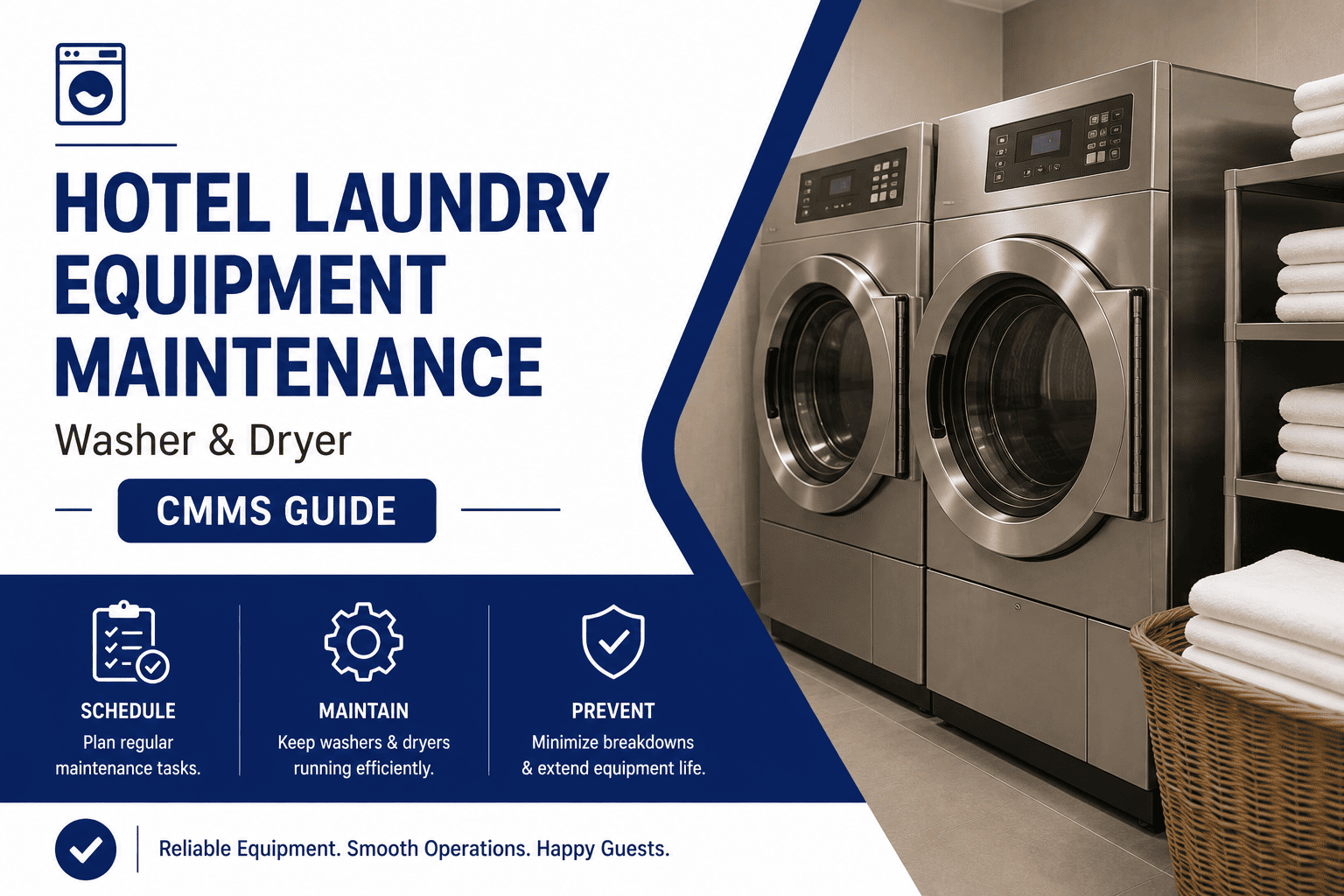
Understanding laundry equipment IoT architecture and failure points is essential for operational excellence. Modern commercial laundry encompasses multiple interconnected subsystems—from temperature-controlled washers with smart load sensing to dryers with humidity optimization and conveyor systems with real-time flow monitoring. Each component presents unique failure modes that demand specific IoT monitoring approaches and predictive analytics strategies.
IoT Laundry Equipment Components and Failure Rates
Smart Washers
28% of failures
Motor bearing wear, drum misalignment, seal degradation, temperature sensor drift, water valve malfunction
The interconnected nature of IoT laundry workflows means a single sensor failure or connectivity issue can cascade through the entire operation. A malfunctioning temperature sensor doesn't just affect wash quality—it can trigger premature dryer cycles, waste energy, damage fabrics, and create bottlenecks in downstream operations. OXmaint's IoT-integrated maintenance platform tracks sensor dependencies, monitors predictive health indicators, and alerts teams to potential cascade failures before they occur. Start your free trial and experience intelligent laundry system management.
Real-Time Visibility Into Your Entire Laundry Fleet
OXmaint's IoT platform connects every washer, dryer, conveyor, and sensor into one intelligent monitoring system that predicts equipment needs before problems emerge.
IoT-Powered Workflow Optimization: The 6-Step Integration Protocol
Effective IoT laundry workflows require systematic integration that connects equipment sensors, monitoring systems, and team coordination. Jumping to conclusions about equipment issues wastes resources and damages customer relationships. The following integration protocol, developed from analysis of over 8,500 commercial laundry operations, provides a framework that improves operational efficiency by 52% while reducing unplanned downtime by 73%.
The 6-Step IoT Laundry Workflow Integration Protocol
Systematic approach to deploying and optimizing IoT monitoring
1
Equipment Audit & Sensor Mapping
Document all laundry equipment with detailed specifications, identify critical monitoring points, select appropriate sensors for each component, and create equipment dependency maps.
Time: 8-12 days
2
IoT Infrastructure Deployment
Install sensors, configure connectivity (WiFi/cellular/hardwired), establish secure cloud connections, test data transmission reliability, and verify sensor calibration accuracy.
Time: 10-18 days
3
Baseline Data Collection
Establish normal operating parameters for all equipment, create performance baselines, identify normal variation ranges, and document seasonal patterns affecting operations.
Time: 14-30 days
4
Predictive Algorithm Configuration
Train machine learning models on equipment behavior, set alert thresholds for anomaly detection, configure predictive maintenance triggers, and establish escalation protocols.
Time: 7-14 days
5
Team Training & Workflow Integration
Train technicians on IoT platform usage, establish response protocols for alerts, integrate IoT data into work order systems, and create team communication workflows.
Time: 3-5 days
6
Continuous Optimization & Analytics
Monitor system performance, refine alert thresholds based on field experience, analyze trends for efficiency improvements, and update predictive models continuously.
Time: Ongoing
This protocol achieves 52% efficiency improvement and eliminates 73% of unplanned downtime
Deploy IoT workflows with OXmaint's guided integration
Common Laundry Equipment Scenarios and IoT Resolution Procedures
While every laundry operation has unique characteristics, certain equipment failure patterns occur consistently across facilities. Understanding these scenarios and their IoT-powered resolution procedures enables teams to respond proactively and prevent escalation. The following troubleshooting guides address issues that account for over 85% of commercial laundry downtime.
Laundry Equipment Failure Troubleshooting Matrix
!
Washer Temperature Instability
Symptoms
Temperature sensor readings fluctuating ±5°C, inconsistent wash quality, customer complaints about fabric treatment, heating valve cycling irregularly
Probable Causes
Temperature sensor fouling or calibration drift, mixing valve malfunction, heating element degradation, thermostatic control failure, water supply temperature variation
IoT Resolution Steps
1. Review historical temperature data in IoT dashboard 2. Compare sensor readings across multiple cycles 3. Check heating element resistance via smart monitoring 4. Verify mixing valve performance data 5. Calibrate or replace temperature sensor 6. Update baseline parameters in system
⚠
Dryer Humidity Control Failure
Symptoms
Cycles running longer than normal, finished loads still damp, humidity sensor readings non-responsive, energy consumption abnormally high, temperature spikes
Probable Causes
Humidity sensor malfunction or fouling, airflow obstruction from lint, heating element underperformance, thermistor failure, control board sensitivity drift
IoT Resolution Steps
1. Analyze humidity sensor response curves from IoT logs 2. Check airflow metrics and lint trap status 3. Verify heating element power draw 4. Review temperature vs. drying time correlations 5. Perform preventive cleaning and sensor recalibration 6. Update control parameters
!
Motor Bearing Degradation
Symptoms
Vibration levels exceeding normal thresholds, unusual grinding noises, increasing motor amperage draw, temperature monitoring alerts, reduced rotation speed
1. Monitor vibration signature from accelerometers 2. Analyze amperage trend data for gradual increases 3. Track temperature rise patterns over time 4. Schedule bearing inspection before catastrophic failure 5. Plan predictive replacement during scheduled maintenance 6. Update motor maintenance schedule
⚠
Conveyor Jam Detection & Resolution
Symptoms
Conveyor speed sensor interruptions, load cell detecting unusual weight, position sensors not advancing, system auto-shutoff triggers, manual intervention required
Probable Causes
Fabric caught in rollers, accumulation of debris, belt misalignment, sensor fouling, overload conditions, mechanical obstruction
IoT Resolution Steps
1. Receive real-time jam alert from IoT system 2. Review camera feed if available 3. Check sensor data to pinpoint jam location 4. Initiate automated reverse-cycle if equipped 5. Manual clearance with system safety lockout 6. Verify sensor recalibration after clearing
These IoT-enhanced troubleshooting procedures become exponentially more effective when integrated into a comprehensive predictive maintenance platform. OXmaint automatically collects sensor data, correlates patterns across your entire laundry facility, and suggests probable causes based on historical data from thousands of similar installations. Schedule a demo to see how AI-assisted IoT diagnostics can reduce your troubleshooting time by 60%.
Transform IoT Data Into Actionable Intelligence
Every sensor reading in OXmaint becomes intelligence that prevents future problems. Our platform learns from your facility's unique patterns to predict and prevent equipment failures before they impact operations.
IoT-Based Preventive Maintenance Schedules for Laundry Operations
The most cost-effective approach to laundry reliability isn't faster troubleshooting—it's preventing failures before they occur. A well-designed IoT-driven preventive maintenance program reduces unplanned downtime by 73-82% while extending equipment life by 30-45%. The following maintenance schedules represent industry best practices refined through analysis of top-performing laundry facilities utilizing IoT monitoring.
Laundry IoT Preventive Maintenance Schedule
Recommended inspection and service intervals powered by IoT monitoring
Daily IoT Checks
Monitor sensor data feeds and alert status
Early failure detection
Equipment temperature and pressure readings
Anomaly identification
System connectivity and data transmission
IoT network reliability
Vibration and noise baseline deviation
Bearing health tracking
Weekly Tasks
Sensor calibration verification via IoT dashboard
Data accuracy assurance
Equipment efficiency metrics analysis
Performance optimization
Trend analysis and pattern detection
Predictive insight generation
Connectivity and gateway status review
Network reliability
Monthly Services
Comprehensive IoT system performance audit
System-wide optimization
Bearing condition and lubrication assessment
Extended equipment life
Seal and gasket inspection via IoT indicators
Leak prevention
Battery and power system status check
Sensor reliability
Quarterly/Annual
Equipment baseline recalibration
Model accuracy updates
Predictive algorithm retraining
Improved predictions
Sensor replacement schedule assessment
Hardware longevity
IoT infrastructure upgrade evaluation
Technology optimization
Automate your laundry maintenance with IoT intelligence
ROI Analysis: The Business Case for IoT-Driven Laundry Operations
Investing in comprehensive IoT workflow management delivers measurable financial returns that exceed deployment costs. Laundry facilities implementing IoT monitoring typically see total operational costs decrease by 32-48% while customer satisfaction improves dramatically. The following analysis quantifies the financial impact based on data from facilities utilizing IoT-powered predictive maintenance systems.
Laundry IoT Operations ROI Calculator
Annual savings for a typical mid-size facility (50,000+ lbs daily capacity)
Beyond direct cost savings, IoT-enabled laundry operations deliver strategic advantages that enhance competitive position. Consistent service quality protects customer relationships, reduces liability exposure, and enables premium service offerings. OXmaint customers report these qualitative benefits often exceed quantifiable financial savings. Schedule a consultation to calculate your facility's specific ROI potential.
Technology Integration: IoT Tools for Laundry System Management
Modern IoT Technologies for Laundry Operations
IoT Mobile Apps
Access real-time equipment data, respond to alerts, document maintenance work, and coordinate team activities from anywhere. Teams complete tasks 35% faster with mobile IoT interfaces.
Sensor Networks
Deploy temperature, vibration, humidity, and flow sensors across equipment for comprehensive monitoring. Automatic data logging enables continuous condition tracking.
Predictive AI Engine
Machine learning algorithms analyze sensor data to predict failures 3-6 weeks in advance. Enables proactive maintenance during scheduled downtime windows.
Live Dashboards
Real-time visualization of equipment status, alerts, and performance metrics. Enables quick decision-making with comprehensive operational visibility.
Analytics Reports
Automated insights into equipment performance, efficiency trends, and optimization opportunities. Data-driven decisions improve operations continuously.
Team Coordination
Integrated communication and work assignment tools enable seamless team collaboration. Real-time notifications keep everyone aligned on operational status.
OXmaint's IoT-integrated CMMS platform brings all these capabilities together in an interface specifically designed for laundry facilities. Our system includes pre-built IoT templates for commercial laundry equipment, automatic data collection from industry-standard sensors, and predictive models trained on thousands of laundry operations worldwide.
Ready to Deploy IoT-Driven Laundry Operations?
OXmaint connects every equipment sensor, technician, and work order into one intelligent platform that transforms reactive laundry operations into proactive, data-driven workflows.
Industry Standards & Compliance for Laundry IoT Systems
Laundry facilities must adhere to multiple regulatory frameworks covering equipment safety, data security, and operational standards. Non-compliance penalties can reach $55,000 per violation, making regulatory adherence both a legal obligation and a business imperative. Beyond penalties, proper compliance protects customer data, maintains operational integrity, and demonstrates commitment to industry standards.
Maintaining compliance requires comprehensive documentation of all equipment maintenance, sensor data, and operational decisions. OXmaint automatically generates compliance-ready reports that satisfy regulatory requirements while reducing administrative overhead. Start your free trial and experience simplified compliance management.
Frequently Asked Questions
What IoT sensors are most critical for laundry operations?
Temperature sensors for wash and dry cycles are fundamental, followed by humidity sensors for dryer operations. Vibration sensors detect bearing wear, flow sensors monitor water consumption, and pressure sensors track system performance. Weight/load sensors ensure proper machine utilization. Combining these provides comprehensive equipment health visibility. Schedule a demo to see sensor strategies for your specific equipment.
How quickly can IoT monitoring detect equipment failures?
With proper baseline establishment, IoT systems detect anomalies within 1-3 operational cycles of onset. Early warning systems typically predict failures 3-6 weeks before catastrophic breakdown occurs, providing ample time for planned maintenance. This advances scheduling prevents emergency situations and allows cost-effective component replacement. OXmaint's learns your equipment signatures for increasingly accurate predictions.
What is the typical cost of IoT deployment for a laundry facility?
Sensor hardware costs range from $2,000-$8,000 depending on equipment quantity and sensor complexity. Cloud platform subscriptions typically run $300-$1,200 monthly. Total implementation costs usually amortize within 2-4 months through operational savings. Facilities report ROI exceeding 400% annually once systems mature. Investment scales with facility size and equipment count.
How does IoT monitoring improve team coordination and communication?
IoT platforms centralize equipment data, work orders, and team assignments in one accessible interface. Real-time alerts notify technicians immediately when attention is needed. Historical data provides context for troubleshooting, and automated escalation ensures urgent issues reach appropriate personnel. Mobile access enables teams to coordinate remotely. OXmaint's facilitates seamless team workflows.
What security measures protect laundry IoT systems from cyber threats?
Enterprise-grade IoT platforms employ end-to-end encryption, secure authentication, regular security audits, and intrusion detection systems. Data is encrypted both in transit and at rest. Access controls limit who can modify equipment settings or access sensitive data. OXmaint maintains SOC 2 compliance and implements industry-standard security protocols. Regular security updates protect against emerging threats. Book a demo to review our security architecture.
Transform Your Laundry Operations With IoT Intelligence Today
Join hundreds of laundry facilities using OXmaint to eliminate equipment failures, ensure regulatory compliance, and reduce operational costs by up to 48%. Our platform is purpose-built for the unique challenges of commercial and industrial laundry management.

-and-cmms-integration.png)