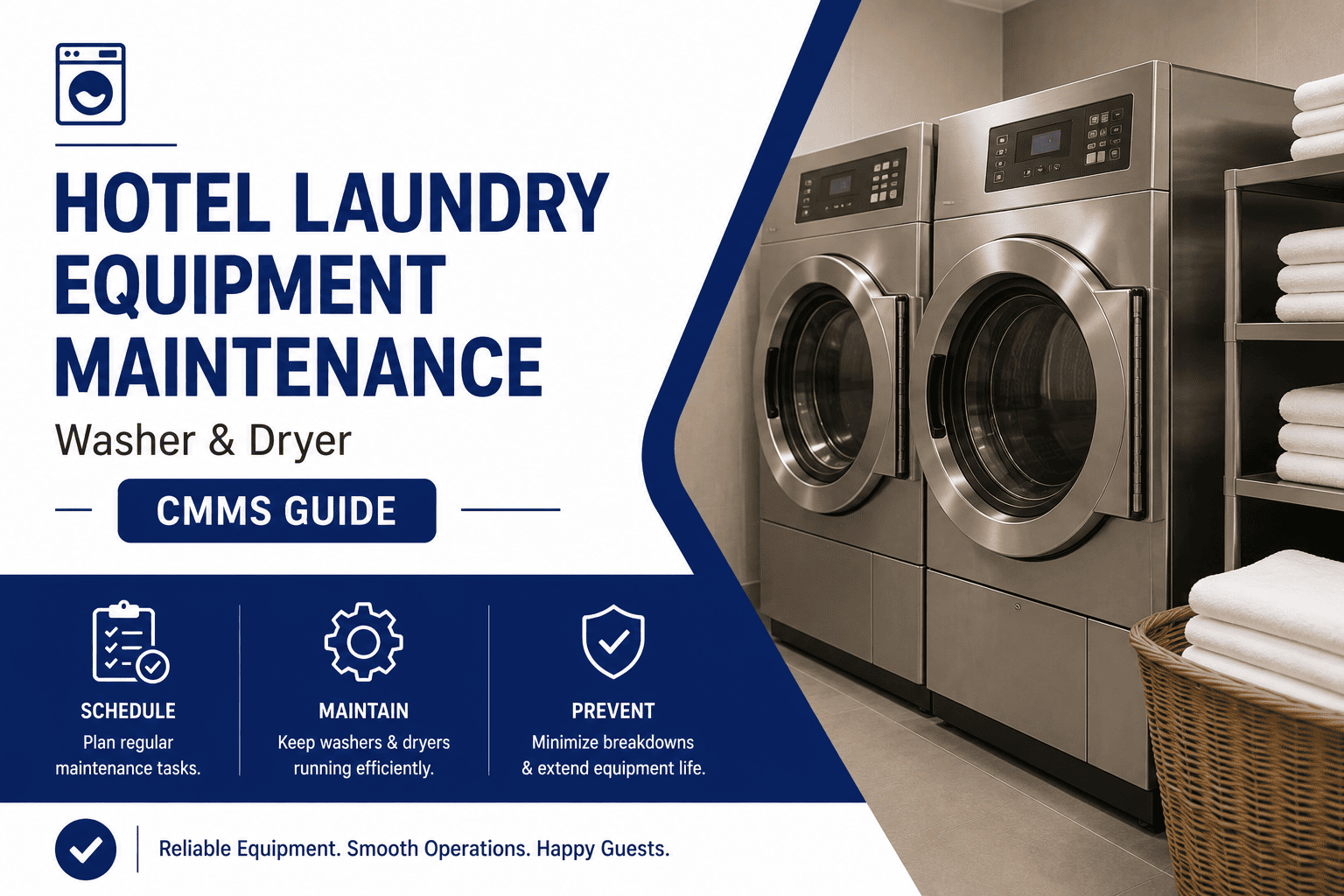
Hotel laundry operations process 400–900 linen cycles daily, yet most properties have zero visibility into equipment performance until a breakdown halts operations. Unmonitored failures cost hospitality operations $3,100–$5,600 annually per machine in emergency repairs, delayed linen turnover, and energy waste. IoT-enabled laundry equipment monitoring uses embedded sensors and real-time analytics to detect performance degradation 48–72 hours before failure, reduce energy consumption by 18–22%, and extend equipment lifespan from 8 years to 14+ years. Start your free trial today and connect your laundry room to a smart monitoring platform that prevents costly breakdowns before they impact guest services.
Unmonitored Equipment
Annual Repair Costs
$3,100–$5,600
Unexpected Breakdowns
7–11 per year
Energy Waste
18–25% excess usage
Equipment Lifespan
6–9 years
IoT-Monitored Equipment
Annual Repair Costs
$750–$1,300
Unexpected Breakdowns
1–2 per year
Energy Waste
Near optimal usage
Equipment Lifespan
13–16 years
Annual Savings Per Machine: $4,200
Key IoT Sensors That Monitor Laundry Equipment Health
Commercial laundry equipment contains five critical performance indicators that IoT sensors track continuously: vibration and imbalance sensors (detect bearing wear and drum misalignment 60+ hours before failure), temperature sensors on heating elements and exhaust systems (flag overheating that degrades components), motor current draw monitors (identify worn brushes, belt slippage, and overload conditions), water flow and pressure sensors (detect valve wear, clogged filters, and supply issues), and cycle time analyzers (track deviation from baseline to identify efficiency losses). Hotels deploying these sensors through a CMMS-connected IoT platform report 76% fewer emergency service calls and a 94% reduction in linen delivery delays caused by equipment downtime. Schedule a free equipment assessment with our hospitality IoT specialists to map the right sensors to your laundry room configuration.
Cycle Time Tracking
Real-Time
Detect performance drift per cycle
Vibration Analysis
Continuous
Bearing & drum fault detection
Temperature Sensors
±0.5°F
Heat element & exhaust monitoring
Motor Current Draw
Live Feed
Overload & belt wear alerts
Water Flow & Pressure
Per Cycle
Valve & filter condition tracking
Automated Alerts
Instant
SMS, email & CMMS work orders
How IoT Monitoring Prevents the 5 Most Common Laundry Failures
The five most frequent commercial laundry equipment failures in hotels are drum bearing failure from vibration and misalignment (causing 26% of breakdowns), heating element burnout from scale and overloading (21% of failures), drain pump blockages from lint and debris accumulation (19%), door seal deterioration from heat cycling and chemical exposure (17%), and belt and motor wear from continuous high-volume operation (13%). IoT vibration sensors detect bearing anomalies 48–72 hours before mechanical failure. Temperature deviation alerts flag heating element degradation before burnout occurs. Flow sensors catch drain restrictions before pump motor burnout. Seal integrity monitoring via cycle pressure data identifies leaks before water damage escalates. Motor current analytics pinpoint belt wear weeks before operational failure. Properties using IoT monitoring through a CMMS platform reduce total laundry equipment breakdown frequency by 76% and cut average repair costs from $620 per incident to $145 per incident.
01
Sensor Layer
Vibration & imbalance sensors
Temperature probes on elements
Motor current transducers
Update Rate: Every 30 Sec
02
Data Layer
Edge processing on-site
Cloud sync & storage
Historical trend analysis
Retention: 5+ Years
03
Alert Layer
Threshold-based instant alerts
Predictive anomaly warnings
Automated CMMS work orders
Response: < 2 Minutes
04
Action Layer
Auto-scheduled maintenance tasks
Parts inventory triggers
Compliance documentation logs
Downtime Cut: 76%
Annual ROI from IoT Laundry Equipment Monitoring
Hotels that implement IoT performance monitoring on commercial laundry equipment typically recover their investment within 4–6 months through four saving streams: eliminated emergency service calls (reducing 7–11 annual incidents to 1–2, saving $1,600–$2,400), extended equipment lifespan (adding 5–7 years of useful life worth $1,800–$2,600 in deferred capital expenditure), energy efficiency gains (18–22% reduction in utility costs saving $520–$900 annually), and prevention of linen delivery failures that affect guest satisfaction scores. The total IoT monitoring investment—including sensor hardware, platform subscription, and integration—averages just $900–$1,400 annually per machine, delivering 280–360% ROI in the first year.
Eliminated Emergency Repairs
76% reduction × 8 avg breakdowns × $310/call
$1,885
Extended Equipment Lifespan
55% longer life on $22,000 machine ÷ 16 years
$1,925
Energy & Water Efficiency
20% reduction on $6,400 annual utilities
$1,280
Prevented Linen Disruptions
Avoided guest complaints & re-linen costs
$720
Total Annual Savings
$5,810
IoT monitoring investment: $1,150/year. Net savings: $4,660. ROI: 305% in first year.
These figures reflect results from hospitality operations that integrated IoT laundry monitoring with CMMS platforms for automated work order generation and compliance documentation. Properties with 3+ laundry machines gain additional ROI through centralized dashboards, shared parts inventory, and cross-machine performance benchmarking. Create your free account now and connect your laundry equipment to real-time IoT monitoring with automated alerts, digital maintenance logs, and predictive failure analytics in under 60 minutes.
Stop Laundry Equipment Failures Before They Happen
Join hotel operations using Oxmaint IoT monitoring to eliminate 76% of unexpected failures, reduce energy costs by 20%, extend equipment life by 55%, and maintain complete audit-ready documentation.
Frequently Asked Questions
How does IoT monitoring integrate with existing hotel laundry equipment?
IoT sensors for laundry monitoring are retrofit-compatible with most commercial washers and dryers from brands like Electrolux, Miele, Speed Queen, and Milnor without requiring OEM modifications. Installation involves attaching vibration sensors to drum housings, temperature probes to heating elements and exhaust outlets, and current transducers on motor supply lines. A local IoT gateway connects all sensors via wired or wireless protocol and transmits data to a cloud CMMS platform. Installation typically takes 2–4 hours per machine and requires no operational downtime. The platform begins generating baseline performance profiles within 48–72 hours of operation, after which anomaly detection algorithms identify deviations that signal developing faults.
What performance metrics does IoT monitoring track for hotel washers and dryers?
IoT platforms monitor seven core performance metrics for commercial laundry equipment: vibration amplitude and frequency spectrum (drum and bearing health), heating element surface temperature and cycle ramp rates (thermal efficiency), motor current draw and power factor (mechanical load and wear), water inlet flow rate and fill time (valve and supply condition), drain cycle duration and pump amperage (drainage system health), door seal integrity via cycle pressure retention, and complete cycle time against manufacturer baseline. These metrics are logged per cycle and analyzed against rolling 30-day baselines to detect gradual degradation that staff observation would miss until failure occurs.
How far in advance can IoT sensors predict laundry equipment failures?
IoT predictive analytics detect most commercial laundry equipment failures 48–120 hours before breakdown depending on failure type. Bearing deterioration is typically detectable 72–96 hours in advance through vibration frequency changes. Heating element degradation shows 48–72 hours of temperature deviation before failure. Belt and motor wear produces current anomalies 5–14 days before breakdown in most cases. Drain pump blockages are usually identifiable 24–48 hours in advance via flow rate reduction. This advance warning window allows maintenance teams to schedule repairs during planned low-occupancy periods rather than responding to emergency breakdowns during peak guest service hours.
What is the ROI timeline for hotel IoT laundry monitoring systems?
Most hotels recover IoT laundry monitoring costs within 4–7 months of deployment. The fastest ROI drivers are eliminated emergency service calls (typically 2–3 prevented in the first 6 months worth $620–$1,860), energy consumption reduction visible from the first billing cycle (18–22% savings on laundry utility costs), and prevention of one major component failure such as a drum bearing or heating element replacement that would cost $1,400–$2,800 in parts and labor. Properties with 4+ laundry machines accelerate ROI through shared sensor infrastructure and centralized monitoring that requires no additional labor cost per additional machine monitored.
Ready to Monitor Your Laundry Equipment in Real Time?
Stop reactive repairs from disrupting hotel operations. Oxmaint's IoT platform connects your laundry equipment to predictive monitoring, automated maintenance scheduling, and compliance documentation — all in one dashboard.