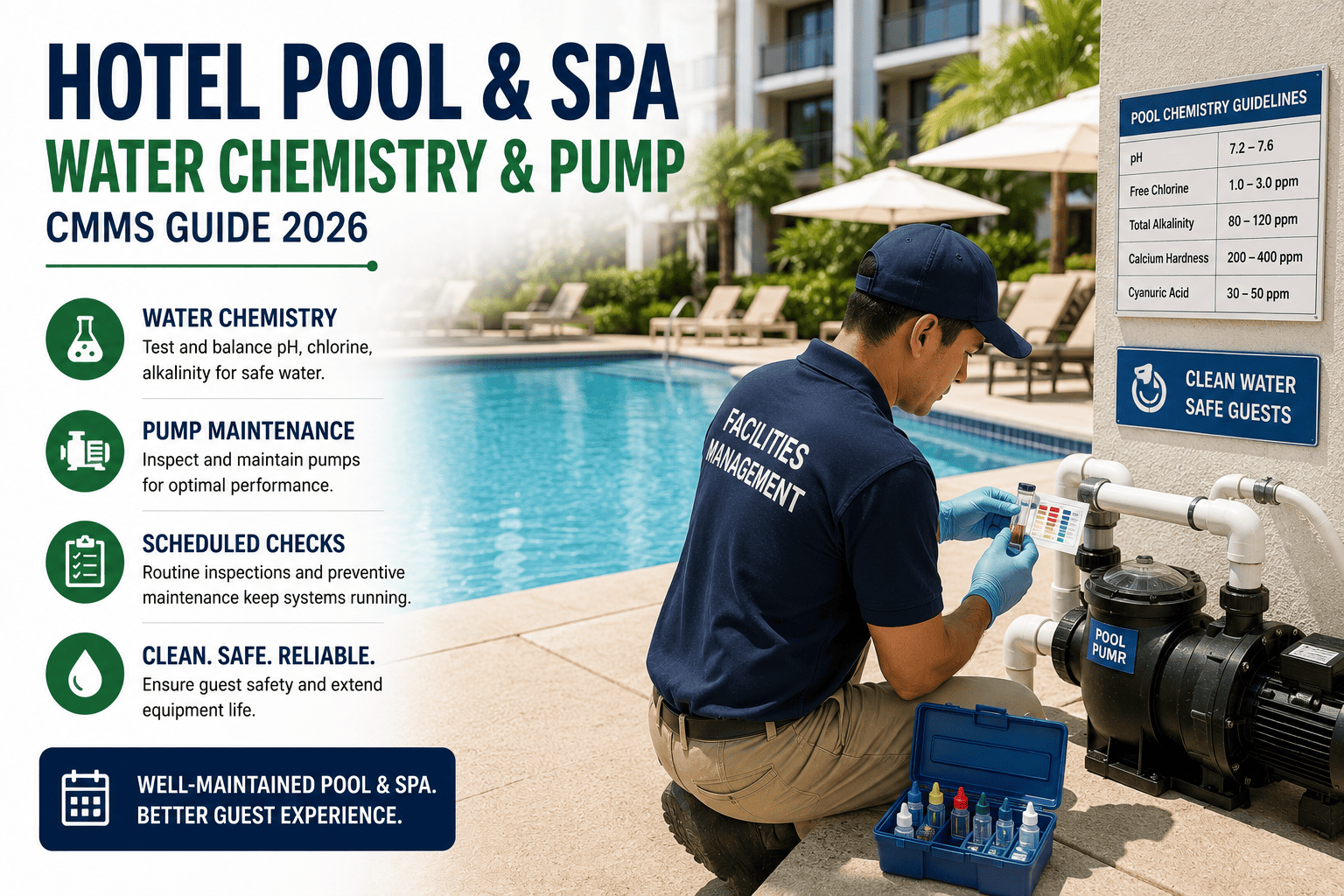
The Fourth of July weekend was shaping up to be the resort's biggest revenue day of the summer—462 guests, fully booked pool cabanas, and a poolside barbecue event with 200 tickets sold. At 10 AM, housekeeping reported the pool water looked "a little cloudy." By noon, the health department had closed the pool. The main circulation pump had failed overnight—a bearing that had been squealing for three weeks finally seized, stopping water flow long enough for chlorine levels to crash and bacteria to bloom. The pool stayed closed for four days. Refunds, cancelled cabana reservations, and the shuttered barbecue event cost $67,000. The bearing that destroyed Independence Day weekend cost $35.
The pool is often the deciding factor when families choose a hotel. It's the backdrop for vacation photos, the place where kids exhaust themselves into peaceful evenings, and the amenity that justifies resort pricing. When the pool closes unexpectedly, guests don't just lose a swimming option—they lose the vacation experience they paid for. Pool pump failures don't announce themselves politely; they cascade through the entire aquatic system, turning crystal-clear water into a health hazard within hours. Understanding why pumps fail and how to catch problems early separates resorts that maintain their reputation from those explaining pool closures to furious families. Properties that implement systematic pool equipment monitoring catch most failures before guests ever notice a problem.
Why Pool Failures Hit Hospitality Hardest
A pool pump failure at a home means a weekend without swimming. A pool pump failure at a resort means health department involvement, social media disasters, refund demands, and reviews that mention "green pool" for years. The hospitality industry faces unique consequences that residential pool owners never consider.
The 8 Most Common Pool Pump Failure Causes
Pool pumps don't fail randomly—they follow predictable degradation patterns that announce themselves through warning signs weeks or months before catastrophic failure. Understanding these patterns allows maintenance teams to intervene before the pool closes. Properties using digital pump monitoring systems catch 90% of developing failures before they impact operations.
Systematic Troubleshooting Guide
When staff report pool pump issues, systematic troubleshooting prevents wasted time and ensures actual problems get fixed quickly. Following a logical diagnostic sequence—rather than guessing—minimizes pool closure time. Maintenance teams using digital troubleshooting checklists resolve pump issues 50% faster than those working from memory.
Symptom-Based Troubleshooting Reference
Different symptoms point to different root causes. Use this reference to quickly narrow down problems based on what staff observe.
| Symptom | Likely Causes | Immediate Checks | Resolution Priority |
|---|---|---|---|
| Pump Won't Start | Power failure, tripped breaker, bad capacitor, seized motor, timer off | Breaker panel, voltage at motor, capacitor test, shaft rotation | Critical - no circulation |
| Pump Hums But Won't Run | Bad capacitor, seized bearing, jammed impeller, low voltage | Capacitor test, manual shaft rotation, voltage check | Critical - motor damage risk |
| Pump Won't Prime | Air leak in suction, low water level, clogged impeller, bad shaft seal | Lid seal, fitting tightness, water level, basket debris | High - no effective circulation |
| Low Flow/Weak Returns | Clogged filter, blocked impeller, air leak, worn impeller, closed valve | Filter pressure, basket inspection, valve positions | High - inadequate circulation |
| Loud Grinding/Squealing | Bearing failure, debris in impeller, cavitation, misalignment | Listen to isolate source, check for debris, verify priming | Critical - imminent failure |
| Pump Overheating/Tripping | Blocked ventilation, low voltage, overloaded motor, bad bearing | Airflow around motor, voltage, amp draw, bearing condition | High - thermal damage risk |
| Water Leaking from Pump | Failed shaft seal, cracked housing, loose fittings, bad gasket | Locate leak source precisely, check seal condition | High - motor damage risk |
| Pump Cycles On/Off | Thermal overload, electrical issue, automation malfunction | Motor temperature, electrical connections, controller settings | Medium - investigate cause |
Health Code Compliance: The Non-Negotiable Factor
Pool pump failures aren't just operational problems—they're potential health code violations. Health departments require minimum circulation rates and water turnover times. When pumps fail, the clock starts ticking on closure requirements.
- 6-hour turnover maximum
- Continuous circulation required
- 1-3 ppm free chlorine
- pH 7.2-7.8 range
- Daily testing documented
- 30-minute turnover maximum
- Higher bather load per gallon
- 3-5 ppm free chlorine
- Temperature ≤104°F
- More frequent testing required
Preventive Maintenance Schedule
Commercial pool pumps operate under demanding conditions—continuous duty, chemical exposure, and high expectations. Proper maintenance extends equipment life and prevents the catastrophic failures that close pools. Teams that automate their pool maintenance tracking report 80% fewer unexpected equipment failures.
| Frequency | Task | Why It Matters | Time Required |
|---|---|---|---|
| Daily | Check pressure gauges, clean strainer basket, verify pump operation | Catches debris buildup and flow issues before they escalate | 10-15 minutes |
| Weekly | Inspect pump for leaks, check motor temperature, verify amp draw | Identifies developing seal and electrical issues early | 20-30 minutes |
| Monthly | Lubricate motor if applicable, inspect wiring, check mounting bolts | Prevents bearing failure and electrical problems | 30-45 minutes |
| Quarterly | Backwash/clean filter thoroughly, inspect impeller, test capacitor | Maintains proper flow and identifies component wear | 1-2 hours |
| Semi-Annual | Inspect shaft seal, check alignment, measure bearing wear | Prevents costly seal failures and motor damage | 2-3 hours |
| Annual | Complete system inspection, motor service, consider seal replacement | Comprehensive assessment, plan major repairs for off-season | 4-6 hours |
The ROI of Proactive Pool Pump Management
Investing in preventive pool pump maintenance delivers measurable returns through avoided closures, extended equipment life, reduced emergency repairs, and protected guest satisfaction.
Variable Speed Pumps: The Modern Standard
Many resorts are upgrading to variable speed pumps for energy savings and quieter operation. Understanding these systems' unique maintenance requirements prevents creating new problems while solving old ones.
Emergency Response Protocol
When pump failures occur despite preventive efforts, having a clear emergency response protocol minimizes closure duration and protects water quality.
Implementation: Building Your Pool Maintenance Program
Transitioning to systematic pool pump management requires consistent processes, proper documentation, and the right monitoring tools. Most properties start with a free Oxmaint account to digitize existing maintenance routines before expanding to predictive capabilities.
When to Repair vs. Replace Pool Pumps
Not every pump problem justifies repair. Understanding when replacement makes more financial sense prevents investing in equipment that's approaching end-of-life.
Keep the Pool Open, Keep Guests Happy
Every resort guest expects the pool to work. They've seen the photos online, planned their days around poolside relaxation, and packed swimsuits with anticipation. When they arrive to find a closed pool or murky water, the vacation they imagined disappears. Systematic pump maintenance, proper troubleshooting protocols, and proactive monitoring ensure the pool delivers on its promise—crystal-clear water, strong circulation, and memories worth making.
Frequently Asked Questions