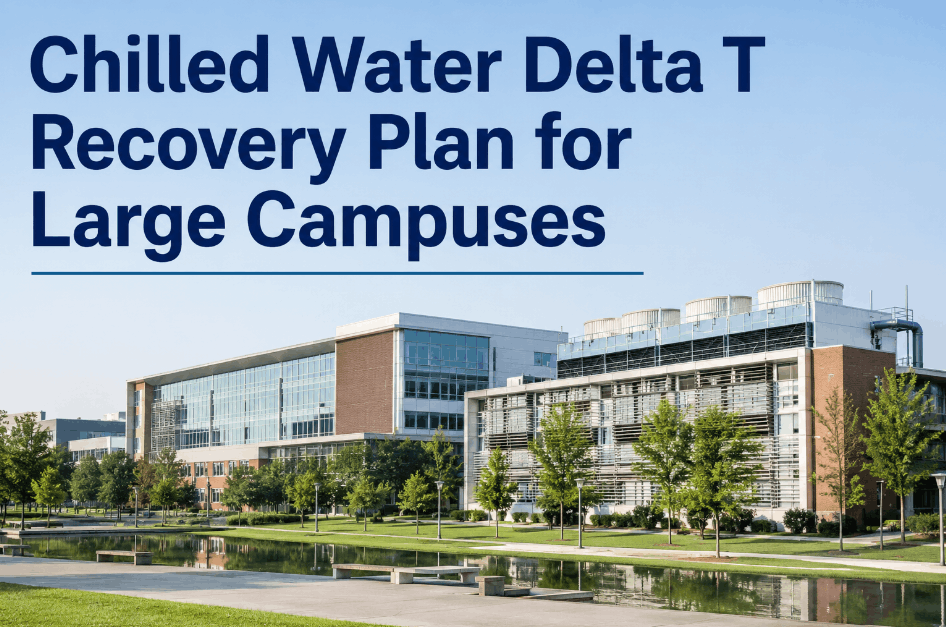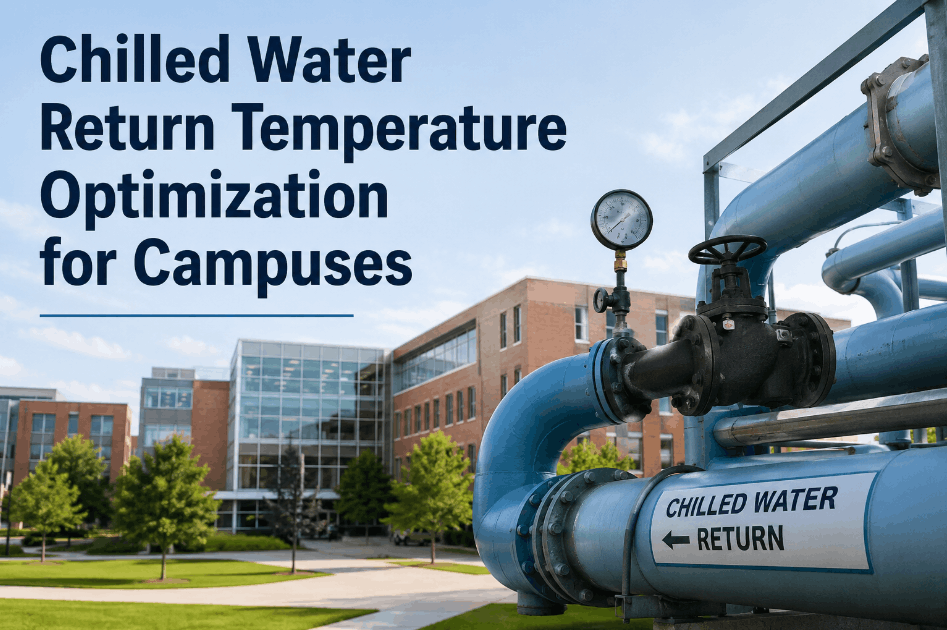
Campus central plants operate most efficiently when chilled water systems maintain a healthy temperature differential — but delta-T degradation is one of the most common and costly performance problems in large hydronic networks. When return temperatures run too close to supply temperatures, chillers are forced into extended runtime, additional units must be brought online unnecessarily, and energy consumption rises across the entire plant. Facilities that Sign Up Free on Oxmaint can track hydronic system maintenance schedules, coil cleaning work orders, and plant performance review cycles in one platform — reducing the operational gaps that allow low delta-T to persist unaddressed. For campus energy and facilities teams ready to build a maintenance-driven approach to chilled water return temperature protection, Book a Demo to see Oxmaint's plant and distribution maintenance workflow in action.
Oxmaint helps campus plant teams manage coil cleaning schedules, valve inspection cycles, and hydronic system PM programs — keeping delta-T healthy without reactive intervention.
6 Root Causes of Low Delta-T in Campus Chilled Water Systems — and the Maintenance Response Each Requires
Low delta-T is a symptom — the causes are typically maintenance-addressable conditions in terminal equipment, distribution piping, and control sequences. Facilities that Sign Up Free on Oxmaint can assign each root cause category a recurring PM work order, ensuring campus teams address delta-T contributors systematically rather than chasing performance after the problem surfaces.
Dirty cooling coils restrict heat transfer at terminal units — reducing the temperature rise across the coil and returning water to the plant at near-supply temperatures, directly depressing campus delta-T.
Control valves that fail open or are oversized for their application allow excess chilled water flow through terminal units without corresponding heat transfer — a primary driver of low delta-T in distribution systems.
When differential pressure bypass valves are stuck open or incorrectly set, chilled water short-circuits back to the return header without passing through load — collapsing delta-T at the plant level.
During low-load periods or in overbuilt distribution loops, flow rates exceed what terminal equipment can absorb thermally — causing return temperatures to fall toward supply and signalling distribution system over-pumping.
Building automation sequences that command simultaneous maximum valve opening across multiple AHUs without load confirmation flood the distribution loop with flow — overwhelming coil heat transfer capacity and depressing delta-T.
Campus distribution networks that were never balanced or have drifted from original balance conditions concentrate flow in low-resistance branches — starving remote buildings while over-supplying near-plant zones and reducing system delta-T.
Campus Chilled Water Delta-T Protection: Maintenance Intervals and Response Framework
Each delta-T degradation cause requires a specific maintenance response at a defined interval. Use this reference to build or audit your campus chilled water PM program. Teams still managing plant performance reactively are encouraged to Book a Demo to see how Oxmaint structures hydronic maintenance programs for campus operations.
| Delta-T Issue | Root Cause Asset | Maintenance Action | Recommended Interval | Priority |
|---|---|---|---|---|
| Fouled Coils | AHU / FCU cooling coils | Chemical cleaning and inspection | Annual (pre-cooling season) | High |
| Valve Failure | 2-way and 3-way control valves | Stroke test and actuator inspection | Annual — all critical zones | High |
| Bypass Short-Circuit | DP bypass valves | Verify setpoint and mechanical function | Semi-annual | Medium |
| Distribution Imbalance | Campus piping network | Hydraulic balancing verification | Every 3–5 years or post-expansion | Medium |
| BAS Sequencing Error | Building automation controller | Sequence of operations review and recommission | Annual or post-renovation | Medium |
| Strainer Fouling | Distribution strainers | Clean and inspect strainer baskets | Quarterly — high-fouling zones | Routine |
| Pump Performance Drift | Primary and secondary pumps | Impeller inspection and curve verification | Annual | Routine |
How Oxmaint Supports Campus Chilled Water System Maintenance Programs That Protect Delta-T
Campus chilled water maintenance programs work when they are structured, scheduled, and tracked — not managed through operator memory or annual contractor visits. Oxmaint gives campus engineering teams the CMMS infrastructure to build hydronic maintenance programs that address delta-T protection systematically across every building in the distribution network. Facilities can Sign Up Free and configure coil cleaning, valve inspection, and plant review PM schedules with zone-level asset tracking from the first week.
- Plant and distribution assets registered in Oxmaint asset hierarchy by campus zone
- Pre-cooling season PM work orders automatically triggered for coil and valve inspection
- Technician checklists include delta-T observation fields linked to asset records
- Reactive work orders created immediately when delta-T degradation is reported
- Valve and coil maintenance history tracked per asset — not per contractor invoice
- Portfolio dashboard shows campus-wide hydronic PM completion status in real time
ROI of Chilled Water Return Temperature Optimization Through Structured Campus Maintenance
Campus teams configure plant and terminal equipment assets in Oxmaint and activate PM schedules — typically completing initial setup within two to four weeks without IT support.
Restoring healthy delta-T allows the same cooling load to be served with fewer chiller operating hours — directly reducing campus electricity consumption at the central plant.
Low delta-T left unaddressed forces additional chiller starts that increase wear and can trigger capacity shortfalls during peak demand — events that scheduled maintenance programs prevent.
Eliminating unnecessary chiller cycling and pump over-speed operation extends equipment service life — reducing capital replacement expenditure across the campus plant asset fleet.
Documented coil cleaning, valve inspection, and plant review records in Oxmaint provide the maintenance evidence required for ASHRAE energy audits and sustainability reporting programs.
Consistent delta-T protection ensures adequate chilled water delivery to all campus buildings — eliminating the hot-spot complaints that emerge when low delta-T starves remote distribution zones.
Oxmaint gives campus plant teams the asset hierarchy, PM scheduling, and work order tracking tools needed to protect chilled water return temperature year-round.
Campus Chilled Water Return Temperature Optimization — Questions Plant Teams Ask
The most common causes are fouled terminal coils, stuck-open control valves, over-sized valve selections, and bypass short-circuits — all of which reduce heat transfer at terminal units and return water at near-supply temperatures.
Low delta-T forces the plant to circulate larger flow volumes to deliver the same cooling capacity — increasing pump energy, triggering additional chiller starts, and raising campus energy spend without delivering additional comfort.
Annual pre-cooling-season coil cleaning is the standard recommendation, with high-fouling zones requiring semi-annual service — Oxmaint PM schedules can automate work order generation for both intervals.
Yes. Oxmaint organises assets and PM work orders by campus zone and building — giving plant engineers a single platform to manage coil, valve, and plant maintenance across the entire distribution network.
A CMMS enforces consistent PM intervals for delta-T-critical maintenance tasks — ensuring coils are cleaned, valves are inspected, and bypass functions are verified before degradation accumulates into a plant performance event.
Oxmaint gives campus plant and facilities teams the PM scheduling, asset tracking, and work order tools to manage chilled water return temperature proactively across every building in the network.