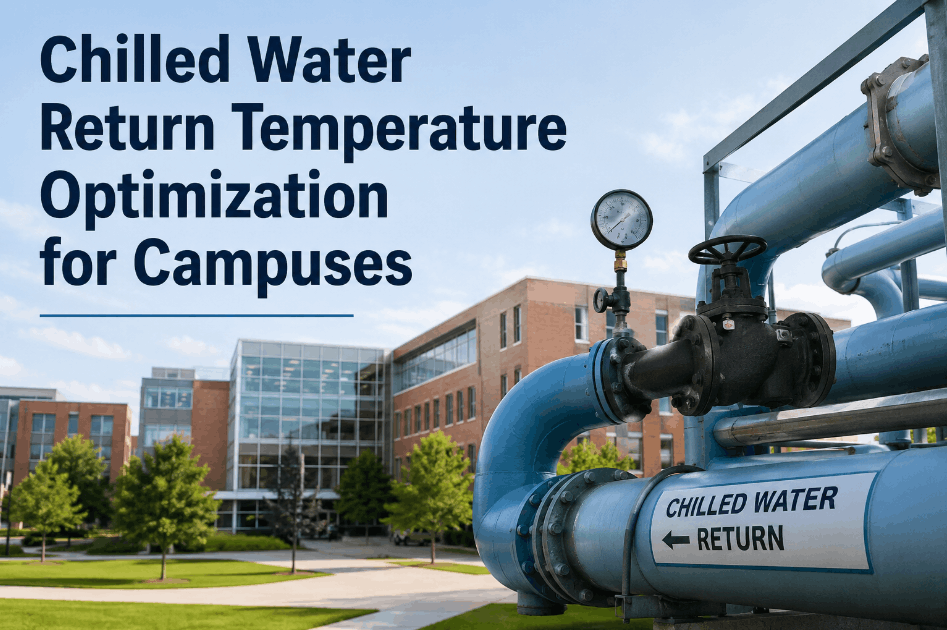
Chilled water delta T degradation — the narrowing gap between supply and return water temperatures — silently erodes cooling plant capacity and drives up energy cost per ton across large campus systems. When delta T collapses, chillers run longer, pumping energy increases, and cooling capacity becomes unavailable exactly when it is needed most. Campus facilities teams using Sign Up Free with Oxmaint structure valve leak inspections, coil fouling checks, and load control audits as preventive maintenance tasks — recovering delta T without emergency plant expansions. A healthy campus chilled water system targets 12–16°F delta T at design load; systems operating below 8°F are wasting 30–50% of available plant capacity. Book a Demo to see how Oxmaint helps campus HVAC teams build structured delta T recovery programs.
CAMPUS COOLING · DELTA T RECOVERY · CHILLED WATER · HVAC EFFICIENCY · 2026
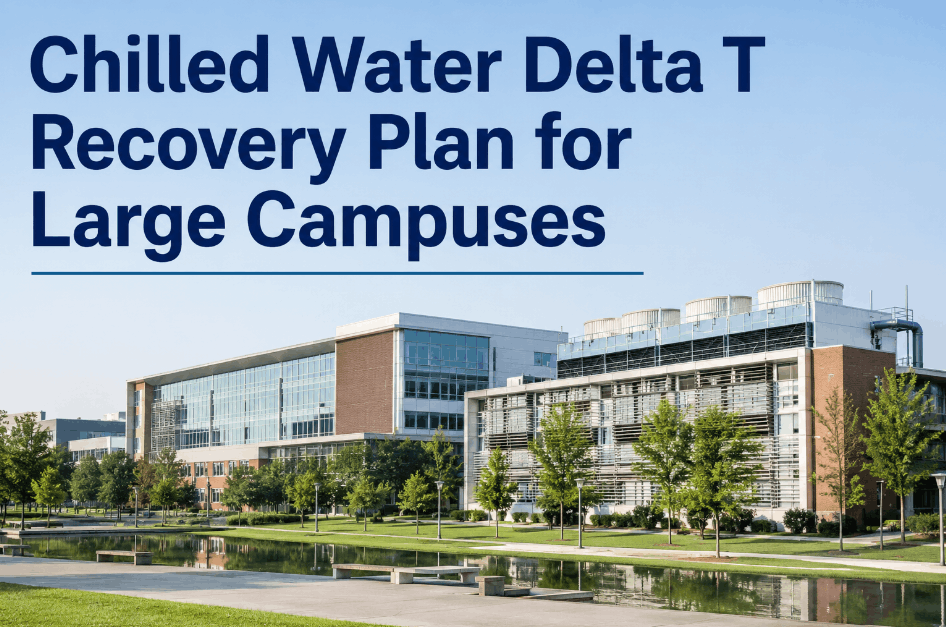
Chilled Water Delta T Recovery Plan for Large Campuses
Recover chilled water delta T on large campuses through valve leak detection, coil fouling management, load control correction, and structured hydronic balancing — restoring plant capacity and cutting energy waste.
12–16°FTarget chilled water delta T at design load for a healthy campus cooling plant
30–50%Plant capacity lost when delta T collapses below 8°F due to valve leakage or coil fouling
20–35%Pumping energy reduction achievable through delta T recovery and system rebalancing
$60K+Annual energy and capacity cost avoided at a 2,000-ton campus plant with restored delta T
4 Root Causes of Chilled Water Delta T Collapse on Campuses
Delta T degradation on large campuses is always traceable to one or more of four maintainable conditions — valve leakage, coil fouling, load control drift, and hydraulic short-circuiting. Oxmaint's HVAC maintenance module structures inspection tasks around all four, ensuring campus teams detect performance loss at scheduled intervals rather than at the point of capacity emergency. Sign Up Free to configure chilled water system inspection schedules in Oxmaint.
Control Valve Leakage
Primary Driver
Leaking two-way control valves allow chilled water to bypass coils, returning to the plant at supply temperature rather than design return temperature. A single leaking valve on a large AHU can collapse delta T across an entire distribution zone. Valve seat wear and actuator calibration drift are the most common failure modes; both require scheduled inspection and trend monitoring to catch before plant-wide impact.
Coil Fouling and Air-Side Restriction
Operational Driver
Fouled chilled water coils transfer less heat per unit of water flow, reducing return water temperature and compressing delta T. Air-side fouling — dirty filters, blocked coil fins — reduces airflow across the coil, further limiting heat transfer. Campus buildings with high occupancy or outdoor air loads are most vulnerable. Filter replacement schedules and coil cleaning intervals directly control coil-side delta T contribution.
Load Control and Setpoint Drift
Controls Driver
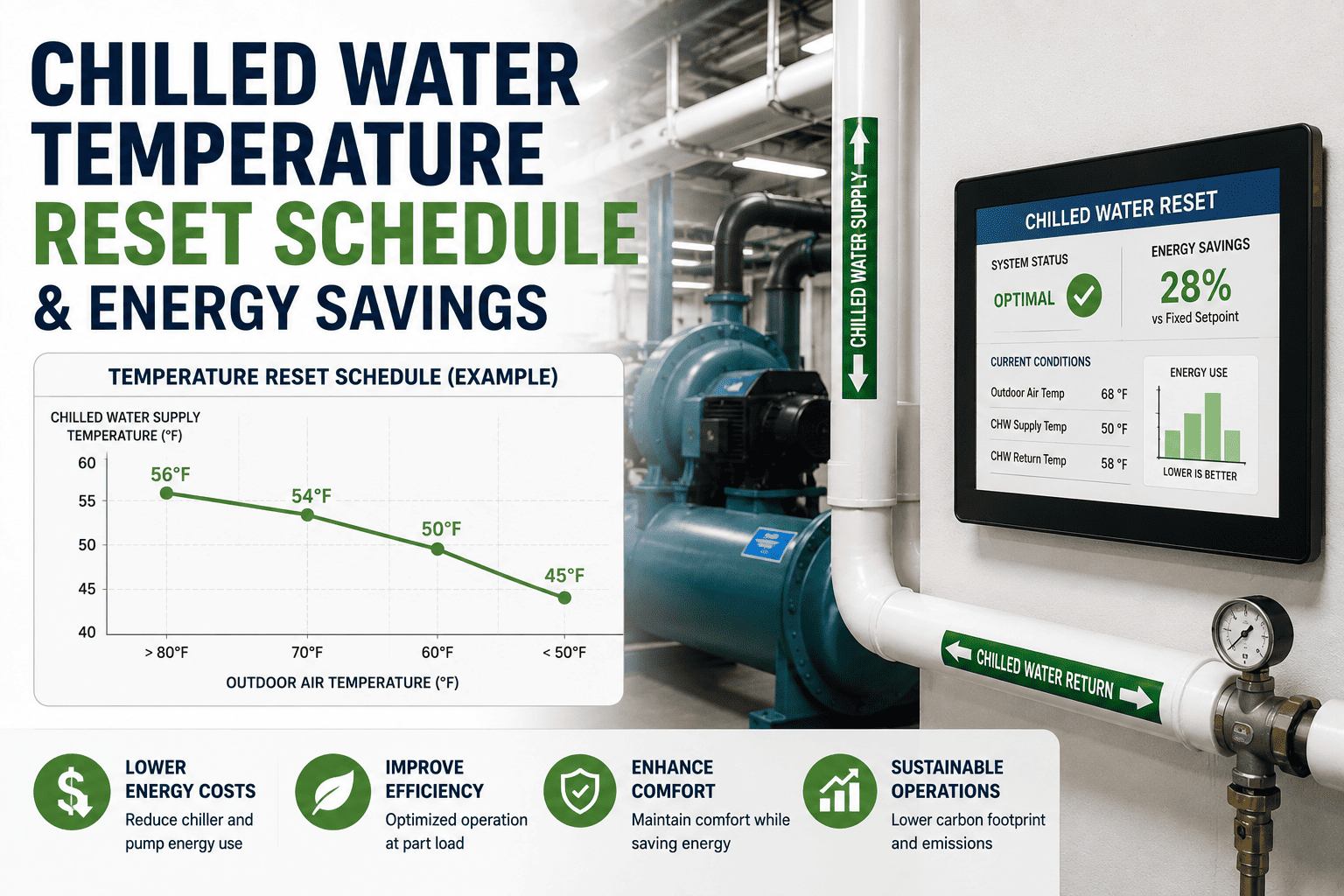
Zone temperature setpoints that have drifted low — or DDC control sequences that have not been recommissioned — drive excessive valve opening and high water flow at low load. The result is high flow, low delta T operation that strains pumps and reduces plant efficiency. Annual controls audit and setpoint verification are the most cost-effective delta T recovery actions for campus buildings.
Hydraulic Short-Circuiting
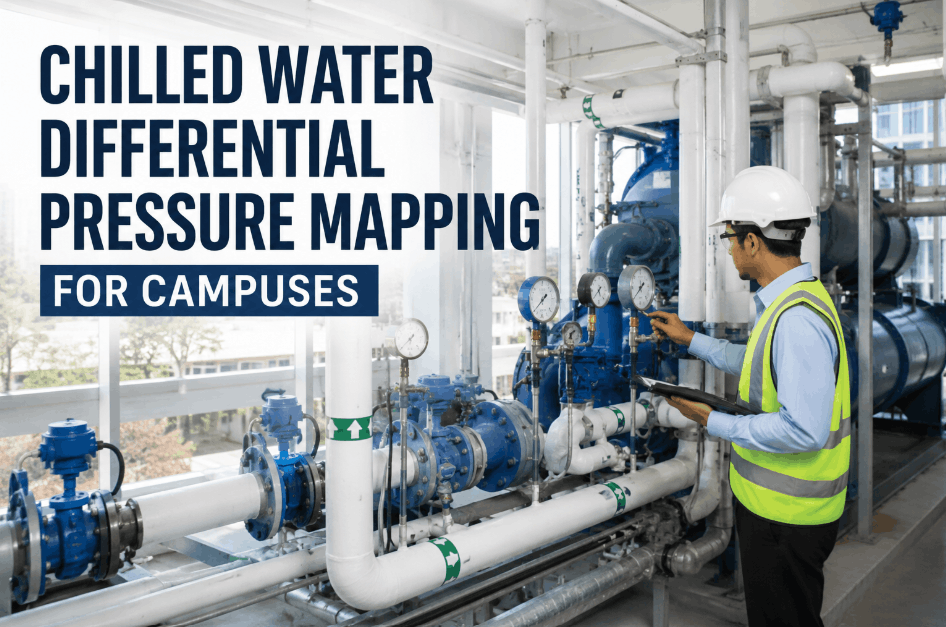
Pressure-independent control valves that have failed open, or bypass connections that are not properly controlled, allow chilled water to circuit back to the plant without passing through coils. These hydraulic short circuits are invisible from plant return temperature alone and require zone-level flow and temperature trending to identify. Oxmaint work orders can schedule zone-level delta T spot checks as part of quarterly rounds.
Delta T Recovery Maintenance Schedule — Campus Implementation
Daily
Plant supply and return temperature monitoring, delta T trend review, pump differential pressure check, unusual load pattern flagging
Weekly
Building-level delta T spot checks, valve position vs. load correlation, filter differential pressure review, BAS alarm queue audit
Monthly
AHU coil approach temperature comparison, control valve actuator response check, zone setpoint audit, pump energy vs. flow ratio review
Quarterly
Zone-level delta T measurement and mapping, valve leak detection survey, coil visual inspection, hydraulic balance spot verification
Annual
Full valve seat inspection and actuator calibration, coil cleaning program, system hydraulic rebalancing, controls recommissioning, delta T baseline documentation
3-Year
Control valve replacement program review, coil condition assessment, pump impeller inspection, full system flow balance verification, plant optimization review
Valve Management — The Highest-Impact Delta T Recovery Action
Control valve condition is the single highest-impact variable in campus chilled water delta T recovery because valve failures directly prevent heat transfer regardless of plant or pump performance. Book a Demo to see how Oxmaint structures valve inspection and replacement tracking across multi-building campus portfolios.
Valve Leak Survey Protocol
Quarterly Inspection
Comparing valve position signal against coil delta T at each AHU identifies leaking valves without flow measurement equipment. Valves reporting closed position while return temperature remains near supply temperature are immediate replacement candidates.
Actuator Calibration Verification
Delta T Protection
Actuator calibration drift causes valves to respond incorrectly to control signals, producing either chronic over-flow or under-cooling. Annual actuator calibration verification prevents the invisible control decay that degrades campus-wide delta T over multi-year periods.
Pressure-Independent Valve Audit
Hydraulic Stability
Pressure-independent control valves eliminate flow variation from system pressure changes, but their cartridge components wear and require periodic replacement. Scheduling cartridge inspection at 5-year intervals protects the hydraulic stability that keeps delta T consistent across load changes.
Valve Replacement Program Tracking
Asset Lifecycle Management
Oxmaint asset records track valve age, inspection history, and replacement status across all campus buildings — enabling planned replacement programs that prevent delta T collapse rather than responding to it after efficiency loss is already measurable.
Recover Delta T. Restore Plant Capacity. Cut Energy Waste.
Oxmaint's preventive maintenance scheduling automates chilled water valve inspections, coil cleaning intervals, and controls audit workflows — so delta T recovery is a structured program, not a reactive emergency response.
Frequently Asked Questions — Chilled Water Delta T Recovery
What is chilled water delta T and why does it matter for campus cooling plants?
Delta T is the temperature difference between chilled water supply and return. Higher delta T means more heat removed per gallon of flow — maximizing plant capacity and reducing pumping energy. Collapsed delta T wastes both.
How do I know if my campus has a delta T problem?
Compare your plant return temperature against supply temperature at various load levels. If the gap is consistently below 8–10°F when the plant is running near design load, delta T collapse is reducing your effective capacity.
Can delta T be recovered without major capital investment?
Yes. Most delta T recovery is achieved through valve leak repair, coil cleaning, and controls recommissioning — maintenance actions that cost far less than plant expansion and deliver results within one cooling season.
Does Oxmaint support multi-building campus chilled water maintenance programs?
Yes. Oxmaint manages assets, work orders, and inspection records across unlimited buildings and sites — enabling campus-wide valve, coil, and controls maintenance from a single platform with full audit history.
How does delta T recovery affect Legionella and water quality compliance?
Restored delta T improves chilled water system flow balance and reduces stagnation risk in low-flow zones — a contributing factor in closed-loop water quality management plans under ASHRAE and local health guidance.
Restore Delta T. Maximize Campus Cooling Capacity.
Oxmaint structures valve inspection, coil maintenance, and controls audit programs across your entire campus — turning delta T recovery from a reactive effort into a documented, scheduled performance program.