Campus chilled water systems distribute cooling across multiple buildings through shared hydronic loops that behave differently under partial load, seasonal transitions, and zone demand shifts — producing differential pressure conditions that no single fixed setpoint can manage reliably without zone-level mapping data. Sign Up Free to start logging differential pressure readings by zone and loop condition in OxMaint, linking measurement data to PM records and plant operating parameters so pressure imbalance is caught in scheduled inspections rather than occupant comfort complaints. Book a Demo to see how OxMaint structures chilled water differential pressure tracking and maintenance planning for campus facility engineering teams managing multi-building hydronic systems.
Campus Facilities · Hydronic Systems · 2026
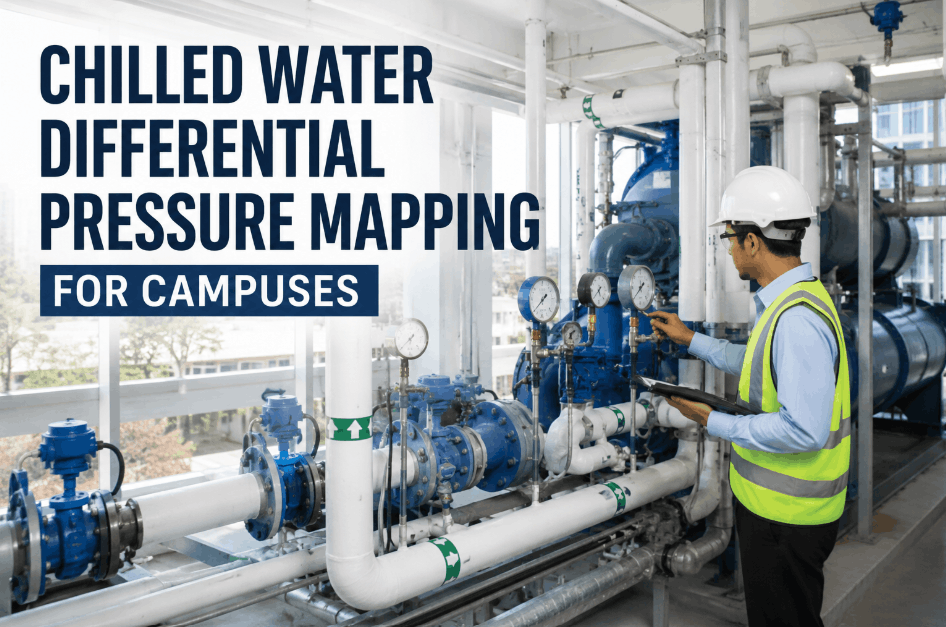
Chilled Water Differential Pressure Mapping for Campuses
Campus chilled water systems stay more stable when differential pressure is mapped by zone, load, and loop condition instead of guesswork — preventing comfort failures and plant inefficiency across every building on the loop.
51%Of campus chilled water comfort failures trace to differential pressure imbalance rather than plant capacity shortfall
−29%Loop pressure variance reduction when zone mapping data drives setpoint adjustment rather than fixed-point control
4×Faster pressure fault isolation with zone-level CMMS mapping vs. plant-level alarm review
93%Loop balancing compliance when differential pressure checks are scheduled and logged per zone in OxMaint
Where Chilled Water Differential Pressure Risk Builds on Campuses
Pressure imbalance failure points are distributed across every segment of a campus chilled water loop — from primary pump staging decisions to control valve authority loss in buildings at the end of long distribution runs. The six patterns below represent the most common hydronic system gaps in campus facility operations, and the points where OxMaint's pressure logging and PM scheduling give engineering teams a structured diagnostic view before comfort failures trigger building-by-building emergency responses. Sign Up Free to configure OxMaint's chilled water pressure mapping workflow and track differential pressure conditions per zone across your campus loop inventory.
01
End-of-Loop Pressure Starvation
Risk Window: Peak cooling demand periods
High Comfort RiskBuildings at the end of long campus distribution runs receive insufficient differential pressure under peak load — control valves fully open but cannot deliver design flow, producing warm space temperatures while plant capacity appears adequate at the central plant level.
02
Fixed Differential Pressure Setpoint Mismatch
Risk Window: Partial load and shoulder season operation
Efficiency GapDifferential pressure setpoints sized for peak demand run primary pumps at excess speed during partial load — producing over-pressure conditions in near-plant zones that force modulating valves nearly closed, increasing pump energy without improving comfort delivery.
03
Control Valve Authority Loss
Risk Window: High loop pressure operation
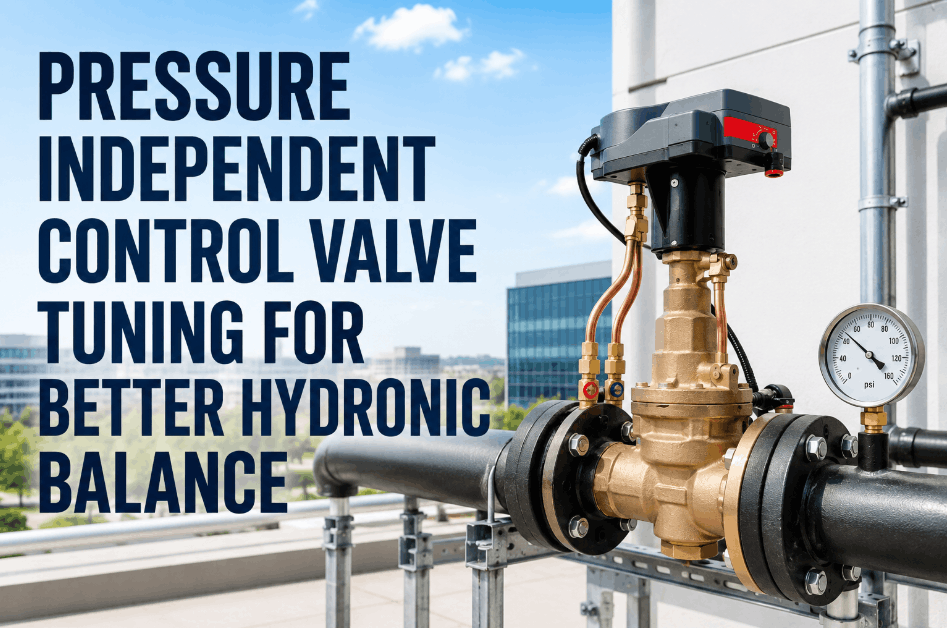
Hydronic Design GapControl valves with low pressure authority — designed for balanced conditions — lose effective modulation as loop differential pressure increases, hunting between open and closed positions and producing coil flow instability that manifests as comfort cycling rather than a clear mechanical fault.
04
Primary-Secondary Pump Decoupler Bypass Flow
Risk Window: Low secondary loop demand
Plant Efficiency RiskDecoupler bypass flow during low secondary loop demand mixes return and supply water — elevating supply temperature delivered to campus buildings and creating a differential pressure condition at secondary pumps that misrepresents actual zone demand at the plant level.
05
Strainer and Isolation Valve Restriction
Risk Window: Post-construction and post-maintenance periods
Condition GapPartially closed isolation valves or blocked strainers in campus branch connections produce localized pressure drops that appear as zone flow deficits — creating building-level comfort complaints that are difficult to isolate without branch differential pressure measurement data.
06
Pressure Measurement Documentation Gap
Risk Window: Between seasonal recommissioning cycles
Prevention InputDifferential pressure readings taken during seasonal balancing visits are not logged per zone in the CMMS — so progressive loop imbalance between recommissioning cycles has no trend record and no early detection trigger in the maintenance system.
Chilled Water Pressure Management — Without vs. With OxMaint
The difference between reactive chilled water balancing and a CMMS-supported zone pressure mapping program is visible in comfort incident frequency, pump energy consumption, and plant tuning intervals across the campus. The comparison below shows what changes when OxMaint structures differential pressure logging, zone mapping, and PM scheduling for campus hydronic system management. Book a Demo to walk through your campus loop structure and identify where OxMaint closes the pressure monitoring gap.
Chilled Water Pressure Mapping Maturity — Where Does Your Campus Score?
Differential pressure management maturity on campuses ranges from fully reactive — facilities teams respond to building comfort complaints after loop imbalance has already disrupted occupancy — to structured preventive programs with zone-level measurement data, setpoint trend records, and root cause documentation at every pressure fault close. The maturity framework below maps where your campus chilled water system sits. Book a Demo to assess your campus hydronic system maturity with an OxMaint solutions engineer.
Chilled Water Differential Pressure Maturity
Score 5 = CMMS zone pressure mapping · Score 1 = fully reactive comfort response
5
Full Zone Map · CMMS-Integrated · Setpoint Trend Tracking
Differential pressure logged per zone on defined inspection intervals. Setpoint adjustments documented per season. Branch restrictions and valve authority monitored in PM program. Root cause captured at every pressure fault close.
Profile: Loop imbalance is identified through measurement data, not comfort complaints. Campus pressure conditions are managed proactively across every zone and season.
4
Seasonal Commissioning · Partial Zone Coverage
Differential pressure balanced at seasonal recommissioning. Near-plant zones well monitored. End-of-loop and branch measurement not captured between commissioning cycles.
Action: Add quarterly zone pressure checks at end-of-loop buildings and high-complaint zones. Measurement between commissioning cycles is where imbalance is caught early.
3
Annual Recommissioning · Reactive Between Cycles
Chilled water loop balanced at annual plant service. Comfort complaints addressed through individual building service calls. Pressure data not transferred to asset records between commissioning visits.
Gap: Annual commissioning misses mid-season load shifts and loop drift. Quarterly zone measurement is the highest-impact next step for campus pressure stability.
2
Building-Complaint Driven Response
Pressure issues identified through occupant comfort escalations. No structured zone measurement between annual service. Same buildings recur with comfort failures each cooling season.
Risk: Loop imbalance accumulates invisibly between complaint cycles. Plant capacity appears adequate while end-of-loop zones fail to receive design flow.
1
No Zone Pressure Measurement Structure
Differential pressure not measured per zone in any PM program. Plant-level metrics used as proxy for campus distribution performance. Loop balance not verified between plant service intervals.
Risk: Every cooling season adds undetected loop imbalance. Campus comfort reliability is a function of coincidental load balance, not structured pressure management.
Map Campus Chilled Water Pressure by Zone Before Comfort Failures Force the Conversation.
OxMaint structures differential pressure logging, zone balance tracking, and PM scheduling for campus facility engineering teams managing multi-building hydronic distribution systems.
How OxMaint Structures Chilled Water Differential Pressure Management
OxMaint connects zone pressure logging, setpoint trend tracking, and PM scheduling into a single hydronic system record for campus facility teams. Every differential pressure measurement becomes a documented data point — with zone imbalance trends identified, setpoint adjustments logged, and high-risk end-of-loop buildings flagged for increased measurement frequency before comfort failures reach occupant escalation level. Sign Up Free to configure OxMaint's chilled water pressure mapping workflow. Book a Demo to see how OxMaint adapts to your campus loop architecture and engineering team structure.
Zone Pressure Logging
Per Zone · Per Visit
Differential pressure captured per building and branch on PM schedule
OxMaint PM checklists capture differential pressure readings per zone — building a trend record that identifies loop imbalance before it manifests as end-of-loop comfort failure.
Setpoint Trend Tracking
Seasonal · Load-Adjusted
Pump differential setpoint adjustments logged per season and load condition
OxMaint records each setpoint change with the load condition and zone measurement that triggered it — creating an adjustment history that supports future seasonal tuning without relying on tribal knowledge.
Branch Restriction Detection
Strainer · Isolation Valve
Branch pressure drop checks included in zone PM checklist
OxMaint PM tasks include branch differential pressure verification — isolating strainer blockage and partially closed isolation valve conditions before they escalate to building-level comfort complaints.
Root Cause Closure
Every Pressure Fault
Imbalance root cause documented at every pressure fault work order close
CMMS closure requires root cause entry on every chilled water pressure fault — automatically increasing PM frequency for high-imbalance zones and flagging end-of-loop buildings for priority measurement during peak demand periods.
"
Every summer, our engineering team would get comfort calls from the three buildings at the end of our campus chilled water loop while the plant showed plenty of available capacity. We assumed it was a plant sizing problem. After configuring OxMaint with quarterly zone pressure checks, we identified a 4 PSI differential pressure drop across two branch isolation valves that had never been fully opened after a winter maintenance outage. Corrected in one service visit. All three buildings have maintained comfort setpoints through two full cooling seasons since — without a single escalation.
Campus Plant Engineer — University Campus, Ontario, Canada
Frequently Asked Questions
What causes differential pressure imbalance in campus chilled water systems?
End-of-loop pressure starvation under peak load, fixed setpoints mismatched to partial-load conditions, branch strainer or isolation valve restrictions, and primary-secondary decoupler bypass flow are the most common causes — each requiring zone-level measurement data to isolate effectively.
How often should differential pressure be measured per zone on a campus chilled water loop?
Quarterly during cooling season, with full zone mapping at each seasonal recommissioning. End-of-loop buildings and zones with previous comfort complaint history should be checked monthly during peak summer demand.
How does OxMaint help prevent campus chilled water comfort failures from pressure imbalance?
OxMaint logs differential pressure per zone on structured PM intervals, tracks setpoint adjustments by season, and requires root cause documentation at every pressure fault close — replacing reactive comfort complaint response with a preventive zone mapping workflow.
Can OxMaint track chilled water pressure conditions across multiple campus buildings?
Yes. OxMaint manages hydronic system asset records and PM schedules across every building on the campus loop — with cross-building pressure trend reporting that identifies loop imbalance patterns before comfort failures reach occupant escalation level.
Does OxMaint require BAS integration to support chilled water pressure mapping?
No. OxMaint's zone pressure mapping workflow operates through structured PM checklists and manual measurement logging — deployable without BAS integration or instrumentation changes to existing campus hydronic infrastructure.
Turn Every Zone Pressure Reading Into a Structured Imbalance Record — Not a Missed Comfort Failure.
OxMaint logs differential pressure per zone, tracks setpoint adjustments across seasons, and enforces root cause documentation — preventing chilled water comfort failures at the campus buildings most exposed to end-of-loop pressure starvation.