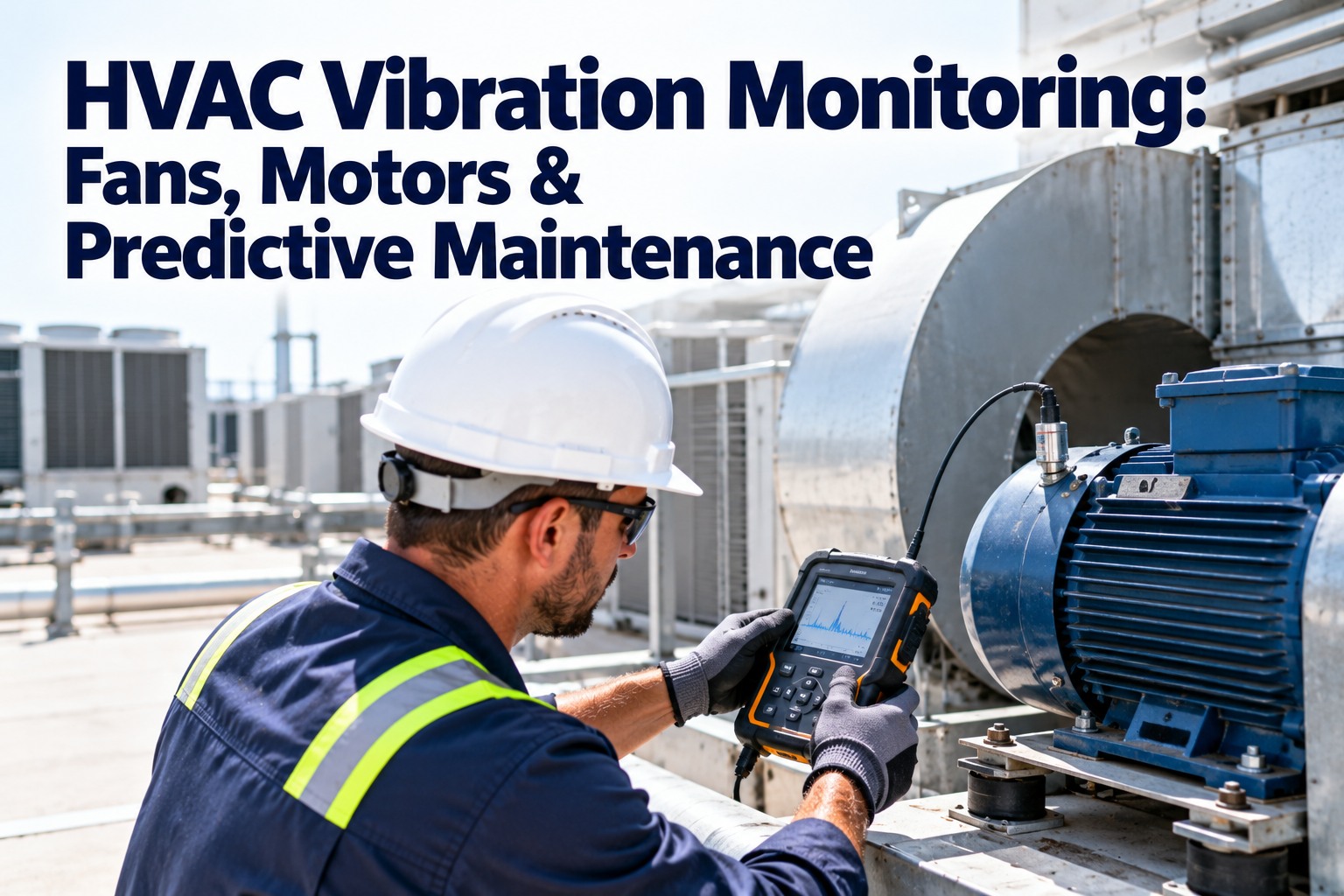
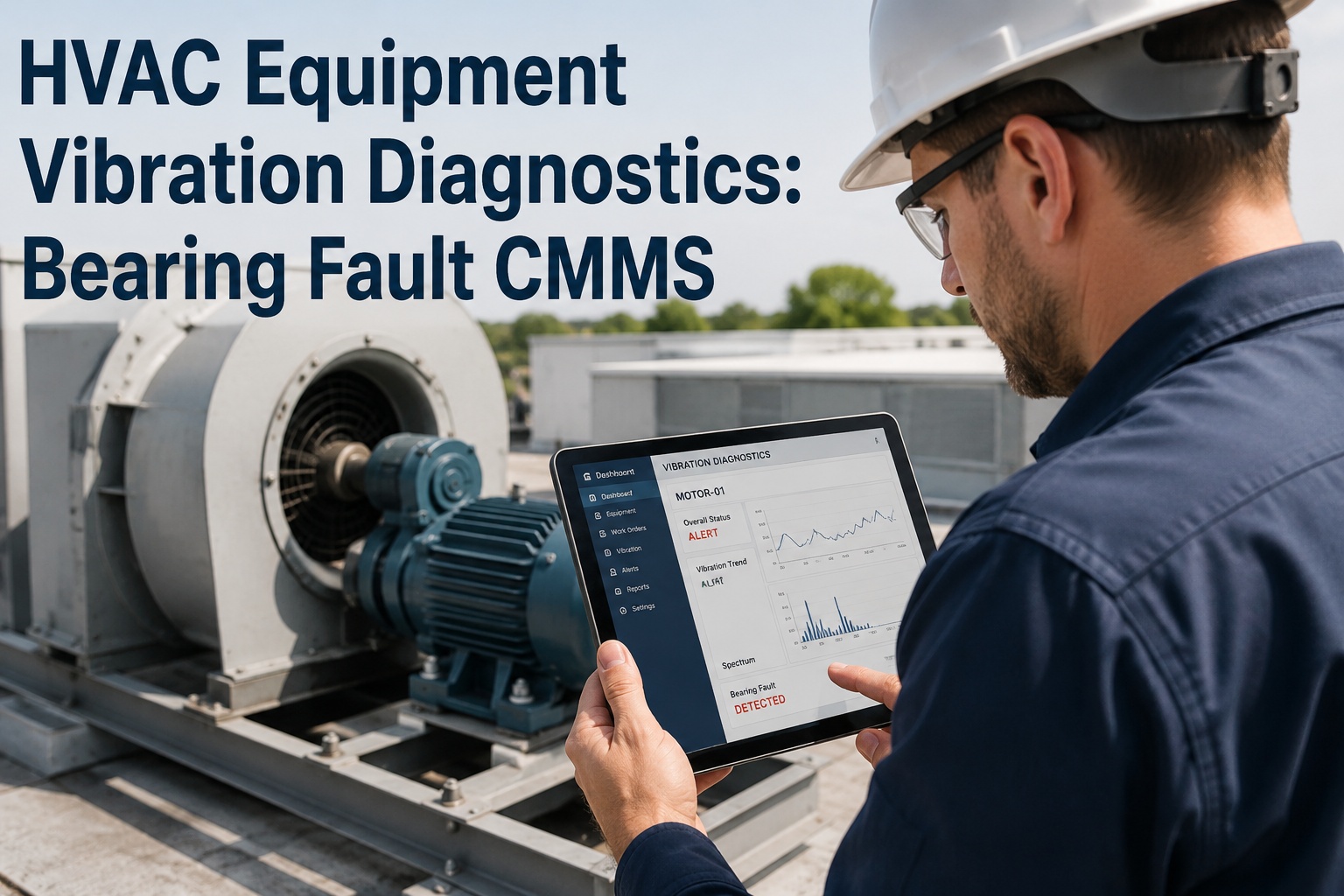
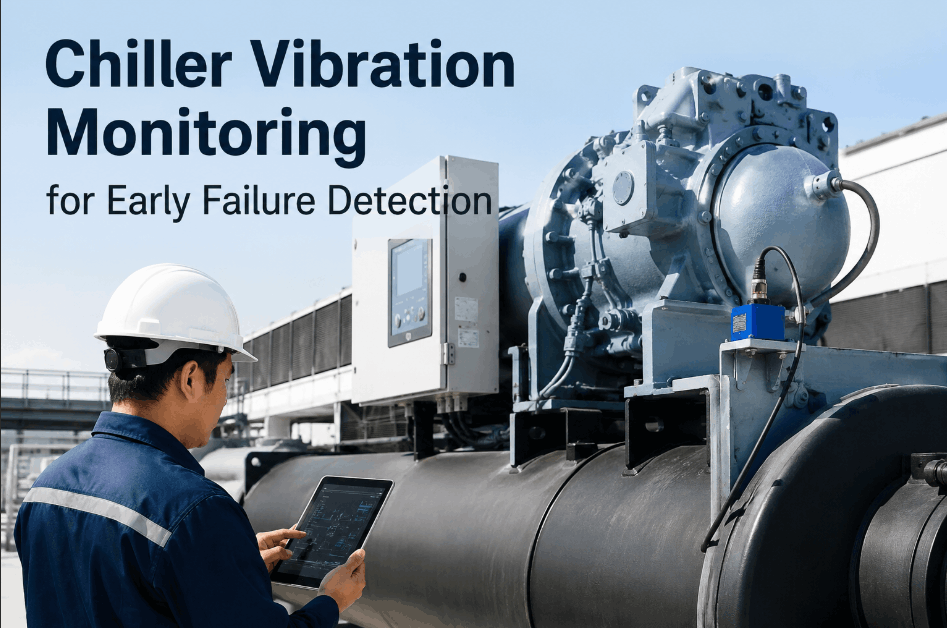
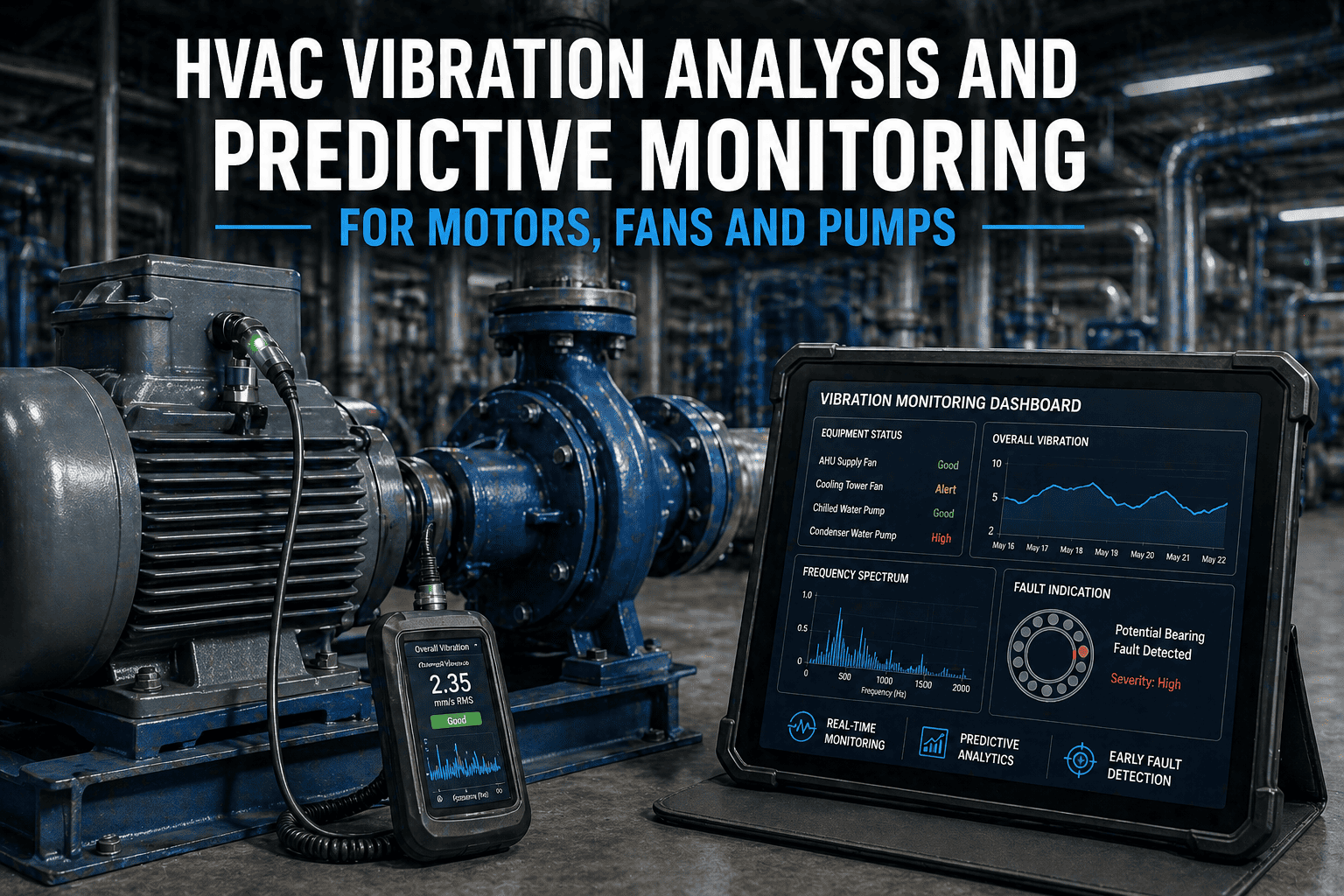
AI-based compressor health monitoring changes this equation entirely. Instead of waiting for catastrophic failure or relying on quarterly inspections that miss progressive degradation, machine learning algorithms continuously analyze compressor operating parameters—current draw, vibration harmonics, discharge temperature, oil pressure, and refrigerant conditions—to detect anomalies weeks or months before mechanical failure occurs. The global AI in HVAC market reached $3.2 billion in 2024 and is projected to grow at 25.8% CAGR through 2032, with compressor diagnostics and predictive maintenance representing the highest-ROI application. Forward-thinking facility teams are already deploying these capabilities—schedule a demo to see how Oxmaint's AI-powered platform brings early warning intelligence to your compressor fleet.
$3.2B
Global AI in HVAC market value in 2024
40-70%
Reduction in unplanned compressor failures
93-98%
AI accuracy in detecting failures 30-90 days early
8-14 mo
Typical ROI achievement timeline
How AI-Based Compressor Monitoring Actually Works
Traditional compressor maintenance follows two fundamentally flawed models: reactive (run to failure, then scramble) or time-based preventive (inspect every 90 days regardless of actual condition). Reactive maintenance costs 5-8x more than planned repairs when you factor in emergency labor rates, expedited parts shipping, tenant disruption penalties, and collateral damage to downstream components. Time-based maintenance wastes 30-40% of service budget on healthy compressors while missing the gradual degradation patterns that precede 80% of failures. AI-based health monitoring takes an entirely different approach—it learns what "healthy" sounds, feels, and performs like for each individual compressor, then alerts when behavior deviates from that learned baseline in ways that historically precede failure.
1
Sense
IoT sensors and BMS integration continuously capture vibration, current, temperature, pressure, and acoustic data from every monitored compressor
2
Baseline
Machine learning builds unique operating profiles for each compressor, accounting for load conditions, ambient temperature, and seasonal patterns
3
Detect
Anomaly detection algorithms identify deviations from learned baselines—flagging subtle pattern changes invisible to human observation or threshold alarms
4
Diagnose
Classification models match detected anomalies against known failure signatures to identify specific fault types, severity levels, and progression rates
5
Act
CMMS auto-generates prioritized work orders with diagnosis, recommended actions, parts requirements, and optimal scheduling windows
The technology stack combines Industrial IoT sensors with edge computing gateways and cloud-based AI analytics platforms integrated into maintenance management systems. Industry research shows AI-assisted compressor monitoring can reduce unplanned failures by 40-70%, lower maintenance costs by 25-35%, and extend compressor lifecycles by 30-50%. Advanced pattern recognition algorithms achieve 93-98% accuracy in detecting mechanical, electrical, and refrigerant-side faults 30 to 90 days before functional failure occurs. Ready to bring AI early warning intelligence to your compressor fleet? Start your free Oxmaint trial and connect your first compressor assets within minutes.
Critical Compressor Parameters for AI Monitoring
Compressors broadcast their health status through dozens of operating parameters—but not all signals carry equal diagnostic value. The highest-impact monitoring targets are parameters that change measurably during early degradation stages, correlate strongly with specific failure modes, and can be captured cost-effectively with modern IoT sensors. AI algorithms achieve maximum accuracy when they correlate multiple parameter streams simultaneously, detecting the multi-dimensional pattern shifts that single-parameter threshold alarms routinely miss.
Primary Signal
Vibration Analysis
What It Detects:
Bearing wear, shaft misalignment, scroll/screw rotor degradation, mounting deterioration, imbalance
AI Advantage:
Frequency-domain analysis detects sub-harmonic shifts 6-12 weeks before amplitude thresholds trigger
Sensor Type:
Tri-axial MEMS accelerometers, 0.5-10kHz range, continuous sampling
Primary Signal
Motor Current Signature
What It Detects:
Winding insulation breakdown, rotor bar faults, phase imbalance, mechanical loading anomalies
AI Advantage:
Motor Current Signature Analysis (MCSA) identifies electrical faults 4-8 weeks before thermal events
Sensor Type:
Split-core CT sensors, real-time waveform capture at 1kHz+ sampling rate
Primary Signal
Discharge & Suction Conditions
What It Detects:
Valve leakage, refrigerant undercharge, condenser/evaporator fouling, liquid floodback risk
AI Advantage:
Superheat/subcooling trend correlation catches refrigerant issues before pressure thresholds alarm
Sensor Type:
Pressure transducers + RTD temperature sensors, ±0.1°F/±0.25% accuracy
Secondary Signal
Oil System Health
What It Detects:
Oil degradation, acid formation, moisture contamination, oil migration, bearing lubrication failure
AI Advantage:
Oil pressure differential trending predicts bearing wear trajectory with 85-92% accuracy
Sensor Type:
Differential pressure transducers, oil level sensors, in-line acid number analyzers
Secondary Signal
Thermal Profiling
What It Detects:
Winding hot spots, bearing overheating, discharge gas overtemperature, condenser approach drift
AI Advantage:
Multi-point thermal mapping reveals asymmetric heating patterns indicating localized mechanical stress
Sensor Type:
Surface-mount RTDs, infrared spot sensors, embedded PTC thermistors
Secondary Signal
Acoustic Emission
What It Detects:
Valve impact events, cavitation, refrigerant leaks, internal mechanical contact, loose components
AI Advantage:
Ultrasonic frequency analysis detects internal leak paths and valve deterioration before performance impact
Sensor Type:
Ultrasonic microphones 20-100kHz, contact acoustic emission sensors
Compressor Types and AI Monitoring Strategies
Different compressor technologies fail in fundamentally different ways, and effective AI monitoring must account for these distinctions. A scroll compressor's failure signature looks nothing like a centrifugal compressor's pre-failure pattern. AI models trained on one compressor type will generate false positives or miss critical warnings when applied to another. The most effective monitoring platforms maintain type-specific machine learning models that understand the unique physics, operating characteristics, and degradation pathways of each compressor technology in your fleet.
Scroll Compressors
Primary failure modes include scroll tip seal wear, axial compliance spring fatigue, and motor winding breakdown. AI monitors orbiting scroll vibration frequency and current draw ratio during loading transitions.
Typical sizes: 1-60 tons | Found in: RTUs, splits, VRF
Screw Compressors
Key failure modes are rotor lobe wear, slide valve sticking, bearing degradation, and oil separator breakthrough. AI tracks rotor profile vibration harmonics and volumetric efficiency trend against load.
Typical sizes: 30-400 tons | Found in: Chillers, industrial
Centrifugal Compressors
Critical failure modes include impeller erosion, surge events, thrust bearing wear, and VFD-motor interaction issues. AI monitors surge margin, shaft displacement, and bearing temperature asymmetry in real time.
Typical sizes: 100-2,500+ tons | Found in: Large chillers
Reciprocating Compressors
Common failures involve valve plate cracking, piston ring wear, rod seal leakage, and crankshaft bearing fatigue. AI analyzes valve impact timing signatures and cylinder pressure waveform distortion.
Typical sizes: 0.5-150 tons | Found in: Walk-ins, industrial
Rotary Compressors
Failure modes center on vane tip wear, cylinder wall scoring, discharge valve fatigue, and motor demagnetization. AI tracks vane contact frequency harmonics and discharge pulsation amplitude shifts.
Typical sizes: 0.5-5 tons | Found in: PTACs, mini-splits
Magnetic Bearing Centrifugal
Unique failure modes include bearing controller faults, levitation instability, and VFD harmonic interference. AI monitors bearing gap consistency, controller correction frequency, and harmonic distortion levels.
Typical sizes: 60-1,500 tons | Found in: Oil-free chillers
The most advanced AI monitoring platforms automatically identify compressor type from installation data and operating characteristics, then apply the appropriate failure mode library and detection algorithms. This means a single platform can monitor a mixed fleet of scroll compressors in rooftop units, screw compressors in mid-size chillers, and centrifugal compressors in central plants—all with type-optimized AI models running simultaneously. Wondering which monitoring strategy fits your compressor fleet? Book a consultation with our HVAC reliability specialists.
Ready to Give Your Compressors a Voice?
Join facility teams worldwide using Oxmaint's AI-powered platform to detect compressor problems weeks before they become emergencies.
AI Failure Detection: Real-World Warning Signatures
Understanding how AI translates raw sensor data into actionable maintenance intelligence requires seeing specific examples of early warning detection. Each compressor failure mode produces a unique multi-parameter signature that develops over days to weeks before the equipment reaches functional failure. AI systems excel at catching these signatures because they correlate data streams that human technicians and traditional BMS alarms evaluate in isolation—connecting a subtle vibration shift with a slight current increase and a minor temperature drift to identify a bearing degradation pattern that no single parameter would flag on its own.
Bearing Degradation
Progresses through four stages over 6-16 weeks: subsurface fatigue → micro-pitting → spalling → catastrophic seizure. AI detects Stage 1-2 through high-frequency vibration envelope analysis long before audible noise or temperature rise.
AI flags 0.3g increase in 3-5kHz vibration band on a chiller compressor with no temperature change yet—bearing replacement scheduled during planned shutdown saves $67,000 vs. emergency repair
Refrigerant Valve Leakage
Discharge or suction valve seats erode gradually, reducing volumetric efficiency. Compressor runs longer to meet load, consuming more energy while delivering less capacity. Often misdiagnosed as low refrigerant charge.
AI correlates 4% capacity drop with normal superheat and rising compressor runtime ratio—correctly diagnosing valve leakage instead of triggering unnecessary refrigerant addition that would mask the real problem
Motor Winding Insulation Breakdown
Insulation resistance degrades from thermal cycling, moisture ingress, or voltage stress. Current signature develops asymmetric harmonics 4-10 weeks before winding-to-winding or winding-to-ground fault occurs.
MCSA detects emerging 3rd harmonic asymmetry in a 200-ton screw compressor motor—scheduled rewind during shoulder season prevents $85,000 mid-summer emergency replacement
Oil System Degradation
Oil acid number rises from moisture contamination and thermal breakdown. Lubrication effectiveness drops progressively, accelerating bearing and seal wear across the entire compressor assembly.
AI tracks oil differential pressure trending downward 0.5 PSI/week while discharge temperature climbs 2°F/week—triggers oil analysis work order that reveals acid number at 0.18 (action threshold: 0.20)
Leading facility management organizations report that AI-based compressor monitoring reduces mean time between failures (MTBF) improvement of 45-65% and drops mean time to repair (MTTR) by 35-55% because technicians arrive with the correct diagnosis, proper parts, and specific repair procedures. First-call resolution rates improve from industry-average 62% to over 88% when AI diagnostic reports accompany work orders. The same intelligence that protects individual compressors can optimize your entire HVAC maintenance operation.
Implementation Blueprint: Deploying AI Compressor Monitoring
Successful AI compressor monitoring deployment follows a proven progression: start with your highest-risk and highest-cost compressors, prove detection accuracy, then scale across the fleet. Organizations that attempt full-fleet deployment on day one face sensor installation bottlenecks, data quality issues, and stakeholder skepticism. Those that demonstrate clear wins on pilot compressors build the technical confidence and business case momentum needed for enterprise-wide adoption.
Days 1-30
Assessment
Inventory all compressors with type, size, age, and failure history
Rank compressors by criticality, replacement cost, and failure frequency
Select 3-5 highest-value pilot compressors across different types
Deploy CMMS platform with compressor asset profiles and baselines
Days 31-60
Instrumentation
Install vibration, current, temperature, and pressure sensors on pilot units
Configure edge gateways for data collection and BMS integration
Establish 30-day operating baselines for each monitored compressor
Train maintenance team on AI alert interpretation and response protocols
Days 61-90
Intelligence
Activate anomaly detection and failure classification algorithms
Integrate AI alerts with automated CMMS work order generation
Validate AI predictions against technician inspections and outcomes
Calculate pilot ROI and document avoided failures for expansion case
Day 90+
Scale
Expand monitoring to full compressor fleet in priority order
Refine AI models with accumulated site-specific failure data
Implement Remaining Useful Life prediction for capital planning
Integrate with energy management and portfolio optimization systems
The critical success factor is selecting a platform that supports diverse compressor types and manufacturers within a single analytics environment. Equipment-agnostic AI monitoring can track Carrier, Trane, York/Johnson Controls, Daikin, Mitsubishi, and Bitzer compressors through the same dashboard without requiring proprietary diagnostics from each OEM. Open API architecture ensures AI insights flow seamlessly into your CMMS, automatically generating work orders when degradation patterns cross intervention thresholds. Want to discuss deployment for your compressor fleet? Schedule a technical consultation to design your monitoring architecture.
Measuring ROI: The Business Case for AI Compressor Monitoring
AI compressor health monitoring delivers returns across multiple dimensions—from immediate emergency repair avoidance to long-term capital expenditure optimization through extended equipment lifecycles. Industry benchmarks show that monitored compressor fleets experience 40-70% fewer unplanned failures, achieve 25-35% lower total maintenance costs, and extend compressor service life by 30-50% compared to unmonitored peers. Most organizations achieve full system ROI within 8-14 months, with the first avoided compressor failure often paying for the entire pilot deployment.
Direct Cost Savings
25-35%
Reduction in total compressor maintenance spend
60-85%
Fewer emergency compressor repair callouts
15-25%
Energy savings from optimized compressor performance
Operational Improvements
40-70%
Fewer unplanned compressor failures
88%+
First-call resolution rate with AI diagnostics
30-50%
Extended compressor service lifespan
Strategic Value
Eliminated
Tenant SLA penalties from cooling/heating failures
Optimized
Capital replacement planning with RUL forecasting
Strengthened
Property value and tenant retention rates
A regional healthcare system managing 23 facilities deployed AI compressor monitoring across 187 compressors ranging from 5-ton scroll units to 500-ton centrifugal chillers. In the first 12 months, the AI system identified 14 developing failures—including two centrifugal compressor bearing degradation events that would have cost $180,000 each in emergency replacement. Planned repairs addressed all 14 issues at a combined cost 73% lower than emergency repair estimates. Total first-year savings exceeded $620,000 against a system investment of $185,000, delivering 3.4x ROI. These results are consistent across every organization that deploys intelligent compressor monitoring. The question isn't whether AI monitoring pays for itself—it's how much you're losing every month without it. Create your free Oxmaint account today and start protecting your most critical HVAC assets.
Give Every Compressor an AI Guardian
Stop losing money to preventable compressor failures. Deploy Oxmaint's AI early warning system and turn reactive HVAC maintenance into predictive intelligence.
Frequently Asked Questions
How does AI compressor monitoring differ from traditional BMS alarms?
Traditional BMS alarms trigger when a single parameter crosses a fixed threshold—like high discharge temperature or low oil pressure. By the time these alarms fire, damage is often already occurring. AI monitoring learns the unique operating signature of each compressor and detects subtle multi-parameter pattern shifts weeks before any single parameter reaches alarm threshold. It's the difference between a smoke detector (alerts during the fire) and an AI system that detects the electrical fault that will cause the fire next month.
What does AI compressor monitoring cost to implement?
Sensor hardware typically costs $500-$2,500 per compressor depending on the number of monitoring points. Cloud analytics and CMMS platform subscriptions range from $50-$200 per monitored asset per month. Most organizations see full ROI within 8-14 months—and a single avoided emergency compressor failure on a large chiller can pay for monitoring an entire fleet for 2-3 years. Starting with 3-5 highest-risk compressors proves value before broader investment.
Can AI monitoring work with compressors from different manufacturers?
Yes—equipment-agnostic AI platforms monitor compressors from Carrier, Trane, York/Johnson Controls, Daikin, Mitsubishi, Bitzer, Copeland, and other manufacturers within a unified dashboard. The AI learns each compressor's individual operating profile regardless of brand, using universal physics-based parameters like vibration, current, temperature, and pressure that apply across all manufacturers and compressor technologies.
How long does it take for AI to start detecting problems accurately?
AI models typically require 30-60 days of baseline data collection to learn a compressor's normal operating patterns across different load conditions and ambient temperatures. Known failure signatures from the global training dataset provide detection capability from day one for common fault types. Accuracy improves continuously as models accumulate site-specific operating data—most systems reach peak accuracy within 6-12 months of deployment.
Which compressors should we monitor first?
Prioritize compressors with the highest combination of replacement cost, operational criticality, and failure history. Centrifugal and large screw compressors in central chiller plants typically offer the highest per-unit ROI due to their $50,000-$200,000+ replacement costs. However, facilities with large fleets of smaller scroll compressors may see greater total ROI by monitoring units with the highest aggregate failure rate and cumulative repair spend across the portfolio.