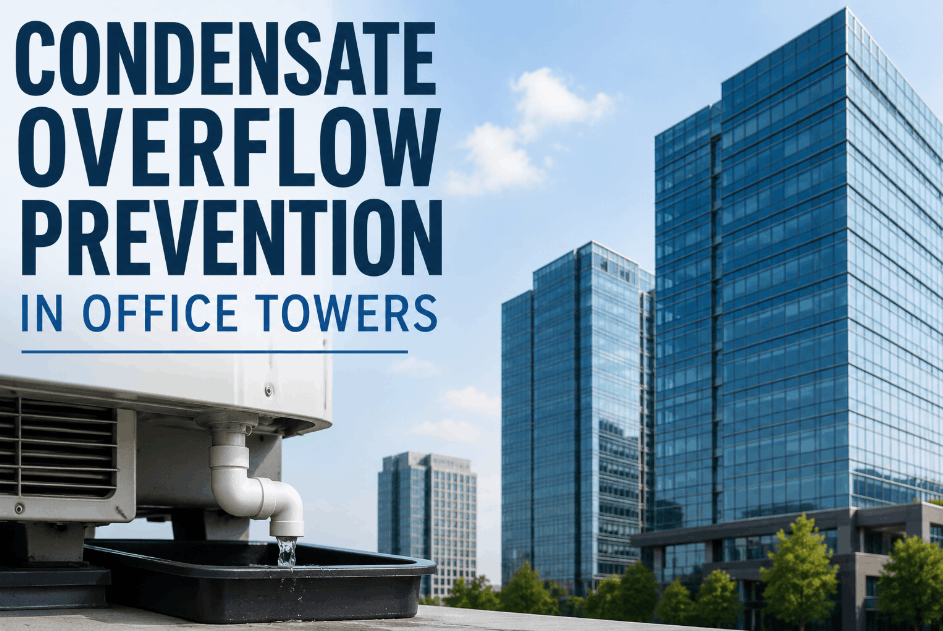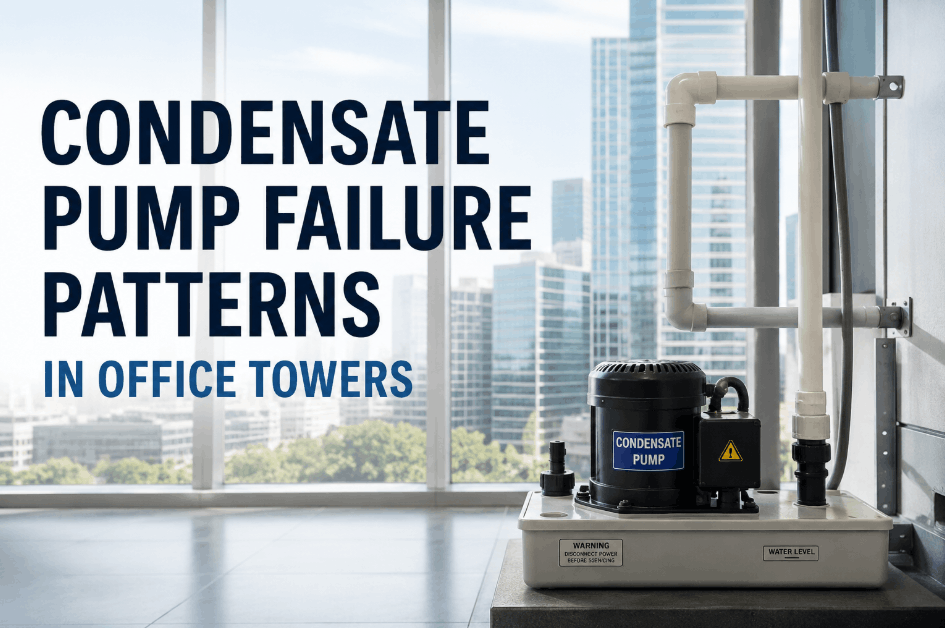
Condensate pump failures in office towers rarely announce themselves until a ceiling tile stains or a tenant calls about water near an AHU closet. These small pumps run constantly in the background, clearing condensate from fan coil units and air handlers across dozens of floors, and a single stuck float or clogged line can mean a leak event during occupied hours. Facilities teams that Sign Up Free on Oxmaint can log every condensate pump as a tracked asset with its own fault history, so float switch issues, blockages, and pump wear show up as patterns instead of one-off complaints. For property teams managing condensate systems across multiple floors or buildings, you can Book a Demo to see how Oxmaint turns scattered service tickets into a clear maintenance record.
Oxmaint logs condensate pump faults, service history, and recurring issues by floor and building so your team can act before a tenant reports water damage.
Common Condensate Pump Failure Patterns in Office Tower HVAC Systems
Most condensate pump failures trace back to a small set of repeat causes. Reviewing service history by pump rather than by building floor makes those repeat causes much easier to spot, and teams that Sign Up Free on Oxmaint can pull that history by asset in a few clicks instead of digging through paper tickets.
Sediment and biological growth in the reservoir can cause the float switch to stick in the off position, letting condensate overflow before the pump ever activates.
Algae and dust build-up inside discharge tubing restricts flow over time, forcing the pump to run longer per cycle until it can no longer keep pace with condensate volume.
Pumps near cooling-heavy zones cycle far more often than design expectations, and motor wear shows up first as intermittent noise or short-cycling before complete failure.
A safety switch left disabled after a prior repair removes the last line of defense against overflow, turning a minor clog into an unprotected leak risk.
A pump that gets serviced two or three times in a short window is rarely fixed by another reset. It usually points to a root cause that has not yet been addressed.
Humid months push condensate volume well above baseline, and pumps already running near capacity are the first to fail when seasonal load increases.
Condensate Pump Issue Review: Signals, Likely Cause, and Response
Use this reference to connect what a technician observes to a likely cause and a practical next step. Teams without a structured record of pump history can Book a Demo to see how Oxmaint tracks this by asset across an entire tower.
| Observed Signal | Likely Cause | Where Logged | Recommended Response | Priority |
|---|---|---|---|---|
| Pump cycles but no discharge | Blocked drain line | Mobile inspection form | Clear line, log blockage cause | Critical |
| Reservoir overflow alarm | Stuck float switch | Work order on asset | Inspect and replace float assembly | Critical |
| Repeat tickets, same pump | Unresolved root cause | Asset fault history | Root cause review work order | Critical |
| Audible motor strain | Bearing or motor wear | Technician notes | Schedule pump replacement | Important |
| Safety switch bypassed | Prior repair shortcut | Compliance checklist | Restore and verify safety switch | Important |
| Seasonal run-time increase | Higher condensate load | Runtime log | Pre-season inspection schedule | Routine |
Tracking Condensate Pumps Across a Multi-Floor or Multi-Building Portfolio
Office towers often have dozens of condensate pumps spread across mechanical closets, ceiling spaces, and AHU rooms, which makes paper-based tracking unreliable. Teams can Sign Up Free on Oxmaint and map every pump to its floor, zone, and parent air handling unit in one setup session.
- Every pump logged as an asset with floor and zone context
- Fault history attached directly to each pump, not the building
- Mobile inspection checklist for technicians at the unit
- Repeat fault patterns flagged automatically across floors
- Work orders generated from inspection findings
- Portfolio view shows pump health across every tower
Why Pattern Review Matters Before Condensate Leaks Reach Tenant Spaces
Reviewing pump history by pattern rather than reacting to each individual call helps property teams avoid repeat costs. Teams can Sign Up Free to start building that history today.
Catching recurring float or blockage issues before overflow reduces water damage incidents in ceiling and tenant spaces.
Addressing root cause instead of resetting the same pump repeatedly reduces avoidable callouts and labor hours.
A clear asset-level history supports vendor accountability, warranty claims, and capital replacement planning.
Oxmaint helps office tower facilities teams track pump faults, service history, and inspection schedules from a single platform.
Condensate Pump Maintenance in Office Towers — Common Questions
Stuck float switches, blocked drain lines, and motor wear from constant cycling account for the majority of failures seen in commercial towers.
Logging service history at the individual pump level makes repeat fault patterns visible, instead of treating each call as a separate, unrelated event.
Yes. Oxmaint logs each pump with its floor, zone, and parent unit, attaching fault history and work orders directly to that specific asset.
Yes. A portfolio dashboard shows condensate pump health and fault trends across every building in a property group from one screen.
A quarterly inspection is common, with more frequent checks recommended during humid seasons when condensate volume rises.
Oxmaint gives office tower facilities teams a structured way to log, monitor, and resolve condensate pump issues before they become leaks.