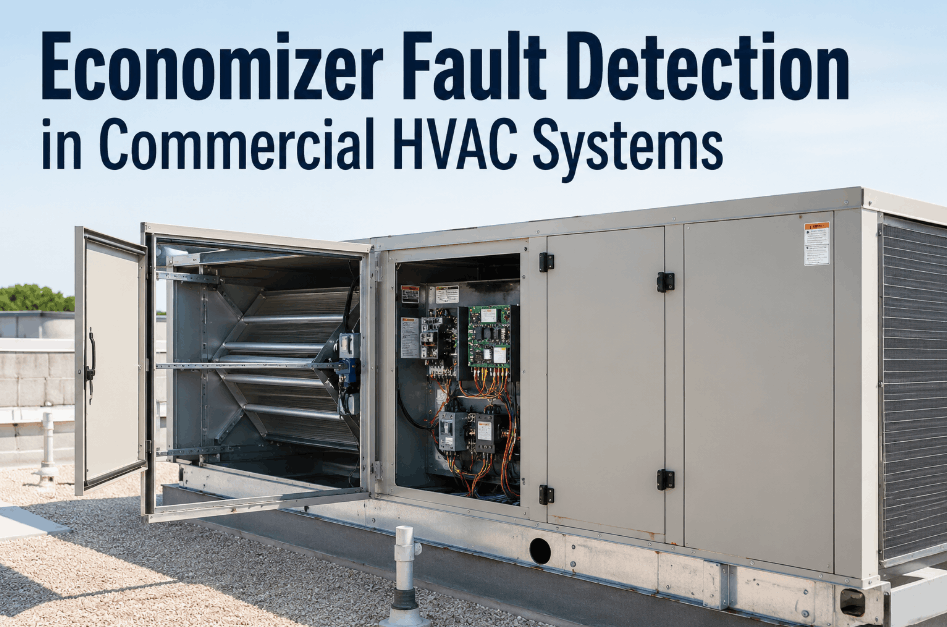
Economizer fault detection in commercial HVAC systems is one of the highest-value diagnostic activities available to facility maintenance teams — yet economizer faults remain among the most common and longest-lasting performance deficiencies in commercial buildings. When economizer dampers stick, mixed-air temperature sensors drift, or outdoor-air logic fails, the building loses free cooling capability and the mechanical cooling system compensates at significant energy cost. Maintenance teams using Sign Up Free on OxMaint can log economizer inspection findings, track damper movement observations, and record mixed-air temperature readings against individual AHU asset records — building the structured condition history that converts economizer checks from isolated inspections into a fault detection program. Without that structured data foundation, economizer faults accumulate undetected inside rising energy bills, and Book a Demo to see how OxMaint connects HVAC controls inspection data to maintenance work order workflows for commercial buildings.
Why Economizer Faults Persist Undetected in Commercial HVAC Systems
Most commercial building HVAC maintenance programs inspect economizers on a fixed calendar schedule without structured fault condition data collection. A stuck damper at 30% open, a failed enthalpy sensor, or a lockout relay that prevents free cooling activation may not produce a visible alarm — but it costs the building energy every hour mechanical cooling compensates for the lost free cooling opportunity. Book a Demo to see how OxMaint structures HVAC controls and economizer inspection records by asset to surface fault patterns that energy monitoring alone cannot isolate.
Six Economizer Fault Conditions to Track in a Commercial HVAC Inspection Program
Effective economizer fault detection does not rely on a single sensor reading or energy bill anomaly. It requires structured inspection of multiple fault conditions across the same AHU asset history over time. Teams using Sign Up Free on OxMaint can capture all six economizer fault indicators in structured inspection checklists tied to individual air handling unit records, building the condition data that makes fault detection systematic rather than opportunistic.
Damper Movement Verification and Mechanical Travel Range Testing
Economizer dampers that are stuck, corroded, or mechanically limited in travel cannot modulate outdoor air as the controls demand. OxMaint inspection checklists capture damper travel range at each visit — distinguishing between a controls issue and a mechanical damper fault.
Mixed-Air Temperature Sensor Calibration and Reading Verification
A drifted or failed mixed-air temperature sensor provides incorrect feedback to the economizer controls, causing the damper to open or close at the wrong conditions. Logging mixed-air temperature readings against outdoor air and return air in OxMaint at each inspection detects sensor drift before it causes extended free cooling lockout.
Outdoor-Air Enthalpy or Dry-Bulb Changeover Logic Verification
Faulty enthalpy sensors, incorrect changeover setpoints, or failed outdoor air sensors prevent the economizer from activating under appropriate conditions. Structured controls verification in OxMaint at each inspection confirms that changeover logic is functioning as designed for the prevailing outdoor conditions.
Outdoor Air and Return Air Damper Proportional Control Verification
Outdoor air and return air dampers that do not modulate proportionally — opening outdoor air without closing return air, or vice versa — create pressurization problems and reduce free cooling effectiveness. OxMaint damper position records at multiple control states identify proportional control failures across inspection visits.
Economizer Enable and Disable Condition Tracking
Economizers may be locked out by low-limit controls, fire/smoke damper interlocks, or BAS overrides that were applied for a specific event and never restored. Inspection records in OxMaint track economizer enable status at each visit and flag lockout conditions that persist beyond their intended duration.
Actuator Response and Controls Signal Verification
Damper actuators that do not respond to controls signals, fail at end-of-stroke, or exhibit hysteresis produce economizer behavior that does not match BAS command output. OxMaint inspection records comparing BAS output against observed damper position identify actuator faults before they produce extended free cooling loss.
Economizer Fault Reference by HVAC System Type and Controls Configuration
Economizer fault patterns and detection priorities vary significantly by AHU type, controls platform, and changeover strategy. Book a Demo to explore how OxMaint structures HVAC controls inspection records and maintenance scheduling by AHU type and building criticality in a single asset management platform.
OxMaint condition records + alert-to-work-order workflow
| System Type / Configuration | Primary Fault Condition | Inspection Frequency | Energy Risk if Undetected | OxMaint Lever |
|---|---|---|---|---|
| Rooftop Units with Dry-Bulb Economizers | Stuck damper, failed outdoor-air sensor | Semi-annual inspection | High — full free cooling loss during mild weather | Damper travel log + controls verification checklist |
| Central AHUs with Enthalpy Economizers | Enthalpy sensor drift, changeover setpoint error | Annual calibration + semi-annual inspection | High — economizer activating in wrong conditions | Sensor reading log + changeover logic verification |
| Variable Air Volume Systems with BAS Integration | BAS override lockout, actuator response failure | Quarterly controls check | Very High — extended lockout with no visible alarm | Enable status tracking + BAS command vs. position records |
| Data Center and Process Cooling AHUs | Mixed-air temperature control failure, proportional damper fault | Monthly inspection | Critical — cooling capacity shortfall with IT load impact | |
| Multi-Zone AHUs in Commercial Office Buildings | Return air damper control loss, minimum position lockout | Semi-annual inspection | Medium — zone comfort and energy waste | Damper position observation + minimum OA verification |
How Unstructured Economizer Inspection Compounds Commercial HVAC Energy Risk
Commercial buildings that check economizers on a calendar schedule without structured fault condition data collection miss the opportunity to detect mechanical, sensor, and controls faults between inspection visits. Each month an economizer fault persists undetected represents continuous mechanical cooling energy that free cooling would otherwise have offset. Sign Up Free to begin logging economizer inspection data in OxMaint and convert periodic equipment checks into a structured fault detection program.
Building an Economizer Fault Detection Program with OxMaint
Register All AHUs with Economizer Type and Controls Configuration
Create asset records in OxMaint for each air handling unit with an economizer, including economizer type, changeover strategy, sensor configuration, and BAS integration details. This context layer makes each inspection finding meaningful against the specific controls logic for that unit.
Configure Structured Economizer Inspection Checklists
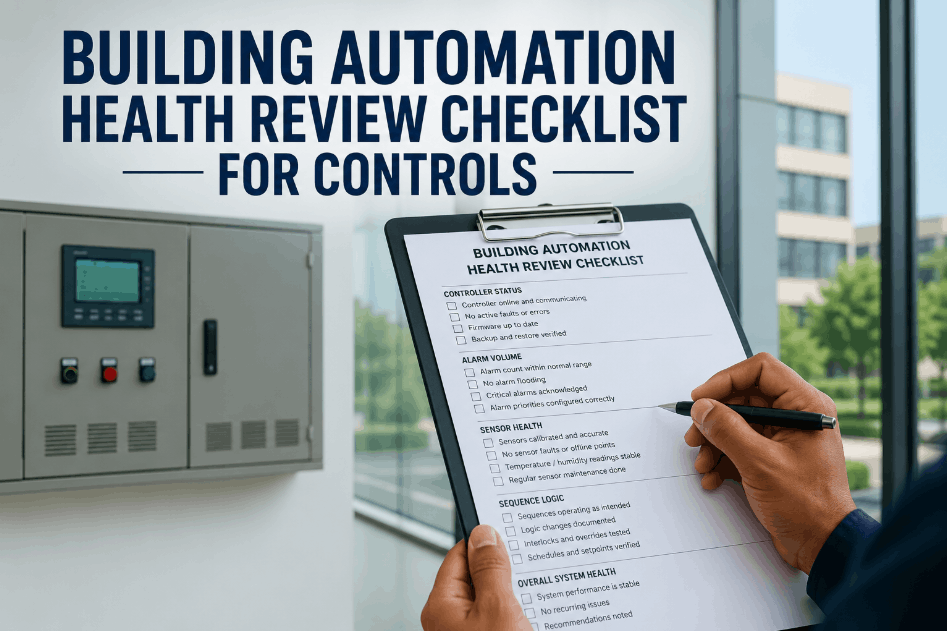
Build OxMaint inspection checklists that capture damper travel range, mixed-air temperature, outdoor-air and return-air readings, changeover logic status, actuator response, and economizer enable condition at each AHU visit — ensuring structured data collection rather than narrative inspection notes.
Establish Sensor Baselines and Fault Condition Alert Thresholds
Use initial inspection readings in OxMaint to establish per-AHU sensor baselines and acceptable operating ranges for mixed-air temperature control. Set alert thresholds that trigger a maintenance review when sensor readings, damper travel, or controls logic deviate from expected performance.
Link Fault Findings to Maintenance Work Order Creation
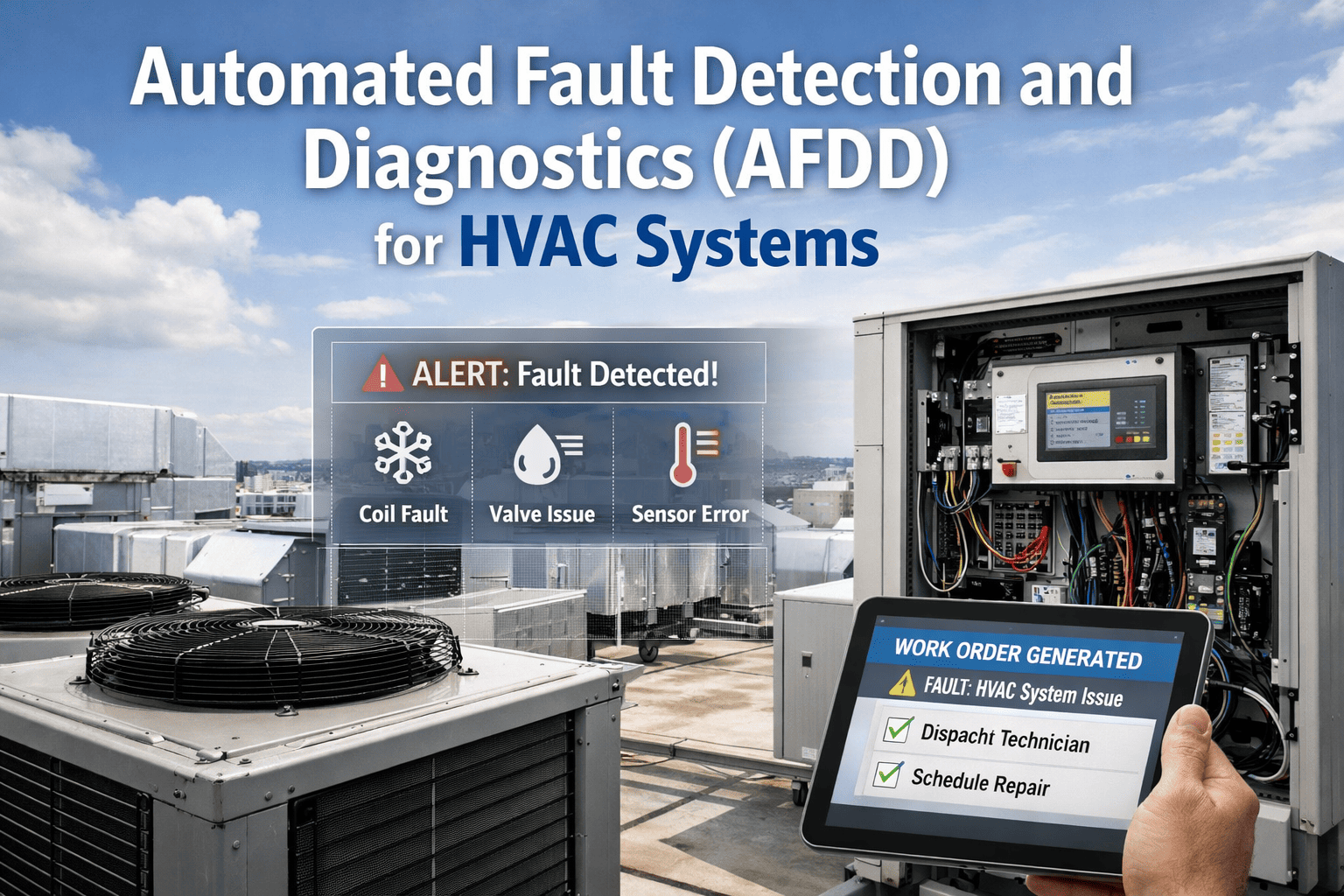
Configure OxMaint to generate a work order automatically when an economizer fault finding is logged in an inspection checklist — routing the specific fault type to the appropriate controls or mechanical technician with the AHU asset history attached.
Track Fault Resolution and Validate Economizer Performance After Repair
Use OxMaint work order completion records to confirm that economizer fault corrections have been validated by a follow-up inspection reading. Post-repair performance verification closes the loop between fault detection, repair execution, and restored free cooling availability.
Frequently Asked Questions: Economizer Fault Detection in Commercial HVAC Systems
What is economizer fault detection in commercial HVAC systems?
It is the structured practice of inspecting damper movement, sensor readings, changeover logic, and actuator response against per-AHU baselines to identify conditions that prevent the economizer from providing free cooling when outdoor conditions make it appropriate — before those faults compound energy costs.
What are the most common economizer faults in commercial buildings?
The most common faults are mechanically stuck dampers, failed or drifted outdoor-air and mixed-air temperature sensors, incorrect changeover setpoints, BAS override lockouts that were never restored, and actuators that no longer respond to controls signals.
How does OxMaint support economizer fault detection programs?
OxMaint provides structured inspection checklists for economizer parameters, per-AHU condition history, configurable fault alert thresholds, and automatic work order generation when a fault is logged — giving facility teams the CMMS infrastructure to operate a systematic economizer fault detection program.
How often should commercial HVAC economizers be inspected for faults?
High-criticality AHUs and units with enthalpy sensors benefit from semi-annual inspection at seasonal transitions. Rooftop units with dry-bulb economizers can be checked annually at minimum. OxMaint PM scheduling ties economizer inspection frequency to AHU criticality and prior fault history.
Can economizer faults be detected through energy monitoring alone?
Energy monitoring can indicate that a building is using more mechanical cooling than expected, but it cannot isolate the fault to a specific AHU or identify whether the cause is a stuck damper, sensor failure, or controls override. Structured OxMaint inspection records provide the AHU-level fault attribution that energy data alone cannot deliver.