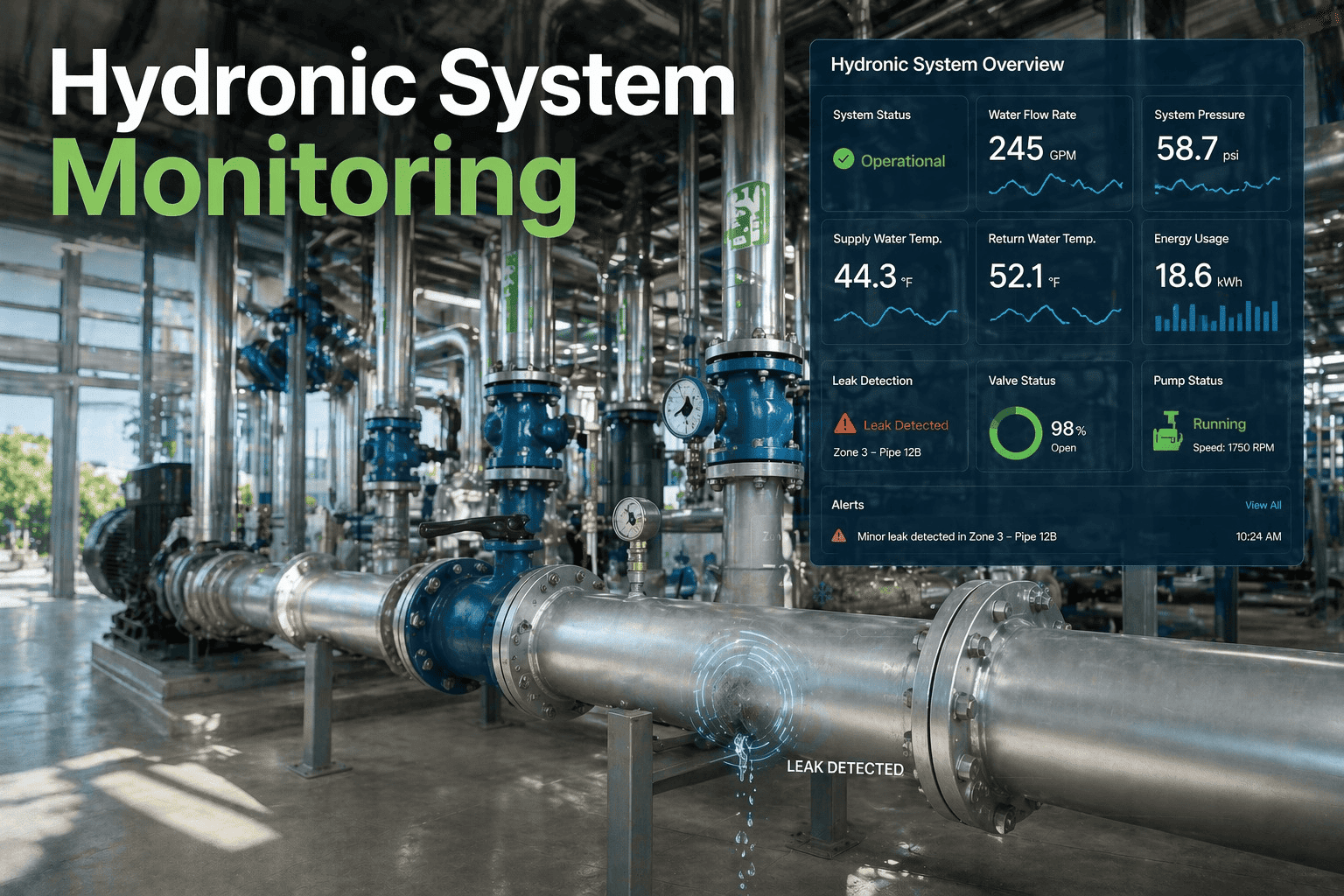
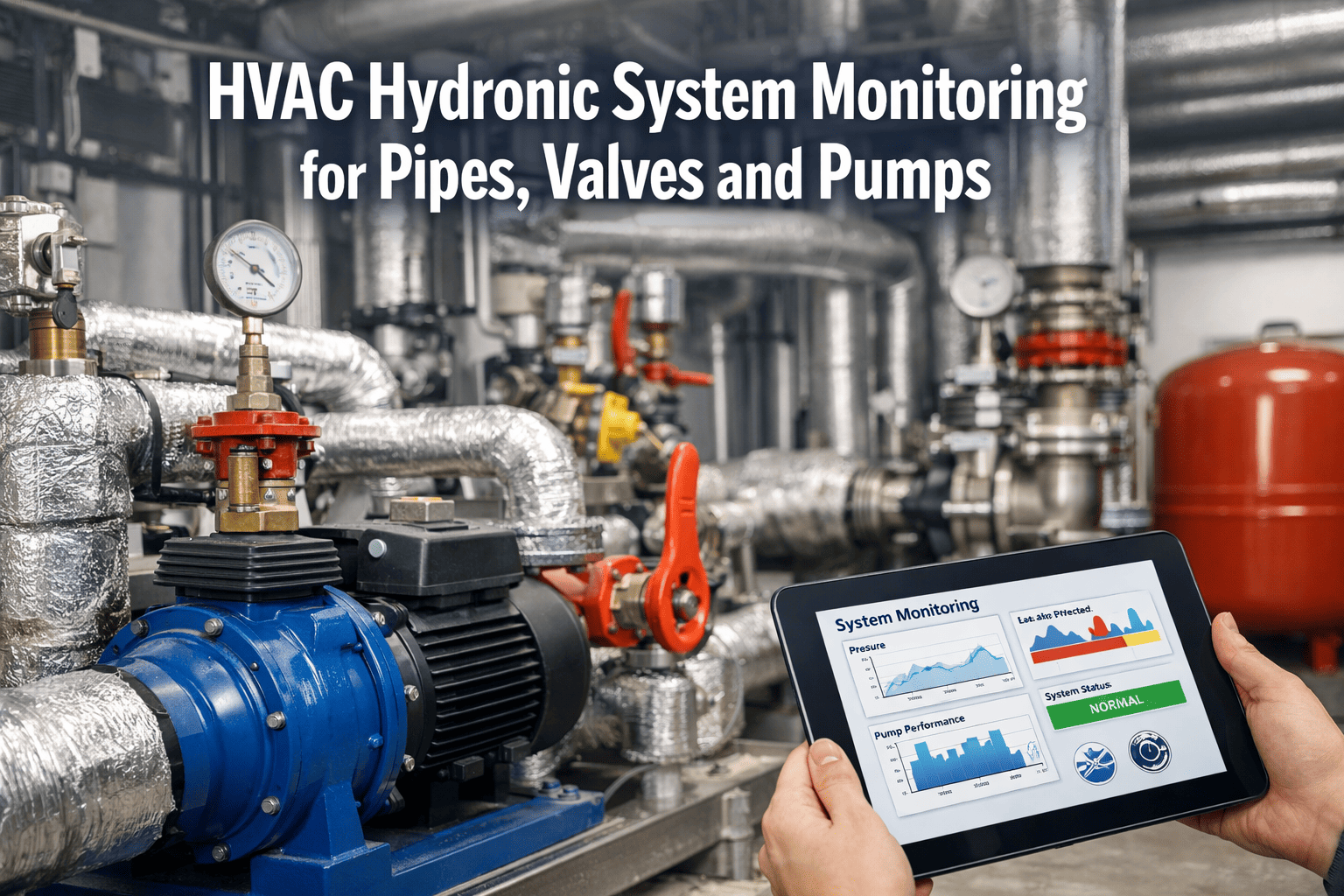
Hydronic systems — chilled water, hot water, and condenser water loops — carry 60–80% of a commercial building's thermal energy. A single undetected pipe leak or valve failure can waste thousands of gallons of treated water, corrode adjacent equipment, and cause catastrophic damage to ceilings, walls, and electrical systems. Studies show that 25–30% of hydronic system energy waste traces to valve leakage and pipe degradation. Without continuous monitoring, a sticking control valve may go unnoticed for months, constantly bypassing chilled water and forcing chillers to run 15–20% harder. OxMaint's predictive monitoring platform connects to pressure transducers, flow meters, and corrosion sensors — automatically creating work orders when parameters drift outside safe operating limits. Book a demo to see how hydronic analytics can prevent leaks and valve failures before they escalate.
Hydronic Systems · Predictive Maintenance · Leak Prevention
HVAC Hydronic Pipe and Valve Monitoring for Leak and Failure Prevention
Pressure monitoring, flow deviation detection, corrosion risk assessment, and valve actuation analytics — the complete guide to protecting your hydronic system from leaks, failures, and efficiency loss.
25-30%Energy waste from undetected valve leakage
40-60%Leak detection time reduction with continuous monitoring
$50K+Average water damage claim from pipe failure
Stop chasing leaks and failed valves reactively. OxMaint's predictive analytics monitor pressure, flow, and valve position — auto‑scheduling maintenance before failures cause downtime or damage.
Why Monitoring Matters
The Cost of Unmonitored Hydronic Systems
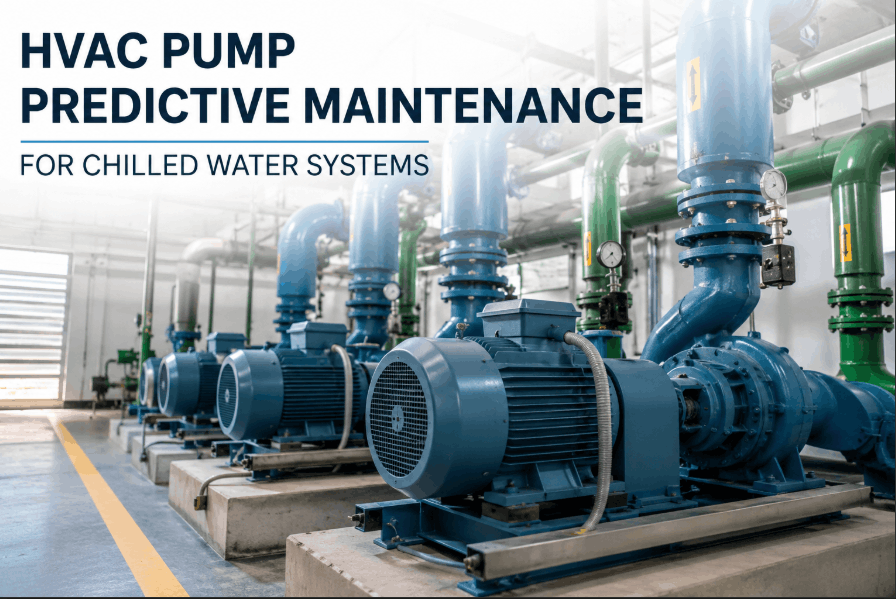
Hydronic systems are the circulatory system of commercial HVAC — and like any circulatory system, they develop leaks, blockages, and valve failures. A 1/8-inch hole in a chilled water pipe at 60 PSI can discharge 800–1,200 gallons per day, wasting water, reducing cooling capacity, and damaging building finishes. Valve leakage — often silent — forces chillers and boilers to work harder, consuming 15–30% more energy while delivering the same thermal output. Pressure drops from undetected blockages cause pumps to cavitate, leading to impeller damage and seal failures that cost $5,000–$15,000 to repair.
01
Pipe Corrosion & Leaks
Water chemistry, oxygen ingress, and flow velocity erode pipes from inside. Undetected pinhole leaks grow into full failures. Continuous monitoring of pressure decay and makeup water volume catches leaks at the pinhole stage — before water damage occurs.
02
Valve Seat Leakage
Control valves and isolation valves degrade over time — seats wear, seals harden, stems stick. A leaking two-way valve can bypass chilled water directly to return, raising supply temperature and forcing the chiller into higher lift. Pressure monitoring across closed valves detects seat leakage immediately.
03
Flow Imbalance & Pump Strain
Partially closed isolation valves, scale buildup, or air pockets reduce flow to critical zones. Flow meters detect deviation from design values — triggering inspections before pumps cavitate or compressors overheat. A 15% flow reduction may reduce cooling capacity by 20–25% while pump energy remains unchanged.
04
Actuator Failure & Valve Sticking
Valve actuators fail in open, closed, or intermediate positions — each failure mode creates different problems. Open failure overcools zones and wastes energy. Closed failure starves zones of cooling. Current draw monitoring on actuators detects impending failures days before they occur.
Monitoring Parameters
Key Hydronic Performance Metrics
| Parameter | What It Measures | Healthy Range | Action Trigger |
|---|
| Supply/Return Pressure Differential |
Pressure decays quickly when makeup water valves fail to close. OxMaint tracks makeup water volume trends and alerts when consumption exceeds normal seasonal patterns. Early detection of a 2 GPM leak can prevent $10,000+ in water damage and repair costs.
Book a demo to see leak detection dashboards.How does valve seat leakage impact chiller efficiency?
A leaking two-way chilled water valve allows cold supply water to bypass directly into the return line. This raises the return water temperature and reduces delta-T across the chiller evaporator. The chiller must work harder to achieve setpoint, increasing kW/ton by 15–25%. Monitoring pressure drop across closed valves detects seat leakage immediately.
Start a free trial to configure valve leakage alerts.What causes flow imbalance in hydronic systems?
Partially closed isolation valves, scale accumulation in pipes, air pockets, and failed automatic balancing valves. Flow imbalance forces pumps to operate at higher head pressures, increasing energy consumption while delivering less cooling to affected zones. Regular flow monitoring and quarterly valve stroke tests prevent imbalance.
Book a demo to see flow monitoring dashboards.How does OxMaint integrate with hydronic system sensors?
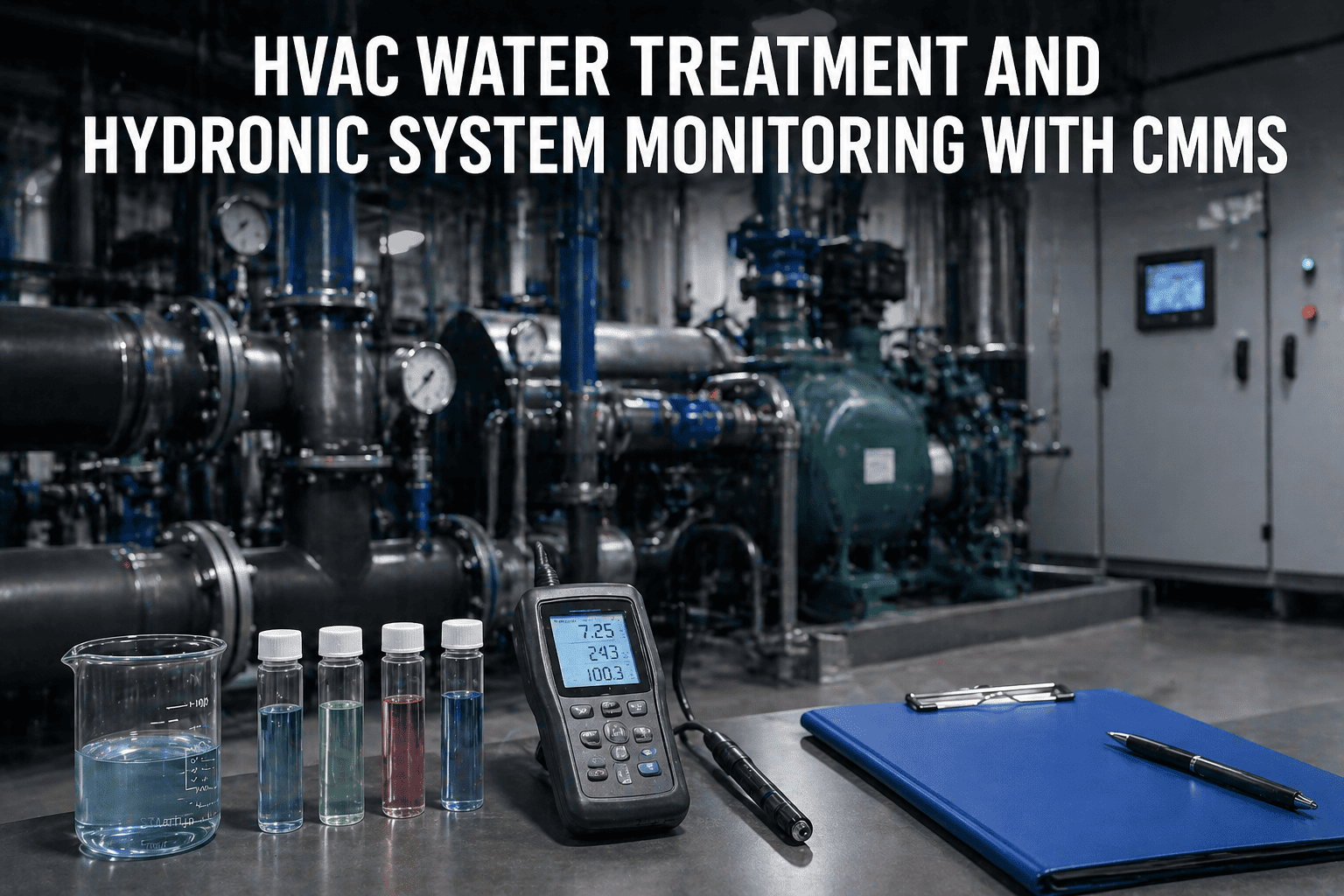
OxMaint connects to pressure transducers, flow meters, temperature sensors, and valve actuators via BACnet, Modbus, or direct analog inputs. Data is ingested at 5–15 minute intervals, compared against configurable thresholds, and auto-generates work orders when parameters drift. Valve stroke tests can be triggered remotely, with results logged to asset history.
Book a demo to see BACnet integration in action.
Protect Your Hydronic System from Hidden Failures
OxMaint's predictive analytics platform monitors pressure, flow, valve position, and makeup water trends — converting sensor data into automated work orders before leaks or valve failures cause downtime or water damage. Get continuous protection for your entire hydronic network.