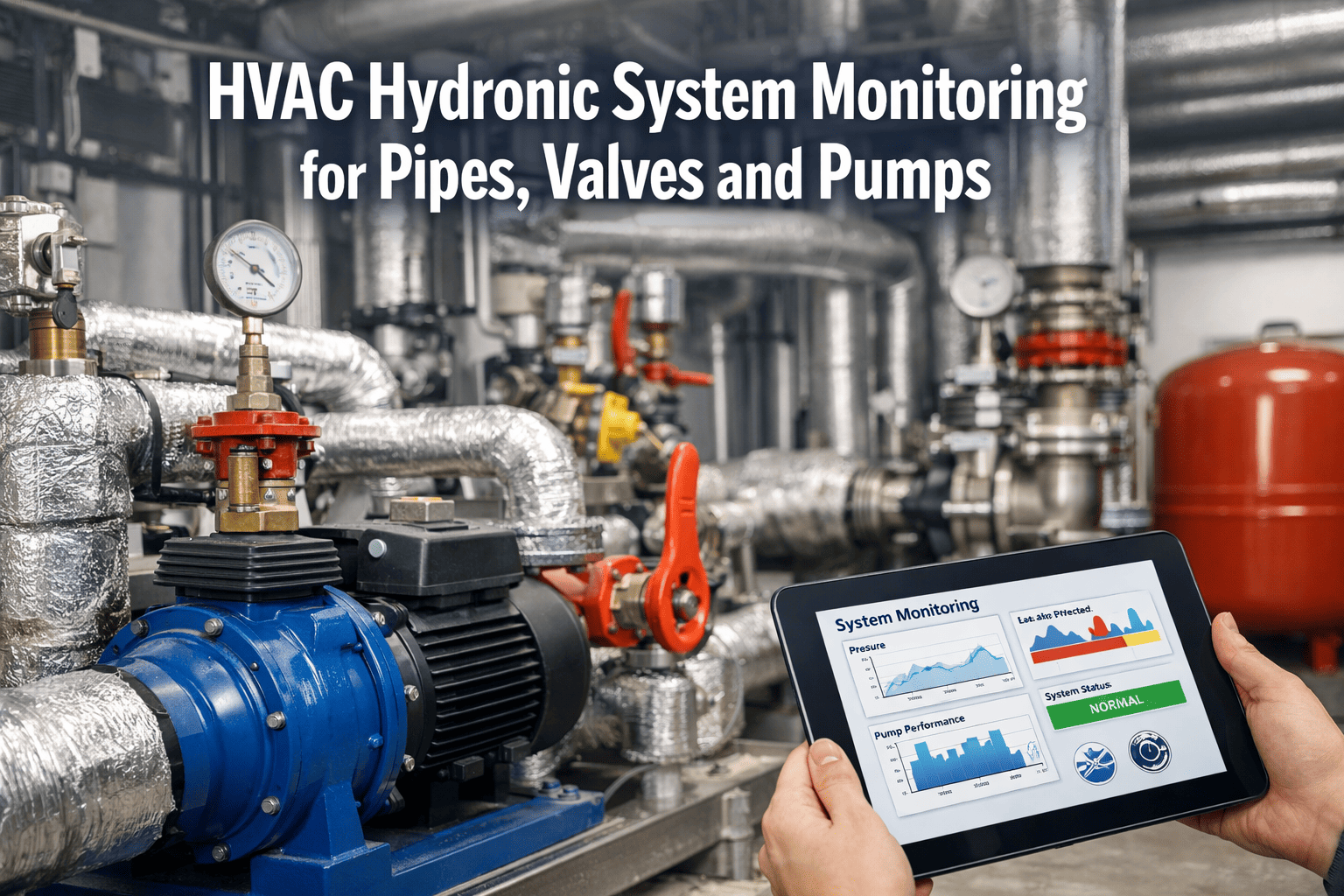
HVAC Hydronic System Monitoring for Pipes, Valves and Pumps
By James smith on April 18, 2026
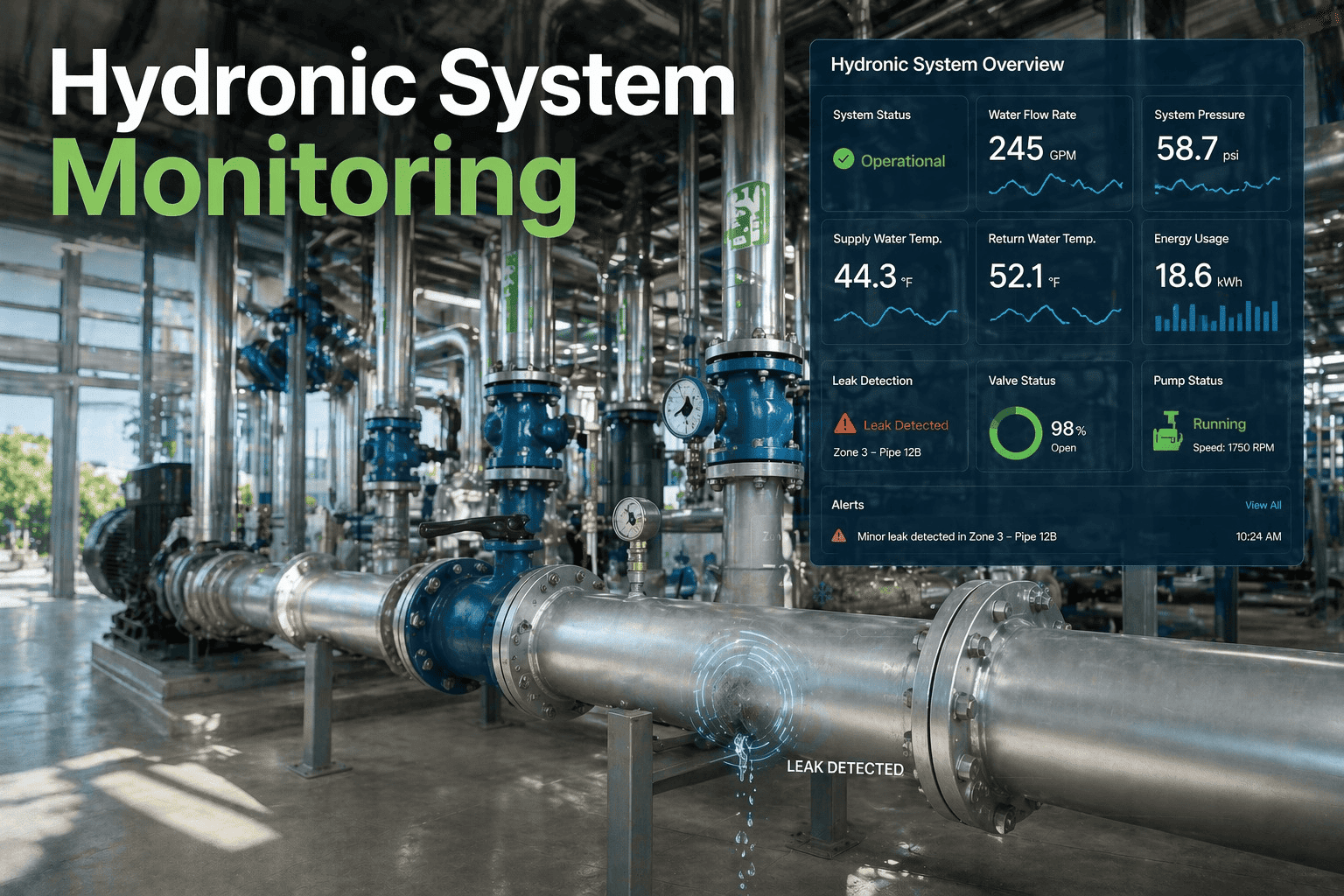
A hydronic system delivering 45°F chilled water supply but returning it at 53°F instead of 57°F is not comfortable evidence of good cooling performance — it is a warning sign. That 4°F delta-T deficit means the building is circulating 30 to 40% more water than the load requires, driving up pump energy while starving high-resistance zones of adequate flow. In commercial HVAC systems, the difference between a well-monitored hydronic loop and an unmonitored one is often 10 to 25% in energy consumption — and the failure mechanisms that drive that gap are all observable before they become emergency repairs. A pump bearing running at 15°F above its baseline temperature has weeks of life remaining. A control valve hunting in and out 60 times per minute is destroying its actuator and creating flow instability across every coil it serves. A waterlogged expansion tank is cycling system pressure with every temperature swing, loading the relief valve until it weeps. This checklist covers five monitoring zones — circulation pumps, control valves and actuators, pipe and distribution systems, expansion tanks and pressure control, and water quality — with inspection tasks tied to the failure modes that cause the most unplanned downtime in commercial hydronic systems. Book a demo to see how Oxmaint's Preventive Maintenance platform schedules hydronic system monitoring, tracks pump bearing trends, and routes corrective work orders automatically.
Hydronic Systems · HVAC · Preventive Maintenance
HVAC Hydronic System Monitoring for Pipes, Valves and Pumps
Detect pump bearing degradation, valve hunting, pipe fouling, pressure cycling, and water treatment failures before they interrupt building operations — structured for chilled water, hot water, and condenser water systems.
25%Energy reduction achievable with correct hydronic balancing in existing buildings
10-12°FDesign chilled water temperature differential — narrowing delta-T is the first sign of system imbalance
8-12%Fuel consumption increase from scale deposits just 1/16 inch thick on heating surfaces
5°FApproach temperature rise above design — threshold for condenser or evaporator fouling investigation
Hydronic System Monitoring Points — Key Detection Zones
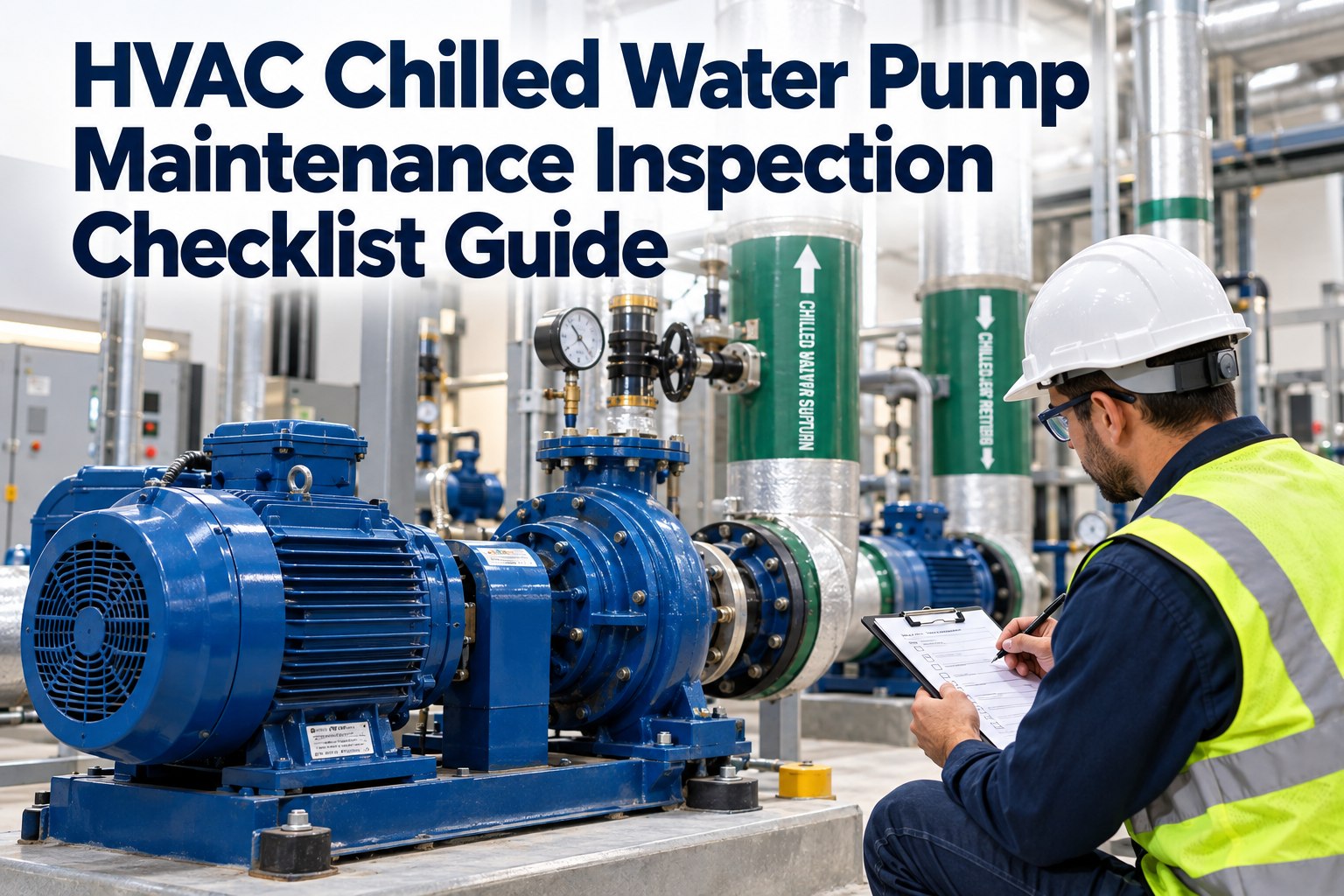
Circulation pumps are the heartbeat of every hydronic system. Early bearing degradation, impeller wear, and seal failure are all detectable weeks before failure through systematic readings — motor amps, bearing temperature, vibration, and flow rate tracked against the established baseline for each pump.
Daily — Operational ReadingsASHRAE HVAC Systems Handbook Ch. 43
Pump suction and discharge pressure recorded — compare to design operating curve; reduced differential pressure at same speed indicates impeller wear, partially closed isolation valve, or strainer blockageRecord: Daily pump log with gauge readings · Role: HVAC Technician
Motor running amps recorded and compared to baseline at current load — amps above nameplate at partial load indicate impeller obstruction or motor deterioration; significant amp reduction at design ΔP indicates loss of flowRecord: Daily pump log · Role: HVAC Technician
Pump and motor temperature check by contact thermometer or infrared — bearing housing temperature rise of 15°F above ambient baseline is actionable; 25°F above baseline is urgent; note abnormal vibration or noise during checkRecord: Temperature trend log · Role: HVAC Technician
Monthly — Condition MonitoringManufacturer Spec / Best Practice
Mechanical seal condition inspected — a small drip from seal (less than 1 drop per minute) is acceptable on packed gland pumps; active weeping or spraying requires immediate scheduled seal replacement before total seal failure floods mechanical roomRecord: Seal condition log · Role: HVAC Technician
Flexible coupling condition checked on accessible close-coupled pumps — inspect for rubber element cracking, chunking, or misalignment; failed couplings transmit vibration into shaft bearings accelerating wearRecord: PM work order · Role: HVAC Technician
Grease or oil-lubricated bearings serviced per manufacturer specification — over-greasing is as harmful as under-greasing; record lubricant type and quantity; oil-bath units: check oil level and colour (cloudy oil = moisture ingress)Record: Lubrication work order with lubricant type and volume · Role: HVAC Technician
Standby pump rotated to duty and duty pump moved to standby (where dual pumps installed) — standby pumps must be exercised monthly minimum to prevent shaft seizure and seal drying; confirm both pumps operational before rotationRecord: Pump rotation log · Role: HVAC Technician / Facilities Supervisor
Zone 02
Control Valves & Actuators
A control valve that hunts — rapidly cycling open and close — is destroying its actuator, destabilising flow to every coil it serves, and wasting energy simultaneously. Hunting is almost always caused by an oversized valve or faulty actuator, both detectable without instrumentation during a structured inspection. Valve authority below 0.5 creates hunting conditions across the entire controllable stroke.
Monthly — Visual and Functional CheckASHRAE / Manufacturer Spec
Control valves checked for hunting behaviour — rapid repeated stroking without load change indicates oversized valve, actuator calibration drift, or BAS control loop instability; confirm hunting frequency and log for controls investigationRecord: Valve observation log · Role: HVAC/Controls Technician
Actuator position verified against BAS command signal — actuator should achieve full stroke from 0% to 100% when commanded; actuator that does not reach full stroke loses flow capacity; check for binding, corrosion, or worn linkageRecord: Actuator check log · Role: Controls/HVAC Technician
Valve stem packing inspected for leaks — dripping valve stems in pressurised hydronic systems indicate worn packing; tighten packing gland as first response; schedule repacking if leakage continues after gland tighteningRecord: Valve inspection form · Role: HVAC Technician
Quarterly — Flow and Balancing VerificationASHRAE HVAC Systems / Best Practice
Supply and return temperature differential (delta-T) at each major AHU measured and compared to design — design chilled water delta-T is typically 10-12°F; narrowing delta-T at full cooling load indicates valve not fully closing, coil fouling, or insufficient flow to other zonesRecord: Delta-T log per AHU · Role: HVAC Technician / Commissioning Agent
Two-way control valve close-off confirmed — at 0% command signal, flow through coil should drop to designed minimum (or zero); valve that does not achieve close-off starves other zones and prevents proper pump VSD pressure controlRecord: Valve functional test log · Role: Controls/HVAC Technician
Check valves on parallel pump installations tested for backflow prevention — a check valve that allows reverse flow causes the standby pump impeller to spin backward; restart from reverse rotation damages mechanical seal and impeller nutRecord: Check valve inspection log · Role: HVAC Technician
Track pump bearing temperature trends, valve delta-T readings, and water treatment results in one PM dashboard — schedule a demo.
The pipe distribution network is the least visible component of a hydronic system and often the last to be inspected. Strainer fouling is the most common single cause of reduced pump flow — but it is invisible without a differential pressure check. Air binding in high-loop sections of the distribution system is silent until a coil stops delivering capacity entirely.
Monthly — Strainer & Air Vent InspectionBest Practice / Manufacturer Spec
Strainer differential pressure checked on all inline Y-strainers — rising ΔP above the manufacturer-specified clean baseline indicates strainer clogging; schedule blow-down cleaning when ΔP reaches 2× clean baselineRecord: Strainer ΔP log · Role: HVAC Technician
Automatic air vents at high-loop sections checked and confirmed operational — air binding at high points eliminates flow through sections of the distribution circuit silently; vents that drip water rather than air indicate the valve seat is worn and needs replacementRecord: Air vent inspection log · Role: HVAC Technician
Visible pipe insulation inspected for damage, missing sections, or moisture — damaged insulation on chilled water lines causes condensation; on hot water lines it causes heat loss and burn hazard; missing insulation in unconditioned spaces risks freeze damageRecord: Insulation inspection log · Role: HVAC Technician
Quarterly — Distribution Balance CheckASHRAE / Commissioning Standard
System differential pressure setpoint confirmed against actual pump VSD output — pump running at 100% speed to maintain ΔP setpoint on a variable flow system indicates inadequate pump capacity, undersized pipe, or strainer restriction; should run at 60-80% speed at peak loadRecord: System ΔP log with VSD speed % · Role: Controls/HVAC Technician
Hot water or chilled water temperature uniformity across the building checked — zones receiving consistently warm chilled water (above 50°F supply) at peak load indicate insufficient flow from a distribution imbalance, not a chiller faultRecord: Zone temperature survey · Role: HVAC Technician / Commissioning Agent
All accessible pipe joints, fittings, and valve bodies inspected for signs of corrosion, staining, or active seepage — closed-loop corrosion is chemistry-driven; visible external staining around fittings indicates pinhole failure developing; document with photo and schedule repairRecord: Annual pipe survey with photographs · Role: Maintenance Lead
Zone 04
Expansion Tanks, System Pressure & Relief Valves
Expansion tanks and pressure controls are the system's pressure management infrastructure. A waterlogged expansion tank is invisible without a tank pressure test — but its effects (pressure cycling, relief valve operation, recurring makeup water consumption) are always present and always measurable.
Daily / Weekly — System Pressure MonitoringManufacturer Spec / ASHRAE
System fill pressure (cold static) checked against design — typical commercial hydronic systems: 12-20 psig cold fill; excessive makeup water consumption (more than 5% of system volume per month) indicates leak in system or failed bladder in expansion tankRecord: Daily pressure log · Role: HVAC Technician
System pressure cycling pattern observed — pressure that rises sharply with temperature increase and drops with cooling indicates a waterlogged or undersized expansion tank; design-correct system should show less than 5 psig swing across full operating temperature rangeRecord: Pressure trend log · Role: HVAC Technician
Expansion tank bladder integrity tested — isolate tank and drain to zero pressure; recharge with nitrogen to design pre-charge pressure (= system cold fill pressure at tank connection point); a bladder that cannot hold pre-charge pressure has failed — replace tankRecord: PM work order with pre-charge pressure reading · Role: HVAC Technician
Pressure reducing valve (PRV/pressure-reducing/make-up valve) operation verified — PRV should open only on pressure loss and should maintain set pressure ±2 psig; constant PRV operation indicates ongoing system leak requiring leak investigationRecord: PRV inspection form · Role: HVAC Technician
Annual — Relief Valve Test (Required)ASHRAE 15 / Local Plumbing Code
Pressure relief valve tested by lifting test lever — valve must activate cleanly and reseat fully when lever is released; a valve that weeps after test or fails to reseat cleanly must be replaced immediately; document test date, result, and setting pressureRecord: Relief valve test log (retain for insurance and compliance) · Role: HVAC Technician
Backflow preventer (RPZ or double-check) on makeup water connection tested and certified by licensed tester — required annually by most water authority codes to prevent hydronic system water from entering domestic water supplyRecord: Backflow preventer test certificate (file with water authority and asset record) · Role: Licensed Backflow Prevention Tester
Zone 05
Water Quality & Treatment Programme
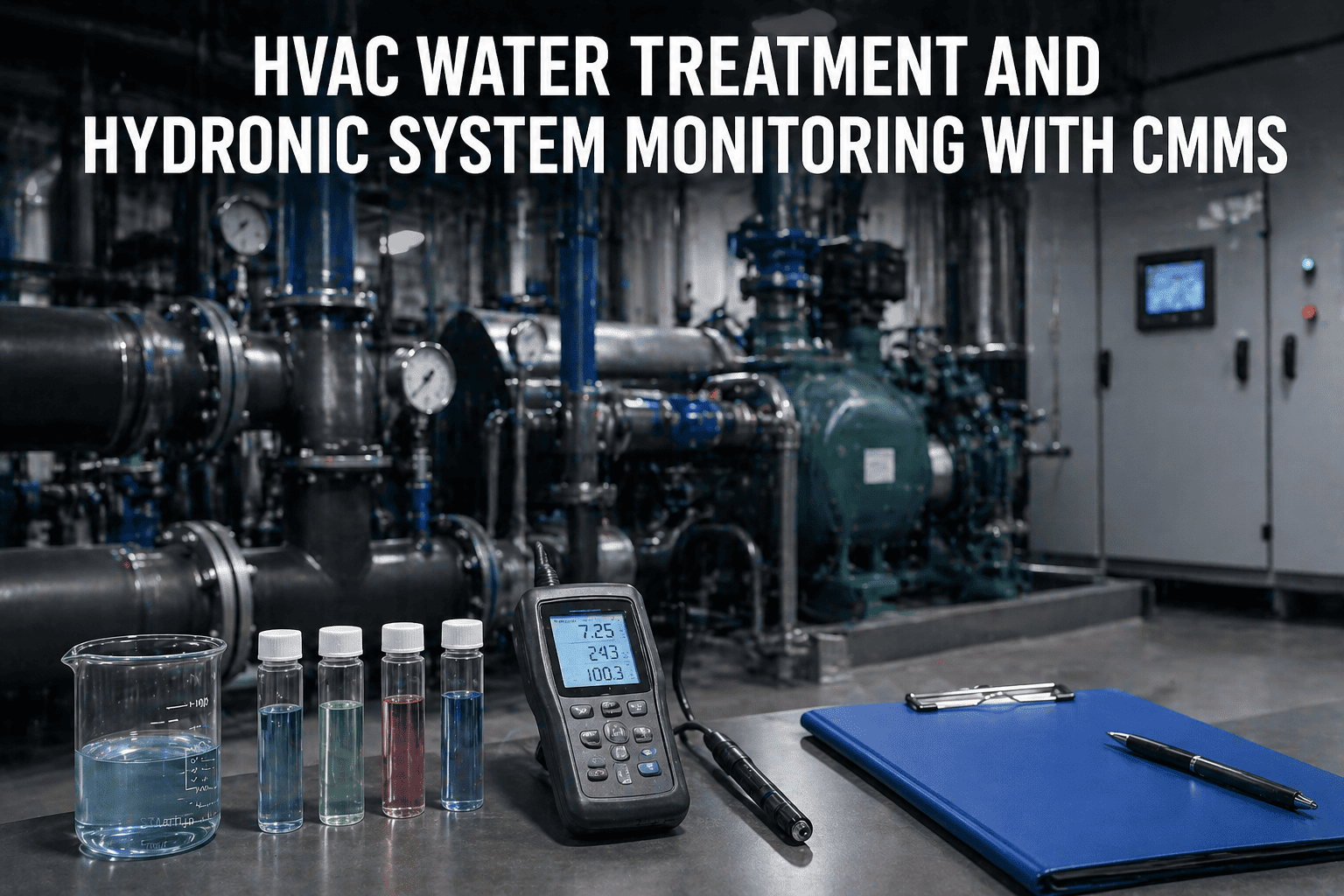
Closed-loop hydronic water is not static — it corrodes, deposits scale, and supports microbial growth at different rates depending on chemistry. Scale deposits just 1/16 inch thick increase fuel consumption by 8 to 12%. A closed-loop system with pH below 6.5 is actively corroding ferrous components. Both conditions are invisible without a structured water testing programme.
Monthly — Water Chemistry TestingASHRAE Guideline 12 / Manufacturer Spec
Closed-loop system pH tested and recorded — target range typically 7.5-9.0 for steel and copper mixed systems; pH below 7.0 indicates active corrosion requiring inhibitor dosing; pH above 9.5 accelerates dezincification of brass fittingsRecord: Water treatment test log · Role: Water Treatment Specialist / HVAC Technician
Corrosion inhibitor concentration tested and compared to water treatment supplier specification — inhibitor depletion is the leading cause of internal pipe corrosion in closed-loop systems; document inhibitor type, target concentration, and measured resultRecord: Water treatment test log · Role: Water Treatment Specialist
Dissolved oxygen content checked (where monitoring is installed) — elevated dissolved oxygen in closed loops accelerates pitting corrosion; oxygen scavenger dosing adjusted if dissolved oxygen above 0.1 ppm in steel-pipe systemsRecord: Water quality log · Role: Water Treatment Specialist
Glycol concentration measured by refractometer on systems with freeze protection — minimum 35% propylene glycol for -20°F (-29°C) freeze protection; glycol degradation reduces both freeze point and inhibitor effectiveness; replace degraded glycol rather than topping upRecord: Glycol concentration log · Role: HVAC Technician / Water Treatment Specialist
Water hardness and total dissolved solids tested on make-up water source — high hardness make-up water accelerates scale formation on heating coils and heat exchanger surfaces; document hardness and compare to water treatment programme targetRecord: Water treatment test log · Role: Water Treatment Specialist
Reference
Monitoring Frequency by Component and Failure Risk
Component
Key Monitoring Parameter
Frequency
Action Threshold
Circulation Pumps
Bearing temperature, motor amps, suction/discharge ΔP
System pressure swing above 5 psig; bladder not holding pre-charge
Pressure Relief Valve
Seat condition, set pressure
Annual test (test lever lift)
Valve weeps after test — replace immediately
Closed-Loop pH
pH, inhibitor concentration, dissolved oxygen
Monthly
pH below 7.5 or inhibitor below target — dose immediately
Glycol Systems
Glycol concentration, inhibitor package
Quarterly refractometer test
Concentration below 35% or inhibitor depleted
Pipe Joints
Visual corrosion, staining, seepage
Annual
Any active seepage — schedule repair before insulation re-applied
Expert Review
What HVAC Hydronic Engineers Say
01
Delta-T is the first number I ask for on any hydronic system call-out. If chilled water is returning at 48°F when it should be at 55°F, the system is running at double the pump energy for the same cooling output. You do not need a sophisticated audit to find that — you need two thermometers and a design set of drawings. Most buildings have neither in the hands of the maintenance team.
An expansion tank that has been waterlogged for six months has typically been cycling the relief valve once a day. Nobody notices because the relief valve discharge goes to a floor drain. By the time the valve seat is weeping constantly, the tank needs replacement, the relief valve needs replacement, and the maintenance log shows nothing unusual. Pressure trend logging would have flagged this in week two.
Closed-loop corrosion is slow, invisible, and irreversible. You cannot un-corrode a pipe. The cost of a monthly water test and inhibitor top-up is approximately $80. The cost of a pinhole leak in a chilled water main running above a server room ceiling is approximately $80,000 — and that is a conservative estimate that does not include the data loss. The test is not optional.
Water Treatment Programme Manager, Multi-Site Commercial HVAC
FAQs
Frequently Asked Questions
How does Oxmaint track hydronic system readings like pump amps and delta-T across multiple buildings?
Each pump, valve, and water treatment point is registered as a separate asset with its own reading fields and baseline thresholds. Technicians record readings on mobile during PM rounds; trending charts flag deviations automatically. Portfolio managers see all assets on one dashboard. Book a demo to see hydronic asset tracking configured for your building portfolio.
What is delta-T and why does a narrowing delta-T indicate a problem?
Delta-T is the temperature difference between supply and return water. Design chilled water delta-T is typically 10-12°F. If the system returns water warmer than expected (narrow delta-T), the coil is not transferring enough heat — caused by insufficient flow, fouling, valve not closing, or air binding. The pump circulates excess water, wasting energy.
How do I determine whether a pump vibration issue requires immediate shutdown or scheduled service?
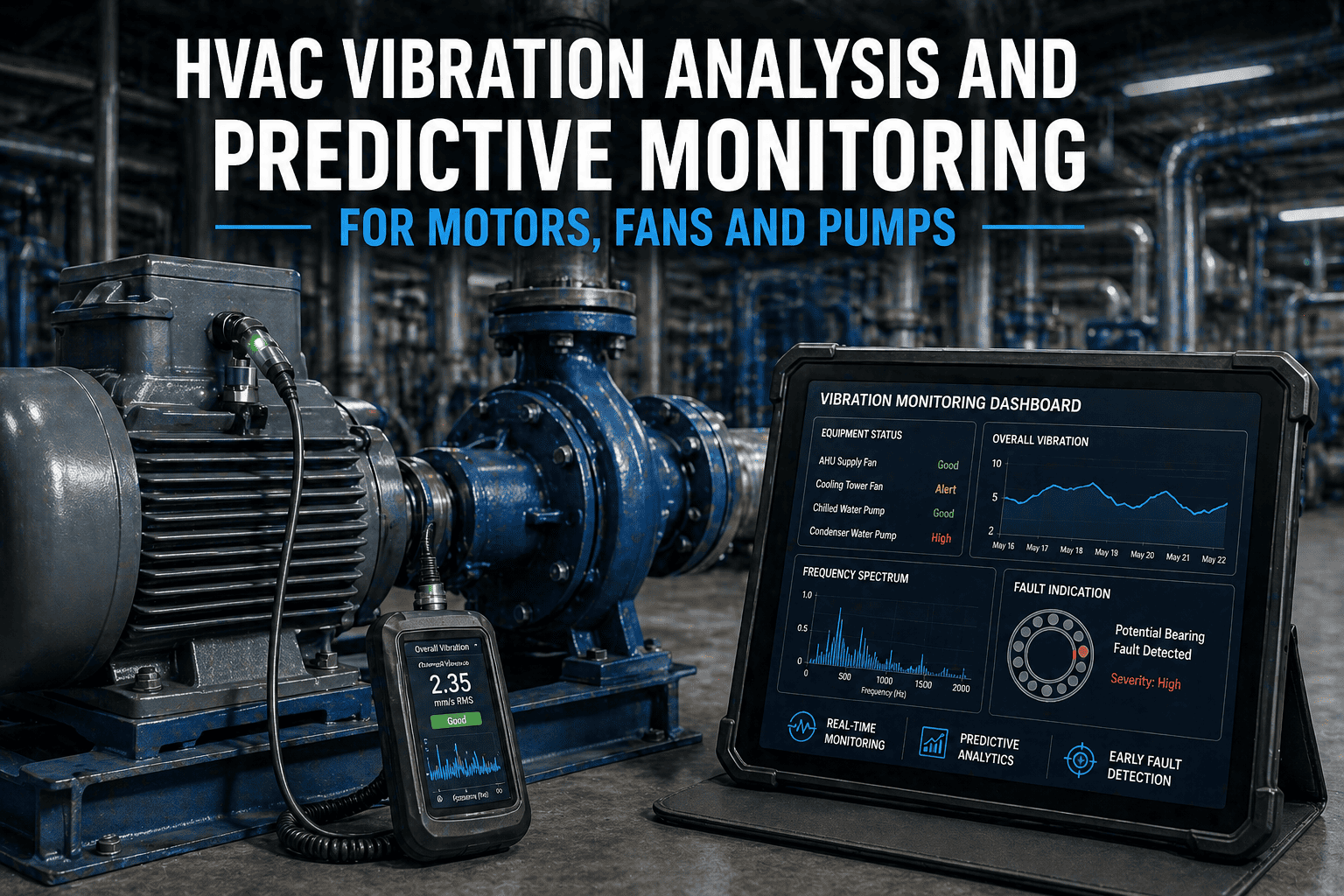
Immediate shutdown is required if vibration is accompanied by bearing temperature above 25°F over ambient baseline, metallic noise from the bearing housing, or seal spray. Scheduled service is appropriate when bearing temperature is 10-20°F above baseline with no noise change. Document readings at every visit to establish the trend rate before making the call.
How often should closed-loop glycol systems have their chemistry tested?
Quarterly refractometer testing for concentration, monthly for inhibitor and pH. Glycol inhibitor packages degrade over time regardless of concentration — a system showing 40% glycol can still have depleted inhibitor causing active corrosion. Annual lab analysis of the glycol sample provides the most complete assessment of inhibitor and degradation byproduct levels.
Track Every Pump Reading, Valve Delta-T, and Water Chemistry Result in One PM Platform.
Oxmaint's Preventive Maintenance platform manages hydronic system inspection schedules, trend-tracks pump bearings and system pressures, routes corrective work orders on threshold breach, and builds the maintenance history that justifies equipment decisions — across single buildings or entire portfolios.