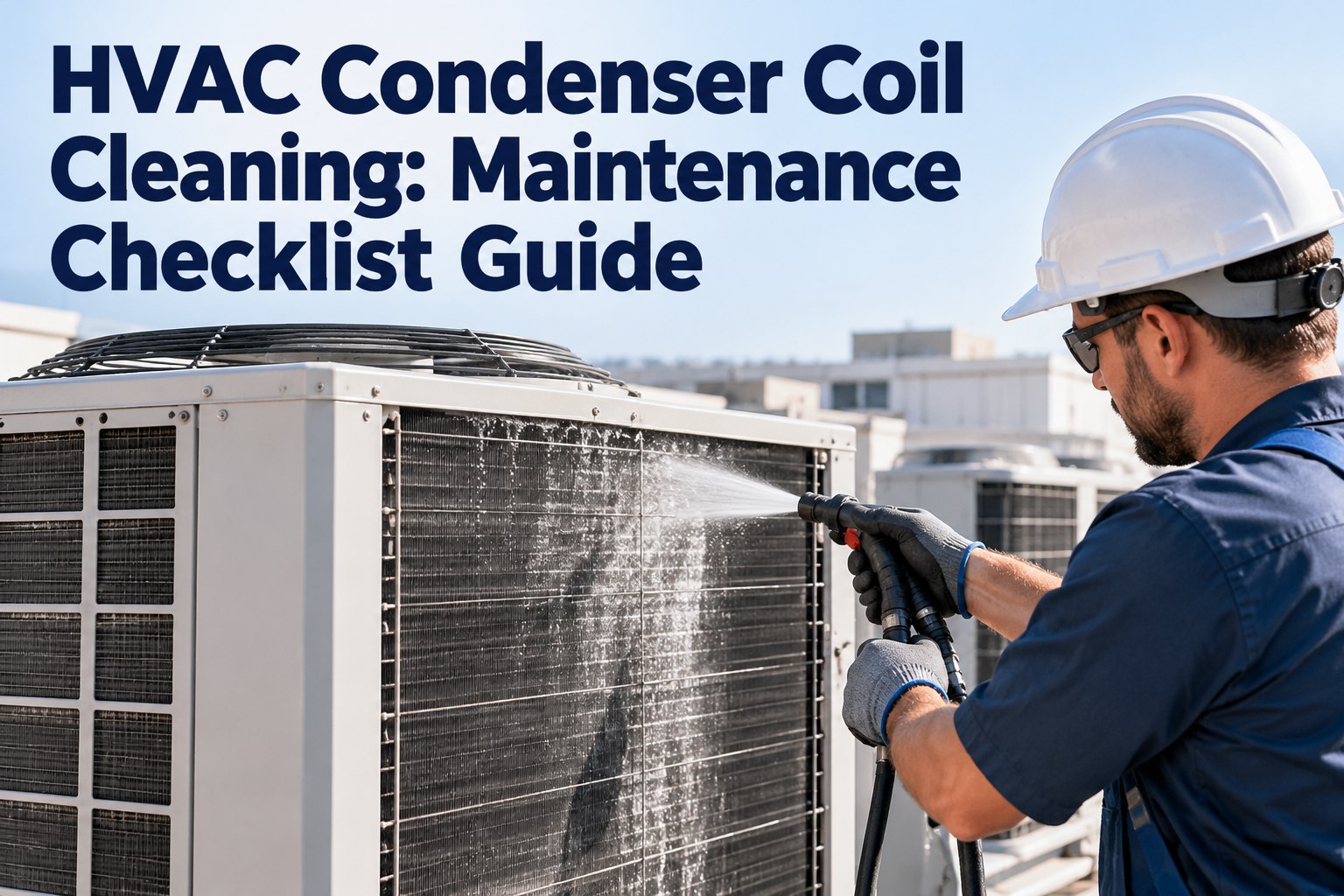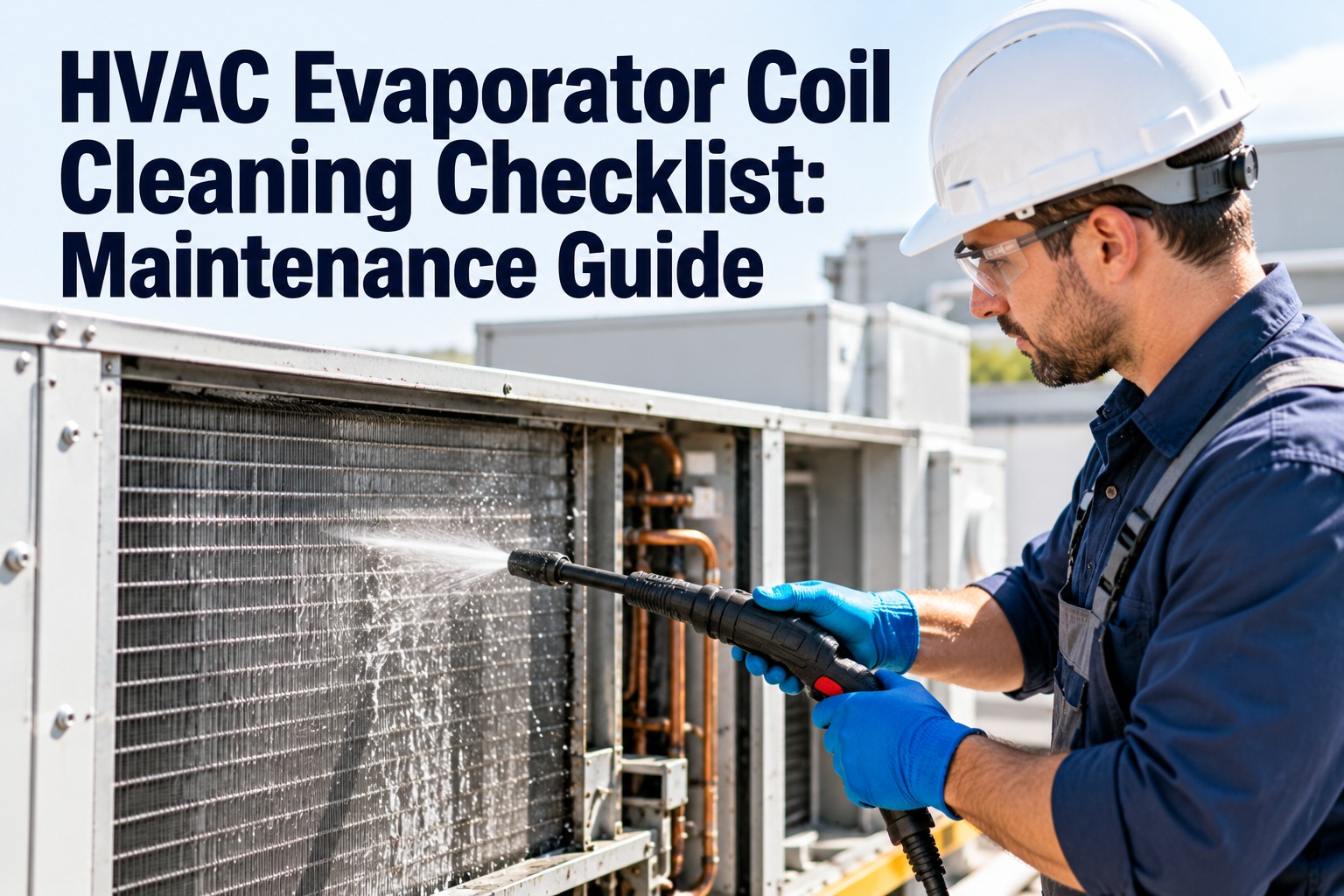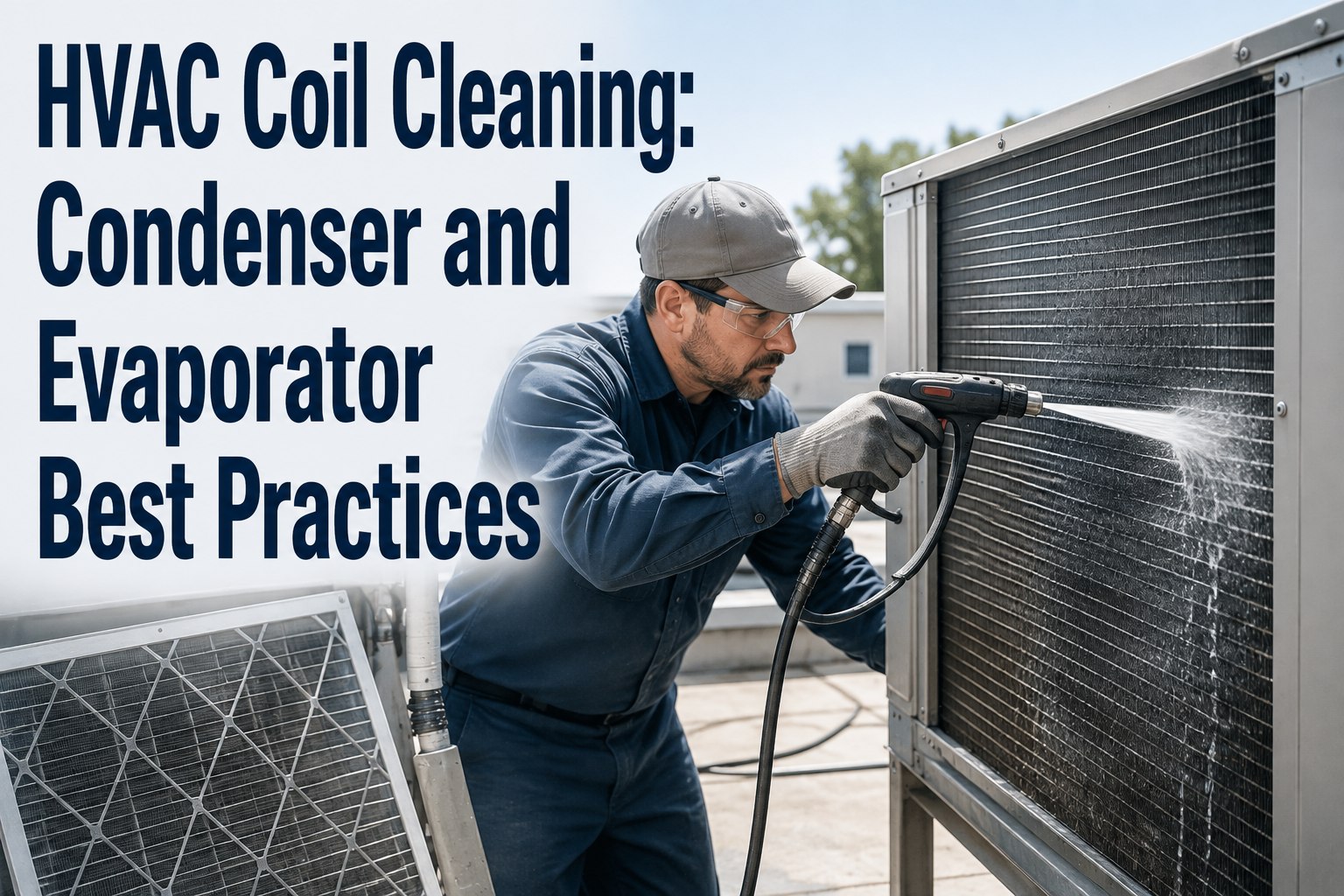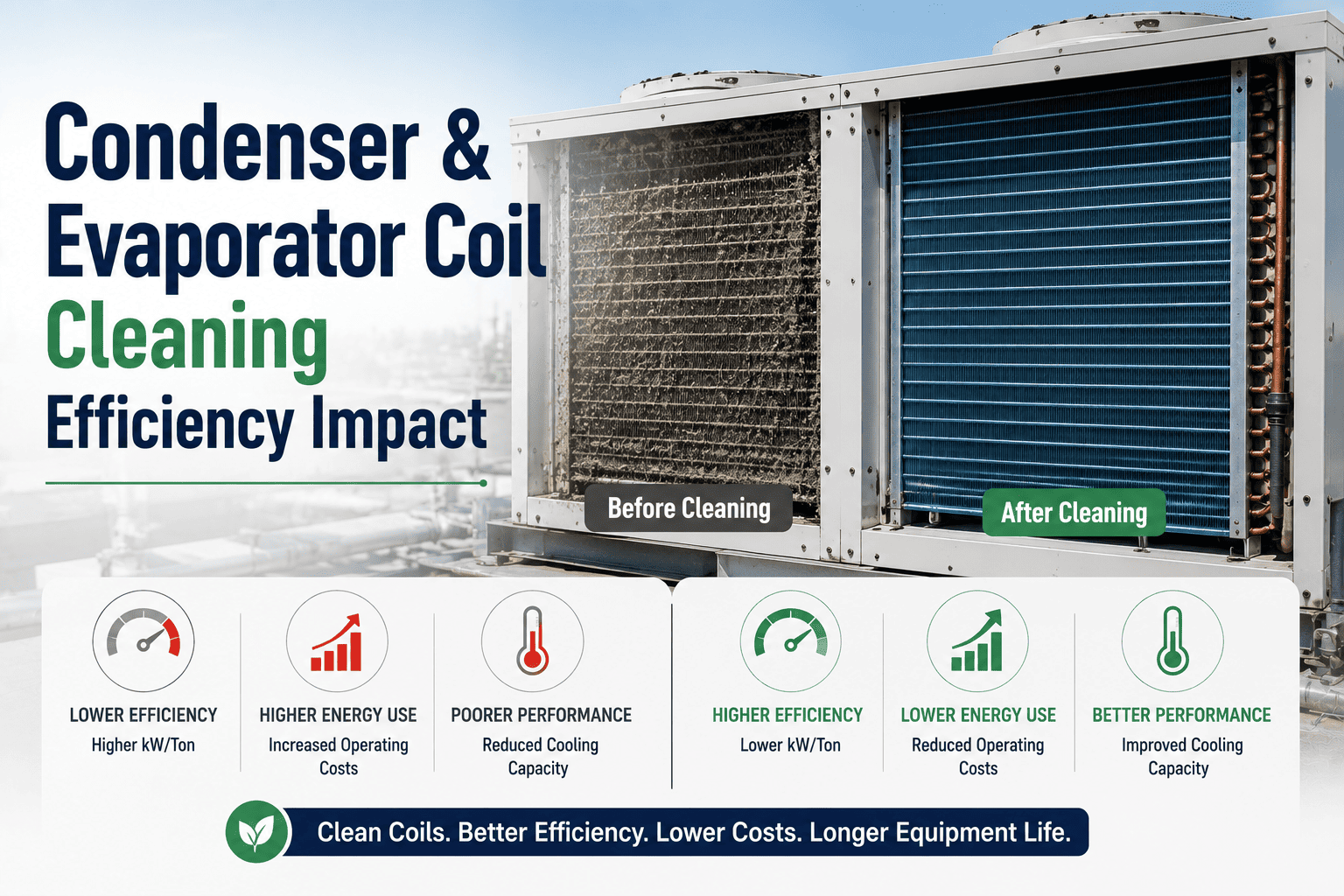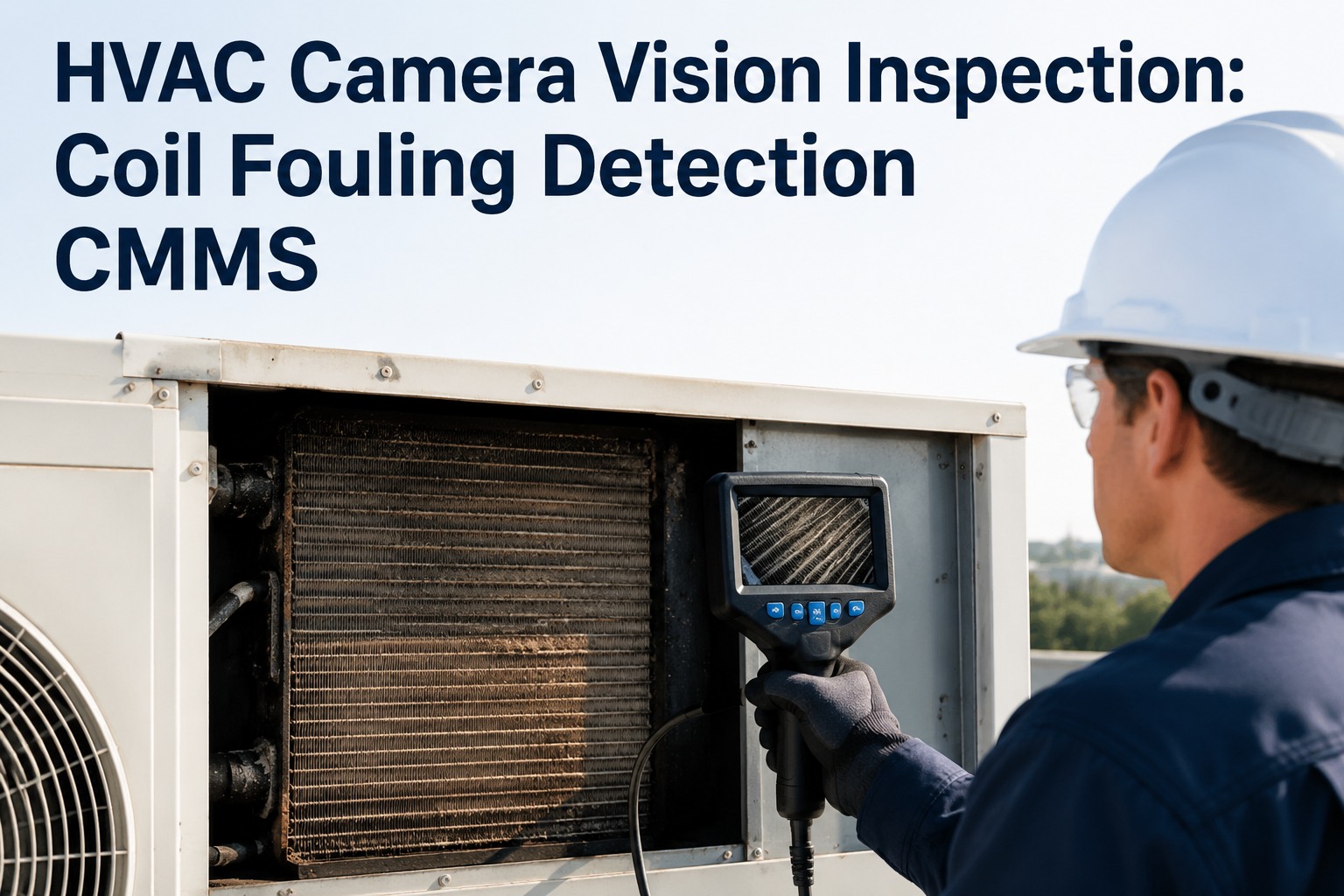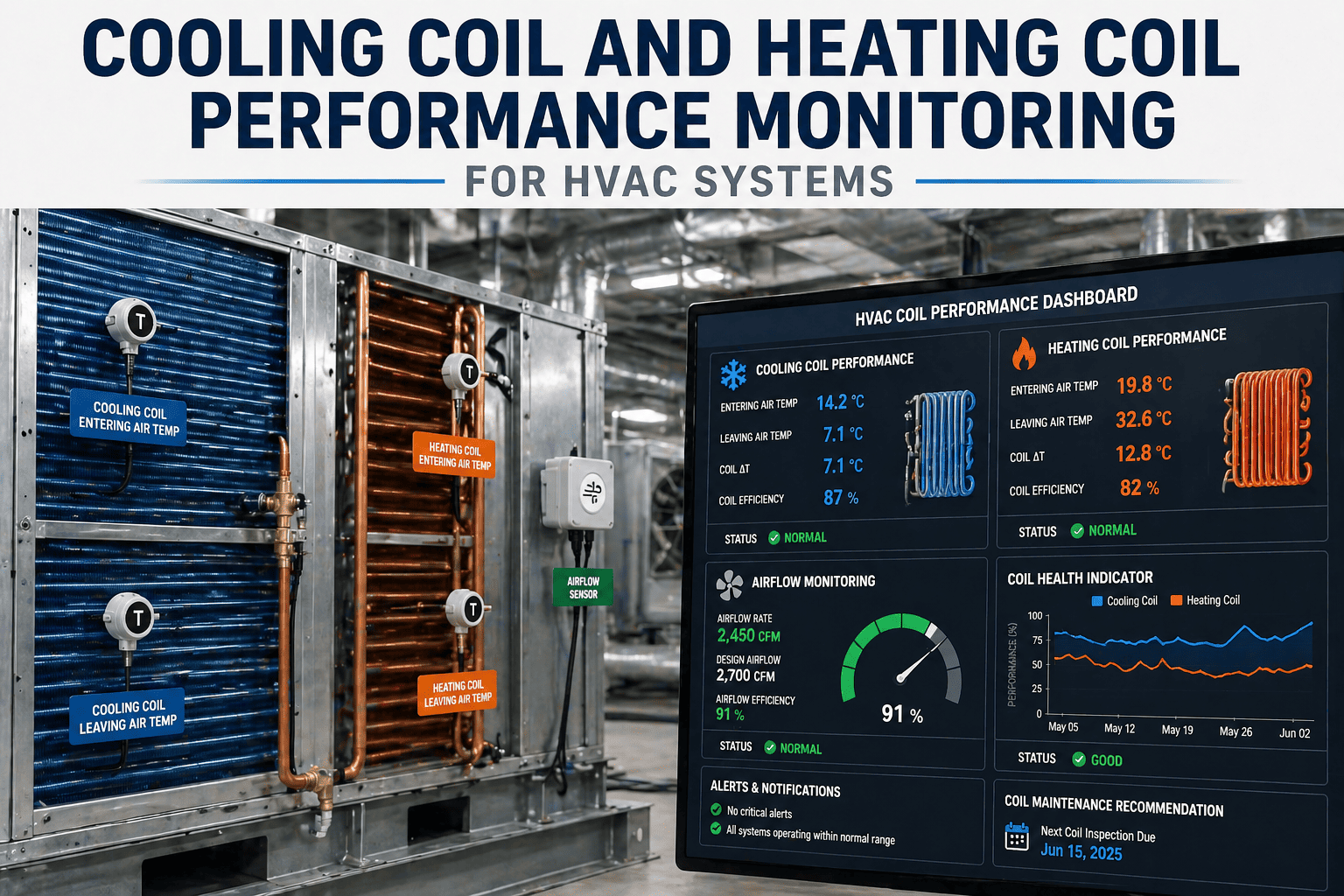
Heating and cooling coils are where commercial HVAC systems either earn their energy efficiency or lose it quietly over the course of a year. A coil that looks clean from the access panel can carry a 0.4-inch layer of biofilm and lint on the downstream side — dropping heat transfer by 16%, pushing the chiller or boiler to work harder, and stealing $22,500 a year from a single 100-ton system in documented waste. The fix is not complicated. It is a four-cadence inspection program tied to measurable thresholds — delta-T across the coil, approach temperature, air pressure drop, fin condition, drain pan cleanliness, and valve actuator response — with every reading logged against the asset record. Book a demo to see how Oxmaint structures coil maintenance checklists with threshold-based inspection capture across commercial HVAC portfolios.
HVAC coil maintenance runs on four distinct measurement checks — temperature differential across the coil (delta-T), approach temperature between water and leaving air, air-side pressure drop across fins, and visual fin and drain-pan condition. Cooling coils (evaporator, condenser, chilled water) fail on fouling and drain pan bioburden. Heating coils (hot water, steam) fail on freeze-ups, scale buildup, and valve actuator drift. The checklist below covers both families with threshold values, cleaning procedures, and the failure-mode diagnostic matrix that commercial HVAC teams use to protect coil assets and maintain the 16% efficiency gain that clean coils deliver over fouled ones.
Why Coil Maintenance Is the Highest-Leverage HVAC Task
HVAC coils are heat exchangers operating under thermodynamic conditions hostile to long-term cleanliness. Cooling coils condense moisture that becomes the growth medium for biofilm. Heating coils accumulate mineral scale and waterside corrosion. Both coil families restrict airflow progressively as fouling builds up, forcing fans to work harder, pumps to run longer, and the chiller or boiler to operate further from its design efficiency curve.
The four failure patterns below are the most common and the most expensive. Each is detectable at monthly inspection if the measurements are actually taken. Each is invisible to walk-by observation until the performance loss triggers a tenant complaint or an energy bill spike that the facilities team cannot explain.
Five Coil Types Covered in This Checklist
Commercial HVAC systems contain five distinct coil types, each with its own refrigerant or fluid, operating temperature range, and failure-mode profile. Correct maintenance starts with knowing which coil is being inspected and what thresholds apply. The cards below frame the scope.
See the Full Coil Maintenance Template Inside Oxmaint
Oxmaint ships preconfigured coil PM templates for all five coil types above — with threshold capture, delta-T calculation, photo evidence, and compliance records attached to the asset. Book a demo to load the template library against your HVAC asset registry.
The Four-Cadence Coil Inspection Framework
Coil maintenance operates on four cadences, each serving a different purpose. Monthly inspections screen for immediate anomalies. Quarterly checks capture performance drift. Semi-annual cleaning resets the coil to near-new condition. Annual certification verifies that seasonal systems are ready for the next operating period — cooling coils before summer, heating coils before winter.
Cooling Coil Inspection Checklist — Evaporator & Chilled Water
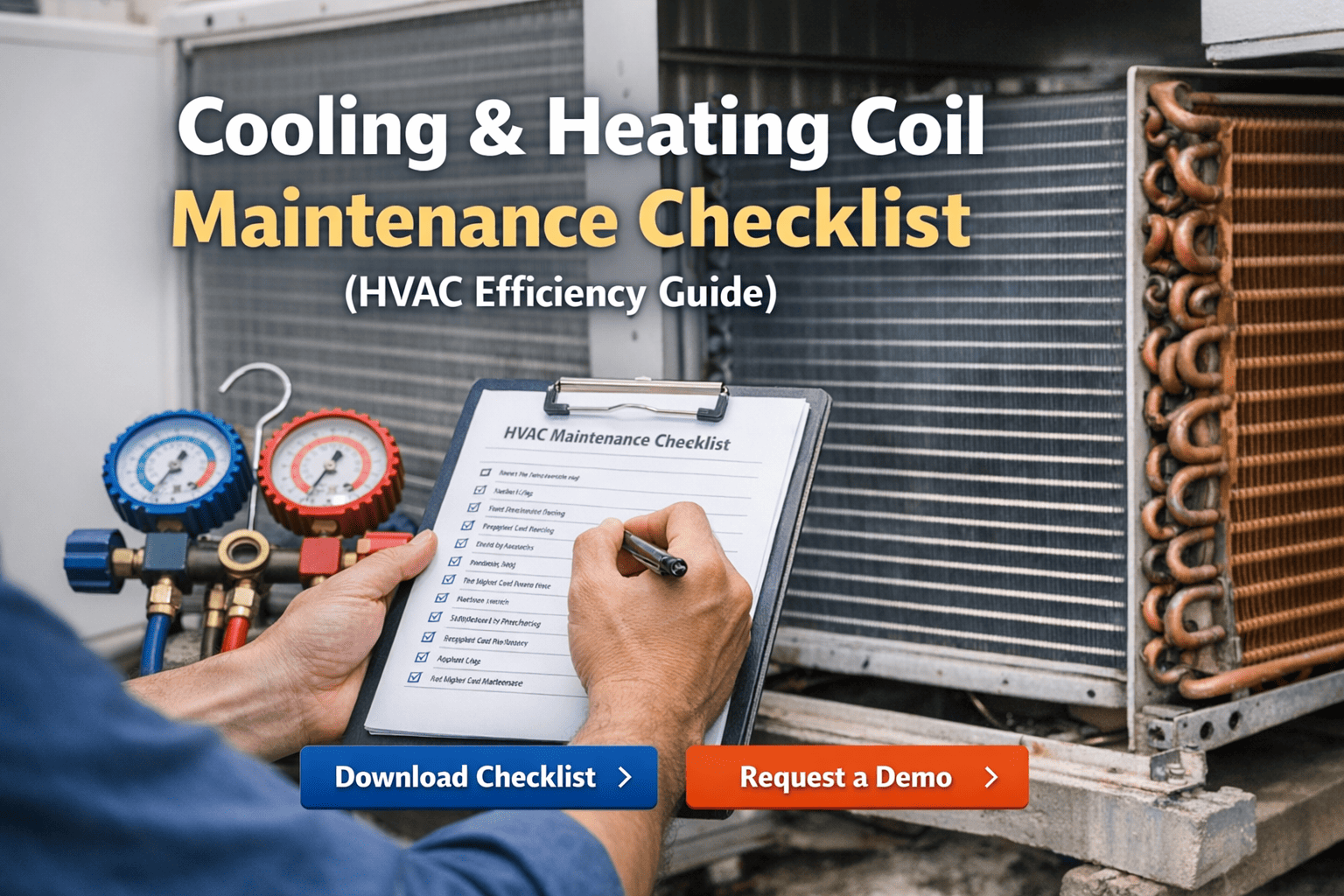
The table below is the monthly and quarterly inspection sheet for cooling coils. Every line carries the measurement target and the action trigger. Load directly into Oxmaint as a PM template per coil asset or use as a paper checklist with photo capture on the mobile app.
| Inspection Task | Measurement / Target | Action Trigger |
|---|---|---|
| Fin visual inspection | Over 90% fins straight and undamaged | Straighten bent fins with correct-pitch fin comb; log damaged section for replacement |
| Coil face air pressure drop | Baseline ±20% on manometer across coil | Schedule coil cleaning; investigate upstream filter and debris |
| Temperature differential (delta-T) | 10-15°F on chilled water design | Investigate fouling, bypass valve leak, or low flow rate; trend monthly |
| Approach temperature | Approximately 7°F at design load | Rising approach = progressive fouling; clean coil and re-measure |
| Condensate drain pan | No standing water, free of biofilm or debris | Clean, sanitize, install drain-line treatment; verify p-trap integrity |
| Condensate drain line slope | Continuous downward slope, no blockage | Clear obstruction; confirm exterior discharge; check overflow secondary pan |
| Refrigerant sight glass (DX only) | Clear, no bubbles at steady operation | Bubbles indicate low charge or moisture; perform leak survey and service |
| Coil fin surface condition | No corrosion, oil residue, or biofilm | Foam cleaning with alkaline biodegradable; low-pressure rinse; mold inhibitor |
| Control valve actuator stroke | Full open to full closed, no stiction | Lubricate stem, verify feedback signal; replace actuator if response lags |
| Insulation on chilled water piping | Intact, dry, no condensation damage | Repair or replace — wet insulation causes corrosion and efficiency loss |
Heating Coil Inspection Checklist — Hot Water & Steam
Heating coils require a different measurement set focused on freeze protection, waterside chemistry, and control integration. The table below covers the critical pre-heating-season and monthly items.
| Inspection Area | Checklist Task | Threshold / Standard |
|---|---|---|
| Freezestat | Setpoint verification, capillary tube placement, trip test with simulated cold air | Setpoint typically 37°F; capillary on leaving-air face; annual calibration mandatory |
| Steam Trap | Visual and acoustic test, verify condensate flow, check for blow-through | Semi-annual inspection minimum; trap failure is the top cause of steam coil freeze |
| Vacuum Breaker | Function test, verify air admission at coil off-cycle, inspect for blockage | Annual inspection; prevents vacuum lock that traps condensate during shutdown |
| Glycol Concentration | Hydrometer or refractometer test, adjust concentration to design freeze point | Test pre-winter and mid-season; degraded glycol raises freeze point progressively |
| Damper Seal | Outside air damper closure test, verify sealing against cold air infiltration | Full-close test each fall before freezing weather; leaking dampers trigger freeze-ups |
| Control Valve | Full stroke test, seat leak check, actuator feedback verification at multiple positions | Semi-annual; stuck-closed valve starves coil flow and causes freeze on cold-air exposure |
| Recirculation Pump | Pump runtime verification, flow switch function, power fault response test | Pre-winter verification; maintains coil flow during low-load periods |
| Heat Trace & Insulation | Electrical continuity, thermostat function, insulation integrity on coil piping | Annual pre-winter test; protect against piping freeze upstream of coil |
| Water Chemistry | pH, conductivity, corrosion inhibitor level on closed-loop hot water systems | Quarterly sampling; pH 8.5-10.5 typical range; treat per water treatment program |
Cooling Coils. Heating Coils. One Checklist Platform.
Oxmaint structures coil inspections, delta-T capture, and compliance records into asset-level PM schedules — with threshold-based flagging, photo evidence, and year-over-year performance trending per coil.
Symptom-to-Cause Diagnostic Matrix
When a coil underperforms, the symptom at the thermostat rarely points cleanly to the root cause at the coil. The matrix below links the six most common field symptoms to their likely causes and the checklist item that would catch each one before it becomes a comfort complaint or an energy-bill surprise.
| Field Symptom | Most Likely Causes | Checklist Item That Catches It |
|---|---|---|
| Reduced cooling capacity | Fouled coil, low refrigerant, low CHW flow, valve bypass, dirty filter | Quarterly delta-T and approach temperature capture, monthly filter check |
| Frozen evaporator coil | Low airflow, dirty filter, low refrigerant, blower motor fault, fouled coil | Monthly airflow visual, filter pressure drop, refrigerant sight glass |
| Low delta-T on chilled water | Valve leak-through, fouled coil, oversized pump, three-way bypass | Quarterly delta-T trend, semi-annual valve stroke and leak test |
| Condensate overflow | Blocked drain line, biofilm in pan, slope reversal, missing p-trap water seal | Monthly drain pan inspection, semi-annual drain line treatment |
| Hot water coil freeze or burst | Freezestat drift, damper leak, stuck valve, pump failure, glycol dilution | Annual freezestat calibration, damper seal test, glycol concentration check |
| Rising energy consumption | Progressive coil fouling, valve drift, control setpoint change, insulation damage | Quarterly approach temperature trend, year-over-year performance log |
What Structured Coil Maintenance Delivers
Teams moving from ad-hoc coil cleaning to a structured, CMMS-driven inspection program report consistent operational and energy outcomes within the first cooling and heating season. The numbers below are drawn from industry benchmarks and Oxmaint customer deployments across commercial and institutional HVAC portfolios.
Standards & Certification Coverage by Coil Type
| Coil Type | Governing Standards | Oxmaint Checklist Coverage |
|---|---|---|
| Evaporator / DX Coils | AHRI 410, EPA refrigerant management 608/609, ASHRAE 15 safety | Refrigerant charge, sight glass, superheat, subcool, fin condition, drain pan records |
| Condenser Coils | AHRI 410, ASHRAE 90.1 efficiency requirements, ANSI fan and guard specs | Fin straightening, coil cleaning cadence, ambient approach, discharge pressure trend |
| Chilled Water Coils | AHRI 410, ASHRAE 90.1 (15°F delta-T), ASHRAE 62.1 IAQ, NADCA ACR | Delta-T capture, approach temperature, valve stroke tests, condensate pan IAQ inspection |
| Hot Water Coils | AHRI 410 Air-Heating Coils, ASHRAE 90.1, local boiler inspection code | Freezestat, damper seal, glycol, valve function, water chemistry records |
| Steam Coils | ASME B31.9 building piping, local steam pressure vessel inspection | Steam trap, vacuum breaker, condensate drainage, coil pitch verification |
Perspective: What HVAC Teams Said
Frequently Asked Questions
QHow often should commercial HVAC coils be cleaned?
QWhat is the correct delta-T for a chilled water coil?
QWhat cleaning chemicals are safe for commercial coils?
QHow does Oxmaint capture coil performance readings?
QWhat is the most common preventable heating coil failure?
Stop Cleaning Coils on Hope. Measure Them on a Checklist.
Oxmaint structures coil inspections, delta-T capture, and year-over-year performance trending into one platform your HVAC team uses on their phones and your facilities leadership reviews from a dashboard. AHRI, ASHRAE, and NADCA frameworks already loaded.