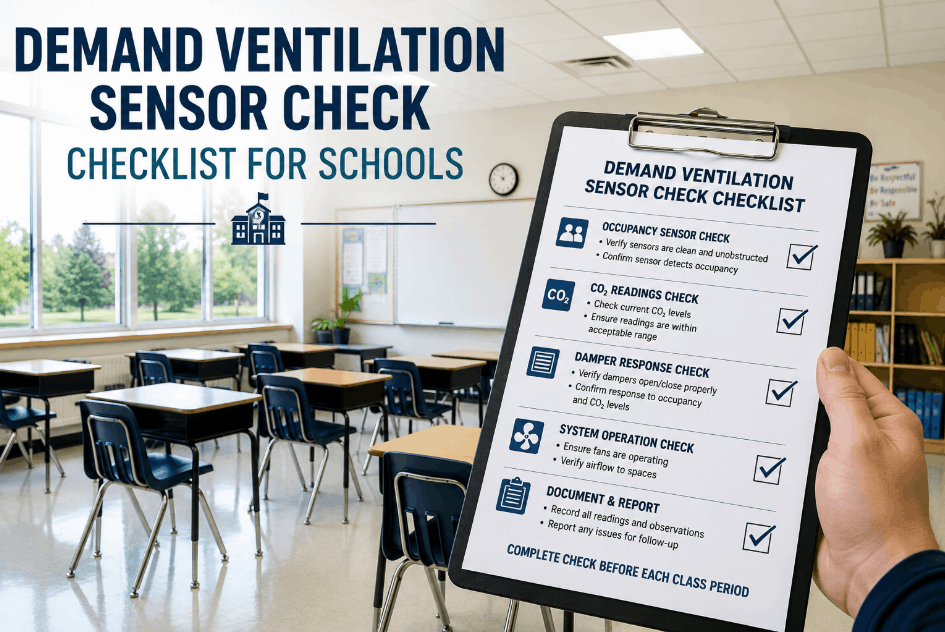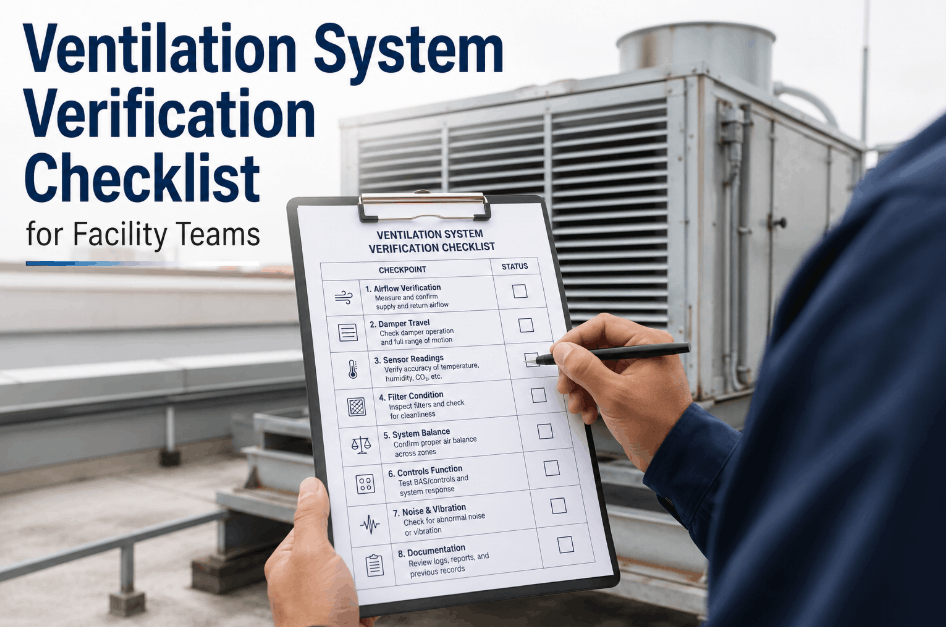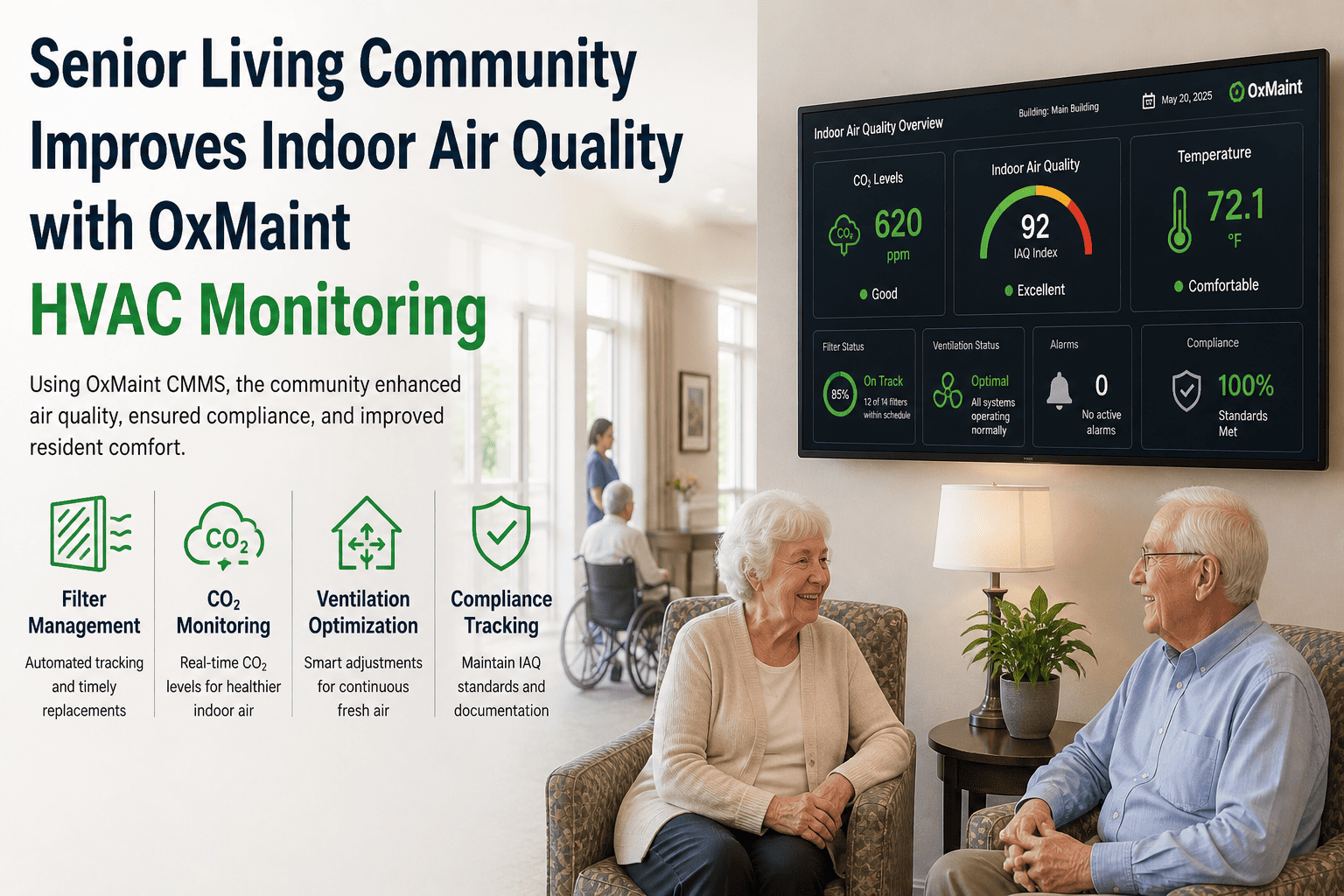
Schools are the highest-occupancy-per-square-foot buildings most facility teams manage — and the most regulated for indoor air quality. EPA's indoor air quality guidance for schools and ASHRAE 62.1 both establish minimum ventilation requirements that directly affect student cognitive performance and attendance. Harvard research shows that CO2 above 1,000 ppm reduces cognitive test scores by 21%, and most classrooms exceed this level within 30 minutes of full occupancy without adequate outside air. OxMaint's Preventive Maintenance platform turns this checklist into structured digital tasks with completion records, photo capture, and compliance documentation built in. Book a demo to configure school HVAC inspection routes for your district.
School HVAC Maintenance Checklist for IAQ and Comfort
A complete inspection reference for filters, ventilation, humidity, CO2, rooftop units, thermostats, and IAQ compliance — with OxMaint task configuration notes for each check.
Classroom Zones — Different HVAC Priorities by Space Type
Standard Classrooms
CO2 the primary IAQ driver. 25–35 students generate CO2 accumulation rapidly without adequate OA. Thermostat drift causes occupant complaints. Filter inspection and VAV calibration highest priority.
Gymnasium & Auditorium
High occupancy during events, empty otherwise. VAV or CAV systems require setback programming verification. Humidity management critical to prevent surface condensation during occupancy swings.
Science & Art Labs
Fume hood exhaust and VOC sources require dedicated exhaust verification. Makeup air balance critical. Higher ventilation rates required — ASHRAE 62.1 lab classification applies.
Cafeteria & Kitchen
Kitchen exhaust and makeup air balance must be verified. Grease filters require separate inspection schedule. High humidity generation during service periods — condensate drainage critical.
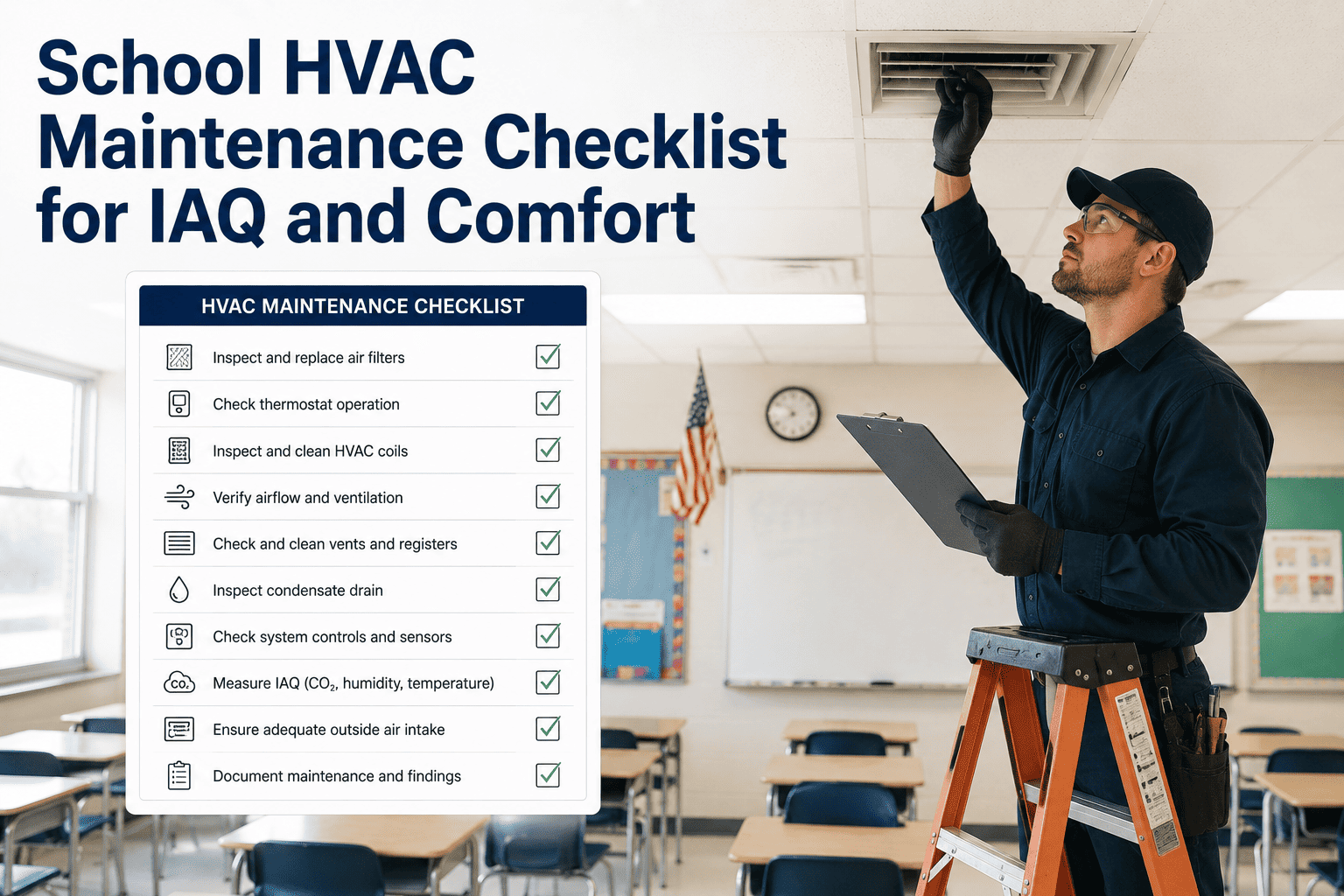
School HVAC Maintenance Checklist
Inspect filter media for loading, tears, and bypass gaps around frame. Measure differential pressure across filter bank. DP above design limit indicates replacement required — do not wait for calendar interval if DP is elevated.
Frequency: Monthly | OxMaint: DP measurement logged per AHUConfirm replacement filter matches or exceeds MERV rating specified in the HVAC design — typically MERV 8–13 for general classroom supply, MERV 13–16 for immunocompromised student areas or post-COVID upgrade specifications. Record MERV grade and installation date in OxMaint asset record.
Frequency: At each replacement | OxMaint: MERV grade recorded per filter positionCheck filter frame gaskets and housing seals for bypass gaps. Unsealed bypass allows unfiltered air to circumvent the filter entirely — eliminating its PM2.5 and allergen capture effectiveness regardless of MERV rating.
Frequency: Annual | OxMaint: Pass/Fail per AHU housingVerify outside air damper opens to design minimum position in occupied mode. Command through BAS and confirm physical damper movement matches BAS position. A failed OA damper actuator stuck closed is the single most common cause of classroom CO2 accumulation above 1,000 ppm.
Frequency: Quarterly | OxMaint: OA% measured vs. design per AHUSpot-check supply register airflow using balometer or anemometer at 10% of classroom supply registers per visit. Deviations from design CFM above 15% indicate VAV fault, duct obstruction, or blower degradation requiring investigation.
Frequency: Annual (full survey) / Quarterly (10% spot) | OxMaint: CFM recorded vs. design per registerMeasure CO2 during occupied period in classrooms with highest occupancy density or past complaints. Readings above 1,000 ppm indicate inadequate outside air delivery. Flag for OA damper and airflow investigation — do not adjust thermostat setpoints in response to CO2 complaints.
Frequency: Quarterly during school year | OxMaint: CO2 ppm recorded per roomInspect condenser coil fins for fouling, debris accumulation, and physical damage. Blocked condenser coil increases head pressure and compressor discharge temperature, reducing cooling capacity by 15–25% and increasing energy consumption significantly.
Frequency: Semi-annual (before cooling season + mid-summer) | OxMaint: Coil condition and cleaning log per unitInspect belt for cracking, glazing, and wear. Check tension with belt tension gauge — slack belts slip, produce noise, and reduce airflow capacity. Misaligned belts wear sheaves and fail early. Replace at first sign of cracking regardless of calendar interval.
Frequency: Semi-annual | OxMaint: Belt condition and tension recorded per RTUInspect condensate pan for standing water, algae, and sediment. Flush drain line and confirm free flow. Blocked condensate drainage causes pan overflow, ceiling tile damage, and mold growth — the most common cause of IAQ complaints and school closure events attributable to HVAC.
Frequency: Quarterly | OxMaint: Drainage pass/fail and flush confirmation per RTUCompare thermostat reading against calibrated reference thermometer at sensor height during occupied period. Offset above 1°C causes persistent over- or under-heating generating occupant comfort complaints and wasted heating/cooling energy. Recalibrate or replace sensors with persistent drift.
Frequency: Annual | OxMaint: Delta-T value per zone — flag if above 1°CMeasure humidity in library, computer lab, gymnasium, and any areas with past mold complaints. ASHRAE 62.1 target range: 30–60% RH. Above 60% promotes mold and dust mite growth. Below 30% increases virus transmission risk and causes occupant discomfort.
Frequency: Quarterly | OxMaint: RH % recorded per zone with alert if out of rangeUse This Checklist in OxMaint
Every item in this checklist is configurable as a recurring PM task in OxMaint — with digital completion records, CO2 and temperature data capture, photo evidence, and EPA IAQ Tools for Schools compliance documentation built in.
Expert Review
"Harvard research has definitively shown that CO2 at 1,000 ppm reduces cognitive test scores by 21%. Most school classrooms exceed this level within 30 minutes of full occupancy without adequate outside air delivery. The tragedy is that every single one of these IAQ failures is preventable with a quarterly outside air damper check and a CO2 spot measurement — tasks that cost less than $50 per classroom per year and directly protect the educational outcomes that every school district is accountable for. The school HVAC teams that have structured PM programmes are protecting both occupant health and their district's performance metrics."