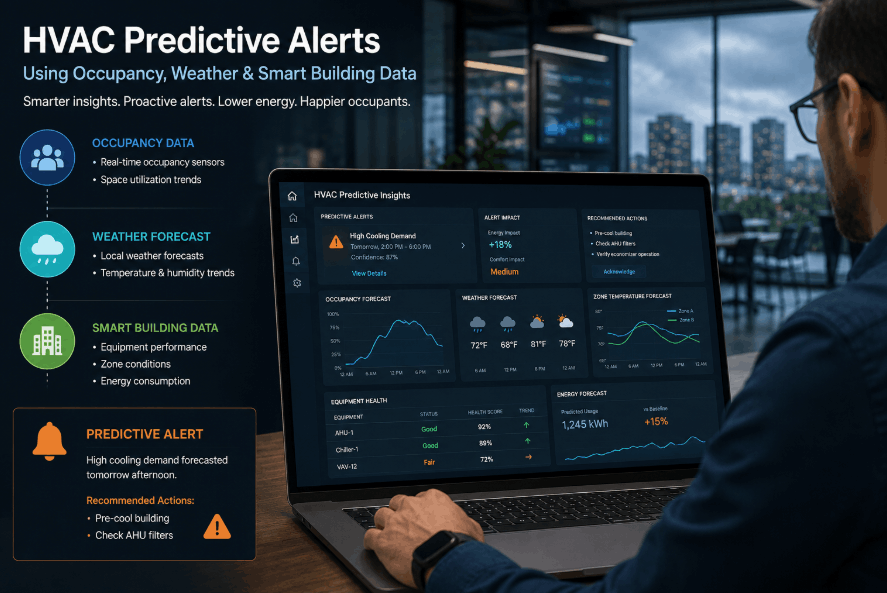
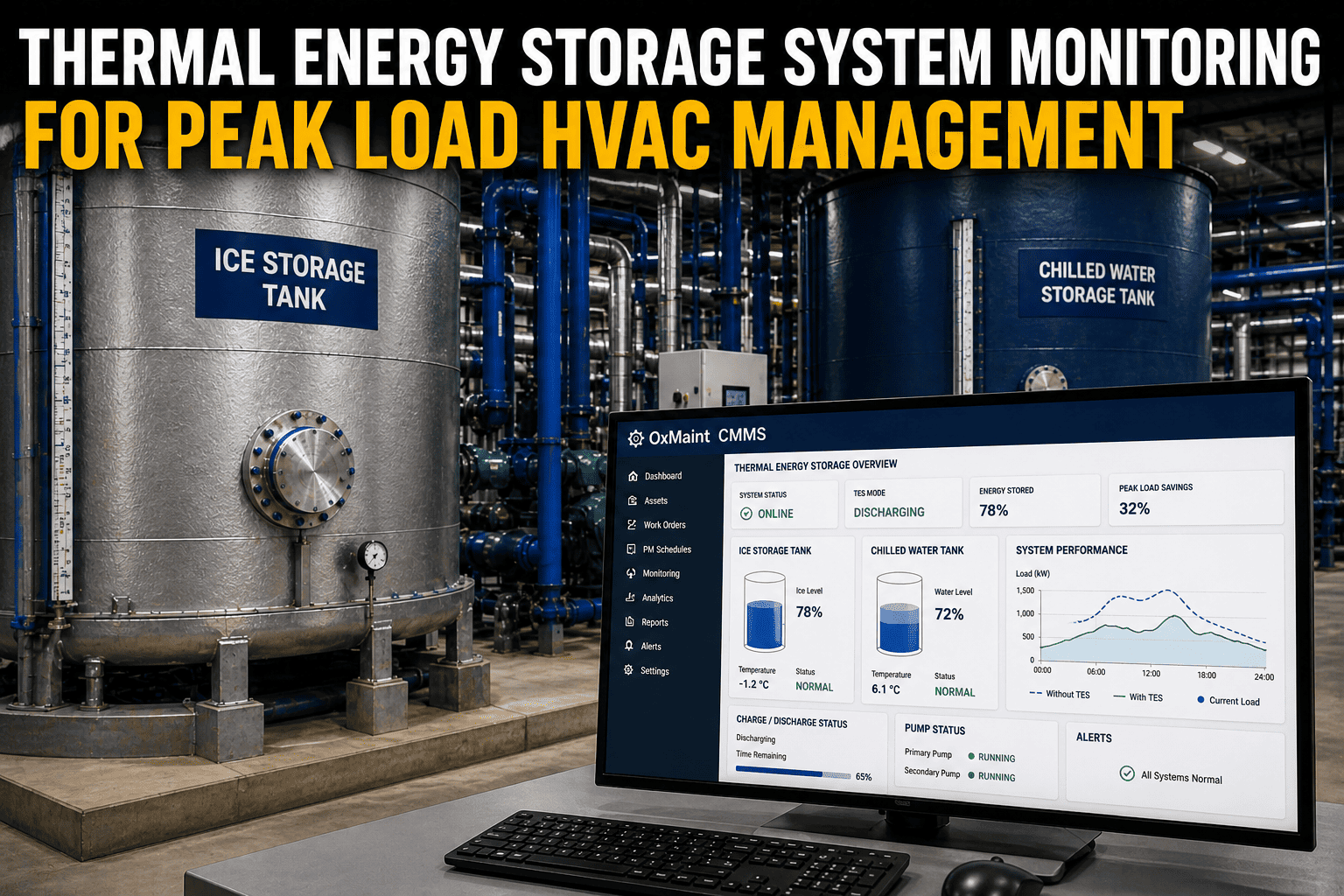
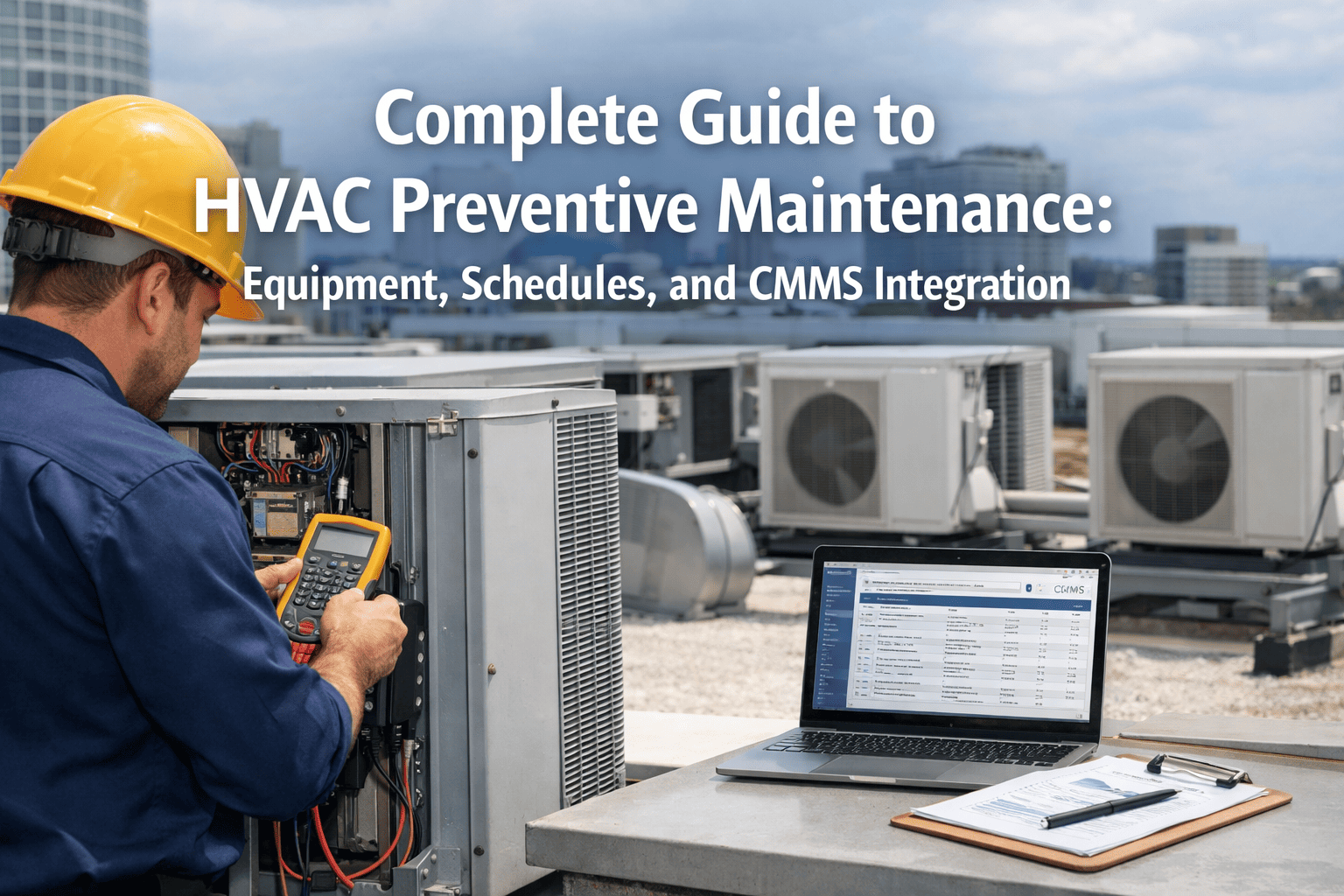
Cooling load forecasting gets unpredictable fast once a building has to handle a large event — a packed conference hall, a stadium concourse, or a hotel ballroom on a peak crowd day pushes occupant heat gain, outdoor weather swings, and last-minute schedule changes well past normal design assumptions. Facility teams using Sign Up Free on OxMaint can register chiller and AHU capacity profiles, log expected occupancy against event schedules, and build equipment staging plans before cooling demand outpaces plant capacity. Getting cooling load forecasting right for event days is what keeps comfort steady when crowd size and weather refuse to follow a normal Tuesday.
Why Event Days Push Cooling Demand Past Normal Capacity
A full house changes the cooling equation almost instantly — body heat, lighting, and AV equipment add load that a static design schedule never accounted for, and outdoor conditions on the day can swing that further in either direction. Book a Demo to see how OxMaint links chiller and AHU asset records to event schedules so plant operations teams can see capacity risk before doors open.
Five Variables That Drive Cooling Load Forecasting Accuracy
Reliable forecasting means tracking the same variables on every event, not re-deriving the load plan from scratch each time. Sign Up Free to start logging these variables against your asset and event records in OxMaint.
Crowd Size and Occupant Heat Gain
Expected attendance is the single largest driver of cooling load on event days. Forecasts built without a confirmed headcount tend to under-cool early and over-correct late, both of which strain plant equipment.
Outdoor Weather and Humidity Swings
Outdoor air temperature and humidity on the day directly affect chiller staging and dehumidification load, especially for events with large outdoor-air ventilation requirements.
Event Schedule and Duration Changes
Doors-open times, intermissions, and overruns shift the load curve away from the original plan. Schedule changes that aren't logged against the cooling plan are a common source of late-stage comfort complaints.
Equipment Staging Sequence and Lead Time
Bringing additional chillers or AHUs online takes time, and staging too late forces equipment to run at full output to catch up, accelerating wear on compressors and fan motors.
Pre-Cooling and Setback Recovery Time
Spaces that sit at an energy-saving setback before an event need enough recovery time to reach setpoint before occupants arrive, which varies by space volume and envelope performance.
Cooling Load Risk by Venue and Space Type
Forecasting risk isn't uniform across a facility — large open spaces with variable occupancy behave very differently from fixed-capacity rooms. Book a Demo to see how OxMaint maps cooling assets to space type so planning effort goes where forecasting risk is highest.
| Space Type | Dominant Load Driver | Forecasting Risk | Risk Level | OxMaint Planning Lever |
|---|---|---|---|---|
| Convention / Exhibit Halls | Variable booth and crowd density | Uneven zone loading | High | Event-linked equipment staging WOs |
| Arenas & Stadium Concourses | Rapid occupancy surges | Fast load ramp at entry/intermission | Critical | Pre-event readiness checklists |
| Hotel Ballrooms & Banquet Space | Fixed-capacity, scheduled events | Schedule overrun load drift | Medium–High | Schedule-linked PM scheduling |
| Auditoriums & Lecture Halls | Predictable seated occupancy | Setback recovery timing | Medium | Pre-cooling lead-time tracking |
| Multi-Purpose Campus Halls | Mixed and recurring event types | Inconsistent historical baselines | High | Event history trend reporting |
How Inaccurate Load Forecasts Drive Operational Costs
When cooling load forecasting falls short, the costs show up well beyond the event itself. Sign Up Free to connect event scheduling and asset performance data in OxMaint and start closing the gap between forecast and actual demand.
Using OxMaint to Forecast and Plan Cooling Loads at Scale
Forecasting accuracy improves once load data, asset capacity, and event schedules live in the same system instead of separate spreadsheets. Book a Demo to walk through how this roadmap fits your facility's event calendar.
Register Chiller and AHU Assets with Capacity Profiles
Create asset records for plant equipment in OxMaint with rated capacity, staging sequence, and lead-time data attached for fast reference during planning.
Log Event Schedules and Expected Occupancy on Work Orders
Attach expected headcount, doors-open time, and duration to pre-event work orders so staging decisions are based on logged data, not memory.
Schedule Pre-Event Readiness Inspections by Forecasted Load
Use forecasted demand to set inspection and staging tasks ahead of high-risk events, concentrating effort where load risk is greatest.
Link Sensor and Performance Data to Event History
Connect actual plant performance during each event back to the original forecast in OxMaint, building a record of how well planning assumptions held up.
Generate Load Trend Reports for Staffing and Capital Planning
Use OxMaint reporting to identify recurring event types that strain capacity, supporting staffing decisions and longer-term capital planning for plant upgrades.
Frequently Asked Questions: Cooling Load Forecasting for Events
What factors most affect cooling load forecasting accuracy on event days?
Crowd size, outdoor weather, schedule changes, and equipment staging lead time are the four biggest variables. Tracking them consistently against past events improves forecast accuracy over time.
How far in advance should pre-cooling start for a large event?
It depends on space volume and envelope performance, but most large spaces need 30 to 45 minutes of pre-cooling lead time before occupants arrive in significant numbers.
How does OxMaint help with cooling load forecasting?
OxMaint links plant asset capacity to event schedules and work orders, giving facility teams a single place to plan staging and review forecast accuracy after each event.
What happens when cooling load is under-forecasted?
The plant has to run at maximum output to catch up, which raises energy costs, increases comfort complaints, and accelerates wear on chillers and fan motors.
Can event-day load data inform long-term capital planning?
Yes — trend reports built from logged event history in OxMaint help identify when recurring high-demand events are signaling a need for added plant capacity.