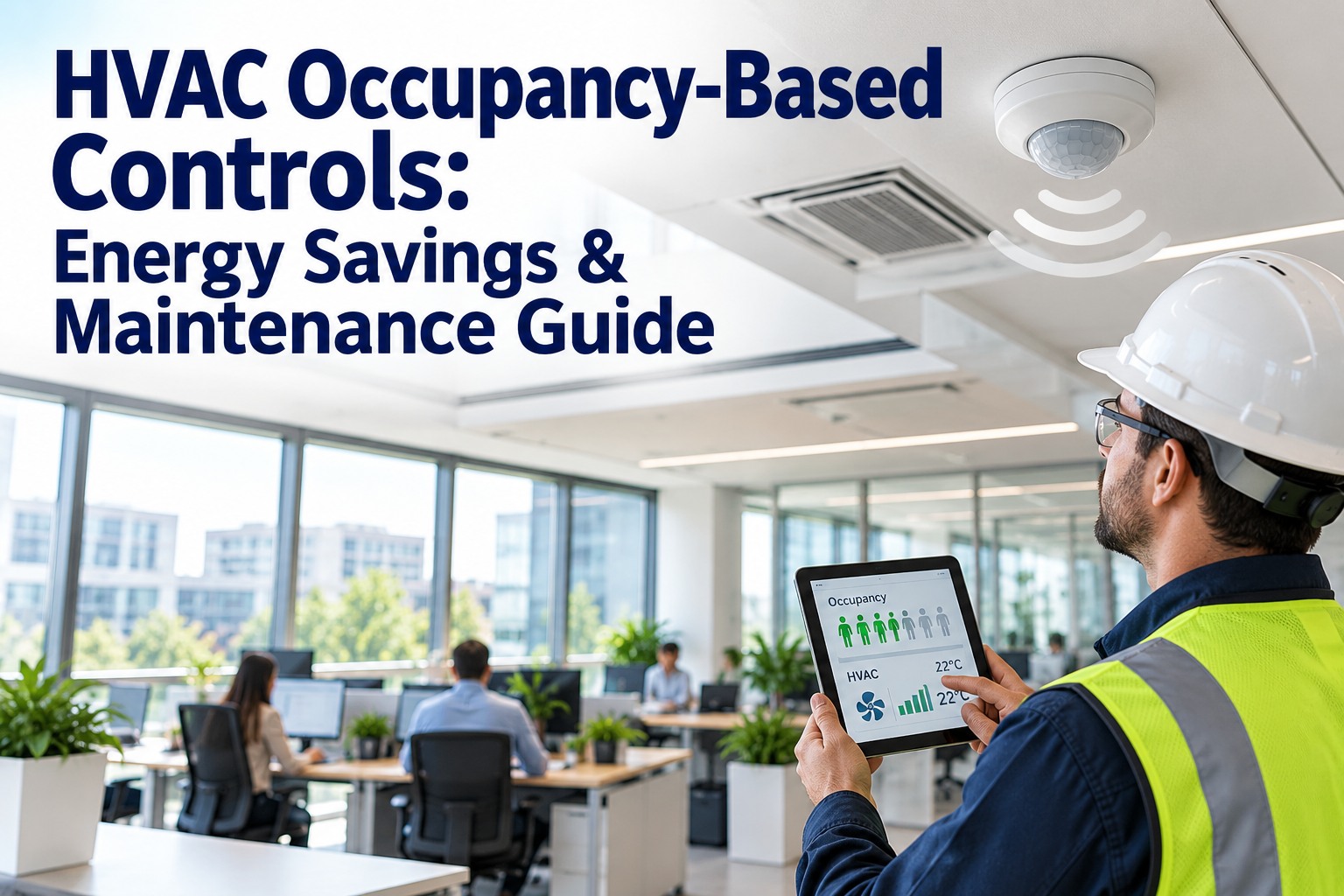
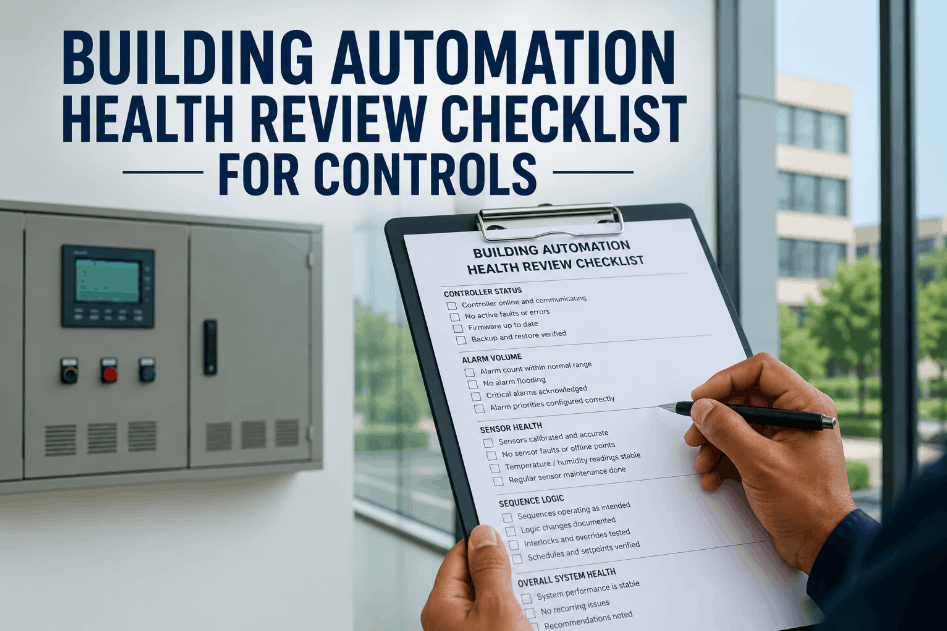
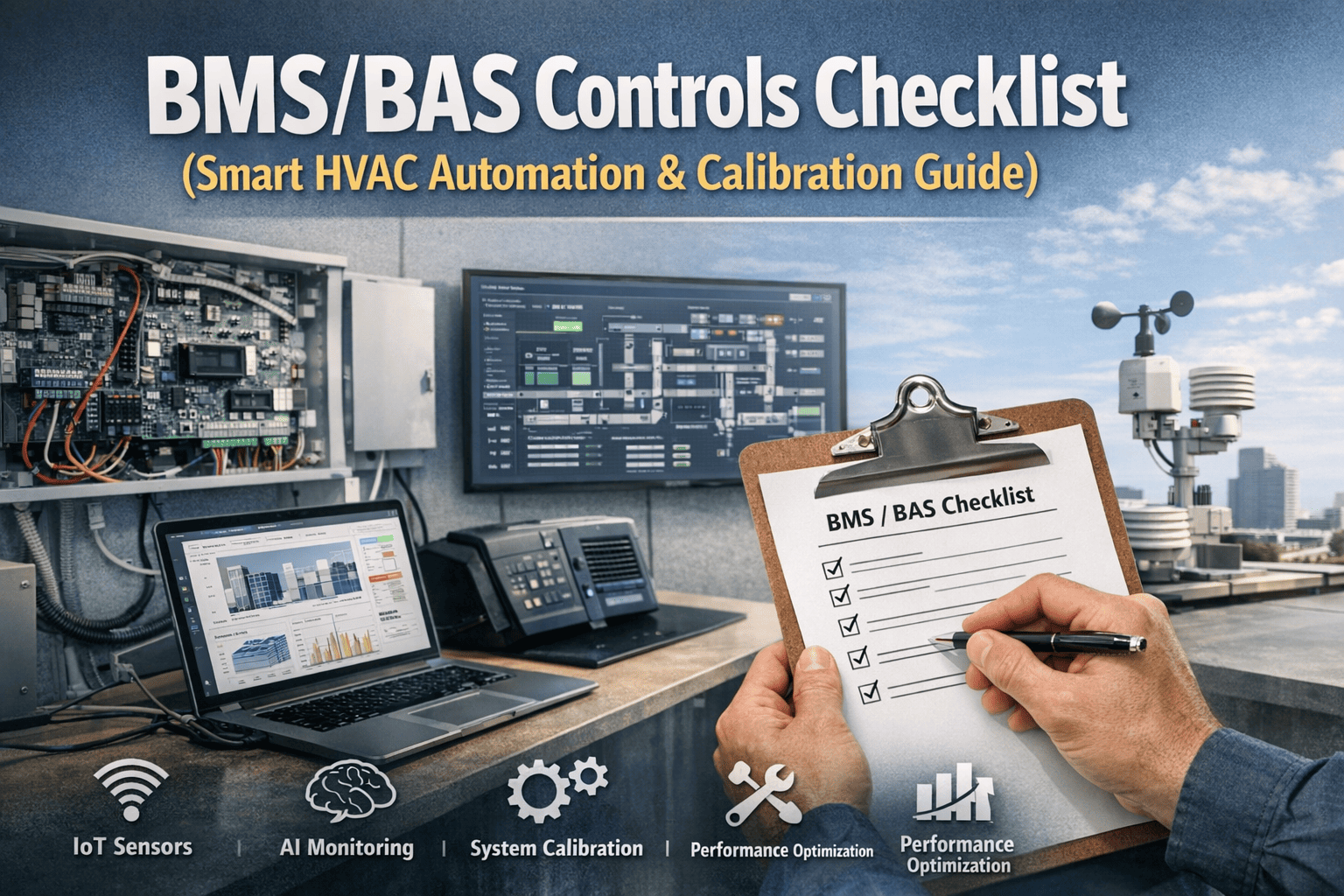
An HVAC system running a fixed 7am-7pm schedule in a building that is 30% occupied at 10am and 60% occupied at 2pm is paying full fuel for empty rooms. Occupancy-based controls close that gap — sensors read the room, the BMS modulates airflow, temperature setpoint and ventilation, and the energy bill falls by 15-40% without a single thermostat complaint. The catch is that occupancy sensing is only as good as the maintenance behind it. A dusty PIR, a drifted CO₂ sensor, a dead badge-reader input, and the "smart" control reverts to running the fallback schedule — invisible, until the utility bill arrives. OXMAINT AI is the AI-powered HVAC maintenance software that tracks every sensor as an asset, runs the drift-and-dust PM calendar, raises WOs on BMS fallback events and keeps the energy-savings record on the same screen as the maintenance program.
HVAC OCCUPANCY-BASED CONTROLS · ENERGY SAVINGS & MAINTENANCE · 2026
HVAC Occupancy-Based Controls: Energy Savings & Maintenance Guide
Six sensing technologies, four control maturity levels, one PM cadence. OXMAINT AI tracks every occupancy sensor as an asset, runs the drift-and-dust PM calendar, flags BMS fallback events and keeps the savings and the maintenance on one record.
15-40%
HVAC energy saved vs fixed schedule
6
sensing technologies to choose from
1
PM calendar keeps the savings real
Six Occupancy Sensing Technologies — How The BMS Knows A Room Is Full
Occupancy data arrives in six flavors. Each one has strengths, blind spots and a maintenance signature. OXMAINT AI tracks each sensor as an asset so the HVAC maintenance software knows which cleaning cadence applies to which device.
PIR
Passive infrared
The default ceiling / wall sensor. Reads body heat movement. Cheap, reliable, blind to stationary people (a reader at a desk).
PM: dust lens quarterly · check timeout
US
Ultrasonic
Pings the room with ultrasound; detects micro-motion a PIR misses. Overcounts airflow / HVAC noise if sensitivity is high.
PM: sensitivity verify annually
DUAL
PIR + ultrasonic (dual-tech)
AND / OR logic across both sensors. Fewer false-off events; the standard for OR, conference rooms, labs.
PM: lens + sensitivity annual
CO₂
CO₂ concentration
NDIR sensor reads room CO₂ as a proxy for people-count. Drives Demand-Controlled Ventilation (DCV) directly.
PM: calibration drift annual
VIDEO
Camera / computer vision
Count-of-people from a wide-angle camera. Highest accuracy, highest capex, privacy and lens-fouling risks.
PM: lens clean quarterly · recalibrate
OTHER
Badge, Wi-Fi, booking
Door-badge reader, Wi-Fi device-count, room-booking schedule. Indirect but zero added hardware.
PM: integration health check
The Four Control Maturity Levels — Where The Building Sits
Occupancy-based control is a ladder. Most buildings sit between level 2 and level 3; level 4 is where predictive-schedule learning kicks in. OXMAINT AI tags each zone by its maturity level so the gap-closure plan is visible.
04
Predictive scheduling
ML learns actual occupancy patterns per zone over weeks; pre-conditions before expected arrival; relaxes earlier on light days.
30-40% save
03
Occupancy-triggered setpoint & airflow
Sensor-triggered reset — empty zone goes to unoccupied setback, VAV box pinches, OA damper modulates to CO₂ / DCV.
20-30% save
02
Scheduled + override
Fixed BMS schedule with manual override and after-hours timer. The majority baseline in commercial buildings.
5-10% save
01
Fixed-schedule only
7am-7pm, five days a week, regardless of actual building use. The legacy baseline.
baseline
Zone-Type × Sensing Strategy Matrix
Not every zone needs the same sensor stack. The matrix below documents the typical pairing per zone type — OXMAINT AI uses it as the design default when onboarding a new building.
Zone type
PIR / dual-tech
CO₂ / DCV
Camera / vision
Badge / booking
Private office
Primary
Backup
Open office
Secondary
Primary
Overlay
Backup
Conference room
Primary
Primary
Booking link
Lecture hall / auditorium
Secondary
Primary · DCV
Count overlay
Schedule
Lab / cleanroom
Dual-tech
Secondary
Badge
Retail / lobby
Secondary
Overlay
Primary
Hotel guest room
Primary
PMS integration
Where The Energy Actually Comes From — The Savings Stack
A 25% HVAC saving does not come from one place — it comes from four. The chart below breaks the typical savings stack for a well-tuned level-3 occupancy program.
TYPICAL ENERGY SAVINGS STACK · LEVEL-3 OCCUPANCY PROGRAM · VS FIXED SCHEDULE
Setpoint setback (empty-zone)
~10%
Airflow / VAV minimum reset
~7%
Ventilation DCV (OA damper to CO₂)
~5%
Night / weekend extended setback
~3%
Total vs fixed-schedule baseline
~25%
Sensor PM Cadence — How The Savings Stay Real
Occupancy savings are only real if the sensors are. OXMAINT AI runs the drift-and-dust PM calendar per sensor type so the BMS never silently reverts to the fallback schedule.
QUARTERLY
Lens / dust cleaning
PIR and camera lenses dust up and under-report occupancy; quarterly wipe with a dry cloth is the fastest savings-protection cycle.
ANNUAL
CO₂ sensor calibration
NDIR CO₂ sensors drift. Annual single-point calibration (ambient outdoor CO₂) or full two-point calibration where DCV is active.
ANNUAL
Sensitivity & timeout verify
Walk-test with timer; verify the sensor sees motion from the expected locations and the timeout is at the right value (typically 10-15 min).
EVENT
Post-renovation re-aim
Any ceiling, furniture or partition change can shift the sensor's field of view. Re-aim walk-test after renovations.
EVENT
BMS fallback alarm
If the BMS reverts a zone to fallback schedule more than N times a month, a WO is raised — the sensor or the integration is faulty.
EVENT
Integration health check
Badge / booking / Wi-Fi feeds verified end-to-end quarterly — a dead integration shows no error, just a schedule going back to default.
Common Failure Modes — Why Savings Disappear
A commissioned program that was saving 22% can be back at baseline within six months without anyone noticing. These five failure modes are the usual cause; each one has a maintenance fix.
01
Dusty PIR / camera lens
Under-reports occupancy; zones go to setback with people still in them → manual override → override stays on. Fix: quarterly lens clean.
02
CO₂ drift upward
Over-reports occupancy; OA damper opens wider than needed; heating / cooling load climbs. Fix: annual calibration.
03
Timeout set too long
Zone stays "occupied" 30-45 minutes after people leave. Fix: timeout verify annually; 10-15 minute default.
04
Permanent manual override
A frustrated user hits override, nobody clears it, the zone runs permanent-occupied for months. Fix: override audit on BMS weekly.
05
Silent integration break
Badge / booking feed stops updating after an API change; BMS falls back to default schedule. Fix: integration health check.
Savings Are Earned In Commissioning. They're Kept In Maintenance.
The 25% savings number comes out of the commissioning report. The real number six months later depends on whether the PIR has been dusted, the CO₂ recalibrated and the integration verified. OXMAINT AI keeps the whole cadence on one calendar.
Live Occupancy & Energy Dashboard
The dashboard the energy manager opens: live occupancy by zone, savings-vs-baseline for the day, BMS fallback count and any open sensor WO. OXMAINT AI renders it from the BMS feed and the WO log.
OCCUPANCY & ENERGY DASHBOARD · MAIN BUILDING · 14:13
42%
building occupancy now
-23%
HVAC kWh vs baseline, MTD
3
zones on fallback schedule
Lab 3-204 · CO₂Reading 1,800 ppm vs peer 650 · drift suspectedWO 71422 · calibration
Open office 5N · PIR clusterFallback 11 times this week · dust / aimWO 71418 · lens & walk-test
Conf room 4-BPermanent override · 9 days runningReview · clear override
Conference room 7-AOccupancy-triggered, booking confirmedOK
Lecture hall A · CO₂DCV active · OA damper 32%OK
Payback Math — Why Occupancy Programs Earn Their Capex
An occupancy-based control retrofit is a capex item with a short payback. The math below is a working estimate for a 100,000 sq ft commercial office — OXMAINT AI holds the live number against each building.
Capex per zone
$150-800
Sensor + wiring + commissioning. Camera and dual-tech sit at the top of the band; PIR at the bottom.
HVAC energy savings
15-40%
Across HVAC fuel + electric; higher share where DCV applies and night / weekend run-time was long.
Payback
2-4 yr
For most commercial retrofits; faster where utility rebates apply or baseline is a fixed 24/7 schedule.
How OXMAINT AI Runs The Program
The sensor register, PM cadence, BMS fallback detector, integration health check, live board and payback-vs-actual tracker all live natively in the OXMAINT AI HVAC maintenance software — open a free account and bring the sensor register into OXMAINT AI.
Sensor Register
Every PIR, dual-tech, CO₂, camera, badge, booking feed as a tracked asset with its own PM cadence.
Dust-and-Drift PM Calendar
Quarterly lens clean, annual CO₂ calibration, annual sensitivity verify — the three cycles that keep savings real.
BMS Fallback Detector
Monitors how often each zone is on fallback schedule; above threshold auto-raises a sensor WO.
Override Audit
Weekly list of zones in permanent manual override; a reason is required to leave an override past 7 days.
Integration Health
Badge / Wi-Fi / booking integrations pinged on schedule; a silent break raises a WO before the schedule reverts.
Savings Vs Baseline
Live HVAC kWh / BTU vs the fixed-schedule baseline; the dashboard the energy manager actually opens.
Frequently Asked Questions
Which sensing technology is best for most commercial buildings?
Dual-tech PIR + ultrasonic for enclosed spaces (private office, conference, lab); CO₂ for larger open areas and lecture halls where DCV is the main lever. Camera / vision where capex is justified by density or privacy constraints are low. Badge / booking as backup almost everywhere.
What's the typical payback for a retrofit?
2-4 years for most commercial buildings; faster where the baseline is a long fixed 24/7 schedule or where utility rebates apply. The ongoing maintenance cost (dust, calibration, walk-test) is small compared to the savings leak when it is skipped.
How much savings do we lose when a sensor is dirty?
A dust-fouled PIR cluster that triggers 10-15 fallback events per week typically costs a few percent of the HVAC savings in that zone. Across a building, un-maintained sensors can erase a third to half of the commissioned savings within a year. OXMAINT AI counts the fallback events so the leak is visible.
Does occupancy control affect indoor air quality?
Properly commissioned, no — DCV uses CO₂ as a people-count proxy and modulates ventilation to maintain ASHRAE 62.1 minimums. Mis-commissioned, yes — a CO₂ sensor drifted low can under-ventilate a packed room. The annual calibration PM is what prevents it, which is why OXMAINT AI makes it non-skippable.
The Sensor Register Keeps The Savings Honest.
Load the occupancy program into the OXMAINT AI HVAC maintenance software — sensor register, dust-and-drift PM cadence, BMS fallback detector, override audit, integration health check and live savings-vs-baseline dashboard. The 25% commissioning number stays the 25% operating number.