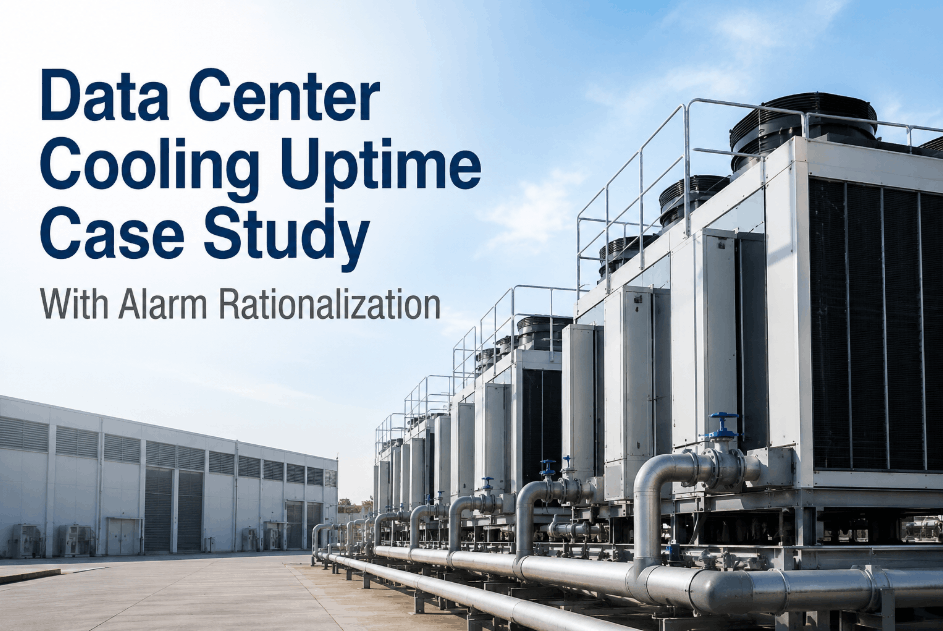
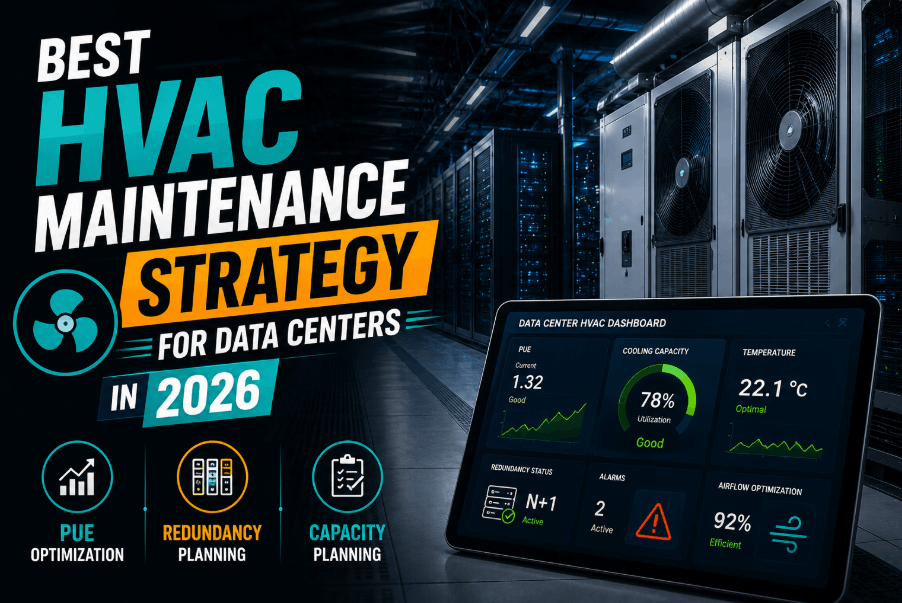
Data center cooling reliability is not a comfort consideration — it is a business continuity imperative. Thermal excursions that persist beyond seconds can trigger emergency shutdowns, hardware damage, and SLA breaches that cost multiples of the cooling infrastructure that failed to prevent them. Sign Up Free to schedule, track, and document every cooling PM task across your critical site infrastructure in OxMaint CMMS. From precision air handlers to chilled water plant inspections, OxMaint structures preventive maintenance around the uptime targets and redundancy configurations that mission-critical operations demand. Book a Demo to see how data center facility teams use OxMaint to enforce cooling PM compliance and surface fault indicators before thermal incidents occur.
Enforce Cooling PM Compliance Across Critical Site Infrastructure in OxMaint
Schedule CRAC/CRAH maintenance, track chilled water plant PM, manage redundancy testing, and document cooling uptime — all in one platform built for mission-critical facilities.
Data Center Cooling Reliability Benchmarks by Tier Classification
Uptime Institute's Tier classification framework defines cooling reliability expectations from Tier I through Tier IV. Each tier carries distinct redundancy requirements, PM intervals, and fault tolerance standards that directly shape maintenance program design. Sign Up Free to configure your data center cooling assets and PM schedules in OxMaint aligned to your Tier classification today.
Critical Cooling System PM Priorities for Data Centers
Data center cooling PM programs must cover multiple interdependent system layers — from precision air handling units to chilled water infrastructure and thermal management controls. Each carries distinct failure modes and required inspection intervals. Book a Demo to review OxMaint's data center cooling PM template library for critical site operations.
CRAC / CRAH Unit PM
Computer room air conditioning and air handler units require monthly filter inspection, quarterly coil cleaning, and semi-annual refrigerant charge verification. OxMaint schedules these tasks per unit — capturing completion timestamps and technician sign-offs for compliance documentation.
Chilled Water Plant Inspection
Chilled water systems serving data centers require quarterly chiller PM, monthly cooling tower water treatment verification, and annual heat exchanger inspection. OxMaint's asset hierarchy links all chilled water plant components to coordinated PM schedules with parent-child dependency tracking.
Economizer Mode Verification
Air-side and water-side economizers provide significant PUE benefits but require controls calibration and damper/valve inspection to function reliably. OxMaint work orders include economizer verification tasks within seasonal HVAC PM cycles — ensuring efficiency gains aren't lost to control failures.
Redundancy Failover Testing
Tier III and IV data centers require documented failover testing to validate that redundant cooling paths perform as designed. OxMaint schedules failover test work orders, captures results digitally, and maintains the test history required for Tier certification audits and insurance reviews.
Thermal Monitoring Integration
OxMaint's anomaly detection links temperature and humidity threshold breaches to automatic work order creation — ensuring that thermal excursions in raised floor or hot-aisle environments trigger immediate inspection workflows rather than waiting for scheduled PM cycles.
Humidity and Condensation Control
Relative humidity outside the ASHRAE A1–A4 envelope causes electrostatic discharge and condensation risks. OxMaint inspection checklists include humidity sensor calibration and humidification system PM — maintaining the environmental stability that hardware warranties and SLA commitments require.
5 Data Center Cooling Failures That Structured PM Prevents
CRAC Unit Refrigerant Loss
Slow refrigerant charge depletion degrades CRAC cooling capacity weeks before unit shutdown. OxMaint PM checklists include refrigerant charge verification at each service interval — catching low-charge conditions before they reach critical threshold during high-density compute events. Sign Up Free to configure CRAC PM schedules with refrigerant verification tasks in OxMaint.
Cooling Tower Fouling and Legionella Risk
Cooling towers serving chilled water plants require monthly water treatment verification and quarterly biological contamination testing. OxMaint's compliance module logs water chemistry results and treatment completion — providing the audit trail required by ASHRAE 188 Legionella risk management programs.
Hot Aisle Containment Integrity Loss
Damaged blanking panels, failed containment curtains, and improper cable routing degrade hot-aisle/cold-aisle separation — raising cooling energy consumption and increasing inlet temperatures. OxMaint inspection checklists include containment integrity as a required task at each quarterly PM cycle.
Economizer Controls Failure
Economizer damper or valve failures that go undetected force mechanical cooling to run during periods when free cooling would suffice — adding 15–25% to cooling energy spend with no operational alert. OxMaint PM schedules include economizer controls verification during each seasonal transition inspection.
Redundant Path Failures Hidden by Primary Operation
Redundant cooling paths that fail silently while the primary path operates create the illusion of full N+1 protection when actual redundancy is gone. OxMaint schedules documented failover testing to validate redundant path readiness — ensuring the redundancy that Tier certification requires actually exists. Book a Demo to see OxMaint's redundancy testing workflow for data center cooling.
Mission-Critical Cooling Needs Mission-Critical PM Compliance
OxMaint gives data center teams structured PM scheduling, failover test documentation, anomaly-triggered work orders, and compliance audit trails — built for Tier III and IV uptime requirements.
Frequently Asked Questions: Data Center Cooling Reliability
What uptime target should data center cooling systems achieve?
Tier III facilities target 99.982% uptime (1.6 hours permitted downtime annually); Tier IV targets 99.9999% (31 seconds). Both require documented PM compliance and failover testing to validate cooling redundancy.
How often should CRAC/CRAH units be serviced in a data center?
Monthly filter inspection, quarterly coil cleaning and refrigerant check, and semi-annual comprehensive service are standard for mission-critical CRAC/CRAH units. Higher-density compute environments may require increased frequency.
What is the most common cause of preventable data center cooling failures?
Coil fouling, refrigerant charge depletion, and undetected redundant path failures account for approximately 45% of cooling-related data center incidents — all preventable with structured PM programs tracked in a CMMS.
How does OxMaint support data center cooling compliance documentation?
OxMaint captures timestamped inspection records, refrigerant logs, water treatment results, and failover test outcomes — providing the complete audit trail required for Tier certification, insurance, and regulatory reviews.
Can OxMaint trigger work orders from cooling system anomalies?
Yes. OxMaint's anomaly detection links threshold breaches in temperature, humidity, and energy consumption to automatic work order creation — ensuring thermal events trigger immediate inspection workflows rather than waiting for scheduled PM.
How does OxMaint handle redundancy testing documentation?
OxMaint schedules failover test work orders, captures test results with technician sign-off, and maintains a searchable test history — providing the documented proof of redundancy that Tier III and IV audit requirements demand.
Your Data Center Cooling Reliability Starts With Structured PM
OxMaint gives critical site teams the PM scheduling, anomaly detection, redundancy testing workflows, and compliance documentation to protect cooling uptime at every Tier level.