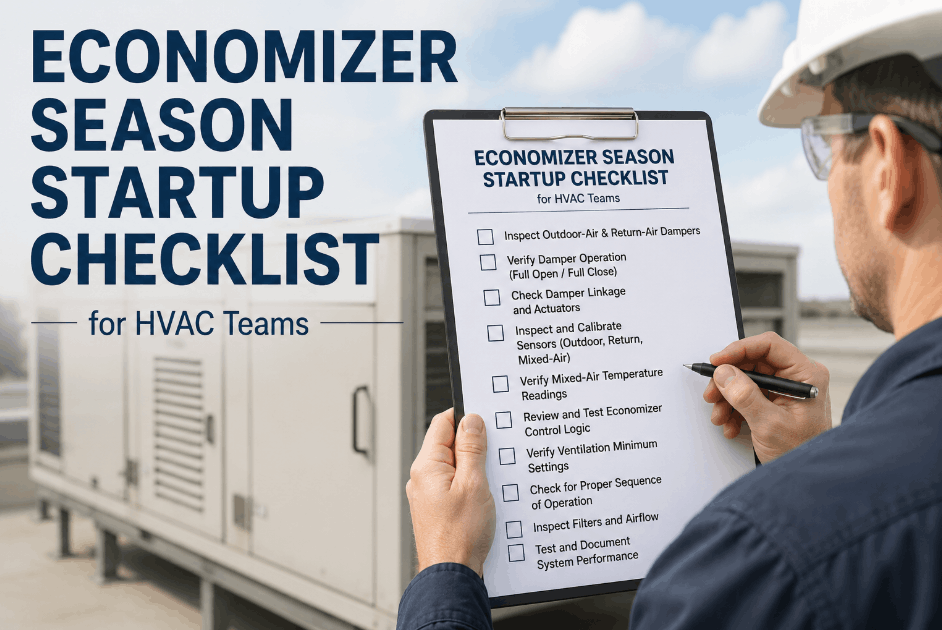
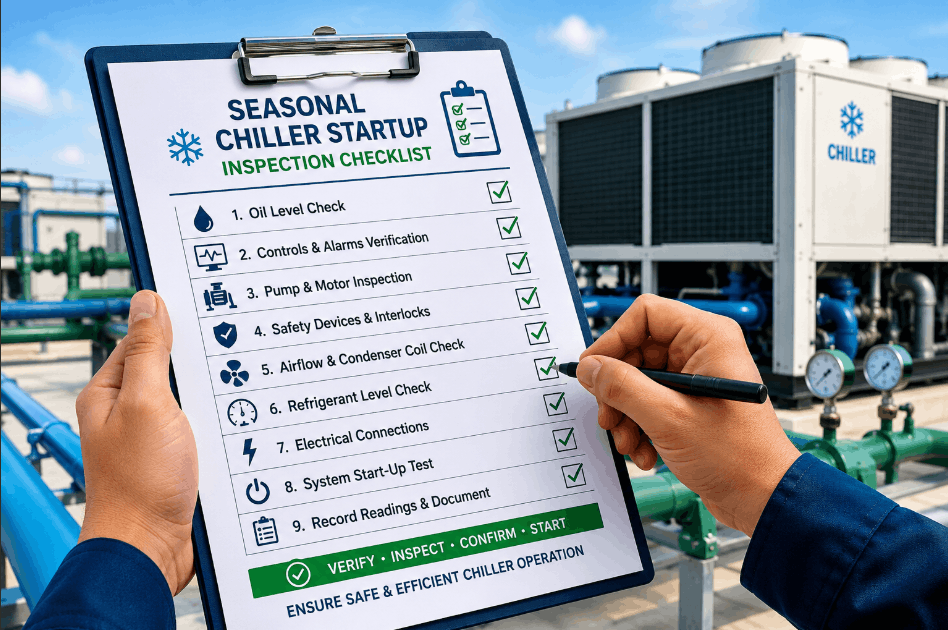
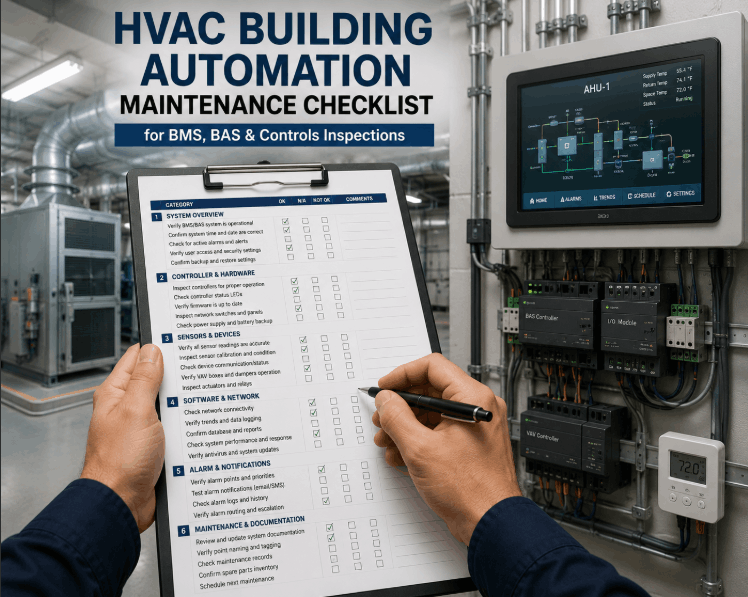
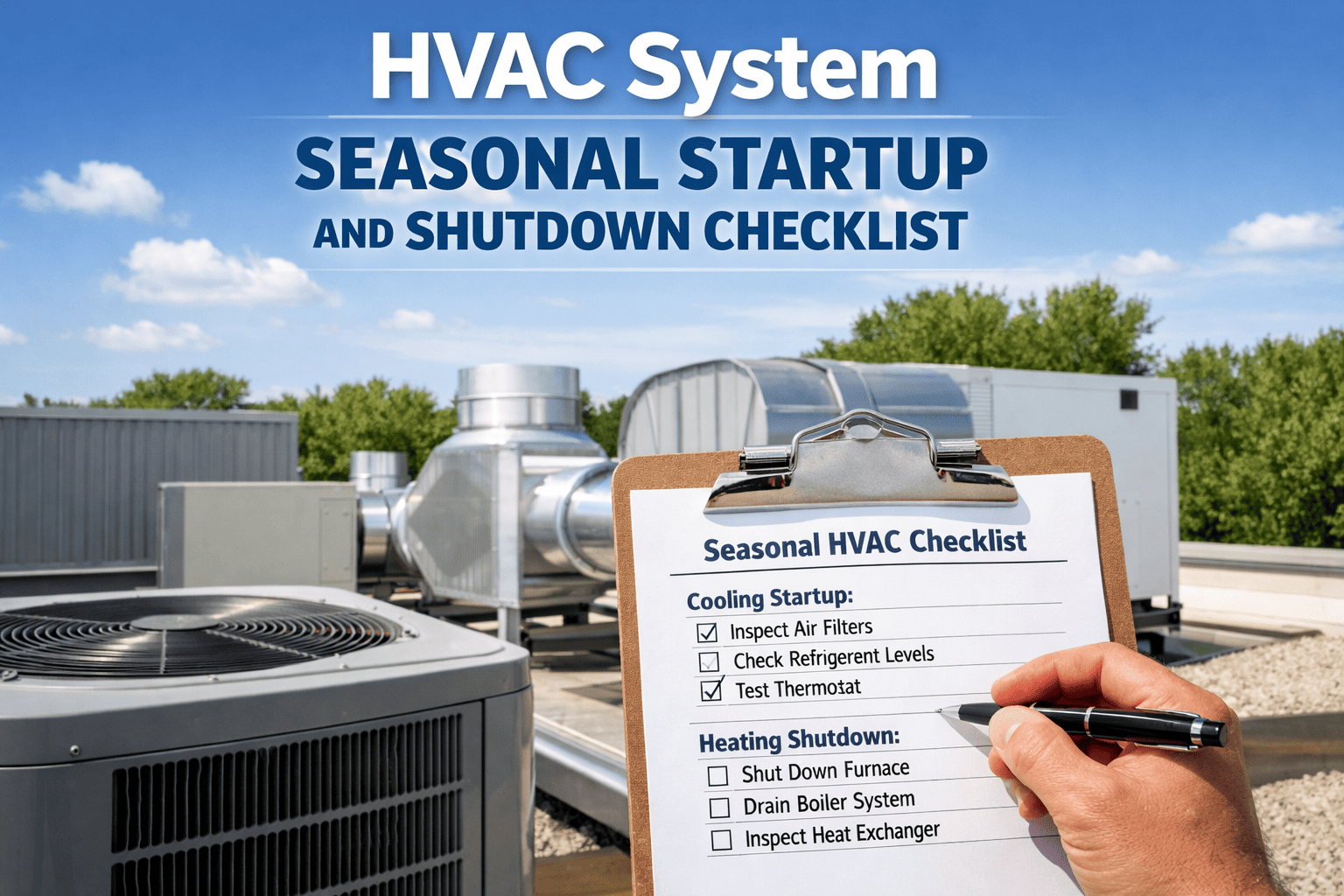
HVAC systems recover or waste energy in the first days of economizer season — and the difference comes down to how well your team validates dampers, sensors, and control sequences before free cooling demand peaks. Missed calibration steps, stuck actuators, and misread mixed-air temperatures silently degrade indoor air quality and energy performance across your entire building portfolio. Oxmaint's Sign up free platform gives HVAC maintenance teams a structured mobile environment to run seasonal startup checklists, capture field readings, and close out inspection records with full audit trails — so every economizer is verified before it runs. Whether you manage commercial buildings, healthcare facilities, or campus operations, unverified economizer startup creates invisible comfort and compliance risk across every air handler in your fleet. Book a demo to see how Oxmaint helps facilities teams standardize seasonal HVAC startup and track completion by technician, unit, and zone. Use this checklist before economizer season begins to confirm every unit is ready to deliver clean, controlled free cooling.
Run Economizer Startup Checklists with Oxmaint
Capture field readings, verify control sequences, and generate audit-ready seasonal startup records — built for HVAC maintenance teams managing multi-unit facilities.
1. Outdoor Air Damper & Actuator Inspection
Damper mechanical condition determines whether your economizer can modulate cleanly. A seized actuator or misaligned blade will hold the system in a fixed position regardless of what the controller commands.
2. Sensor Calibration & Signal Verification
Economizer controls are only as accurate as the sensors feeding them. A single offset outdoor air temperature sensor can prevent free cooling from engaging on days it would be most effective.
3. Control Logic & Sequence Verification
Even correctly calibrated sensors and functional dampers deliver no value if the control sequence is misconfigured. Verify the BAS sequence before the first demand day — not after a complaint.
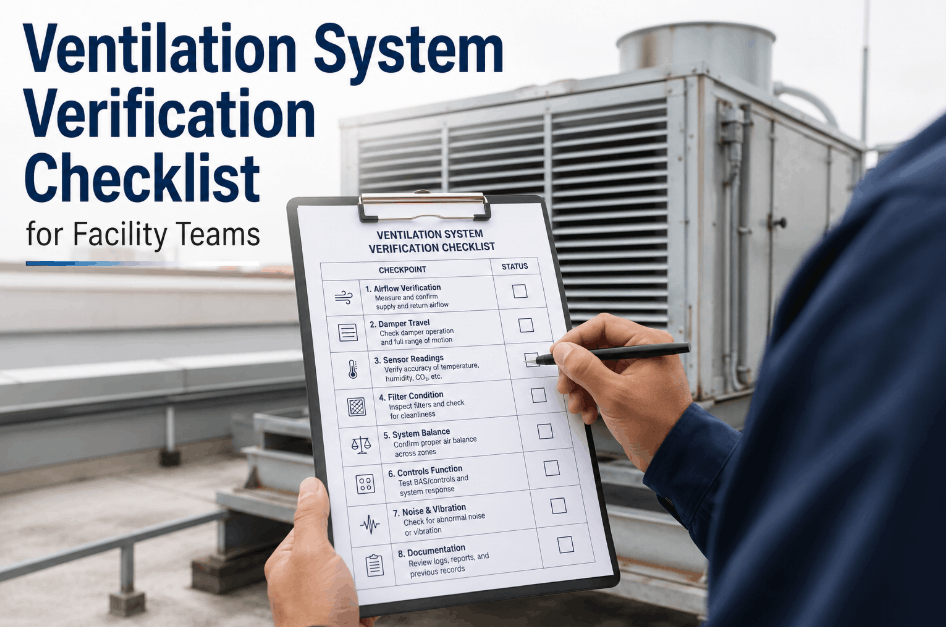
4. Airside System Condition Check
Economizer performance depends on clean airflow paths. Dirty filters, blocked coils, and leaking duct connections reduce free cooling delivery regardless of how well the controls perform.
5. Performance Verification & Documentation
Completing a startup without recorded baseline readings leaves your team with nothing to compare against when performance degrades mid-season. Capture readings now to defend performance and close out inspections cleanly.
Standardize HVAC Seasonal Startup Across Your Facility
Oxmaint gives HVAC teams mobile checklists, real-time field capture, and manager-level visibility across every unit startup — so free cooling season starts with confidence, not guesswork.
Frequently Asked Questions — Economizer Season Startup
1. When should economizer startup inspection be completed each year?
Complete economizer startup 4–6 weeks before the first expected free cooling demand in your climate zone. Early completion allows time to address actuator, sensor, or control issues before peak season pressure prevents scheduled service access.
2. What is the most common reason economizers fail to engage during free cooling conditions?
Offset outdoor air temperature or enthalpy sensors are the leading cause. A sensor reading 3–5°F high will prevent economizer engagement on valid free cooling days, wasting mechanical cooling energy without triggering any fault alarm.
3. How does Oxmaint support HVAC seasonal startup checklists?
Oxmaint provides mobile inspection forms with mandatory field capture, GPS-timestamped completion records, and manager dashboards tracking startup completion by unit, zone, and technician — replacing paper logs and spreadsheet tracking across multi-building portfolios.
4. What readings should be recorded during economizer startup verification?
Capture outdoor air temperature, mixed-air temperature, supply air temperature, damper position feedback, and actuator stroke confirmation at minimum. These baseline readings support mid-season diagnosis and regulatory inspection documentation without additional site visits.
5. Can economizer startup records be used for energy compliance reporting?
Yes. Many energy codes and green building standards require documented economizer functional testing. Timestamped, technician-signed startup records maintained in Oxmaint provide the audit trail needed for ASHRAE 90.1, Title 24, and LEED operations compliance submissions.
Ready to Run a Smarter HVAC Startup Program?
Oxmaint gives your maintenance team the mobile tools, structured checklists, and audit-ready records to verify every economizer before free cooling season — at scale, across every facility you manage.