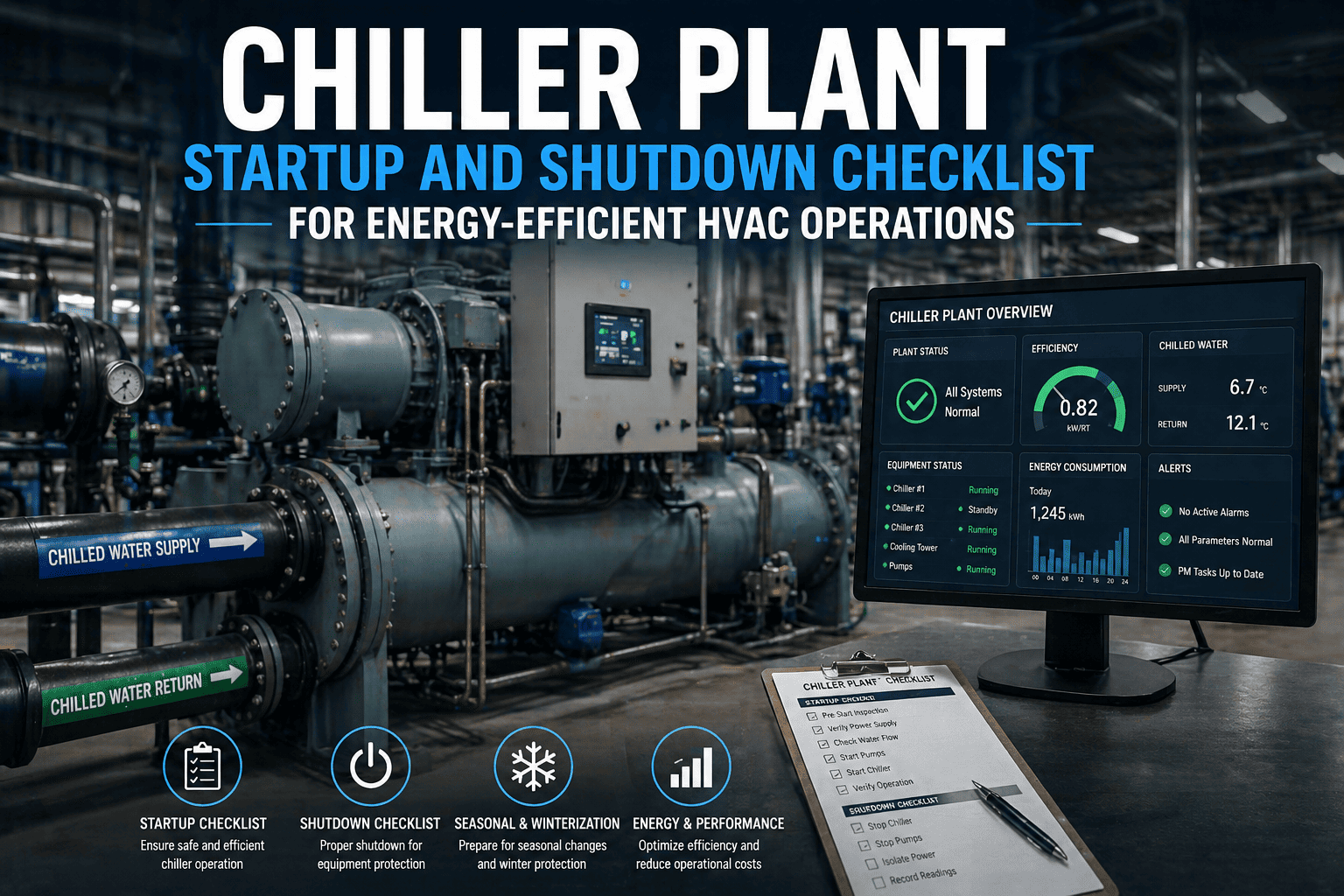
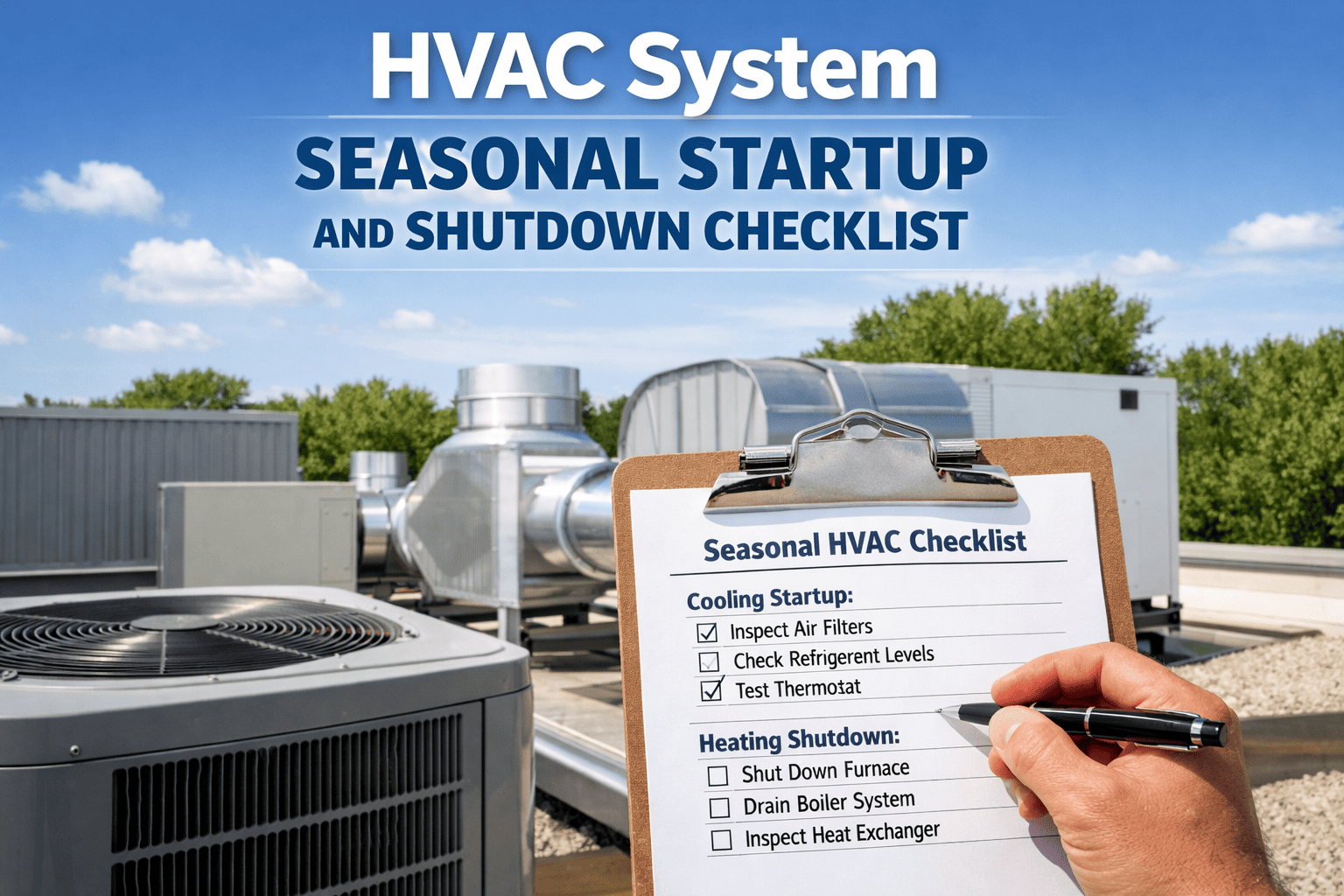
Every spring and fall, commercial HVAC systems face their highest risk of failure — not from years of wear, but from improper seasonal transitions. A chiller started without verifying refrigerant charge, or a boiler shut down with condensate left in the pipes, can mean weeks of downtime and repair costs that dwarf the entire year's PM budget. This checklist covers the exact tasks, sequence, and verification steps facility teams need to execute safe, compliant seasonal HVAC startups and shutdowns — for chillers, boilers, cooling towers, AHUs, and controls. Start your free trial on Oxmaint to digitize this checklist and assign tasks to your team automatically, or book a demo to see seasonal PM workflows live.
Checklist · Seasonal Maintenance · HVAC
Seasonal HVAC Startup and Shutdown Checklist
Spring startup, fall shutdown, coil cleaning, controls verification, refrigerant checks, and safety tasks — in the correct sequence for commercial facilities.
Spring Startup
Fall Shutdown
6
Asset categories covered
47
Individual checklist tasks
2
Seasons with separate sequences
EPA
Refrigerant compliance included
Spring Startup Checklist — Cooling Season Preparation
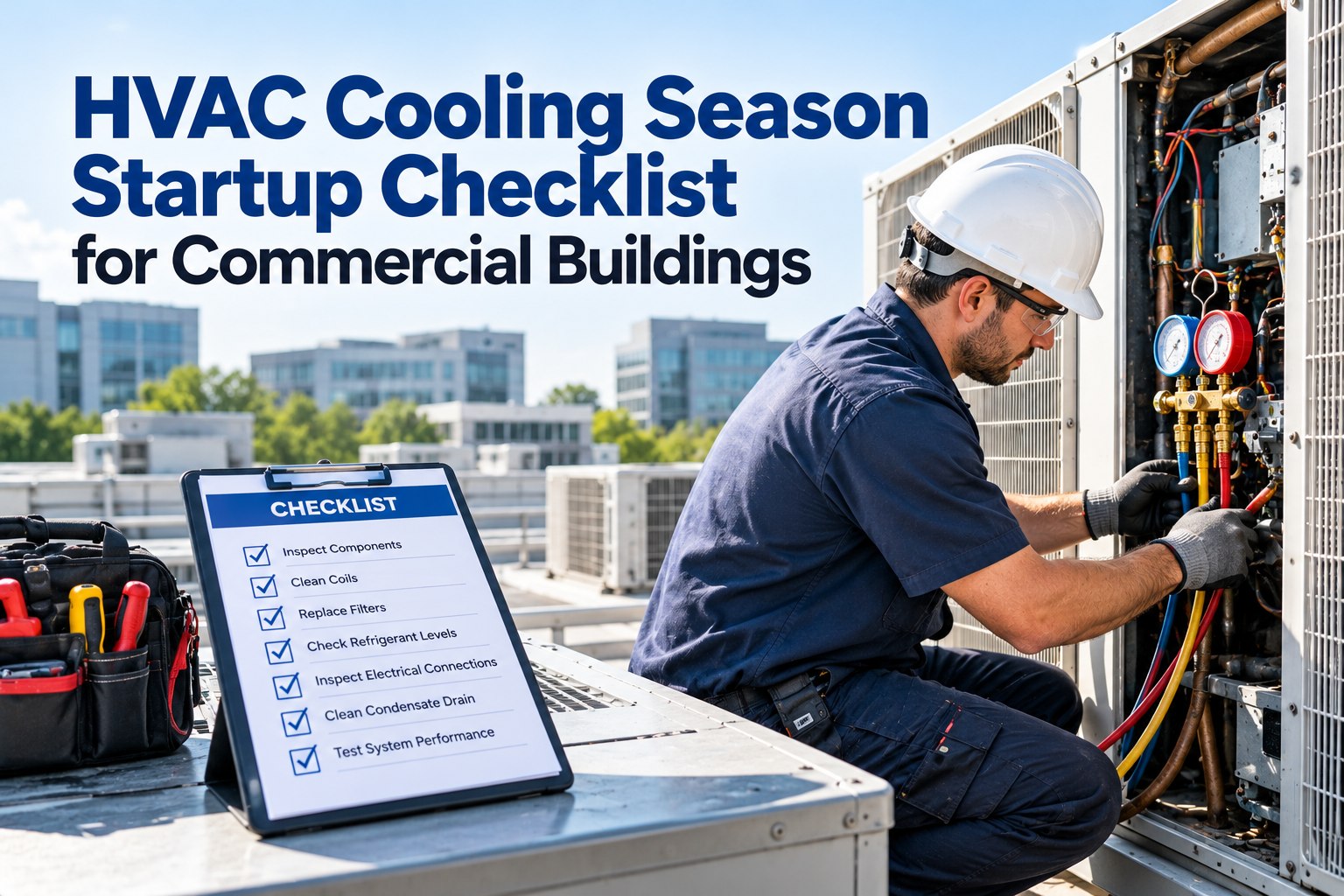
Start cooling season preparation 4–6 weeks before the expected first cooling demand day. This window allows time to address parts shortages, refrigerant procurement, and control calibration before the first hot day creates emergency pressure.
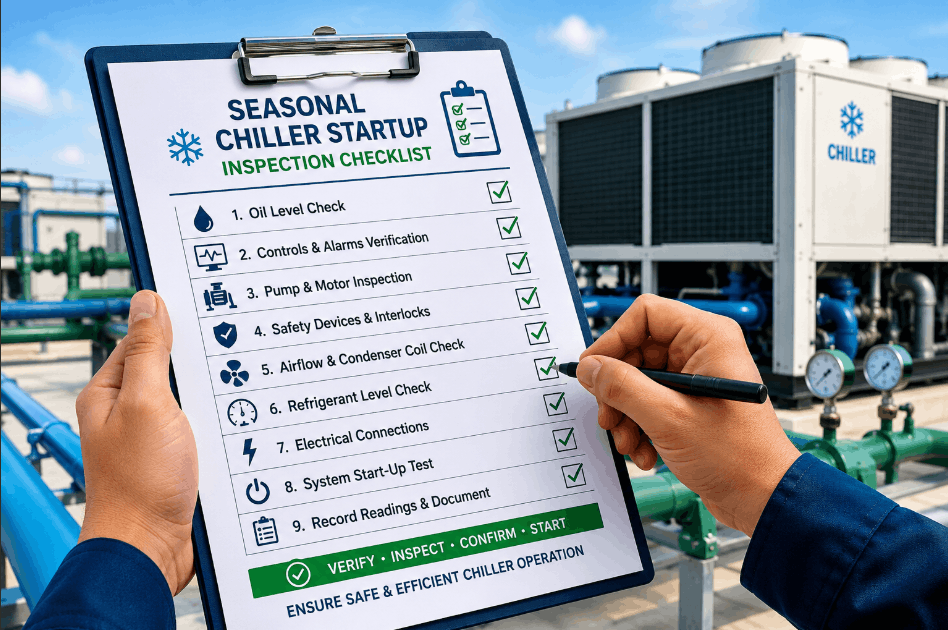
Refrigerant charge inspection and leak test — Electronic leak detector, subcooling/superheat readings. Pass: No leaks detected; charge within ±5% of nameplate. EPA 608
Oil sample analysis (compressor oil) — Send sample to accredited lab. Pass: Acidity, moisture, and metals within OEM limits.
Evaporator and condenser tube inspection — Visual inspection + eddy current if flagged. Pass: No fouling, scaling, or pitting visible.
Safety device test (high pressure, low pressure cutouts) — Functional test each cutout. Pass: All cutouts trip at nameplate setpoint ±5%. ASHRAE 15
Controls and BMS integration verification — Force chiller from BMS; verify setpoint response. Pass: Chiller responds to BMS command within 30 sec.
Purge unit function check (centrifugal chillers) — Verify purge unit cycles; log purge rate. Pass: Purge rate below OEM threshold. EPA 608
Basin cleaning and flushing (Legionella prevention) — Physical inspection after drain and clean. Pass: No sediment, biofilm, or visible contamination. ASHRAE 188
Fill media inspection for fouling or damage — Visual inspection of accessible fill sections. Pass: No blockage, biological growth, or structural damage.
Drift eliminator inspection — Visual; check for warping, cracking, missing sections. Pass: Full coverage with no gaps.
Fan blade inspection and balancing check — Visual + vibration reading at startup. Pass: Vibration within OEM specification.
Water treatment system startup and dosing verification — Chemical dosing log; water sample test. Pass: pH 7.5–8.5; conductivity within system design range. ASHRAE 188
Cooling coil cleaning (chemical or steam) — Visual inspection; before/after airflow measurement. Pass: Airflow within 5% of design; no fin blockage.
Filter replacement (transition to cooling-season MERV rating) — Install new filters; log MERV rating and date. Pass: Correct MERV rating installed; housings sealed.
Drain pan inspection and trap priming — Visual + pour water to verify trap function. Pass: Drain flows freely; no standing water.
Belt tension and drive condition check — Tension gauge; visual for cracking or fraying. Pass: Tension within OEM spec; no visible wear.
Economizer damper actuator and linkage check — Manual cycle through full range; verify BMS control. Pass: Full travel 0–100% without binding.
Run This Checklist Digitally — Assign, Track, and Close Tasks Automatically
Oxmaint converts this seasonal checklist into work orders assigned to your team, with photo evidence, digital sign-off, and automatic compliance logging.
Fall Shutdown Checklist — Heating Season Preparation
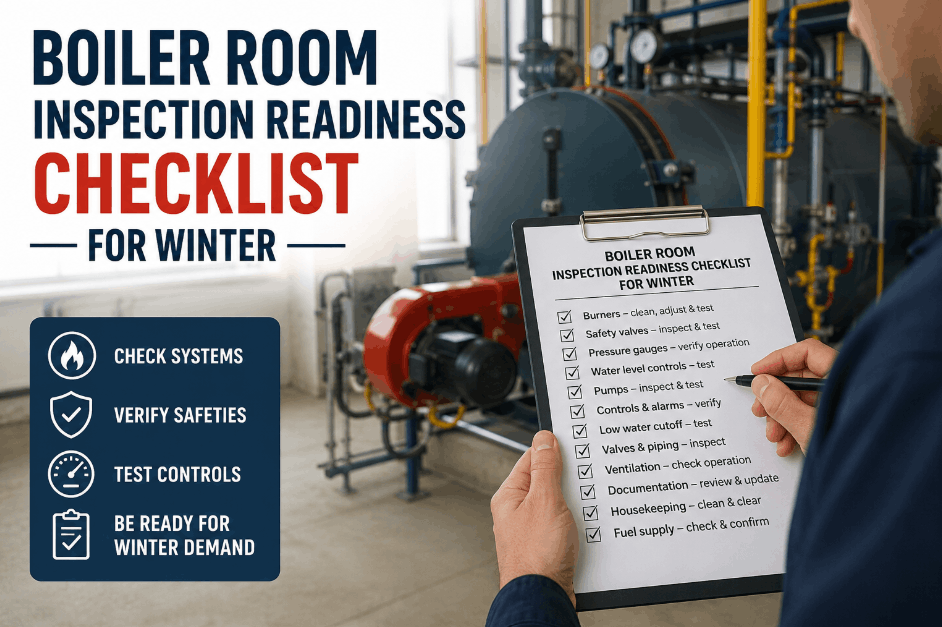
Shutdown tasks protect cooling equipment from freeze damage and prepare heating systems before first cold demand. The two-week window before the last expected cooling day is the target start — rushing shutdown is a leading cause of spring startup failures.
Combustion analysis and burner tune-up — Flue gas analyzer — O2, CO, CO2, flue temp. Pass: CO below 200 ppm; O2 2–4%; efficiency above 80%. Local AHJ
Safety valve inspection and pressure test — Manual lift test; pressure setpoint verification. Pass: Valve lifts freely; reseats without weeping. ASME
Waterside chemical treatment verification — Water sample analysis. Pass: pH 8.5–10.5; dissolved oxygen below 0.005 ppm.
Low-water cutoff device test — Slow drain test under operating pressure. Pass: Burner cuts off before low-water condition reached. ASME CSD-1
Flue and stack inspection for blockage or corrosion — Visual inspection with mirror or camera. Pass: No blockage, bird nests, or corrosion through flue.
Evaporator water side drain or glycol addition for freeze protection — Hydrometer reading or full drain confirmation. Pass: Glycol concentration protects to −10°F below site low; or dry.
Refrigerant circuit pressure check for winter storage — Pressure gauge — system isolated. Pass: Standing pressure within normal range for ambient temp. EPA 608
Oil heater energization (if equipped) — Verify heater circuit energized; confirm with amprobe. Pass: Heater drawing rated current.
Control panel cover sealed; moisture protection — Visual — all covers latched, weatherstripping intact. Pass: No open penetrations; pest-proof seals in place.
Expert Review
SR
"The most common cause of failed spring startups I see is improper fall shutdown — particularly on cooling towers. Teams drain the basin but skip the fill media and drift eliminator inspection, then wonder why they have biological fouling in April. A proper shutdown checklist that includes a post-drain inspection step would eliminate that failure mode entirely. Digital checklists with mandatory photo capture at each step are the only way to enforce this reliably across multiple sites."
Sandra Reyes, CEM, CFM
Certified Energy Manager · Facility Operations Director · 18 years in commercial HVAC operations
Seasonal Timing Reference
Spring Startup Sequence
Week −6
Chiller: Refrigerant check, oil sample, tube inspection
Week −4
Cooling tower: Basin clean, fill media, water treatment startup
Week −3
AHU/FCU: Coil cleaning, filters, drain pans, belts
Week −2
Controls: BMS integration test, economizer verification
Week −1
Full system test run; document readings; sign off
Fall Shutdown Sequence
Week −6
Boiler: Combustion analysis, safety valves, waterside treatment
Week −3
Chiller: Refrigerant pressure log, glycol or drain evaporator
Week −2
Cooling tower: Final basin drain, fill media inspection, covers
Week −1
AHU: Switch to heating coil mode; heating season filter install
Week 0
Boiler test fire; verify heating distribution; sign off all systems
Frequently Asked Questions
How far in advance should seasonal HVAC startup begin for a large commercial building?
For facilities over 100,000 sq ft with central chilled water plants, begin 6 weeks before the expected first cooling demand. This timeline accommodates refrigerant procurement lead times (currently 4–6 weeks for some HFCs), lab turnaround for oil samples, and contractor scheduling during peak spring demand. Waiting until the first hot forecast means you'll be competing with every other facility for the same technicians and parts.
Use Oxmaint to set seasonal startup PM triggers automatically — the system generates work orders on your target lead-time date, not when the heat arrives.
Which checklist item is most commonly skipped and causes the biggest downstream problems?
Drain pan inspection and condensate trap priming on AHUs is the single most skipped task — and the one that generates the most summer service calls. A dry or clogged trap causes water to back up into the unit, saturating insulation, promoting mold growth, and triggering drain pan float switches that shut down the unit. The task takes 5 minutes but saves several hours of emergency response. Digital checklists with mandatory completion before the work order closes are the most reliable way to enforce it.
Book a demo to see how Oxmaint enforces task completion with photo verification.
Does Oxmaint support seasonal checklist templates that auto-generate every spring and fall?
Yes. Oxmaint supports seasonal PM triggers that fire on a fixed calendar date each year — for example, April 1 for cooling startup and October 1 for heating startup. When the trigger date arrives, the system automatically generates work orders for every asset in the seasonal template, assigns them to the appropriate technician or team, and notifies the facility manager. Completed tasks log timestamp, technician, and photo evidence — building your compliance record automatically. The seasonal checklist in this page can be imported directly as a template.
Start your free trial to set up your first seasonal PM trigger today.
What are the compliance requirements for refrigerant handling during seasonal startup and shutdown?
Under EPA Section 608, any technician handling refrigerants in systems with more than 5 lbs of charge must be EPA 608 certified. Refrigerant leak records must be maintained for systems with more than 50 lbs of charge — with leaks exceeding 30% of charge in a 12-month period triggering a mandatory repair requirement. During shutdown, refrigerant must not be vented to atmosphere; recovery equipment is required. All refrigerant transactions (recovery, recharge, disposal) must be logged and retained for 3 years. Oxmaint logs all refrigerant-related work order findings with timestamps to satisfy these retention requirements automatically.
Digitize This Checklist — Assign Tasks and Track Completion Automatically
Oxmaint converts seasonal HVAC checklists into assigned, tracked, and signed-off work orders. Every task verified. Every season compliant. No paper binders.