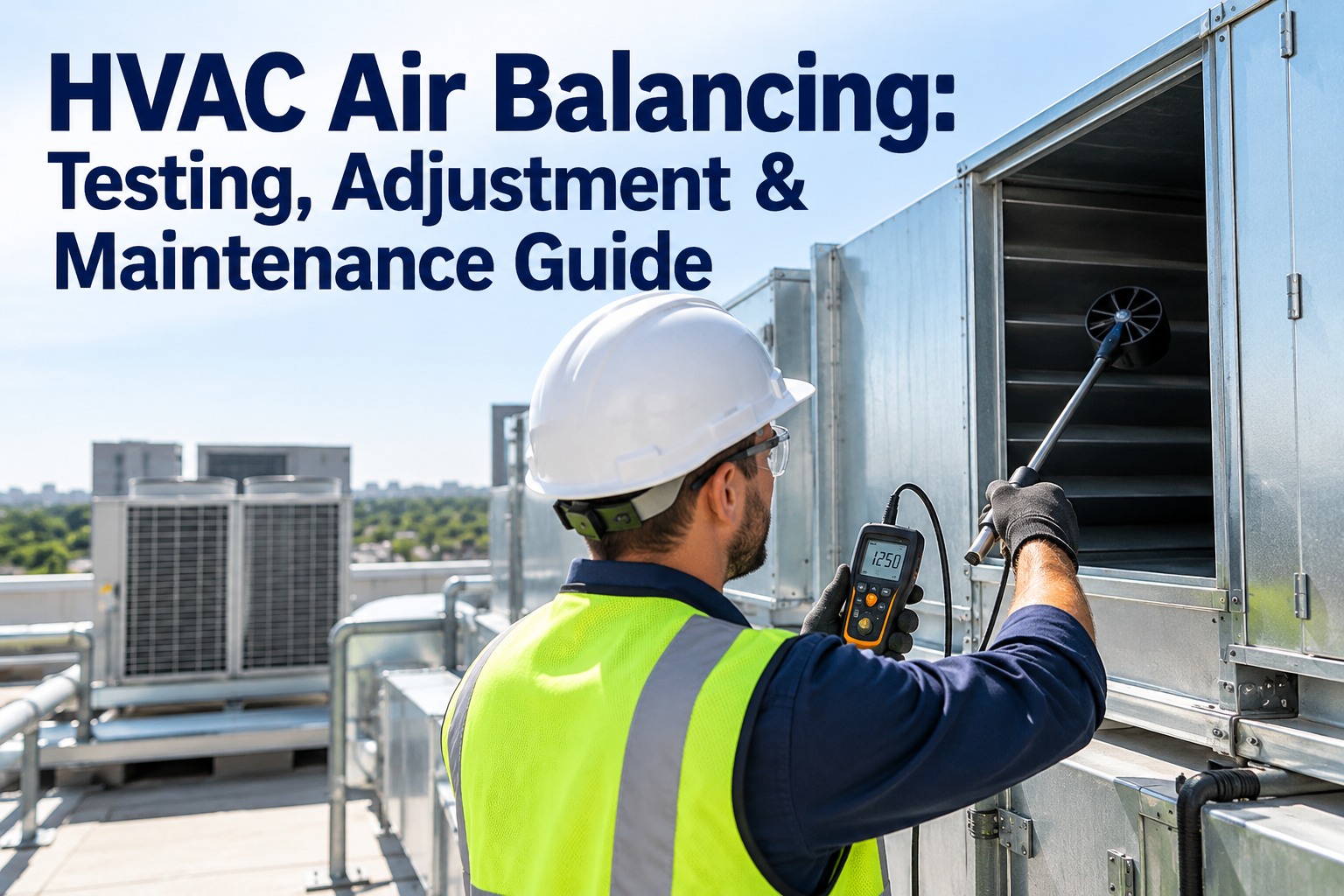
HVAC Air Balancing: Testing, Adjustment & Maintenance Guide
By Willam Jerry on October 22, 2026
One room is freezing while the one next door is stuffy. A door whistles. The system runs flat out and the energy bill climbs anyway. These are the signs of an HVAC system that was never balanced — or has drifted out of balance — so some zones get too much air and others get starved. Air balancing fixes that by measuring the airflow at every outlet and adjusting it to the design intent. This guide walks the testing, adjusting and balancing procedure, the method, the instruments, and how to keep a balanced system balanced with OXMAINT AI — or book a demo of HVAC PM scheduling in OXMAINT AI.
HVAC Air Balancing: Testing, Adjustment & Maintenance Guide
Hot-and-cold complaints, pressure problems and wasted energy almost always trace back to airflow that isn't where the design put it. OXMAINT AI is the AI-powered CMMS that schedules the balancing work, logs the measured readings against design, and tracks every adjustment as a work order — so a balanced system stays balanced, with the proof on record.
testing, adjusting and balancing — the three phases of the procedure
±10%
of design airflow is a commonly cited acceptance band at each outlet
CFM
airflow measured at every diffuser, grille and register against its target
Report
a documented TAB report is the deliverable that proves the work
What Air Balancing Actually Does
A duct system naturally sends the most air down the path of least resistance — the outlets closest to the fan get too much, the far ones get too little. Balancing redistributes that airflow so every zone receives what the design calls for, which fixes comfort, pressure and efficiency at once. Start free and track airflow readings by zone in OXMAINT AI.
Uneven Comfort
Some rooms too hot, others too cold, no setpoint that satisfies everyone.
Pressure Problems
Doors that slam or whistle, spaces that should be positive going negative.
Wasted Energy
Fans running harder than needed to force air past an unbalanced network.
Short Equipment Life
A system fighting itself cycles and strains more than a balanced one.
The Three Phases: Test, Adjust, Balance
TAB is a sequence, not a single task. You measure what the system is actually doing, adjust the equipment and dampers, then balance the distribution so every branch and outlet lands on target — and verify it holds.
01
Test
Measure total system airflow at the fan, then the airflow at each branch and outlet, plus static pressure and fan speed. Record the actual numbers against design.
→
02
Adjust
Set the fan to deliver the required total airflow — fan speed, drive or VFD — so there is enough air in the system to distribute before any branch balancing begins.
→
03
Balance
Proportionally set the dampers so every branch and outlet receives its design share, then trim to final figures and document the result in a TAB report.
The Proportional Balancing Method
The accepted approach isn't to set each outlet in isolation — it's proportional balancing, where outlets are brought into the right ratio to each other first, then the whole system is trimmed to design together. This is the sequence a balancer follows. Book a demo of logging balancing runs in OXMAINT AI.
1
Establish total airflow
Set the fan so the system is moving its required total volume before touching any branch.
2
Find the index outlet
Identify the outlet or branch with the lowest ratio of measured to design airflow — the one working hardest to reach target.
3
Balance proportionally to it
Adjust the other outlets on each branch into the correct proportion relative to that index, working branch by branch.
4
Trim the system to design
With proportions set, bring the total back to design at the fan — every outlet moves together and stays in ratio.
5
Verify and record
Re-read every outlet, confirm each is within the acceptance band, and capture the final figures in the report.
The Instruments and What They Read
Balancing is only as good as the measurements behind it. Each instrument reads a different part of the picture — volume, velocity, pressure or speed.
Flow Hood (Balometer)
Captures total airflow volume (CFM) directly at a diffuser or grille — the workhorse of outlet balancing.
Anemometer
Vane or hot-wire — reads air velocity at a grille or in a duct, converted to volume with the area.
Pitot Tube & Manometer
Traverses a duct to read velocity pressure and static pressure for in-duct airflow and system pressure.
Tachometer
Reads fan and motor speed (RPM) to confirm the fan is delivering the set total airflow.
Keeping a Balanced System Balanced
A system balanced on commissioning day drifts — filters load, belts slip, dampers shift, coils foul. These are the recurring maintenance checks that hold the balance between full re-balances. Tick each as you complete it; the whole row toggles.
Why Systems Drift Out of Balance
Re-balancing gets scheduled when one of these quietly undoes the original work. Knowing the causes is how you catch the drift before the complaints start.
×
Loaded Filters
Rising resistance across a dirty filter starves every outlet downstream of it.
×
Slipping Belts
A worn or loose fan belt lowers the total airflow the whole system depends on.
×
Moved Dampers
Dampers nudged during other work throw the careful proportions off balance.
×
Fouled Coils
Dirt on the coil face adds resistance and reduces the air the fan can push.
×
Space Changes
Renovations, new partitions or added loads change what each zone needs.
×
Control Drift
VFD or BAS setpoints edited over time quietly move the delivered airflow.
How OXMAINT AI Holds the Balance
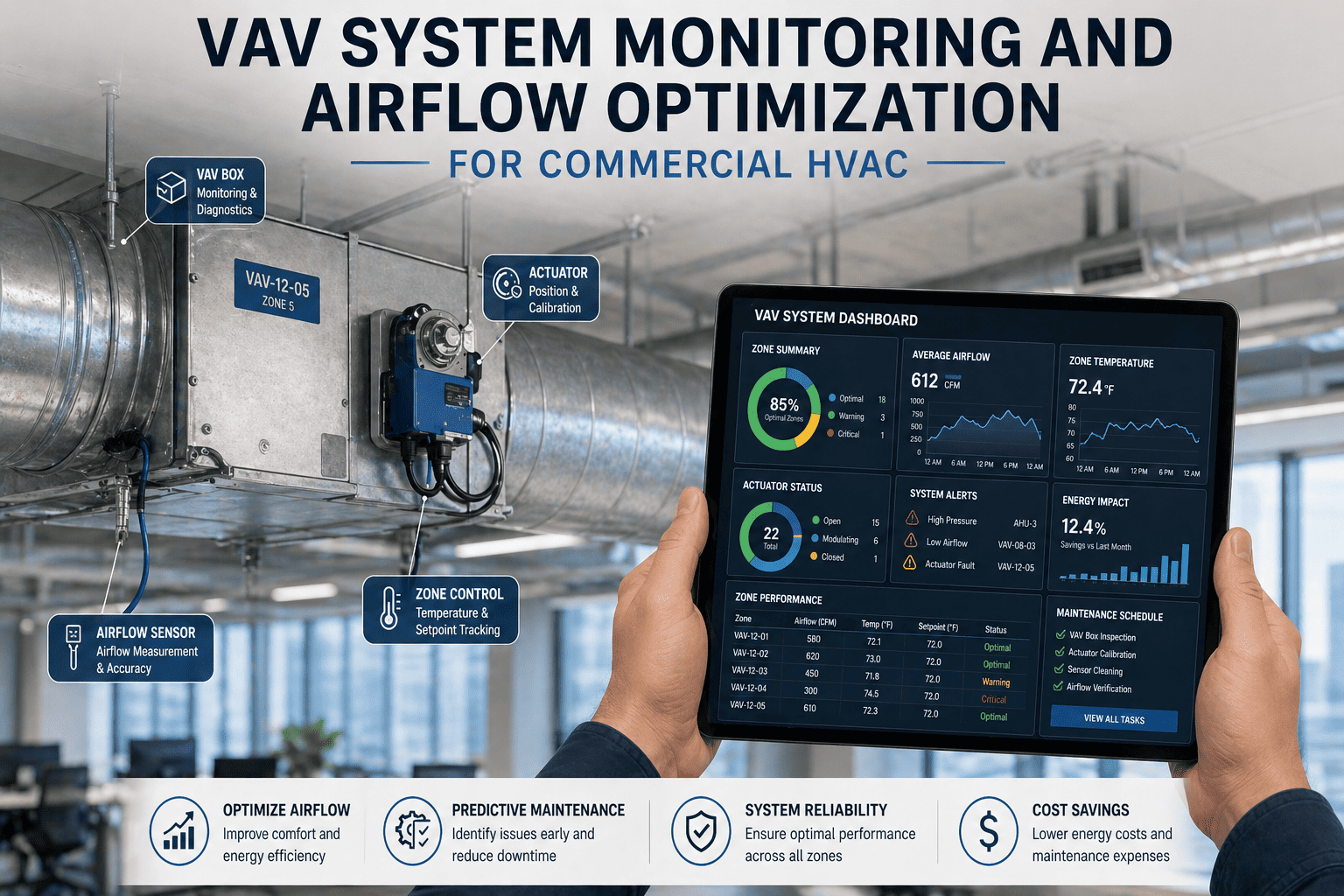
OXMAINT AI is the AI-powered maintenance management software that keeps a balanced system balanced between re-balances — the asset register, the PM schedule, the airflow readings and the adjustment history on one platform. Put your air handlers and zones on it when you start free and schedule balancing PMs in OXMAINT AI.
Equipment & Zone Register
Every air handler, VAV box and zone as an asset, with its design airflow and TAB report attached.
Scheduled PM Routes
Filter, belt, coil and damper checks generated on cadence so the balance is maintained, not left to drift.
Readings vs Design
Spot-measured airflow logged against the commissioned target, so drift shows up as a number.
Adjustment → Work Order
An out-of-band reading raises a prioritised work order to re-balance or repair, with the data attached.
Document Trail
TAB reports, readings and adjustments retained as the record of a system that performs to design.
Drift Trending
Airflow trended by zone so the recurring problem outlet gets a real fix, not another re-balance.
A Balanced System Is a Quiet, Efficient One.
Caught on a PM route, a loaded filter or a slipping belt is a scheduled fix before anyone feels the difference. Left alone, it's a wave of comfort complaints and an energy bill that climbs. OXMAINT AI makes the upkeep repeatable and the readings provable.
Written for facilities, building-operations and HVAC maintenance teams. Testing, adjusting and balancing is a specialised discipline — formal TAB work is performed by trained and often certified technicians following procedures from bodies such as NEBB, AABC or SMACNA, using calibrated instruments. The acceptance band and figures cited here are commonly referenced values that vary by project specification, system type and the standard your work follows — confirm the exact targets against the design documents and the governing specification. OXMAINT AI is a maintenance management platform that schedules the PMs, logs the readings and tracks the adjustments — it is not a balancing instrument, a certified TAB agency, or a replacement for a qualified balancer.
Frequently Asked Questions
What does HVAC air balancing mean?
It's the process of measuring the airflow throughout a duct system and adjusting dampers, fan speed and controls so every zone and outlet receives the airflow the design intended — no room over-supplied, none starved. The result is even comfort, correct pressure relationships and efficient operation. Start free and track zone airflow in OXMAINT AI.
What is the difference between testing, adjusting and balancing?
Testing is measuring what the system is actually doing — airflow, pressure, fan speed. Adjusting is setting the equipment, chiefly the fan, to deliver the required total airflow. Balancing is distributing that airflow proportionally across branches and outlets so each lands on its design target. Together they're the TAB procedure.
Why is proportional balancing preferred?
Because adjusting one outlet changes the airflow at every other outlet on the system — they're all connected. Proportional balancing first sets the outlets into the correct ratio to each other, then trims the whole system to design together, so the final adjustment keeps everything in balance rather than chasing each outlet in turn.
How often should a building be re-balanced?
A full re-balance is typically triggered by a renovation, an equipment change, a change of use, or persistent comfort and pressure complaints — not a fixed calendar. Between those, routine PM on filters, belts, coils and dampers plus spot airflow checks is what holds the balance the original TAB established.
What instruments are used for air balancing?
A flow hood or balometer reads airflow volume directly at outlets; a vane or hot-wire anemometer reads velocity at grilles and in ducts; a pitot tube with a manometer reads velocity and static pressure in the duct; and a tachometer confirms fan speed. All should be calibrated for the readings to mean anything. Book a demo of logging instrument readings in OXMAINT AI.
Balance It Once, Keep It Balanced for Good.
Run HVAC balancing upkeep on OXMAINT AI: every air handler and zone with its design airflow and TAB report on file, PM routes that catch the filters, belts and dampers before they drift, airflow readings logged against design, and a work order raised the moment a zone falls out of band.