OxMaint helps commercial facility teams schedule, execute, and document HVAC preventive maintenance across every system — AHUs, RTUs, chillers, boilers, cooling towers, VAV boxes, and building controls. Skipping scheduled HVAC maintenance is the leading cause of premature equipment failure in commercial buildings, with unplanned breakdowns costing 3 to 5 times more than planned PM. This checklist covers all major commercial HVAC equipment with monthly, quarterly, semi-annual, and annual inspection tasks so your team never misses a critical service interval. Use it as your field reference and digital tracking starting point.
Checklist · Preventive Maintenance · P1 Critical
Complete HVAC Preventive Maintenance Checklist for Commercial Buildings
AHUs, RTUs, chillers, boilers, cooling towers, VAV boxes, controls, and ductwork — monthly through annual frequencies for every major commercial HVAC system.
Why It Matters
The Cost of Skipping HVAC PM in Commercial Buildings
3–5x
Higher cost for reactive vs planned HVAC repair
40%
Of building energy consumed by HVAC systems
15–25%
Energy savings from regular filter & coil cleaning
2x
Longer equipment lifespan with consistent PM
Frequency Guide
HVAC PM Frequency Matrix
Match each system to its required service interval. High-load commercial systems need more frequent attention than light-use equipment.
| Equipment |
Monthly |
Quarterly |
Semi-Annual |
Annual |
| Air Handling Units (AHU) |
Filters, belts, drain pan |
Coils, controls, lubrication |
Full inspection |
Duct inspection, full PM |
| Rooftop Units (RTU) |
Filters, thermostat |
Coils, refrigerant, electrical |
Economizer, controls |
Compressor, full PM |
| Chiller Plant |
— |
Oil analysis, controls |
Tubes, refrigerant |
Full overhaul, efficiency test |
| Boiler |
— |
Burner, controls, flue |
Heat exchanger, water |
Full inspection, combustion |
| Cooling Tower |
Water treatment, visual |
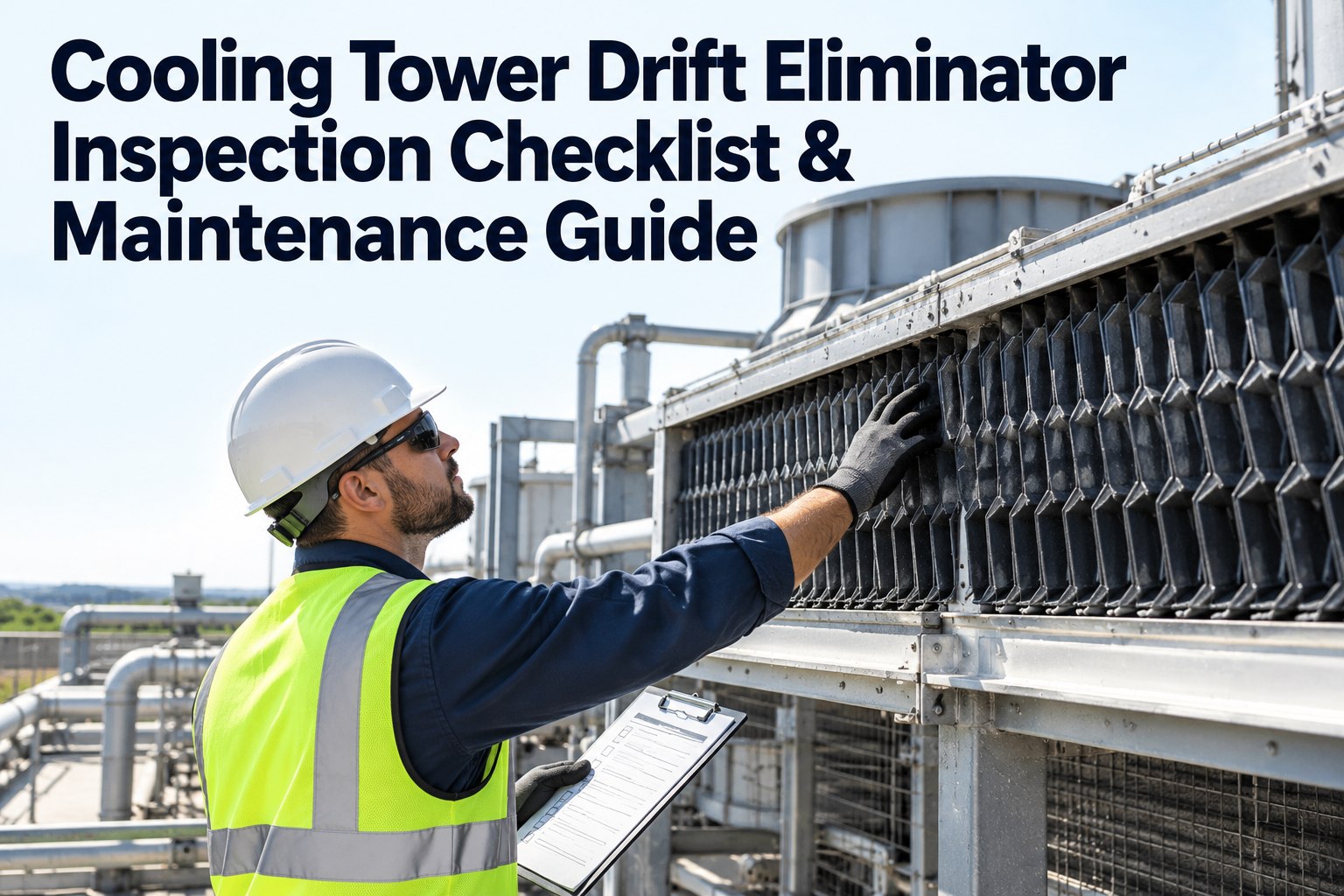
Basin, fill, drift elim. |
Fan motor, structure |
Full cleaning, Legionella |
| VAV Boxes |
— |
Actuator, damper, controls |
— |
Full calibration, airflow |
| BAS / Controls |
— |
Setpoints, alarms, sensors |
Calibration, sequences |
Full audit, software update |
Equipment 1
Air Handling Units (AHU) Checklist
Monthly Tasks
Inspect and replace air filters (track MERV rating and static pressure drop)
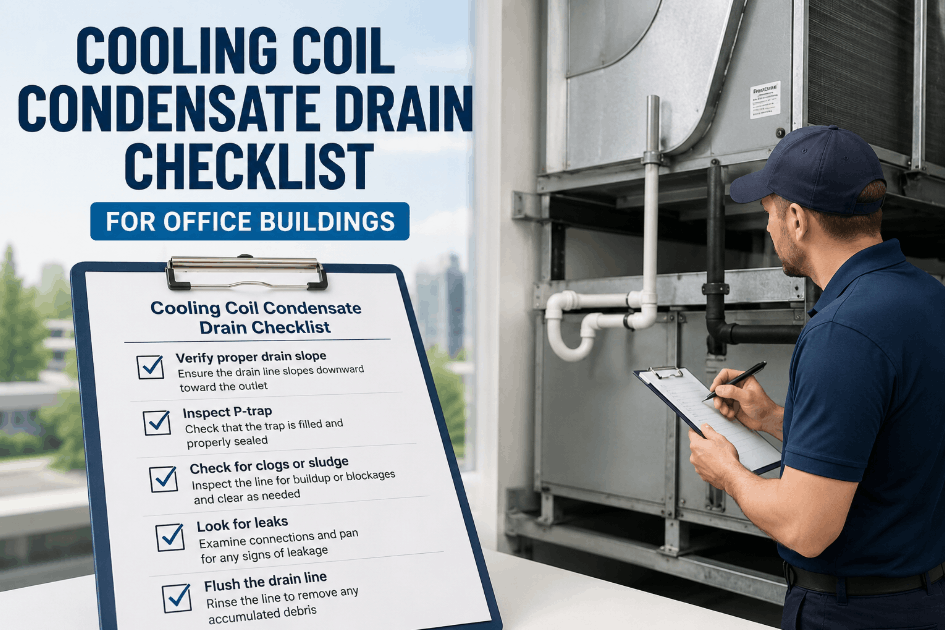
Check condensate drain pan for algae growth, standing water, and blockage
Inspect belt tension and condition — replace if cracked or glazed
Verify supply and return air temperatures against setpoints
Quarterly Tasks
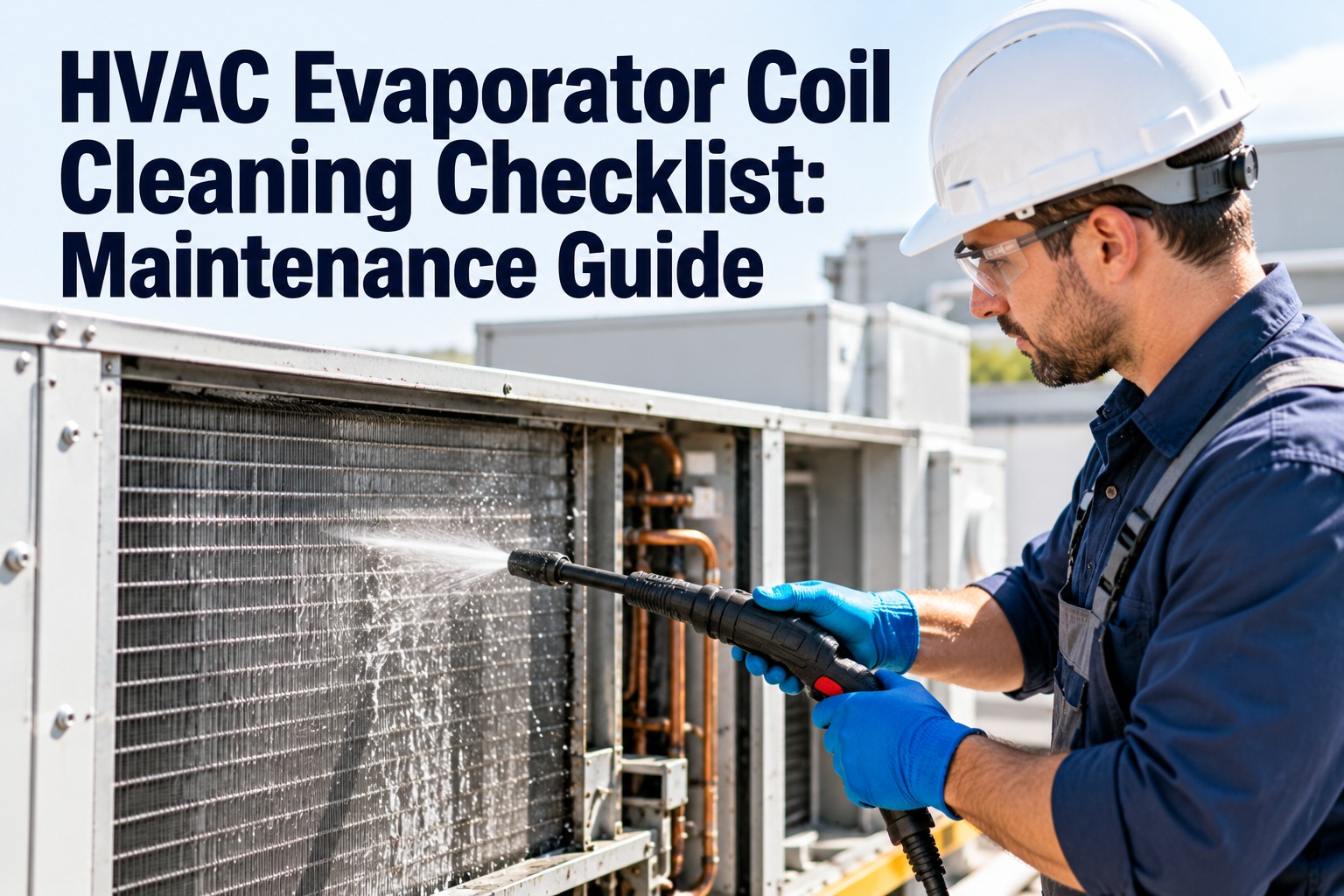
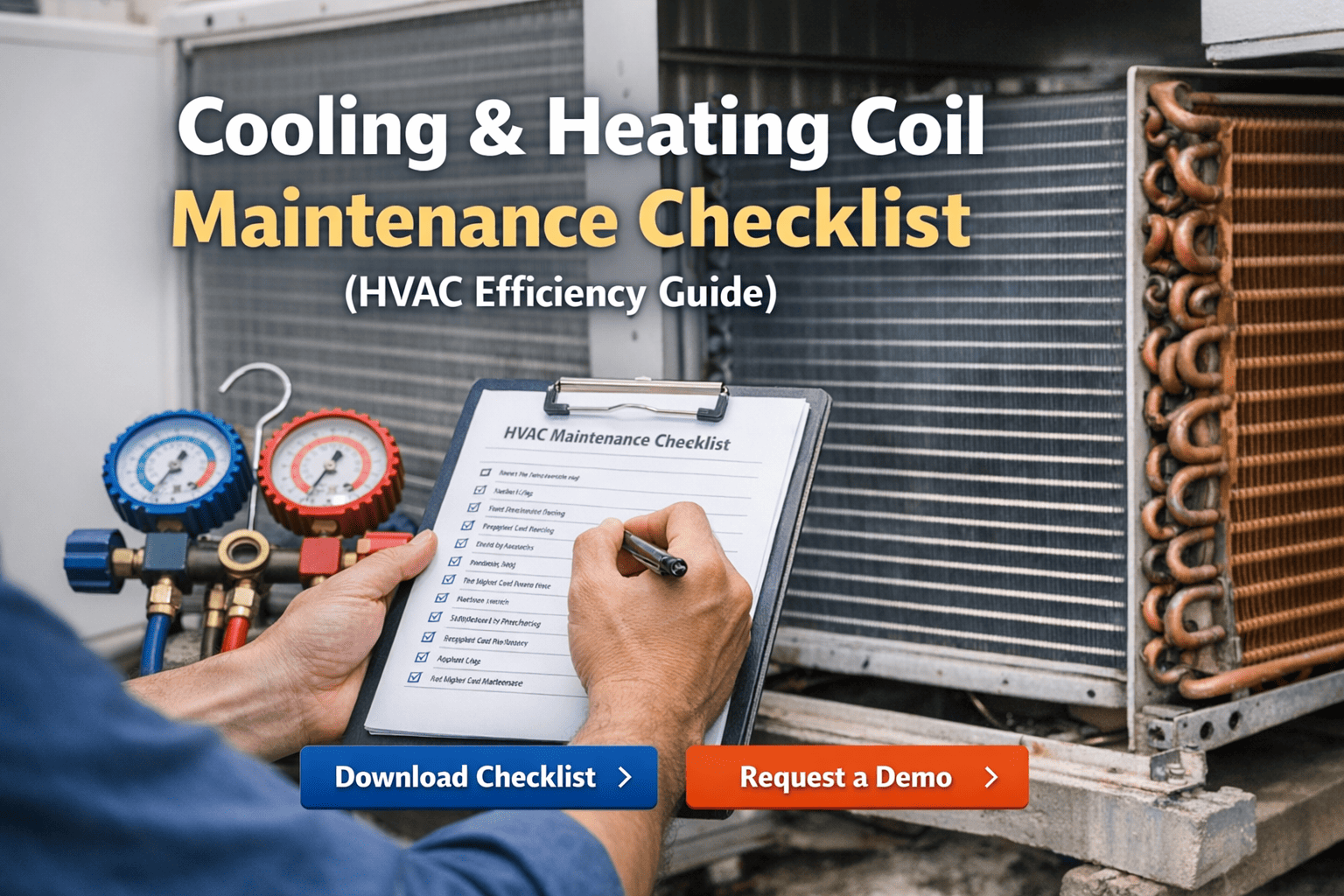
Clean evaporator and heating coils — inspect for fouling and fin damage
Lubricate fan bearings and motor per manufacturer specification
Verify outside air damper operation and economizer sequence
Test smoke detectors and fire/smoke dampers in AHU
Annual Tasks
Inspect all ductwork connections, insulation, and internal lining for deterioration
Measure and balance airflow at all supply and return grilles
Megger test fan motor windings and check electrical connections for tightness
Calibrate all temperature, humidity, and CO2 sensors
Equipment 2
Rooftop Units (RTU) Checklist
Monthly Tasks
Replace or clean filters — document pressure drop before and after
Inspect unit curb, cabinet panels, and roof penetration for leaks
Verify thermostat operation and temperature differential
Quarterly Tasks
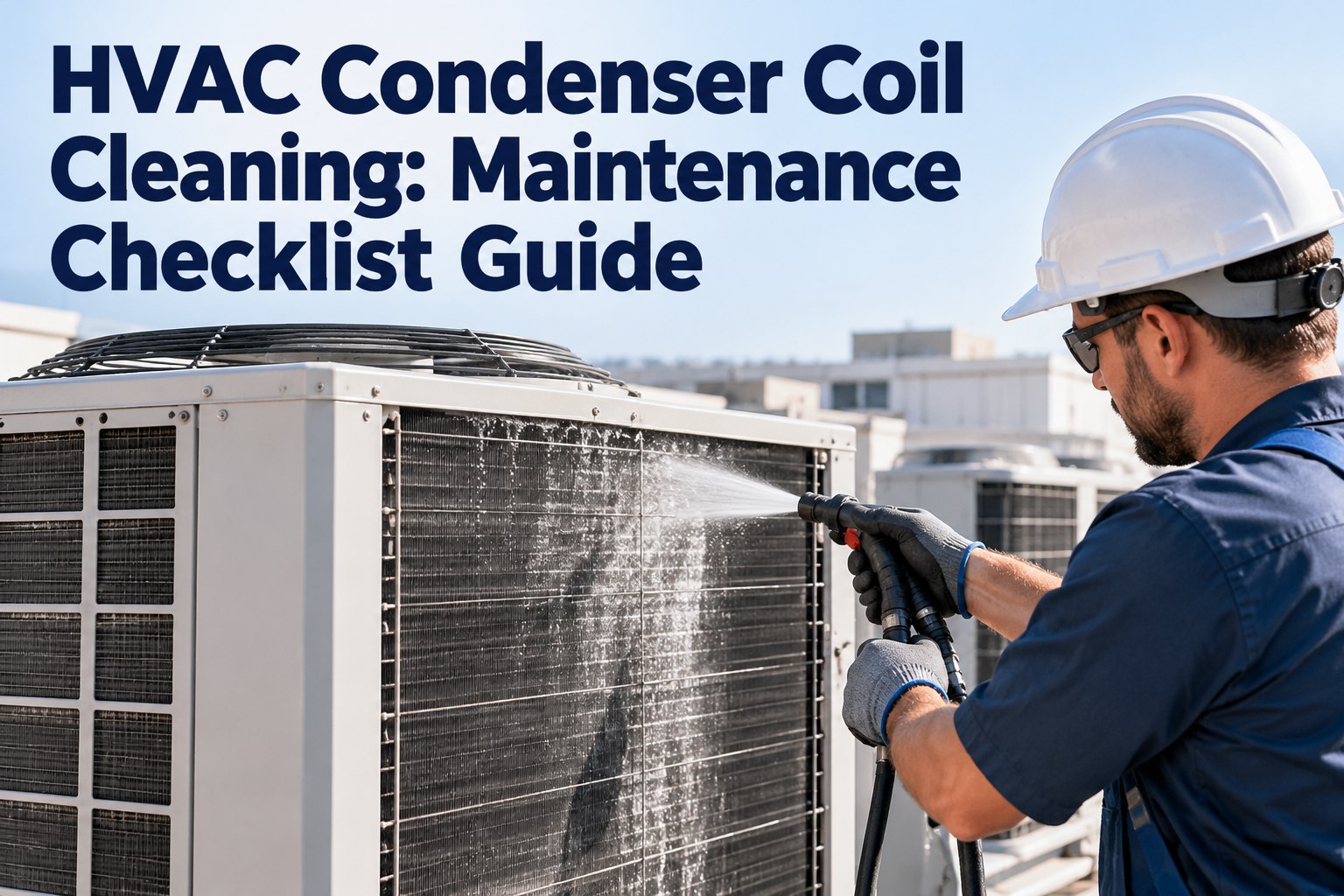
Clean condenser and evaporator coils — straighten bent fins with fin comb
Check refrigerant pressures — suction and discharge with gauges
Inspect electrical connections, contactors, and capacitors for wear
Test economizer dampers — verify free cooling operation and controls
Annual Tasks
Full compressor amp draw measurement and comparison to nameplate
Leak-check refrigerant circuit with electronic detector per EPA 608
Inspect heat exchanger for cracks or carbon deposits (gas units)
Schedule HVAC PM Automatically with OxMaint
Set up recurring work orders for every system at every frequency — monthly filters to annual overhauls — and track completion in real time.
Equipment 3 & 4
Boiler & Chiller Plant Checklist
Boiler PM Checklist
Quarterly
Test low-water cutoff and all safety controls — log test date and result
Inspect burner flame pattern, check combustion air supply
Analyze flue gas — CO, O2, and efficiency readings
Annual
Full boiler internal inspection — tubes, refractory, and baffles
Test pressure relief valves — tag and replace if past service life
Water treatment chemistry analysis — pH, conductivity, hardness
Boiler code inspection by licensed inspector where required
Chiller Plant PM Checklist
Quarterly
Pull oil sample for spectrographic analysis — moisture, acids, metals
Log operating data — kW/ton, approach temps, lift pressure
Verify controls, setpoints, and capacity control sequence
Annual
Eddy-current test condenser and evaporator tubes
Refrigerant analysis for moisture, acidity, and non-condensables
Full motor winding resistance and insulation test
Efficiency performance test — compare kW/ton to baseline commissioning data
Equipment 5
VAV Boxes & Building Controls (BAS)
V
VAV Box — Quarterly
Verify actuator operation through full stroke range
Test heating coil valve modulation and end switches
Confirm airflow sensor reading against calibrated reference
Check damper blade for debris build-up and free movement
B
BAS / Controls — Quarterly
Review active alarms and fault logs — clear resolved items
Verify occupied/unoccupied schedules match building use
Spot-check 10% of sensors against calibrated reference meters
Confirm demand control ventilation sequences are functioning
D
Ductwork — Annual
Visual inspection for leakage at joints and seams — seal with mastic
Inspect flexible duct connections for kinking or compression
Check duct insulation for damage, moisture, or mold signs
Clean supply diffusers and return grilles — verify airflow pattern
“The biggest HVAC PM failures I see in commercial buildings are not from teams skipping work entirely — they are from teams doing the same tasks on the wrong schedule. Changing filters monthly when the building is lightly occupied is wasteful. Not checking coils quarterly in a high-density office is a disaster. A good PM program matches frequency to actual load, not just the manufacturer’s generic schedule.”
JT
James Thornton
Certified Energy Manager (CEM) · Commercial HVAC Commissioning Specialist · 22 years building operations
FAQ
HVAC PM Checklist — Common Questions
How often should commercial HVAC filters be replaced? +
In commercial buildings, filter change frequency depends on occupancy density, outdoor air quality, and filter MERV rating. A standard monthly inspection is recommended — replace when pressure drop exceeds the manufacturer’s limit, typically 0.5 to 1.0 inches WC above clean resistance. High-density spaces and buildings near construction may need monthly replacement. Low-occupancy facilities may stretch to 90 days.
OxMaint tracks pressure drop readings and triggers replacement work orders automatically when thresholds are exceeded.
What is the most commonly missed HVAC PM task in commercial buildings? +
Condensate drain pan inspection and evaporator coil cleaning are consistently the most skipped tasks in commercial HVAC PM programs. Fouled coils reduce heat transfer efficiency by 15 to 30% and force compressors to work harder, shortening their lifespan. Blocked drain pans cause water damage, mold growth, and IAQ complaints. Both are inexpensive to address on schedule and extremely costly to remediate after failure.
Book a demo to see how OxMaint flags overdue tasks before they become failures.
Does a commercial HVAC PM checklist satisfy code requirements? +
ASHRAE 180 Standard Practice for the Inspection and Maintenance of Commercial Building HVAC Systems defines minimum PM requirements for commercial facilities. Many jurisdictions and insurance policies require documented PM records to maintain warranty coverage and meet fire code requirements for smoke dampers and fire protection systems. OxMaint generates time-stamped, auditable maintenance records that satisfy ASHRAE 180, NFPA, and local code documentation requirements for every task completed by your team.
How do I know if my HVAC equipment needs more than a standard PM schedule? +
Rising energy consumption, increasing complaint volume, or more frequent reactive repairs are the clearest indicators that a standard PM schedule is insufficient for your building’s actual load. Tracking mean time between failures (MTBF) per equipment category in your CMMS reveals which assets are underserved by their current PM frequency.
OxMaint’s analytics dashboard surfaces these patterns automatically, so you can adjust PM frequencies based on real building data rather than generic schedules.
Run Your HVAC PM Program from One Platform
OxMaint automates scheduling, assigns work orders to technicians, tracks completion with photo documentation, and generates ASHRAE-compliant PM records — for every system in your building.