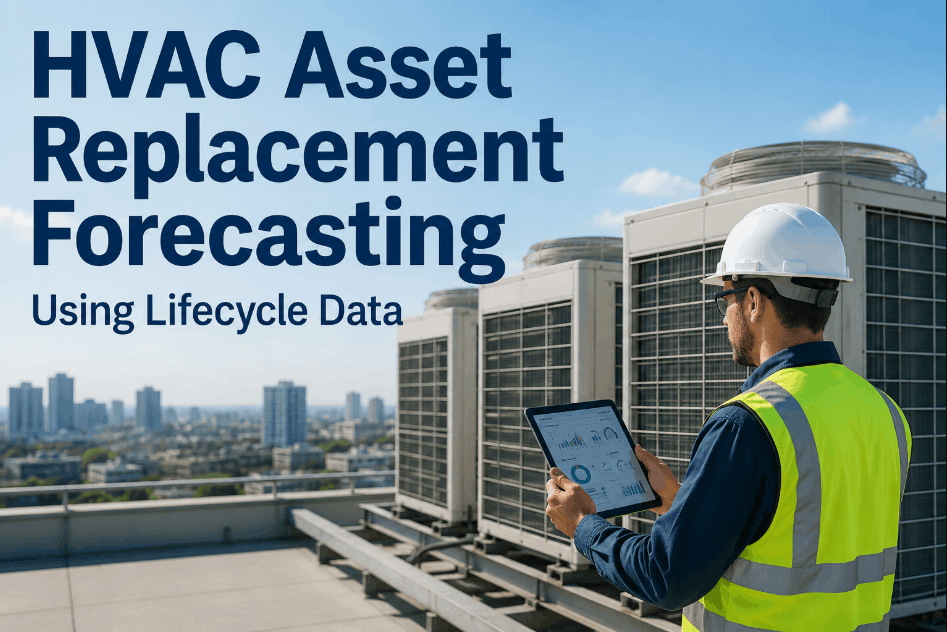
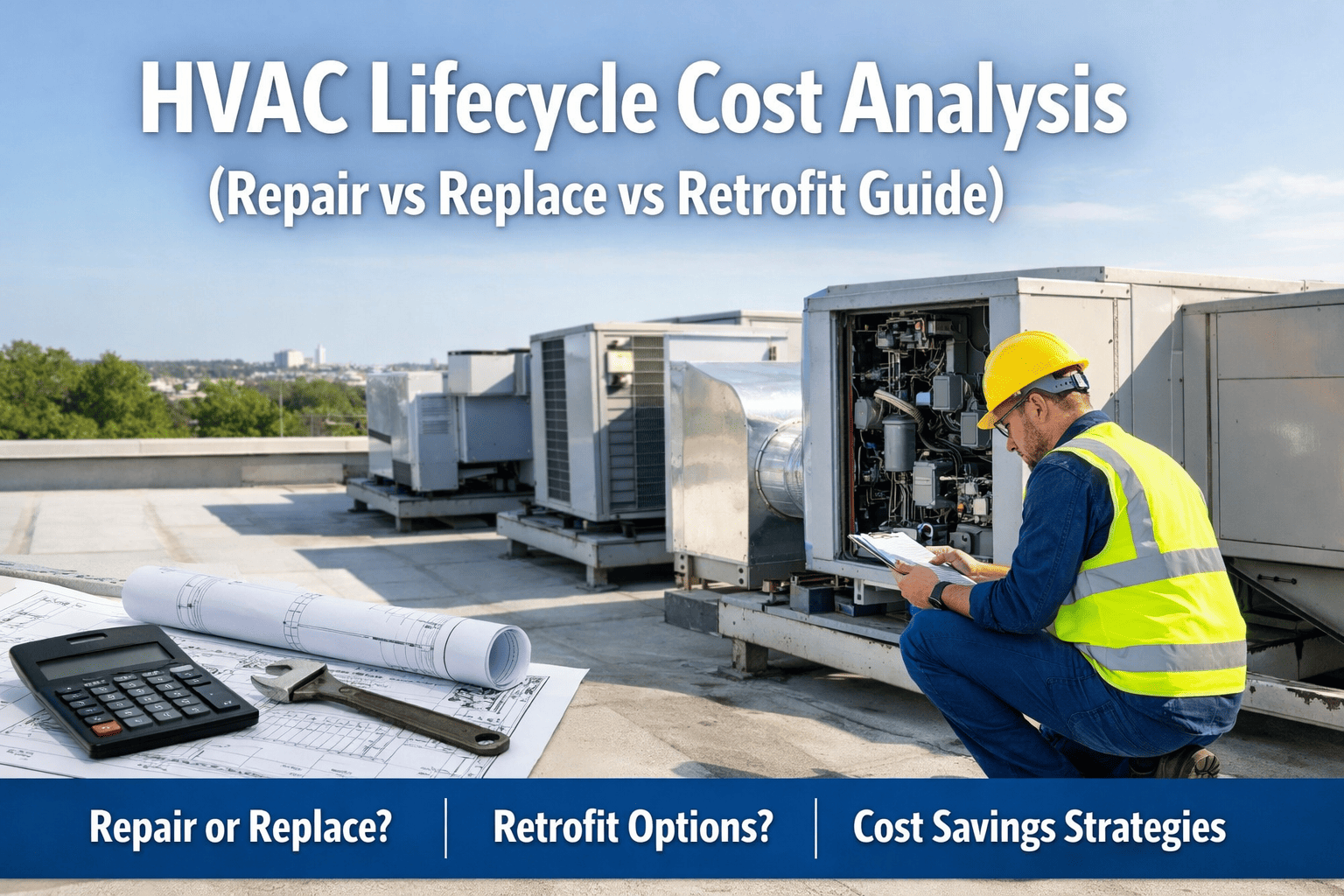
Commercial HVAC equipment is one of the largest capital investments a facility makes — and one of the most poorly tracked. Industry data consistently shows that rooftop units, chillers, boilers, and air handling units have a designed lifespan of 15 to 20 years, yet the actual lifespan in most facilities is significantly shorter when maintenance is inconsistent or undocumented. Conversely, well-maintained equipment regularly exceeds its expected service life by five years or more, generating substantial cost savings. The difference between these two outcomes almost always comes down to one thing: how well an organization tracks, manages, and interprets its asset data across the full equipment lifecycle.
HVAC Asset Lifecycle:
From Installation to
Replacement Decisions
Master lifecycle cost tracking, repair-vs-replace analysis, and capital planning with OxMaint's digital asset management platform — built for facilities that take their equipment seriously.
Understanding Where Your HVAC Assets Stand Today
Every HVAC asset in your facility sits at a different point in its lifecycle. Without a structured tracking system, most organizations discover an asset's true condition only when it fails — the most expensive time possible. Sign up with OxMaint to map your entire HVAC fleet across these five critical phases.
The foundation of accurate lifecycle management is set at installation. Every asset should enter your CMMS with manufacturer data, installation date, warranty terms, expected service life, and baseline performance benchmarks. This initial data becomes the reference point for every future maintenance and replacement decision.
New equipment operates at peak efficiency with minimal maintenance intervention. This phase establishes the baseline energy consumption and performance data that will be critical when evaluating degradation in later years. Preventive maintenance during early life pays the highest return on investment across the full lifecycle.
Component wear accelerates. Compressors, heat exchangers, motors, and controls require increasingly frequent attention. Maintenance costs begin rising and work order frequency increases. This is the phase where detailed cost tracking becomes most valuable — identifying assets that are aging faster than their class average.
Repair costs spike. Major component replacements — compressors, heat exchanger cores, control boards — often individually cost 30–50% of replacement unit value. At this stage, every repair event should trigger a formal repair-vs-replace analysis with full lifecycle cost modeling before work is approved.
Equipment that has reached or exceeded its design life presents a capital budgeting decision, not a maintenance decision. Total cost of ownership analysis, energy efficiency degradation data, and reliability records should drive scheduled replacement — not emergency failure. Proactive replacement planning reduces emergency capital outlay by an average of 60%.
The True Cost of an HVAC Asset Is Never Just the Purchase Price
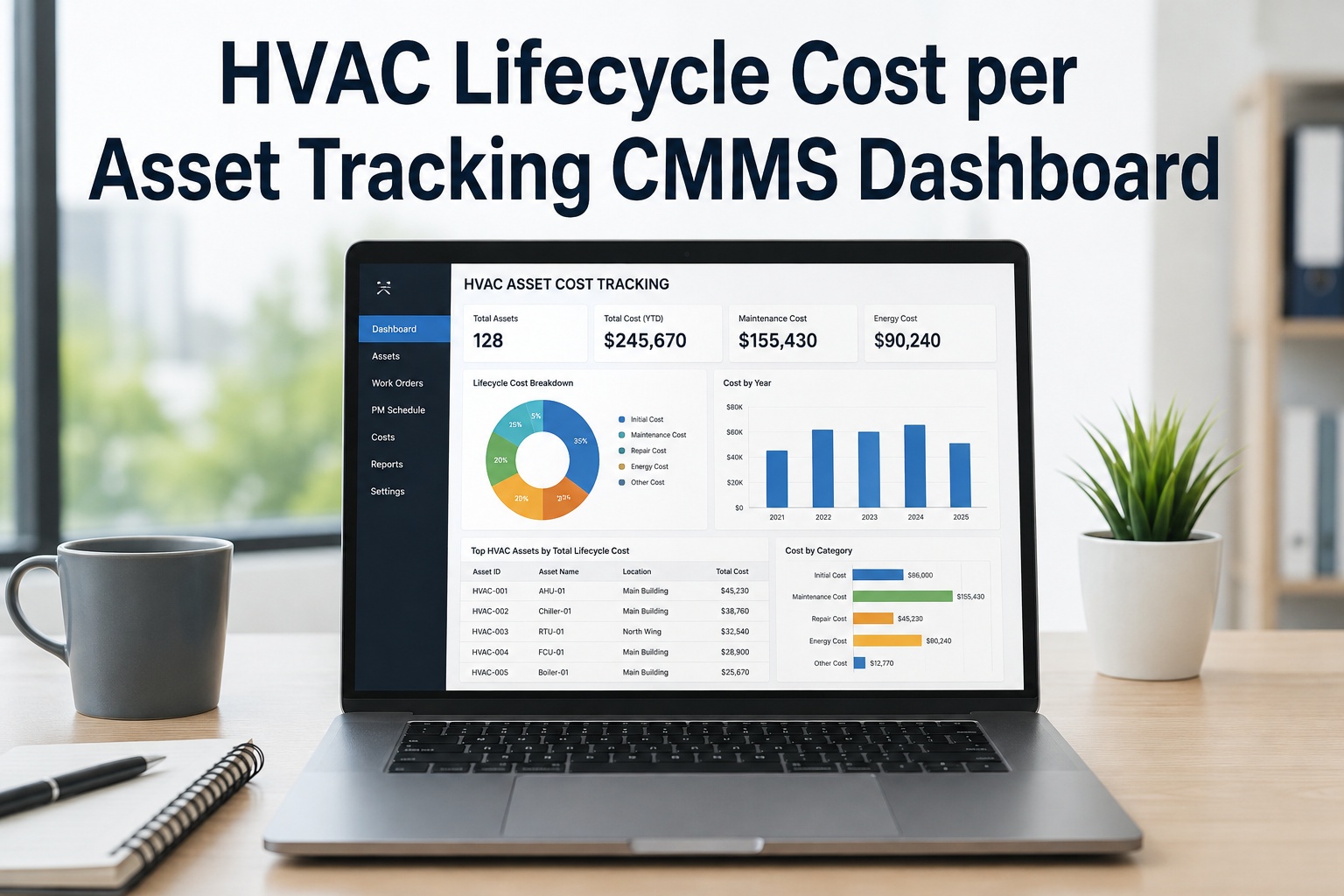
A rooftop unit with a $28,000 purchase price may carry a total lifecycle cost exceeding $120,000 when energy consumption, labor, parts, and downtime costs are properly attributed over its service life. Organizations that track only purchase price and annual maintenance contracts systematically underestimate their true HVAC spend — and make worse capital decisions as a result.
OxMaint's asset costing engine automatically accumulates all direct costs against each asset record across the full lifecycle. Maintenance managers gain a running TCO figure for every HVAC unit in their fleet without manual calculation. Book a demo to see how OxMaint surfaces lifecycle cost data your current system is missing.
The Decision Every Maintenance Manager Dreads — Made Data-Driven
The repair-vs-replace decision is the highest-stakes judgment call in HVAC asset management. Made emotionally or without data, it costs facilities millions over time. Sign up for OxMaint and make every repair-vs-replace call with confidence.
When a single repair estimate exceeds 50% of the equipment replacement cost, replacement almost always delivers better 10-year economics. OxMaint surfaces this threshold automatically when a high-cost work order is created against an aging asset, prompting managers to run a formal lifecycle cost comparison before approving the repair.
Stop Reacting to Equipment Failures.
Start Budgeting for Them.
Reactive capital spending — replacing HVAC equipment after emergency failure — is consistently 40 to 70% more expensive than planned replacement. Emergency procurement carries premium pricing, expedited shipping, and emergency labor costs. Unplanned downtime adds production loss or occupant disruption that compounds the financial impact further.
OxMaint's capital planning module enables maintenance managers to project replacement needs 3, 5, and 10 years forward by analyzing current fleet age distribution, failure frequency trends, and accumulated lifecycle costs. Finance teams receive defensible capital budget requests grounded in asset data rather than estimates. Book a demo to see OxMaint's capital forecasting dashboards in action.
- Fleet age distribution reports identify assets approaching end-of-life thresholds simultaneously
- Year-over-year maintenance cost trend analysis flags assets with accelerating spend
- Replacement cost estimator adjusts for equipment class, size, and market pricing
- Capital budget exports formatted for annual budget submission with supporting asset data
What Every HVAC Asset Record Should Contain
A lifecycle management program is only as strong as the quality of its asset data. OxMaint's structured asset register ensures every HVAC unit carries a complete, searchable, and actionable digital record. Sign up to build your HVAC asset register in under 30 minutes.
OxMaint gives maintenance teams a complete asset lifecycle management platform — from installation record to replacement justification. Stop discovering equipment failures and start predicting them.
HVAC Asset Depreciation: What Finance Needs from Maintenance
Commercial HVAC equipment is depreciable property under most accounting standards, with IRS MACRS placing HVAC systems in the 39-year nonresidential real property category or 5–7 year equipment category depending on configuration and use. Facilities with accurate installation records and cumulative cost data in OxMaint can provide finance teams with precisely what they need for depreciation schedules, insurance valuations, and capital expenditure justifications — without manual reconstruction from scattered records.
Beyond accounting, accurate asset records support energy audit compliance, building certification renewals (LEED, ENERGY STAR), and ASHRAE Standard 180 commercial HVAC inspection documentation. Sign up for OxMaint and bring your asset records into compliance-ready condition from day one.
OxMaint maintains current book value for each HVAC asset based on acquisition cost, installation date, and selected depreciation method — giving finance teams accurate figures for balance sheet reporting and insurance purposes without manual calculation.
Complete maintenance history, inspection records, and compliance checklists are stored against each asset record and exportable on demand — eliminating the documentation scramble that precedes every energy audit or insurance review.
OxMaint tracks warranty expiry dates for parts and labor across the entire HVAC fleet, alerting teams before warranty coverage lapses on newly installed equipment and flagging repair events that may qualify for warranty claims.
HVAC Asset Lifecycle Management — FAQ
Every Year Without Lifecycle Data
Is a Year of Avoidable Costs
Facilities using OxMaint reduce unplanned HVAC capital expenditures by up to 40% within the first two years by shifting from reactive replacement to planned lifecycle management. Your asset data is sitting in work orders, invoices, and spreadsheets right now — OxMaint brings it all together.