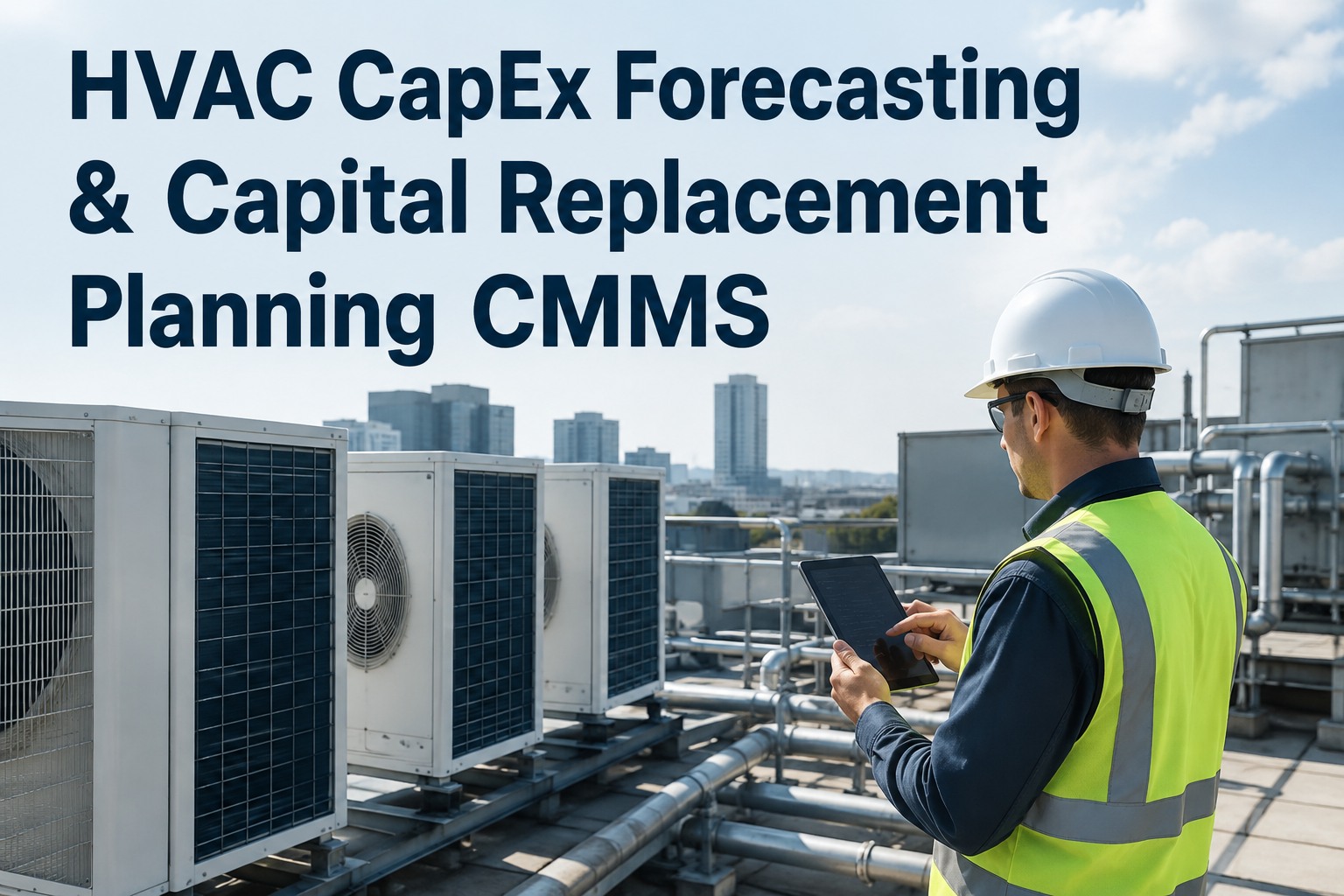
HVAC asset replacement forecasting using lifecycle data transforms capital planning from budget-cycle guesswork into evidence-based decision-making — allowing facilities and operations leaders to time equipment replacement before service risk starts compressing operational budgets. Age alone is a weak predictor of replacement readiness; the combination of repair cost accumulation, downtime frequency, energy efficiency loss, and maintenance record density gives a far more accurate signal of when an asset is approaching end of economic life. Sign Up Free to begin structuring HVAC asset lifecycle records in OxMaint before the next capital planning cycle. OxMaint's CMMS connects work order history, repair cost accumulation, and inspection findings into a structured asset health record that gives facilities directors the evidence base to support replacement requests — before an emergency forces an unplanned capital decision. Book a Demo to see how OxMaint supports HVAC lifecycle data management and capital replacement forecasting for facilities operations programs.
Facilities Management · Capital Planning · 2026
HVAC Asset Replacement Forecasting Using Lifecycle Data
Blend age, repair cost, downtime, and efficiency loss data to time HVAC replacements before service risk starts hurting operations and budgets.
3×Higher emergency replacement cost vs. planned capital replacement in HVAC assets
−28%Unplanned downtime reduction in facilities with CMMS-supported lifecycle forecasting
R:CRepair-to-capital ratio above 30% signals replacement priority in most HVAC asset classes
15 yrMedian commercial HVAC asset lifespan — most replacements needed 2–4 years earlier without data
4 Lifecycle Data Inputs That Drive HVAC Replacement Forecasting
Accurate HVAC replacement forecasting requires blending four data types that no single sensor or calendar metric can capture alone. The inputs below represent the lifecycle signals that give facilities teams an evidence base for capital planning decisions — and the points where OxMaint's asset management and work order workflows provide the structured record that makes forecasting actionable. Sign Up Free to start building structured HVAC lifecycle records in OxMaint's CMMS platform.
01
Cumulative Repair Cost vs. Replacement Value
Signal Type: Economic Threshold
Primary Trigger
When total repair cost over a rolling 3-year period exceeds 30% of current replacement value, economic replacement becomes more defensible than continued repair. OxMaint work order cost tracking builds this record automatically across every service event.
02
Downtime Frequency and Duration Trend
Signal Type: Reliability Degradation
Operational Risk
Increasing downtime frequency — particularly unplanned failures in the same asset — signals mechanical degradation that repair costs alone don't capture. Tracking failure intervals in OxMaint reveals when an asset's reliability curve has shifted beyond acceptable range.
03
Energy Efficiency Loss vs. Design Baseline
Signal Type: Performance Degradation
Cost Driver
HVAC units operating at efficiency below design specification consume disproportionate energy per unit of conditioning delivered. Documenting fan speed, refrigerant performance, and heat transfer efficiency against design baseline in OxMaint makes energy loss visible as a replacement cost input — not just a comfort observation.
04
Maintenance Record Density — Parts and Labor
Signal Type: Asset Health Indicator
Capital Evidence
High parts replacement frequency and rising labor hours per service event indicate an asset nearing end of economic life. OxMaint's asset maintenance history gives capital planning teams the documentation density needed to support replacement budget requests with auditable evidence.
HVAC Lifecycle Management — Without vs. With OxMaint
The difference between intuition-based and data-supported HVAC replacement decisions is most visible when unplanned failures force emergency capital expenditure outside the budget cycle. The comparison below shows what changes when OxMaint structures lifecycle data collection, repair cost accumulation, and asset health trending for HVAC operations programs. Book a Demo to assess your current HVAC lifecycle data gaps with an OxMaint solutions engineer.
HVAC Lifecycle Data Maturity — Where Does Your Program Score?
Capital planning capability for HVAC assets ranges from reactive emergency replacement to fully structured CMMS-supported lifecycle forecasting with repair cost trending, downtime analysis, and efficiency baseline comparison. The maturity framework below identifies where each facilities program operates today and the specific data gap limiting replacement forecasting accuracy. Book a Demo to assess your program's HVAC lifecycle data maturity with an OxMaint solutions engineer.
HVAC Lifecycle Data Maturity
Score 5 = evidence-based capital forecasting · Score 1 = emergency replacement only
5
Full Lifecycle Tracking · R:C Ratio Monitoring · Capital Forecasting
Repair cost, downtime frequency, efficiency loss, and parts density tracked per asset. Replacement forecast built from data signals, not age alone. Capital requests supported by auditable CMMS evidence.
Profile: Replacement timing optimized to lifecycle data. Emergency capital expenditure rare — planned replacement cycles dominate the capital program.
4
Structured Work Orders · Partial Cost Accumulation
Work orders logged in CMMS with cost entries. Cumulative repair cost visible but not consistently compared against replacement value threshold. Downtime data present but not trended.
Action: Enforce R:C ratio comparison on every major repair event. That comparison is where replacement forecasting begins.
3
Work Order Logging · No Lifecycle Aggregation
Maintenance tasks logged individually. No aggregated view of cumulative repair cost, failure frequency, or efficiency trend per asset. Replacement decisions rely on technician judgment and age alone.
Gap: Individual work orders don't reveal lifecycle signals. Cumulative repair cost tracking per asset is the highest-impact next step.
2
Informal Records · Age-Based Decisions
Maintenance records kept in spreadsheets or paper logs. Replacement decisions based primarily on manufacturer age guidelines. No repair cost accumulation or downtime analysis available.
Risk: Age-based replacement misses assets that need early replacement and over-replaces assets with remaining economic life.
1
No Lifecycle Data Structure
HVAC assets replaced at failure only. No maintenance history, no repair cost record, no downtime tracking. Capital decisions made under emergency conditions.
Risk: Every HVAC replacement is an emergency. Capital cost per replaced unit is consistently 2–3× the planned replacement benchmark.
Build the Lifecycle Data Record That Supports Every HVAC Replacement Decision.
OxMaint structures repair cost accumulation, downtime tracking, and asset health trending for HVAC operations programs — in one CMMS platform.
How OxMaint Structures HVAC Lifecycle Data for Capital Forecasting
OxMaint connects work order cost history, failure frequency tracking, inspection findings, and PM schedule management into a single asset record for each HVAC unit in the portfolio. Every service event adds to the cumulative lifecycle data record — giving facilities directors the structured evidence base to forecast replacement timing, prioritize capital requests, and reduce unplanned emergency expenditure. Sign Up Free to map your HVAC asset portfolio in OxMaint and start building lifecycle records that support capital forecasting. Book a Demo to see how OxMaint adapts to your facilities' inspection schedule, capital planning cycle, and reporting requirements.
Asset Cost Accumulation
Per Unit, Per Year
Cumulative repair cost tracked per HVAC asset
OxMaint aggregates parts and labor cost per asset across every work order — giving capital planners a live view of cumulative repair investment relative to current replacement value.
Failure Frequency Trending
Reliability Signal
Downtime events tracked per asset over time
Unplanned failure events logged per asset build a reliability trend that surfaces degrading units before the next emergency — replacing gut-feel replacement timing with data-supported scheduling.
Efficiency Baseline Comparison
Design vs. Actual
Performance loss documented per inspection
OxMaint inspection checklists capture efficiency performance against design baseline — making energy loss visible as a capital replacement input, not just a utility cost observation.
Capital Request Documentation
Every Replacement Cycle
Auditable evidence for budget approval
CMMS work order history, repair cost totals, and failure frequency reports give facilities directors the auditable documentation needed to support capital replacement requests with evidence, not estimates.
"
We had been replacing HVAC units on a 15-year age schedule regardless of condition. After structuring asset cost records in OxMaint, we found three rooftop units in the main office wing had accumulated repair costs exceeding 40% of replacement value in the prior 24 months — while two units the same age were performing within normal range. We moved those three into the capital request for the following year's budget, presented the repair cost history as supporting documentation, and got approval in the first review cycle. Two of the units would have failed before the next budget cycle without that data. The third was showing efficiency loss that was costing more in monthly energy than the replacement payment would have cost annualized.
Director of Facilities Operations — Regional Healthcare System, 8 buildings, 140+ HVAC assets, Texas, USA
Frequently Asked Questions
What data inputs are most important for HVAC replacement forecasting?
Cumulative repair cost relative to replacement value, unplanned failure frequency, energy efficiency loss versus design baseline, and parts replacement density are the four most predictive signals for HVAC capital replacement timing.
How does OxMaint support HVAC lifecycle data collection?
OxMaint accumulates repair cost, downtime events, and inspection findings per asset automatically through work order and PM workflows — building the lifecycle record that supports capital forecasting without manual data aggregation.
What repair-to-capital ratio indicates HVAC replacement priority?
When cumulative repair cost over a rolling 3-year period exceeds 30% of current replacement value, most lifecycle frameworks indicate economic replacement is more defensible than continued repair investment.
Can OxMaint support multi-site HVAC capital planning?
Yes. OxMaint structures asset records, maintenance history, and cost data across multiple facilities — giving operations directors a portfolio-level view of HVAC replacement priority and capital planning timeline.
How does lifecycle data improve capital budget approval rates?
Capital requests supported by auditable CMMS repair cost history, failure frequency trends, and efficiency loss documentation give budget reviewers the evidence base to approve replacement requests in the planning cycle rather than forcing emergency expenditure.
Turn Every HVAC Work Order Into a Lifecycle Data Record — Not Just a Repair Log.
OxMaint structures repair cost accumulation, failure trending, and capital planning evidence for HVAC operations programs — turning maintenance history into replacement forecasting data.