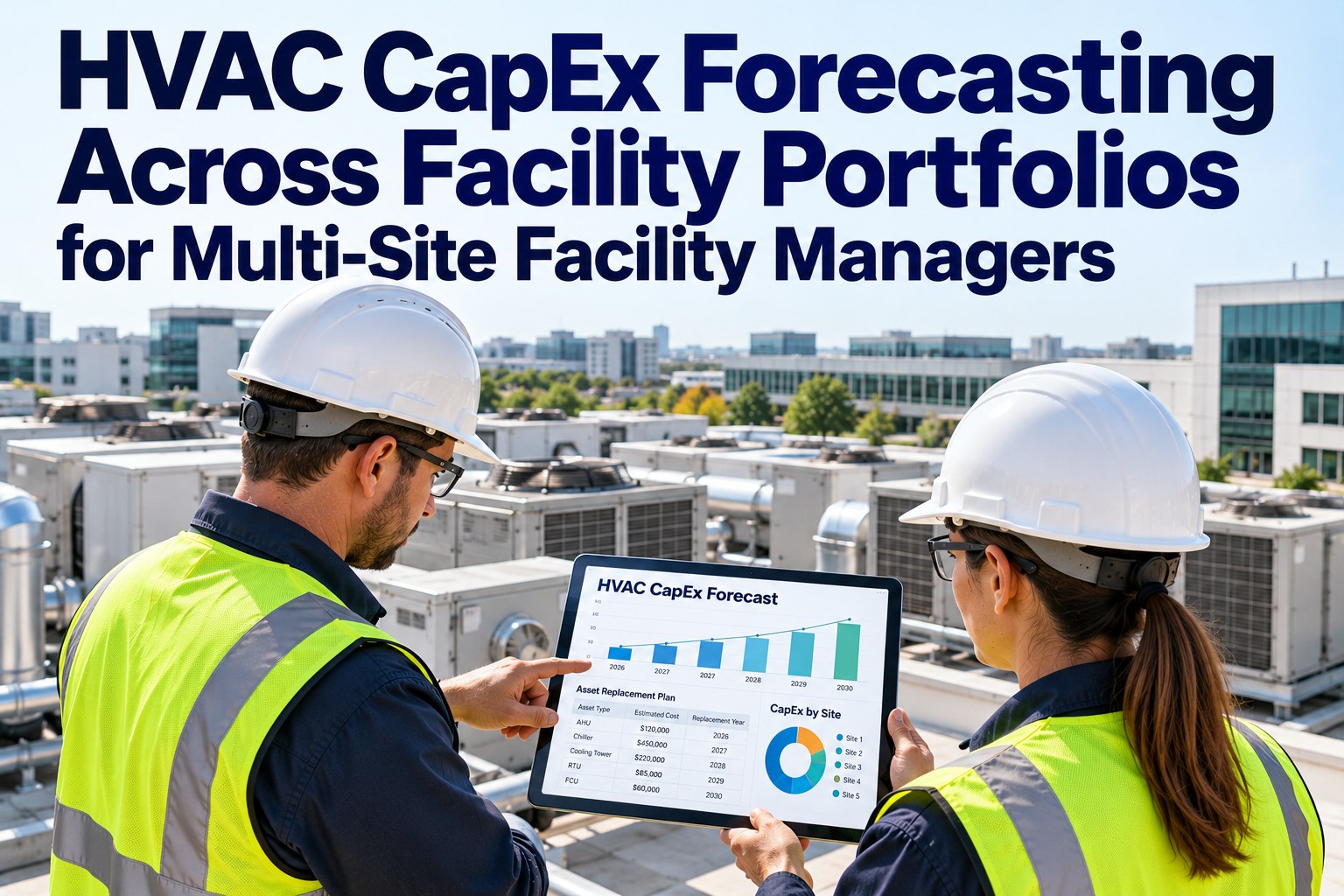
Across a portfolio of buildings, HVAC is the line item that ambushes the budget. A rooftop unit fails in July at one site, an emergency replacement lands at a 150-200% premium, and the capital plan you defended in the spring is already blown — while three sound units elsewhere get replaced early on a fixed age table. Forecasting HVAC CapEx across a portfolio isn't guesswork on a spreadsheet; it's reading age, cost and condition on every asset at once. OXMAINT AI, the AI-powered CMMS, turns that maintenance data into a multi-year replacement forecast you can put in front of a CFO.
HVAC CapEx Forecasting Across Facility Portfolios
Emergency replacements at premium prices. Sound units scrapped on age alone. A capital plan that never survives the summer. OXMAINT AI, the AI-powered CMMS and maintenance management software, runs it on one platform: asset history and work orders feed each unit's age-and-cost profile, the profile drives a repair, retrofit or replace call, and those calls roll up into a defensible multi-year CapEx forecast across every building.
The Portfolio Blind Spot
A single building's HVAC you can track on a wall calendar. A portfolio of them, each with its own mix of rooftop units, chillers, AHUs and boilers at different ages, is where the plan breaks down — you can't see which asset across which site is about to force your hand. OXMAINT AI closes that blind spot by holding every unit's age, cost history and condition in one view. Start free and put your whole HVAC fleet on one forecast in OXMAINT AI.
Start With Service Life — Every Asset Class
Forecasting begins with knowing when each asset class is due. These are ASHRAE median service lives; the planning trigger is 80% of that number, which leaves two to three years to budget and schedule in shoulder season. OXMAINT AI flags each unit as it crosses that line. Book a demo to see your fleet aged against these lives in OXMAINT AI.
| Equipment class | Median service life | Plan at 80% | Portfolio note |
|---|---|---|---|
| Packaged rooftop units (RTUs) | ~15 years | ~year 12 | Usually the largest count — sequence in waves |
| Split-system AC | ~15 years | ~year 12 | Smaller spend, bundle with RTU cycles |
| Air-handling units (AHUs) | ~15 years | ~year 12 | Strong retrofit candidates (VFD, coils) |
| Air-cooled chillers | ~20 years | ~year 16 | High unit cost — forecast early |
| Cooling towers | ~20 years | ~year 16 | Often outlives its paired chiller |
| Water-cooled chillers | ~23 years | ~year 18 | Biggest single line — plan 3 yr ahead |
| Commercial boilers | ~24 years | ~year 19 | Long horizon, easy to defer too long |
| Ductwork | ~30 years | ~year 24 | Rarely the trigger; note with retrofits |
Service life is a starting point, not a verdict. A neglected unit can fail 30–50% sooner, and a well-maintained one can run past its median — which is why age has to be read alongside cost and condition, not on its own.
Repair, Retrofit, or Replace — Read the Thresholds
Age tells you when to look; cost and condition tell you what to do. For every aging unit there are three moves, each with a threshold that makes the call for you. OXMAINT AI tracks the numbers against these lines and raises the alert automatically. Start free and let the thresholds make the call in OXMAINT AI.
- Under ~60% of median service life
- Cumulative repairs under ~30% of replacement value
- Repair under 50% of remaining asset value
- Efficiency unchanged; failure is isolated
- Structurally sound, subsystems obsolete
- 8+ years of life left to amortize the cost
- Payback under ~3 years
- VFD or economizer recovers 10%+ energy
- Single repair 50%+ of replacement cost
- Past ASHRAE median service life
- 3+ repairs on the same failure in 24 months
- Efficiency down 15%+ or OEM parts discontinued
Why the Purchase Price Is the Small Number
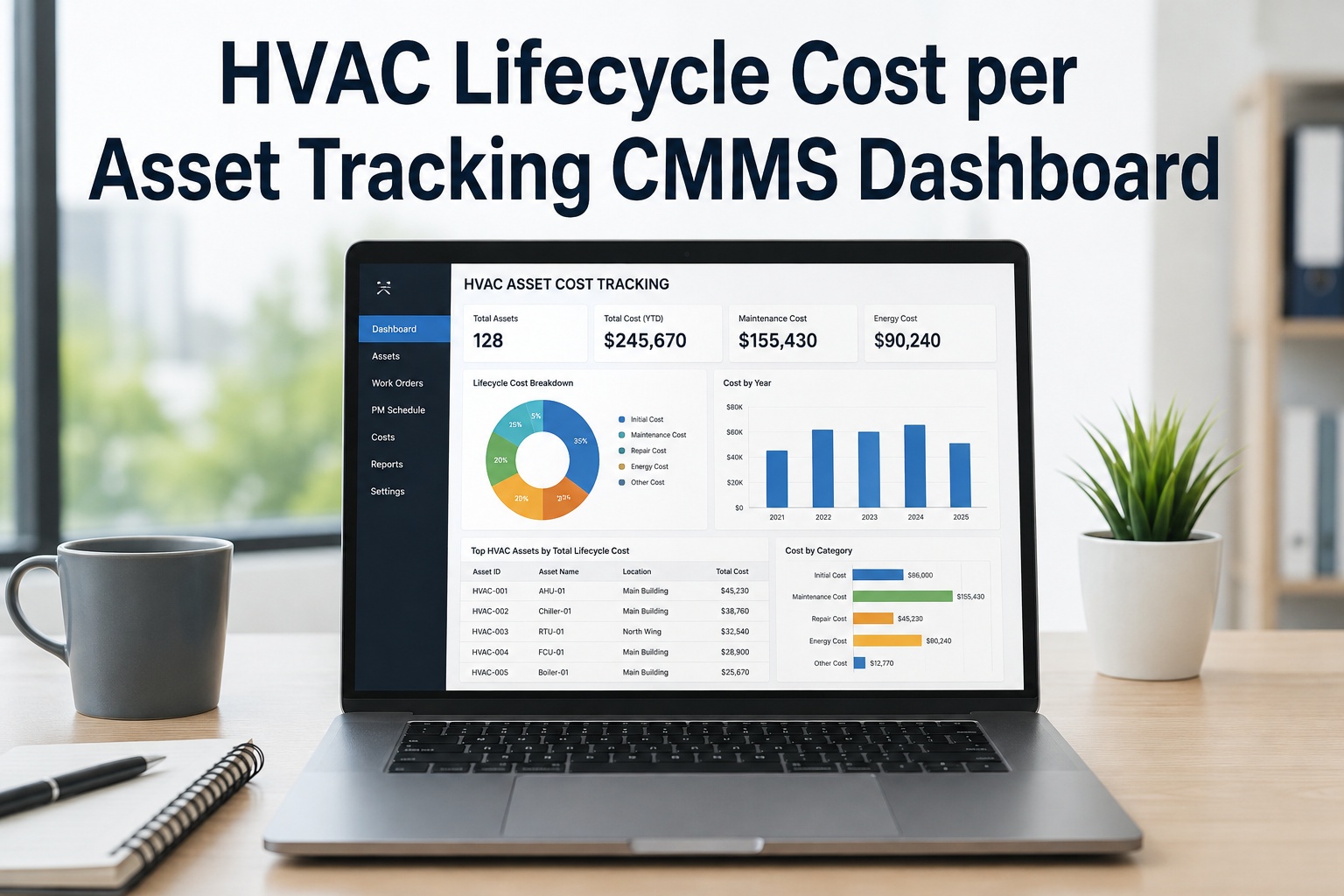
The trap in HVAC CapEx is treating the sticker as the cost. Over a 15-year life, energy dwarfs everything else — so a cheaper unit that runs inefficiently is the expensive choice. Forecasting has to weigh lifecycle cost, not first cost, and OXMAINT AI tracks efficiency drift against the commissioning baseline to catch it. Book a demo to see lifecycle cost per asset in OXMAINT AI.
A Portfolio Forecast Beats a Portfolio of Surprises.
When HVAC renewal runs on emergencies, you pay the premium and lose the plan. OXMAINT AI sequences every aging unit across every site into a costed, multi-year forecast — so capital follows condition, and no single summer blows the budget.
From Asset History to a Costed Forecast
The forecast a CFO signs off doesn't come from a spreadsheet guess — it comes from the maintenance record every site is already generating. OXMAINT AI carries that data from the work order all the way to a sequenced, multi-year capital plan. Here's the chain. Start free and build this forecast on your portfolio in OXMAINT AI.
What the CMMS Brings to CapEx Planning
Portfolio HVAC forecasting is analysis you can't do by hand across dozens of buildings and hundreds of units. OXMAINT AI runs it continuously off the maintenance data you already collect. Book a demo to see the CapEx toolset in OXMAINT AI.
Across eleven buildings, HVAC was the number I could never defend — every year some rooftop unit failed in a heat wave and blew a hole in the plan, while finance asked why we'd replaced perfectly good equipment the year before. Once every unit's age and repair cost lived in one place, the forecast finally made sense. We stopped replacing on the calendar, caught the ones actually failing, and I walked into the budget review with a three-year plan I could stand behind line by line.
Frequently Asked Questions
Forecast HVAC CapEx You Can Defend, Site by Site.
Plan HVAC renewal across your whole portfolio on the OXMAINT AI maintenance management software — per-asset cost history, age-and-condition replace-vs-retrofit-vs-repair calls, efficiency-drift tracking, and a rolling multi-year forecast rolled up across every building. Stop paying emergency premiums and defending guesses.