Facility energy waste in HVAC systems rarely announces itself—it compounds quietly across fans, pumps, coils, and controls until utility bills spike and comfort complaints pile up. Most building operators discover waste only after it has driven up operational costs for months. Sign Up Free with Oxmaint to connect your HVAC asset telemetry, centralize energy performance monitoring, and detect waste patterns before they erode your facility's operating budget. This guide walks facility managers, energy engineers, and operations teams through a structured approach to analyzing recurring energy waste patterns across the full HVAC asset base—so every intervention is backed by data, not guesswork.
Why HVAC Energy Waste Patterns Go Undetected in Facility Operations
Energy waste in HVAC assets is rarely a single catastrophic failure—it is a collection of small, persistent inefficiencies across fans running at wrong speeds, pumps cycling unnecessarily, coils fouled with mineral deposits, and control sequences that no longer match occupancy schedules. Book a Demo to see how Oxmaint's asset performance management platform surfaces energy anomalies across your HVAC equipment fleet. Without structured pattern analysis linked to maintenance history, facilities lose 15–30% of HVAC energy spend to avoidable waste that standard utility monitoring never isolates to the asset level.
Four HVAC Asset Categories Driving the Most Recurring Facility Energy Waste
Pattern analysis across HVAC asset bases consistently reveals that energy waste concentrates in four equipment categories. Sign Up Free to build HVAC asset health profiles inside Oxmaint and start detecting energy waste patterns at the equipment level, not just the utility meter level.
Supply, return, and exhaust fans operating outside design airflow ranges due to belt wear, duct leakage, or outdated scheduling waste energy continuously. VFD-equipped fans running at fixed speeds instead of tracking demand represent one of the highest-value waste recovery opportunities across the HVAC asset base.
Chilled water and condenser water pumps sized for peak loads but operated at constant flow during partial-load conditions waste significant pumping energy. Deadband control failures, valve sequencing errors, and impeller wear all create identifiable pump waste signatures that pattern analysis can isolate to specific assets.
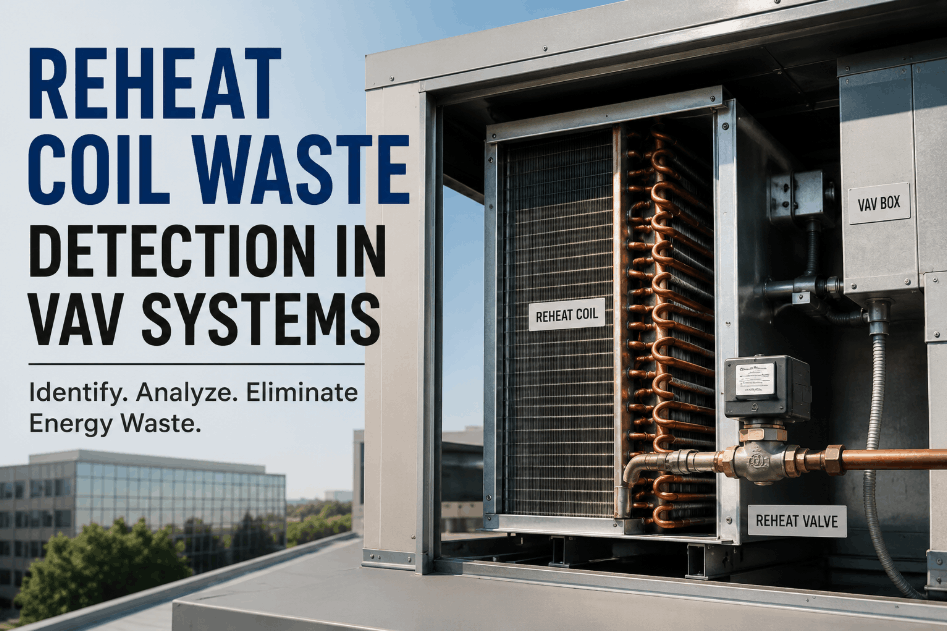
Fouled evaporator and condenser coils force compressors to work harder to achieve the same heat transfer, increasing energy consumption per unit of cooling. Coil fouling follows predictable seasonal patterns that, when tracked against maintenance intervals, allow proactive cleaning schedules before performance degradation accumulates.
Outdated control sequences, misconfigured setpoints, and failed sensors driving incorrect control decisions create invisible energy waste that no physical inspection catches. Simultaneous heating and cooling, overventilation during unoccupied hours, and setpoint drift are persistent control-driven waste patterns requiring analytics-based detection.
HVAC Energy Waste Pattern Analysis: What to Track Across Your Asset Base
Effective waste pattern analysis requires tracking the right performance indicators at the asset level and correlating them with maintenance records and utility data. Facilities that monitor only aggregate consumption miss the asset-level signatures that separate recoverable waste from baseline demand. Book a Demo to see how Oxmaint integrates HVAC asset telemetry with PM scheduling and energy analytics to support structured waste pattern management.
| Waste Pattern Type | Asset Category | Detection Signal | Monitoring Frequency | Action Trigger |
|---|---|---|---|---|
| Off-Hours Runtime Waste | Fans, AHUs | Runtime hours vs. occupancy schedule | Daily automated | Runtime exceeds scheduled hours by >10% |
| Partial-Load Fixed-Speed Operation | Pumps, Fans | VFD speed signal vs. system load | Continuous | Full-speed operation during <60% load periods |
| Coil Fouling Performance Loss | Cooling / Heating Coils | Delta-T trend vs. design spec | Weekly automated | Delta-T drops >15% below design baseline |
| Simultaneous Heating and Cooling | AHU Controls | Heating / cooling valve position correlation | Continuous | Both valves >20% open simultaneously |
| Overventilation During Low Occupancy | VAV Boxes, Dampers | Airflow vs. occupancy sensor data | Daily automated | Airflow exceeds occupancy-based setpoint by >20% |
| Setpoint Drift Waste | Controls, Sensors | Zone temperature trend vs. setpoint history | Daily automated | Persistent deviation >2°F from setpoint |
Common HVAC Energy Waste Signatures Found in Facility Asset Bases
Implementing HVAC Energy Waste Pattern Analysis with CMMS and Asset Management
Waste pattern analysis without a connected maintenance platform creates data gaps where energy logs, equipment records, and work order histories exist in separate systems. When a pattern is identified, the ability to view asset maintenance history, schedule a technician, and log corrective findings is what separates one-time fixes from systematic energy reliability improvement. Sign Up Free and connect your HVAC asset telemetry to Oxmaint's equipment health and work order management platform.
- Register every fan, pump, coil, and control asset in Oxmaint with design specifications and energy baselines
- Document nameplate data, commissioning performance benchmarks, and calibration history for each HVAC asset
- Link utility sub-metering or BAS telemetry to individual asset records for consumption tracking
- Set deviation thresholds based on design efficiency and occupancy schedule parameters
- Configure cross-asset correlation rules for simultaneous heating/cooling and overventilation detection
- Route energy waste alerts to facility engineers with full asset history and maintenance context attached
- Generate automatic PM work orders when coil fouling, pump performance loss, or control drift indicators exceed thresholds
- Attach energy waste trend data and asset health scores to every corrective work order
- Update maintenance schedules dynamically based on observed degradation rates rather than fixed calendar intervals
- Monitor HVAC asset energy intensity scores to identify systemic waste patterns by system type and building zone
- Measure energy cost avoidance from corrected waste patterns against maintenance intervention costs
- Report waste recovery performance and asset health trends to facility leadership and sustainability teams
HVAC Energy Waste KPIs for Facility Operations Teams
Quantifying energy waste management performance requires indicators that connect HVAC asset health to utility consumption outcomes, not just maintenance compliance rates. Book a Demo to access Oxmaint's asset health dashboards and build HVAC energy KPI tracking across your entire facility.
kBtu per square foot normalized for weather and occupancy. Declining intensity confirms waste recovery interventions are delivering measurable consumption reductions across the asset base.
Percentage of HVAC assets adhering to scheduled occupancy-based operating windows. Low compliance signals scheduling drift or override accumulation consuming avoidable standby energy.
Percentage of coil assets performing within 10% of design delta-T. Low compliance predicts compressor overwork and refrigerant circuit stress across the chiller plant.
Average time from waste pattern onset to detection and corrective work order creation. Shorter cycles reduce cumulative energy losses from unaddressed HVAC inefficiencies.
Occurrences of AHU or zone-level simultaneous conditioning waste. Each incident represents direct energy loss and a control system failure requiring immediate corrective action.
Cumulative utility cost avoided through identified and corrected waste patterns. Tracks the financial return of the waste pattern analysis program for facility leadership reporting.